High-speed cameras and electrical signals reveal real-time mechanics of mosquito feeding
Legs push against skin while proboscis probes repeatedly, locating a vessel within 30 seconds
Malaria mosquito finds vessels 17 seconds faster than the yellow fever mosquito

Mosquitoes are commonly thought of as simple insects that land on skin and immediately plunge their mouthparts in to draw blood. Exactly how a mosquito's proboscis moves beneath the skin has been too fast and too small to observe closely — until now.
A new study has found that malaria-carrying mosquitoes coordinate their legs, proboscis and small palps in a rhythmic pattern as they feed. By repeatedly pushing against the skin with their legs while inserting and withdrawing the proboscis, the insects locate a blood vessel within 30 seconds.
The findings were published in volume 12 of the international journal Science Advances by a research team led by professors Joanna Konopka and Christopher Potter at Johns Hopkins University.
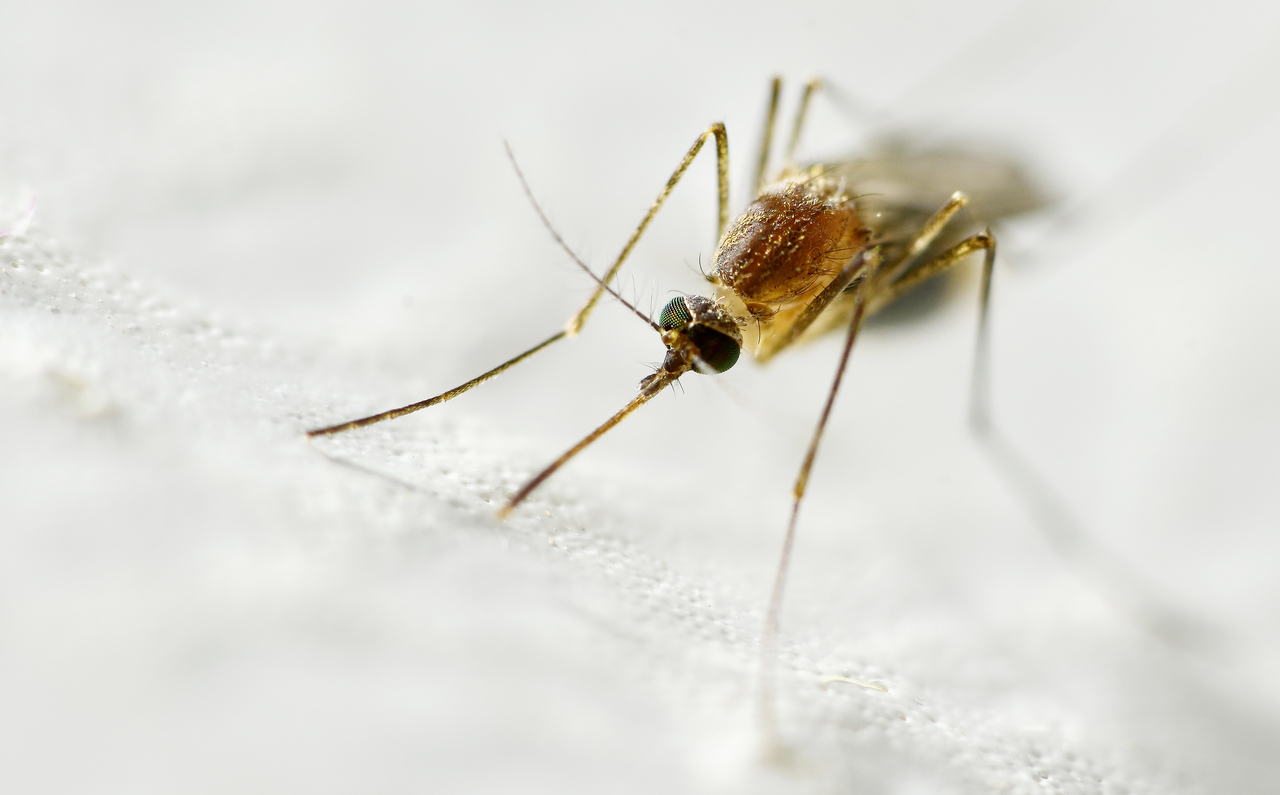
Pushing, probing and feeding in rhythm
The research team had malaria mosquitoes — the species responsible for transmitting malaria in Africa — bite a human arm, then filmed the process with a high-speed camera capable of capturing hundreds of frames per second. AI tracked the movements of each mosquito's legs, proboscis and palps frame by frame.
The researchers attached a thin gold wire to each mosquito's back and had participants hold an electrode in their hand. When the mosquito pierced the skin, an electrical circuit was completed between the insect and the participant, and the signal shifted with every movement of the proboscis beneath the surface. The team used those signals to read what the mosquito was doing inside the skin.
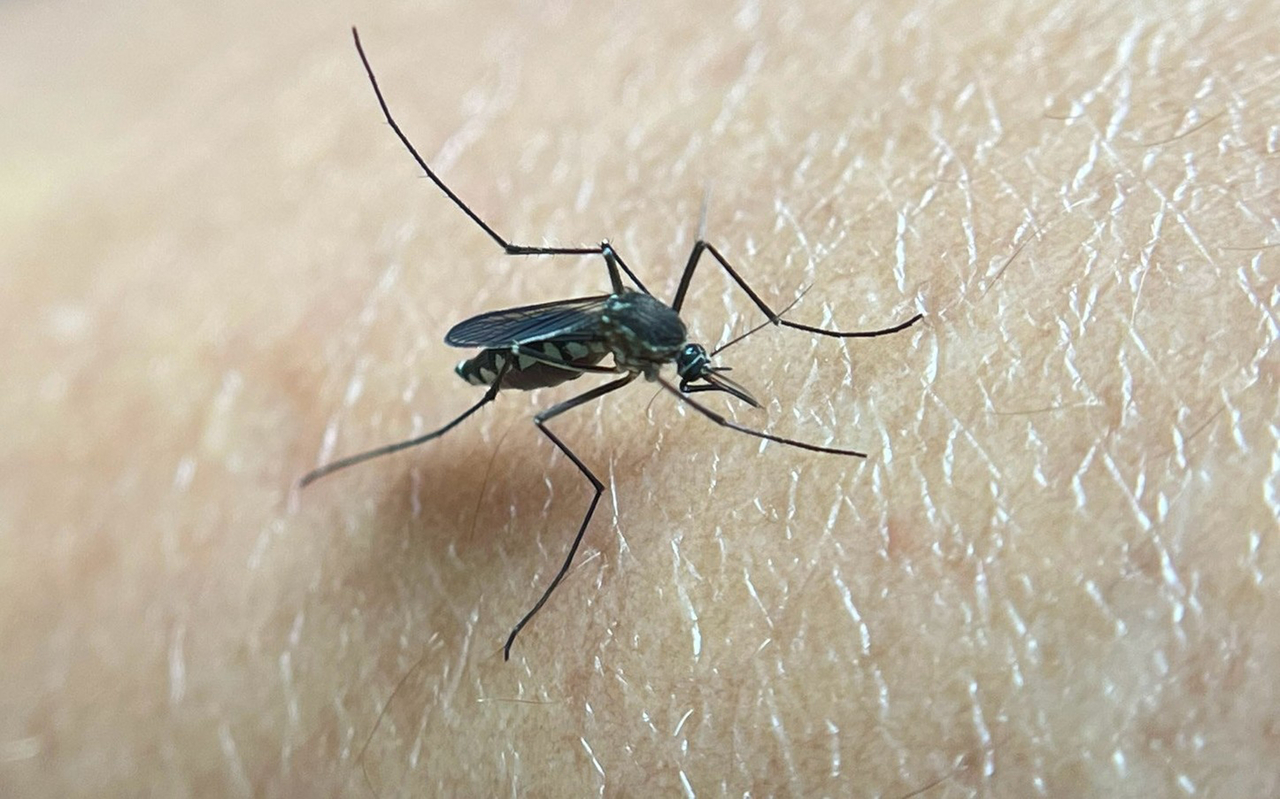
The blood-feeding process broke down into five stages: piercing the skin, locating a vessel, drawing blood, retracting the proboscis and withdrawing it fully.
When the mosquito drove its proboscis deeper into the skin to search for a vessel, its forelegs bent and lifted off the surface. As the proboscis was pulled back, the forelegs straightened and pressed firmly against the skin. The blood-drawing proboscis is thin and flexible enough to bend up to 90 degrees, making it prone to buckling as it navigates beneath the surface.
The research team said the mosquito repeats a cycle of using its legs to push the proboscis out, reorient it and reinsert it, locating a blood vessel within 30 seconds.
The palps flanking the proboscis did not touch the skin, but during the vessel-search phase they moved side to side like scissors 10 to 25 times per second in a coordinated rhythm. Once the mosquito began drawing blood, the lateral motion stopped and the palps shifted to a subtle up-and-down vibration.
The team said the palp vibration alone was enough to tell whether the mosquito had begun feeding.
Average feeding time: 160 seconds
The malaria mosquito located a blood vessel 17 seconds faster than the yellow fever mosquito, which also transmits dengue fever and the Zika virus. The malaria mosquito moved directly toward a vessel, while the yellow fever mosquito searched more erratically, changing direction frequently.
However, the total time from the moment each species inserted its proboscis to the moment it finished feeding and withdrew was similar — 160 seconds for the malaria mosquito and 165 seconds for the yellow fever mosquito.
The malaria mosquito drove its proboscis into the skin in a single thrust, while the yellow fever mosquito pushed it in gradually at a steady rhythm.
Participants said they felt no pain when bitten by the yellow fever mosquito but felt a sharp sting every time the malaria mosquito bit them. The team said further study is needed to confirm whether the difference in insertion technique actually accounts for the difference in pain.
In the paper, the team said "female mosquitoes precisely coordinate multiple body parts at the biting site." They added that a better understanding of the feeding process could help identify new ways to reduce and prevent mosquito bites.
However, the team said follow-up research is needed to determine whether the same results hold for people with different skin conditions and for mosquitoes caught in the wild.
Reference
DOI: 10.1126/sciadv.aec2023
Joanna K. Konopka et al., "Coordinated mosquito biting dynamics at the human skin interface." Sci. Adv. 12, eaec2023 (2026).
dbsdn1110@heraldcorp.com