CROs summoned again four months later as margin loan balance hits 30.3 trillion won
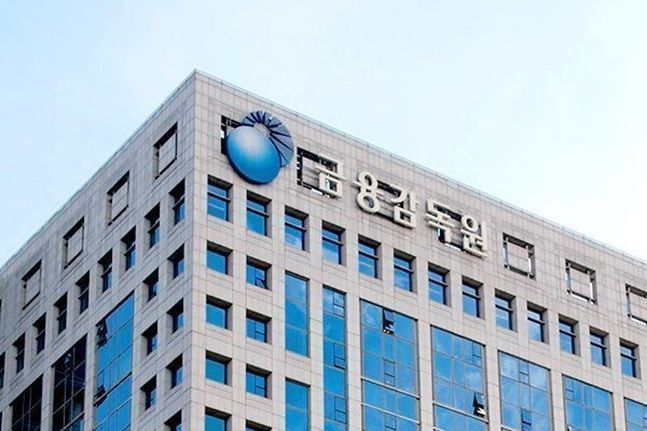
The Financial Supervisory Service warned the brokerage industry Tuesday that it could impose additional regulation if firms fail to properly implement voluntary margin financing controls, criticizing the sector's risk management as insufficient. The watchdog summoned chief risk officers from major brokerages for the second time in four months, ordering preemptive action.
The FSS said it co-hosted a meeting Tuesday with the Korea Financial Investment Association, attended by CROs and other officials from 10 major comprehensive financial investment firms. The meeting was chaired by FSS Deputy Governor for Financial Investment Seo Jae-wan.
The gathering was convened to review the industry's risk management practices since a previous CRO meeting on June 24 and to encourage firms to properly carry out the recently announced voluntary measures to strengthen margin financing controls.
Seo said the brokerage industry's margin financing management had been inadequate since the June meeting, expressing disappointment. He said firms must move beyond uniform management approaches, take a comprehensive view of market conditions and actively manage margin financing exposure.
At the June 24 CRO meeting, the FSS urged brokerages to tighten risk controls amid rising margin loans and unsettled trades. At that time, the average daily margin loan balance had grown from 20.9 trillion won ($15.8 billion) last year to 36.3 trillion won as of May, while the average daily unsettled balance rose from 900 billion won to 1.4 trillion won over the same period. The FSS asked firms to adequately inform investors of forced-liquidation risks and to strengthen their own liquidity management in preparation for heightened market volatility.
According to the FSS, the margin loan balance rose from 35.7 trillion won at the end of April to 38 trillion won at the end of May before falling to 32.1 trillion won at the end of July. It then stood at 33.2 trillion won at the end of August and 33.3 trillion won at the end of September, and was recorded at 30.3 trillion won as of Thursday.
The FSS warned that an excessive buildup in margin loan balances could trigger large-scale forced liquidations during a sharp market downturn, amplifying the shock to the stock market and eroding investor confidence.
The watchdog accordingly urged the industry to thoroughly implement the voluntary margin financing management measures the sector recently put in place. The industry adopted a cap limiting total credit extension to 90 percent of the allowable limit on Oct. 1, and on Oct. 19 introduced a measure to keep each stock's share of margin loans to no more than 15 percent.
Seo said he viewed the industry's adoption of voluntary measures positively but stressed that firms must respond swiftly to changing market conditions. He urged brokerages to prioritize investor protection and begin managing margin financing even before completing IT system upgrades and internal rule revisions. He also warned that additional regulatory tools could be deployed if self-regulation proves inadequate.
Some brokerages have already moved to tighten margin financing controls. Examples include lowering the margin financing rating on all domestically listed stocks to reduce limits, and cutting the base limit on stocks with concentrated margin exposure from 300 million won to 200 million won while restricting limit extensions.
Some firms are also using robotic process automation to monitor margin financing positions and stocks with sharp intraday swings in real time. When a limit is breached or warning signs emerge, they lower a stock's rating or restrict margin financing on it.
The CROs of the comprehensive financial investment firms who attended said they recognized the need to strengthen margin financing management and pledged to cooperate fully in implementing the voluntary measures.
An FSS official said the agency would work with the Korea Financial Investment Association to ensure that the industry's management of credit extension limits and per-stock concentration is carried out effectively, adding that it would continue to communicate and cooperate with the industry to help establish a sound investment culture as early as possible.
hajun825@heraldcorp.com