Korea Institute for Industrial Economics and Trade says oil price cap buffered price shock
Researchers warn against prolonged controls, call for phased exit strategy
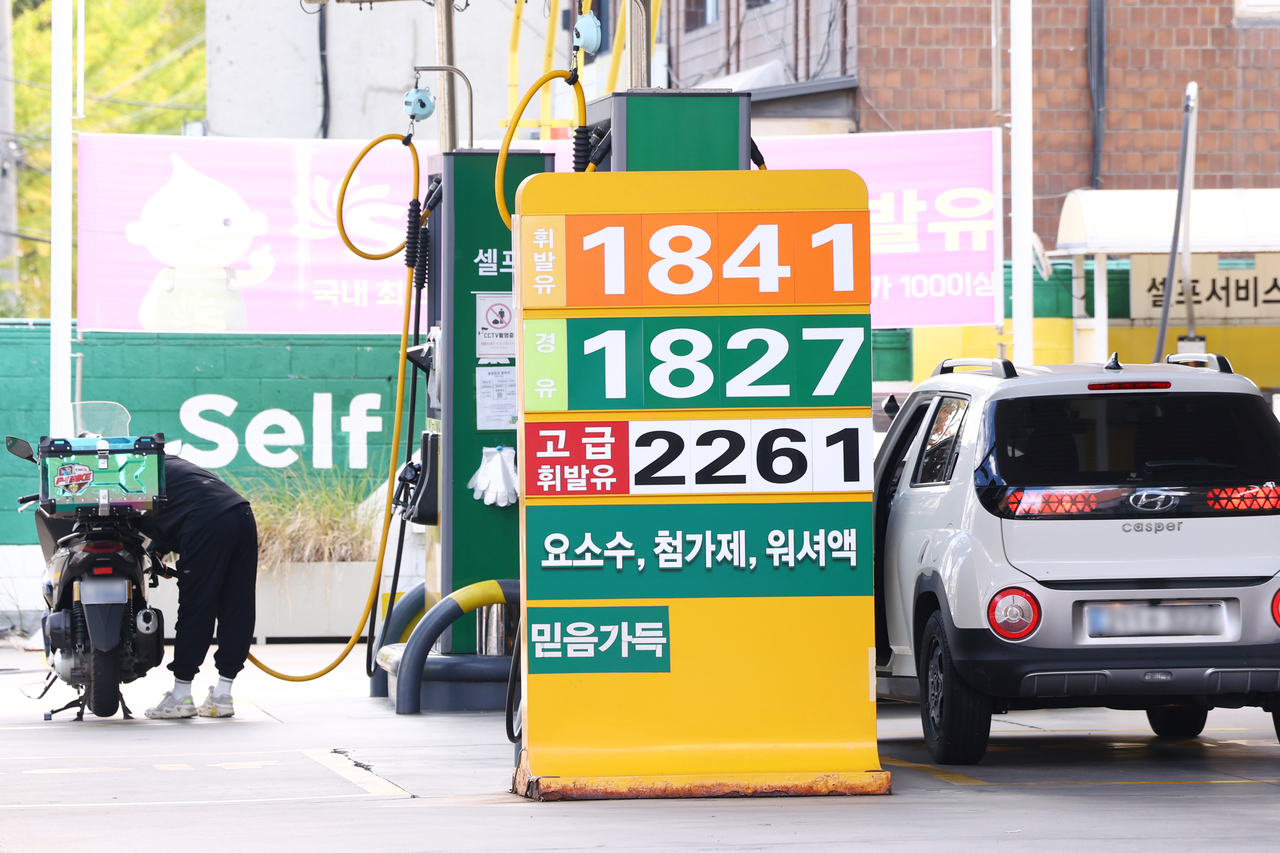
South Korea's energy prices rose about 10 percentage points more slowly than those in the United States and Germany following the outbreak of the Middle East war, a state-run research institute said Tuesday, attributing the gap to active price management policies including an oil price cap regime.
However, researchers cautioned that prolonged price suppression could increase the fiscal burden, and called for a phased normalization plan.
According to a report titled "Effects of the Oil Price Cap and Policy Responses," released Tuesday by the Korea Institute for Industrial Economics and Trade, energy prices in South Korea, China and Thailand — all of which actively managed fuel prices — rose an average of 15.0 percent from March through August this year compared with the same period last year.
That was 9.9 percentage points below the average increase of 24.9 percent recorded in the US and Germany, neither of which imposed direct price ceilings.
By country, energy prices rose 16.5 percent in South Korea, 11.1 percent in China, 17.5 percent in Thailand, 28.8 percent in the US and 21.0 percent in Germany.
South Korea operates a maximum price regime that caps the supply prices charged by refiners, while China restricted the size of increases under its existing administered pricing system. Thailand used a combination of fund subsidies and cuts to refiners' diesel wholesale prices.
The US, by contrast, focused on expanding supply rather than capping prices, while Germany responded with a temporary fuel tax cut and limits on the frequency of price increases.
Japan, which did not set a retail price ceiling but paid subsidies to refiners to hold down prices, recorded an energy price change of minus 4.5 percent over the period.
The report noted that the indicators used for each country varied slightly, drawing on retail gasoline prices and consumer price index data for vehicle fuel, among other measures.
It added that exchange rates, tax structures and the lag between cost changes and price adjustments must also be considered, meaning the gap between countries cannot be attributed solely to policy as a net effect.
Nevertheless, the report said a pattern was observable in which direct price controls and subsidy-based policies buffered the impact of price shocks.
The report also noted that the swing in South Korea's energy price growth rate between August and September was not larger than in other countries, and said it was more accurate to conclude that "South Korea's policy did not eliminate price increases but rather contained the acceleration of the rate of increase and cushioned additional shocks."
At the same time, the report said the price cap regime cannot eliminate energy shocks across the broader economy. It warned that fixing a ceiling for an extended period could accumulate fiscal costs, weaken supply incentives and, if the policy were eventually ended, heighten the risk of a sharp spike in fuel prices.
The report recommended that the ceiling be adjusted in line with international product prices, exchange rates and gaps between domestic inventories and prices, and that an exit rule providing for phased normalization once the shock subsides be designed alongside the policy itself.
It added that targeted support for vulnerable households and energy-intensive industries, diversification of supply sources, and transparent loss settlement arrangements with refiners should be pursued in parallel.
oskymoon@heraldcorp.com