Ministry to add drug to non-covered reporting list, commission clinical review through health research institute
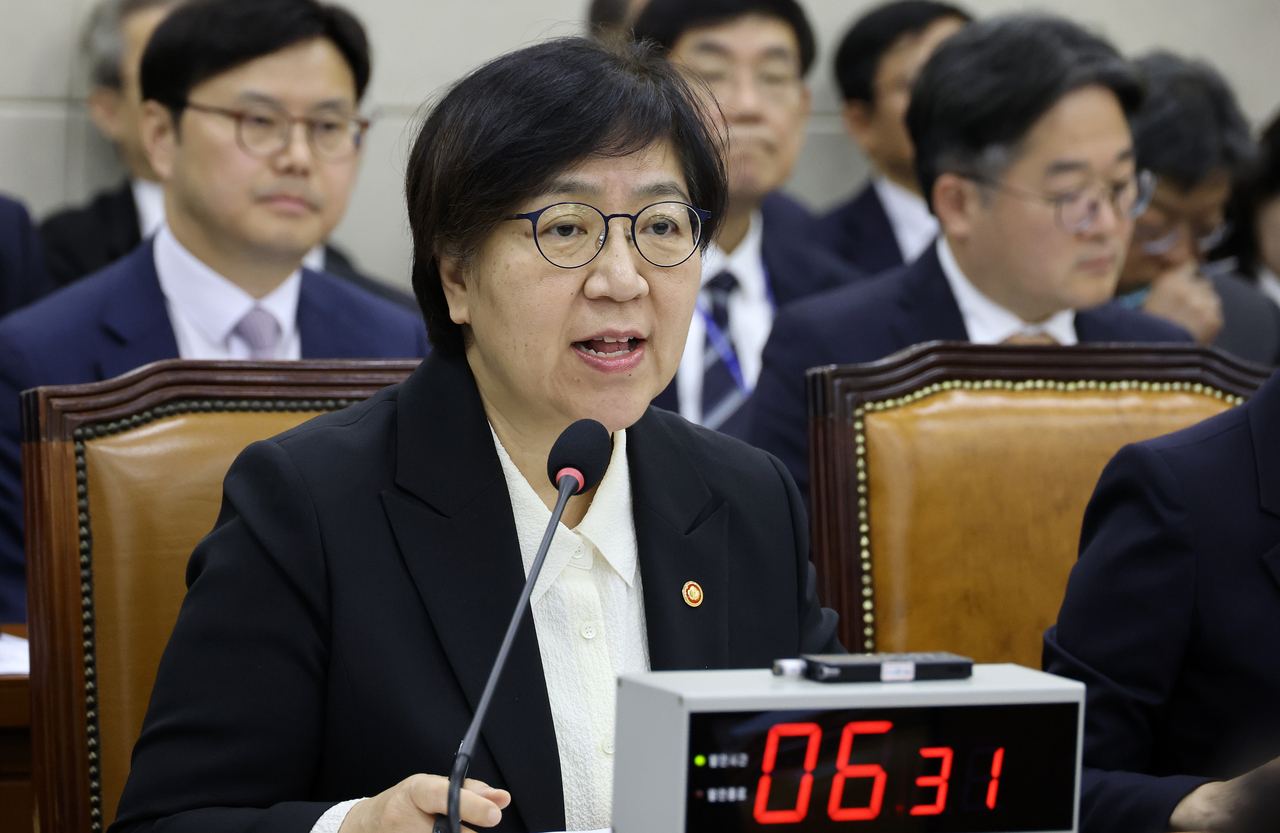
Minister of Health and Welfare Jeong Eun-kyeong said she would tighten oversight of chelation injections after allegations emerged that an automotive battery manufacturer had secretly administered the drug to workers — disguising it as a "vitamin shot" — to conceal elevated blood-lead levels.
Appearing at the comprehensive national audit of the National Assembly's Health and Welfare Committee on Tuesday, Jeong told Democratic Party of Korea lawmaker Jeon Jin-suk that the ministry would add chelation injections to its list of non-covered items subject to mandatory reporting and monitoring.
"We will launch an evaluation study on the clinical evidence and prescribing appropriateness through the National Evidence-based Healthcare Collaborating Agency," Jeong said. "For institutions that have supplied the drug in excessive quantities, we will conduct administrative investigations."
Chelation injections containing calcium disodium edetate are a detoxification treatment that forces heavy metals such as lead out of the bloodstream through urination.
Because the process also flushes essential minerals — including calcium, potassium and magnesium — out of the body, the drug can cause serious side effects such as kidney damage, cardiovascular toxicity and electrolyte imbalances.
For that reason, the World Health Organization recommends the drug only in cases of severe poisoning, where blood-lead concentrations exceed at least 70 micrograms per deciliter.
The controversy centers on DN Automotive's Ulsan factory, where the drug is alleged to have been repackaged as a nutritional or vitamin injection said to aid in waste elimination and chronic fatigue relief — a misuse that critics say reflects a broader problem.
According to lawmaker Jeon, only 1,127 patients received national health insurance-covered treatment for acute heavy-metal toxicity last year, yet the supply of chelation injections reached 136,360 units over the same period.
Responding to a separate call by Democratic Party lawmaker Kwon Chil-seung to strengthen measures against unethical administration of the drug, Jeong said the ministry would "conduct administrative investigations more aggressively."
thlee@heraldcorp.com