Land Ministry and ruling party push for quick action
DP: 'Can't wait any longer' for PPP response
Special capital bill to take top legislative priority
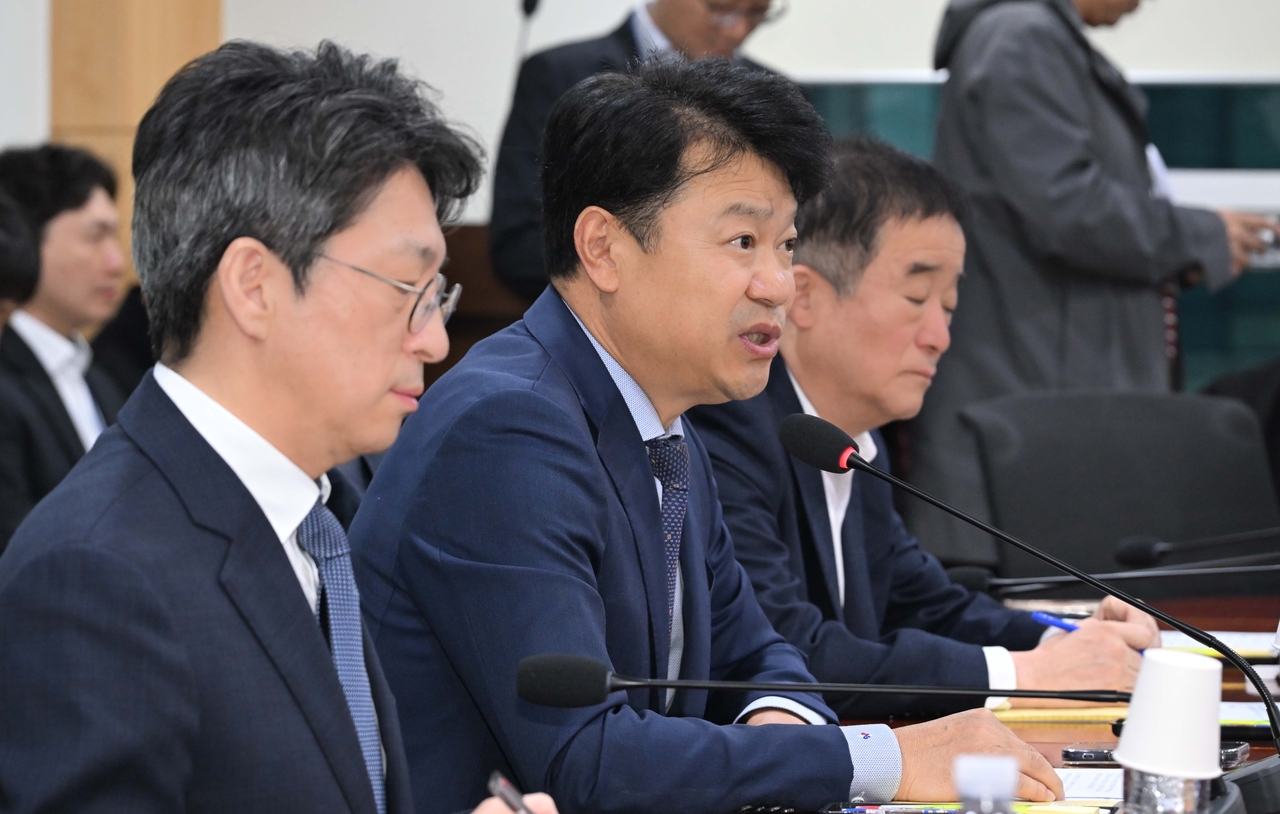
The Democratic Party of Korea and the government held a party-government consultation Wednesday and agreed to raise the legal ceiling on floor-area ratios for private redevelopment and reconstruction projects from 100 percent to 120 percent under a proposed amendment to the Urban and Residential Environment Improvement Act, pledging to push the bill through "as quickly as possible."
Bok Gi-wang, a Democratic Party lawmaker who leads his party's side on the National Assembly's land and transport committee, told reporters immediately after the meeting that his party had proposed the 120 percent figure to his counterpart in the People Power Party as a compromise but had received no response. "We concluded we can no longer afford to wait," he said.
Bok said the PPP has been pushing to ease the legal ceiling for private developers to 130 percent, while the Democratic Party considers 120 percent appropriate given factors such as traffic conditions. "Even the Seoul Metropolitan Government has expressed concern that raising it to 130 percent could create traffic problems," he said. "Our proposal is by no means one-sided." He added that the PPP would not resort to a filibuster over the bill.
The party and government also discussed plans to complete Sejong's role as the administrative capital. Bok said passage of a special administrative capital bill — which would enshrine Sejong as the seat of government and Seoul as the economic capital — would be the top legislative priority, along with a separate bill to relocate five government ministries to Sejong.
"If these bills are not passed, we will not take up any other legislation," he said. "We will resolve a task that has been left unfinished for 20 years."
Land, Infrastructure and Transport Minister Hong Ji-seon reiterated the government's push to accelerate housing supply. "In this, the second year of the people's sovereignty government, we must focus on execution over planning and deliver results that people can feel," Hong said. "Above all, we need to pick up the pace on housing supply."
Hong added that the president had also stressed an all-out push on housing supply. "The government will actively advance follow-up legislation to the Aug. 13 measures and mobilize the full capacity of both the public and private sectors to bring forward the housing supply schedule as much as possible," he said.
On the special administrative capital bill, Hong said the government would "shift the center of state administration to Sejong and expand pathways for future industries into the regions," adding that it would complete the administrative capital and supply the industrial land needed to match corporate investment timelines.
raining@heraldcorp.com