Follow-up to 'I Decided to Live to 120' released simultaneously in South Korea and US
Book reexamines meaning of death through traditional concept of 'cheonhwa'
Covers practical steps from end-of-life care decisions to values-based wills
"Death becomes the most honest filter for distinguishing what matters in life from what does not."
Death is something no one can avoid, yet most people have never been taught how to prepare for the end of their lives. What if, instead of fearing or ignoring death, we accepted it as the process of completing a life? A new book carries the message that when we change the way we look at the end of life, we can also change the way we live in the present.
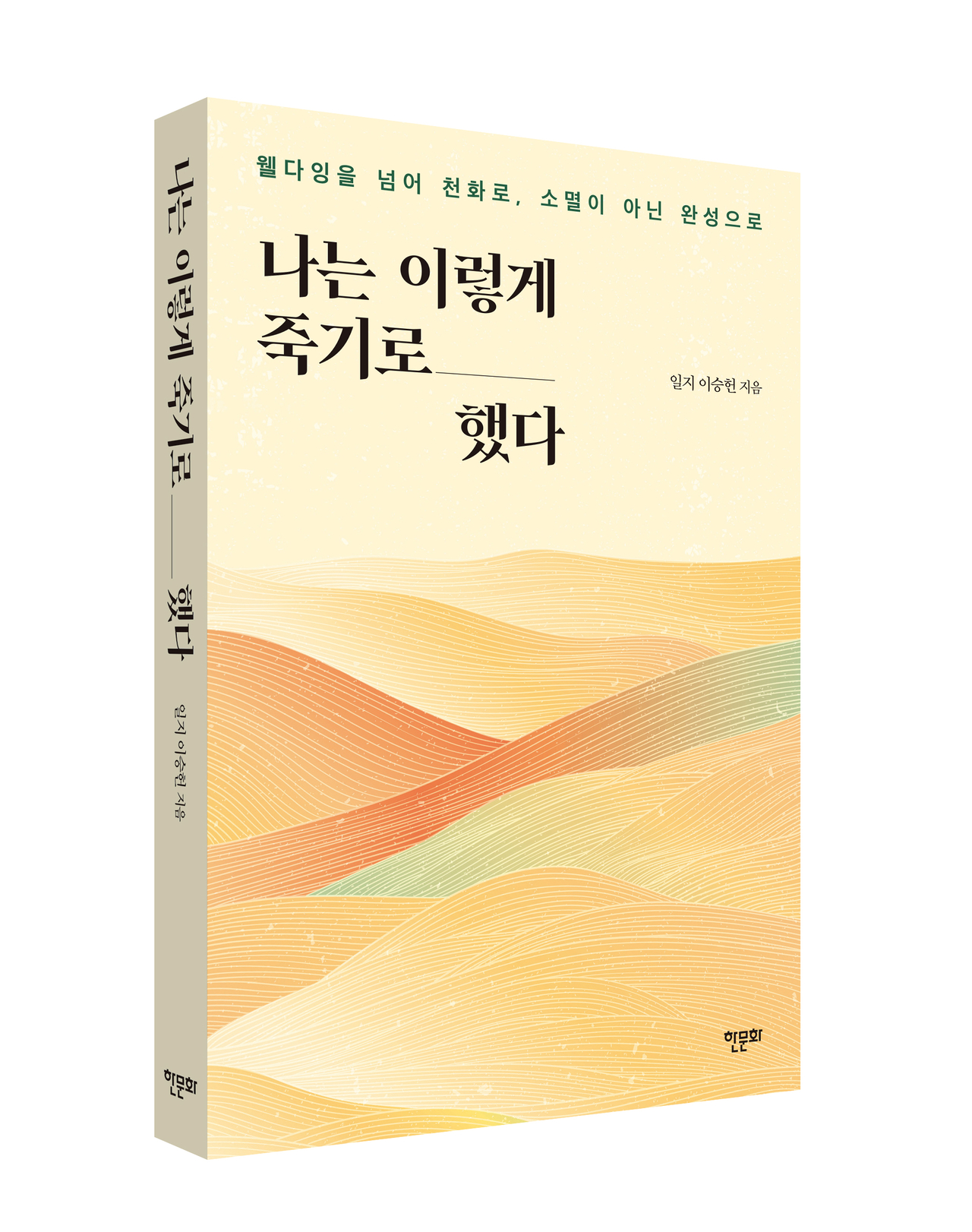
Hanmunhwa Multimedia announced Wednesday that Ilji Lee Seung-heun, director of the Korea Institute of Brain Science, has published a new book titled "I Decided to Die This Way." Released simultaneously in South Korea and the United States, the book is a follow-up to "I Decided to Live to 120," which has been published in 12 countries worldwide. According to the publisher, the new title shot to No. 1 in the health category at Kyobo Book Centre immediately after its release.
Where the previous book explored how to live meaningfully in a super-aged society — going beyond simply living longer — the new work extends that question to life's final moments. Rather than focusing on "well-dying" as mere preparation for a good death, the book centers on how death itself should be understood and embraced.
The central concept running through the book is "cheonhwa," a view of life and death rooted in Korea's traditional Sundo philosophy. Meaning "to become the sky," cheonhwa frames death not as the extinction or severance of existence but as a return to the source of life. Lee argues that death should be seen not as an event separate from life but as the process of bringing an entire lifetime to its full completion.
Lee's personal experiences inform this perspective. Witnessing a mother's difficult final years and a father's peaceful passing led to the realization that the way one faces death is intimately connected to the life one has lived. Lee argues that rather than reflecting on life's meaning only after illness or loss strikes, people should begin contemplating their own endings while they are still in good health.
The book is organized into three parts: viewing death differently, living true to oneself until the end, and departing as oneself. Beyond philosophical reflection on death, it also addresses practical steps for designing one's own final chapter, including ways to maintain physical and mental health, decisions about life-sustaining treatment, writing a values-based will, and holding a life-completion ceremony.
In the book, Lee writes: "If well-dying is preparation for meeting death gracefully, then cheonhwa is about transforming the very consciousness with which we view death." Preparing for death, Lee argues, ultimately means reclaiming agency over the life that remains.
Jeon Se-il, chairman of the Brain Trainer Association and a leading figure in introducing the academic study of death to South Korea, wrote in a foreword: "When we stop turning away from death, life becomes all the clearer. True well-being is only complete when well-living and well-dying go hand in hand."
Lee Ki-woo, former vice minister of Education, described the book as one that "draws on our ancestors' view of life and death to approach the frightening subject of death — something everyone wants to avoid — with a warm and quiet gaze." Neuroscientist Emeran A. Mayer called it "a wise and essential book," adding that "a good death is not a matter of chance but of preparation."
realbighead@heraldcorp.com