Foreign crypto cards gain ground in Korea as domestic firms wait for laws
While South Korean financial firms have developed stablecoin payment technology, regulatory gaps have kept them confined to pilot programs — and foreign payment providers are moving quickly to fill the void. Domestic companies are being forced to debut services abroad while waiting for legislation to catch up, even as foreign crypto cards operate freely inside Korea through existing international card networks. Industry observers warn that payment demand from foreign tourists already comfortable with virtual assets could also end up flowing to overseas providers.
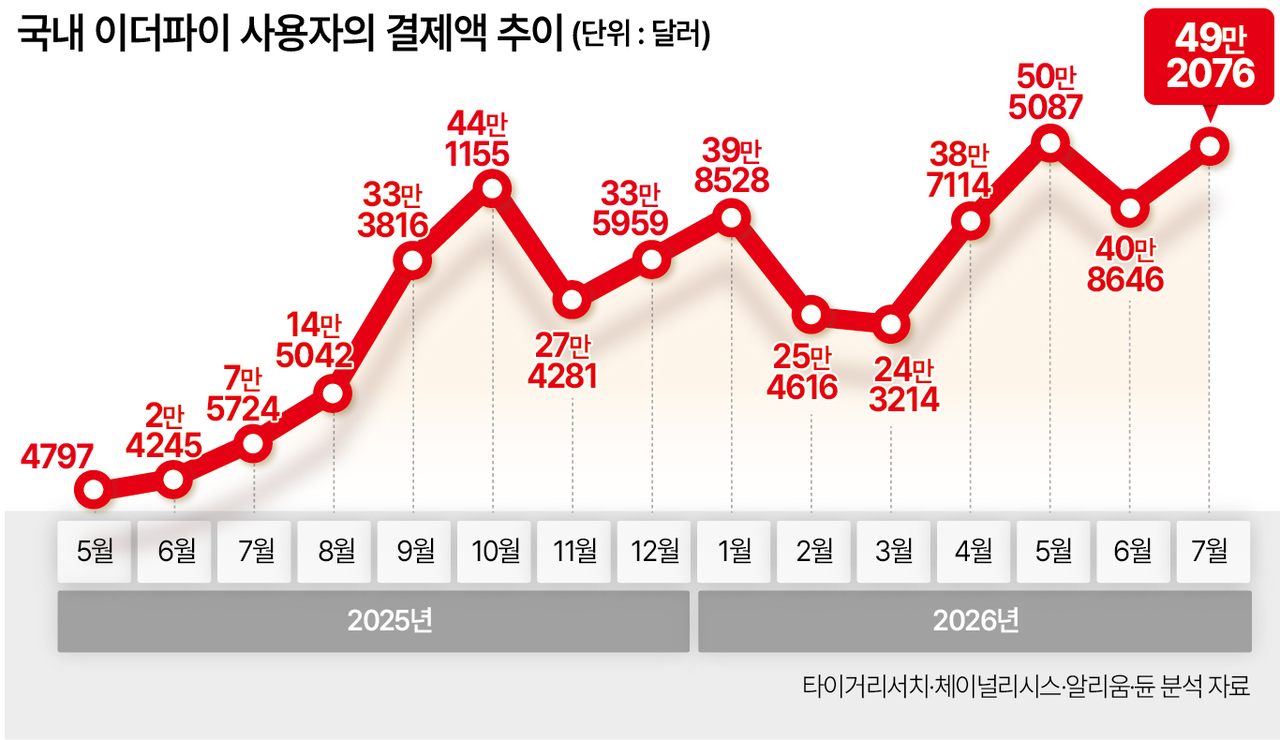
Data obtained through Web3 research firm Tiger Research show that cumulative payments by domestic users of Etherfi from January through July this year totaled approximately $2.689 million. July alone reached $492,076 — roughly 6.5 times the $75,724 recorded in the same month last year, a year-on-year increase of 549.8%. It marks the first time domestic crypto card spending trends have been made public.
Monthly transaction volumes climbed from $145,042 in August last year to $333,816 in September and $441,155 in October. After some fluctuation, the figure crossed the $500,000 mark in May this year at $505,097, and remained above $400,000 in June and July at $408,646 and $492,076, respectively.
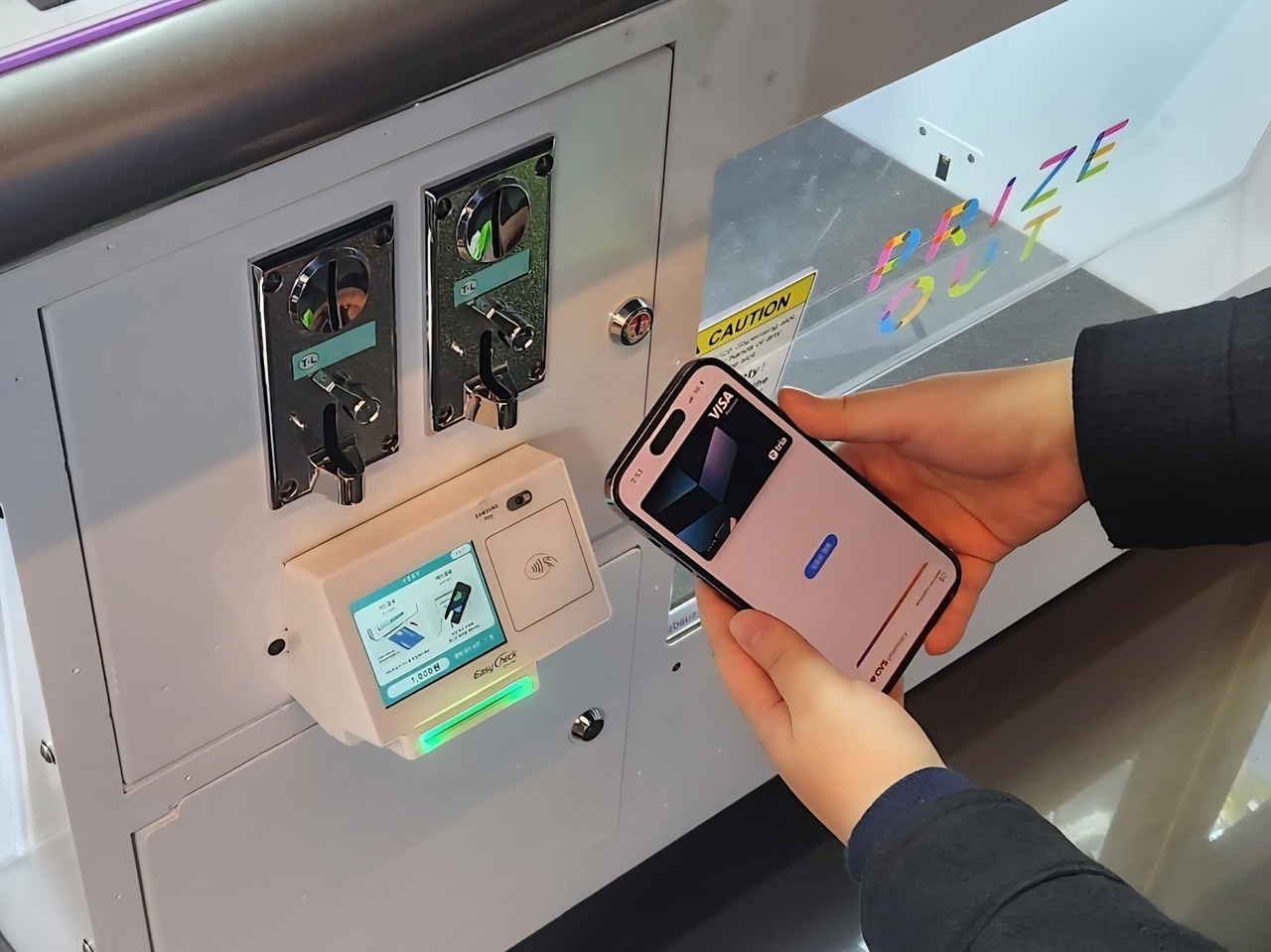
Etherfi is one of the leading foreign crypto card brands alongside Reap Pay. Crypto cards are issued by overseas fintech firms in partnership with international card networks such as Visa and Mastercard, allowing users to make purchases using their virtual asset holdings.
The data cover only Etherfi, but industry insiders believe the actual transaction volume would be considerably larger once other foreign crypto cards such as Reap Pay are included. "Domestic financial firms either have to wait for legislation or go abroad, even though they have the technology — yet foreign crypto cards are being used freely right here," one industry official said. "In the end, it's only Korean companies whose hands are tied."
While foreign providers expand their footprint in Korea's payment market through existing card networks, domestic financial firms remain stuck in the pilot stage on their home turf. The industry says the delay in passing Phase 2 digital asset legislation, combined with so-called "shadow regulation" — informal guidance applied without clear statutory basis — has made it effectively impossible to launch full commercial services.
Domestic financial firms must wait for regulators to clarify the scope of permissible activity before rolling out any new service involving virtual assets. Foreign crypto cards, by contrast, convert virtual assets into fiat currency overseas before routing transactions through existing international card networks, allowing them to be used at domestic merchants just like any other foreign-issued card.
The gap between technical readiness and commercial deployment is stark. Hana Financial Group is currently validating a system with Dunamu and Hana Card that links a Hana Card debit card to an Upbit wallet or Kaia Wallet for real-time stablecoin payment and settlement. The pilot also tests a feature that draws on a dollar stablecoin first and automatically covers any shortfall with a yen stablecoin. The goal is to shorten merchant settlement periods and improve cash flow for small business owners.
Shinhan Card is running a QR payment test for employees at merchants inside its headquarters, using tokens issued directly on Dunamu's public blockchain Kaia Chain. Payments are restricted to pre-registered wallets to verify security and compliance requirements. Shinhan Card is also pursuing a technology validation for yen stablecoin payment and settlement with affiliates of Japan's SBI Group.
The regulatory bottleneck has pushed some domestically developed services to launch abroad first. Samsung Electronics' US subsidiary will begin offering Galaxy users in the United States an international remittance feature using the dollar stablecoin USDC through Samsung Wallet starting in the last week of this month. Users can send USDC to overseas virtual asset wallets and exchange accounts directly from Samsung Wallet without setting up a separate crypto app or wallet. When funds are sent to bank accounts in more than 60 countries, recipients receive the money in their local currency.
Samsung Electronics is also exploring online and offline payment features using stablecoins as a follow-up to the international remittance service, but says domestic deployment must wait for legislation. Chae Won-cheol, head of the digital wallet team at Samsung Electronics' Mobile eXperience division, said the company "cannot do it domestically because the law has not been enacted," adding that the Digital Asset Basic Act must pass first.
The longer legislation is delayed, the more ground domestic firms stand to lose — and the wider the regulatory blind spot around foreign services becomes, industry officials warn. Given the winner-take-most dynamics of payment markets, where early movers lock in users and merchants, a prolonged legislative delay could cost Korean companies their chance at market leadership. Calls are growing for the Phase 2 legislative process to quickly establish clear standards for domestic payment and settlement services, while applying consistent rules to foreign providers operating in Korea and protecting their users.
With South Korea approaching 20 million foreign visitor arrivals annually, there are also concerns that payment demand from inbound tourists could flow entirely to overseas providers. Domestic financial firms have confirmed the viability of stablecoin payments in medical tourism and other sectors but have been unable to scale up due to the regulatory vacuum. Shinhan Bank has piloted a service in which foreign medical tourists pay in dollar stablecoins via Crypto.com's QR payment system, with hospitals and clinics receiving settlement in won. BC Card completed a similar pilot in August, allowing foreign tourists to make QR payments at domestic merchants using USDC held in a blockchain wallet.
Consumer protection gaps are another concern. "Crypto cards issued by overseas virtual asset exchanges are not licensed financial services in Korea, so if payment failures or fraudulent transactions occur, there may be limits to how much recourse users have under domestic rules," one card industry official said. With the issuer and operator based abroad, compensation and dispute resolution procedures could also become significantly more complicated.

forest@heraldcorp.com
kyoung@heraldcorp.com