Government offers shifting reasons — equipment failure, limited speaking time, last-minute scheduling
Opposition and media call explanations contradictory, label prime minister 'irresponsible'
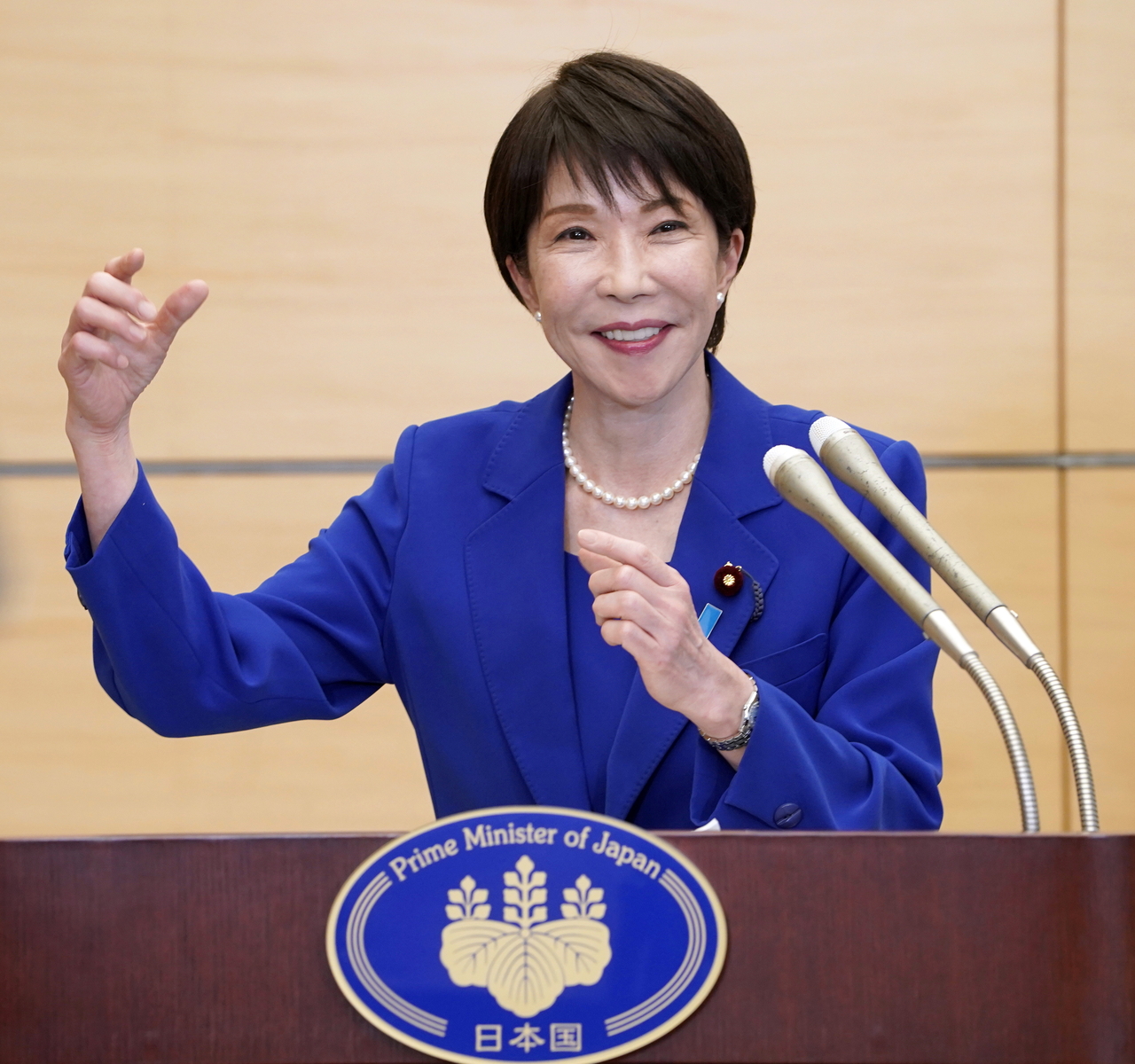
Criticism is mounting over Japanese Prime Minister Takaichi Sanae's absence from a G7 online summit earlier this month.
Contradictory statements made during the regular Diet session have deepened the controversy, drawing sharp rebukes from the media and opposition parties, with some questioning Takaichi's fitness for office and others calling the handling "irresponsible."
According to the Tokyo Shimbun and Kyodo News, Takaichi told the upper house budget committee on Oct. 16 that the absence from the G7 online summit held Oct. 2 was due to a large display screen for international conferences not being ready.
But Foreign Minister Motegi Toshimitsu offered a different explanation before the upper house foreign affairs and defense committee on Tuesday, saying the meeting had lasted only "a few minutes — enough for one speaking slot."
Motegi added that the summit had focused on a surge in diesel fuel prices in Europe, that Takaichi would have had limited opportunity to speak, and that the decision to hold the meeting had been made just before it began.
The discrepancy with Takaichi's earlier account prompted the opposition Constitutional Democratic Party to press further, asking, "These explanations are contradictory — which is true?" Motegi responded evasively, saying he was "not aware of the display issue" Takaichi had cited.
The dispute over accountability widened further when Deputy Chief Cabinet Secretary Nakanishi Yusuke said "diplomacy falls under the purview of the Foreign Ministry."
Constitutional Democratic Party lawmaker Tsujimoto Kiyomi pushed back, asking, "This is irresponsible. Who is actually in control of the Takaichi administration's diplomacy?"
In Takaichi's place, Endo Kazuya, a senior Foreign Ministry official, attended the G7 online summit. A prime minister's absence from such a meeting is highly unusual — since the first session in March 2020, the same format has been held 17 times, and this marked the first time a Japanese prime minister had been absent.
The opposition's criticism has been sharpened by the revelation that Takaichi had dined with Liberal Democratic Party Vice President Aso Taro and other party power brokers just before the summit took place.
Tsujimoto also pressed Takaichi on whether the real reason was a last-minute cancellation — using the Japanese slang term "dotakyan," meaning backing out of a commitment at the eleventh hour.
Media outlets have joined the criticism. In a commentary, Kyodo News said it had "serious doubts about the prime minister's fitness for office" and called on Takaichi to offer "an explanation the public can accept."
Kyodo noted that even taking Takaichi's account at face value, Japan would stand out among G7 nations as a country that could not prepare basic online conferencing equipment, adding that France had announced its intention to hold the meeting two weeks in advance. "If the prime minister has any awareness of being the person ultimately responsible for the nation, there is no room for excuses," Kyodo said.
Kyodo also noted that Takaichi had said the prime minister was at the official residence "writing a policy speech" — scheduled for three days later — while the summit was under way, and skewered the reasoning: "It goes without saying that a G7 meeting takes priority over a speech three days away. It is like a child caught skipping school who says, 'I was at home doing my homework.'"
mokiya@heraldcorp.com