LH pushes ahead with traffic impact study for 6,800-unit project
Seoul says conditions have changed, demands revised transport plan
Chronically congested Hwarang-ro puts road and rail expansion in spotlight
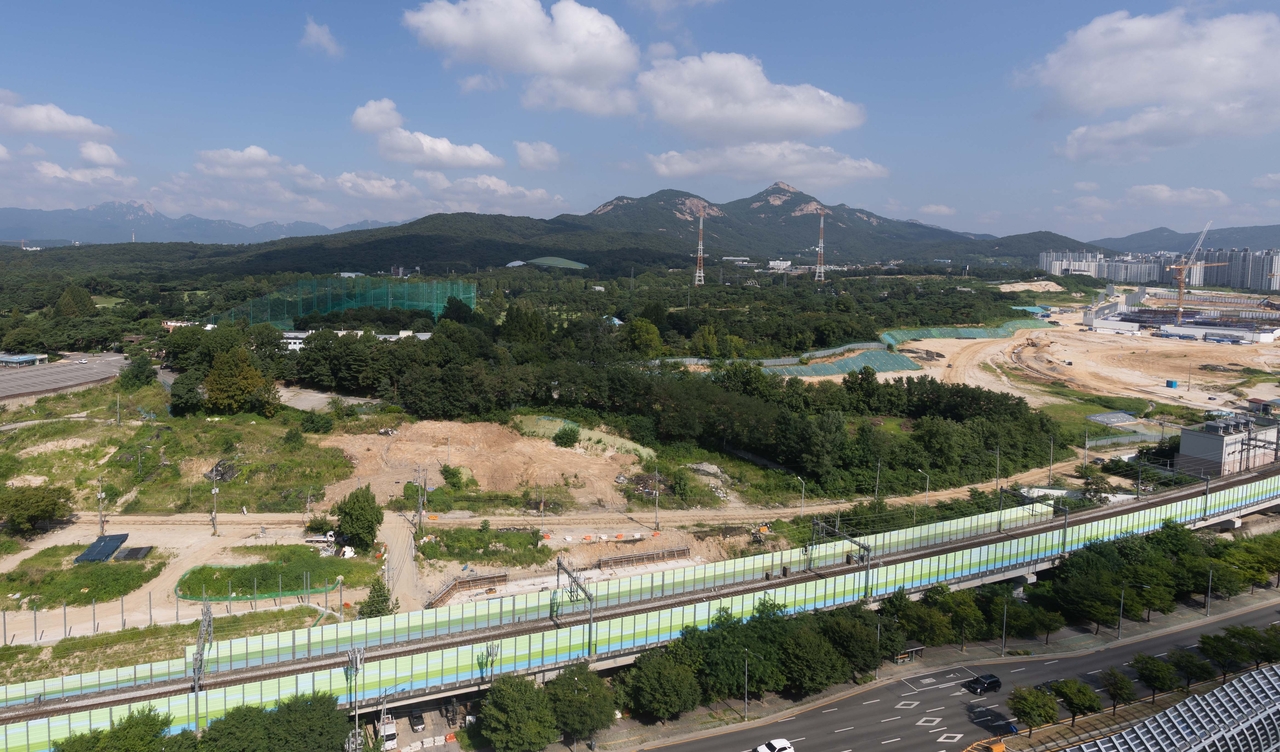
The government and the Seoul Metropolitan Government are at odds over traffic measures ahead of a planned housing supply at Taereung Golf Course in Nowon-gu, Seoul. Korea Land and Housing Corporation (LH), the project developer, is pressing ahead with follow-up procedures based on an existing metropolitan traffic improvement plan. Seoul, however, argues that roads linking Nowon-gu with Guri and Namyangju in Gyeonggi Province are already chronically congested and that a new, comprehensive transport expansion plan is needed to support the additional housing supply.
According to industry sources Thursday, LH posted a tender notice Tuesday for a traffic impact assessment of the Seoul Taereung public housing district. Earlier, on Oct. 21, LH also announced a design competition for an integrated urban-architectural plan, signaling that the project is picking up pace.
The traffic impact assessment is separate from the metropolitan traffic improvement plan. An LH official said a metropolitan traffic improvement plan drawn up in 2020, when the Taereung CC housing supply was first proposed, is already in place, and that the new study is intended to review traffic-related improvements in advance as part of the future district planning process.
Seoul, however, takes the position that traffic conditions around the Taereung CC development have changed — owing in part to large-scale nearby land development — and that the existing plan must be supplemented and renegotiated.
In an official communication sent Friday by Seoul's Road Planning Division to its Public Housing Division, the city stated that the Taereung CC project falls under metropolitan traffic improvement plan requirements under Article 7-2 of the Special Act on the Management of Metropolitan Area Transportation and Article 24 of the Special Act on Public Housing, and called for fresh consultations when a new metropolitan traffic improvement plan is drawn up.
A Seoul city official said traffic conditions have changed considerably since 2020 as large residential complexes have been built in nearby areas such as the Guri Galmae district, making it difficult to apply the old plan as-is. The official said the city believes the existing plan needs to be supplemented and redrawn to reflect the changed traffic environment.
The Taereung CC project site covers approximately 870,000 square meters, exceeding the 500,000-square-meter threshold that triggers the metropolitan traffic improvement plan requirement. The government has previously announced plans to supply 6,800 housing units in the area. Seoul's response does not amount to opposition to the district designation itself, but explicitly notes that additional consultations will be needed during the traffic planning process.
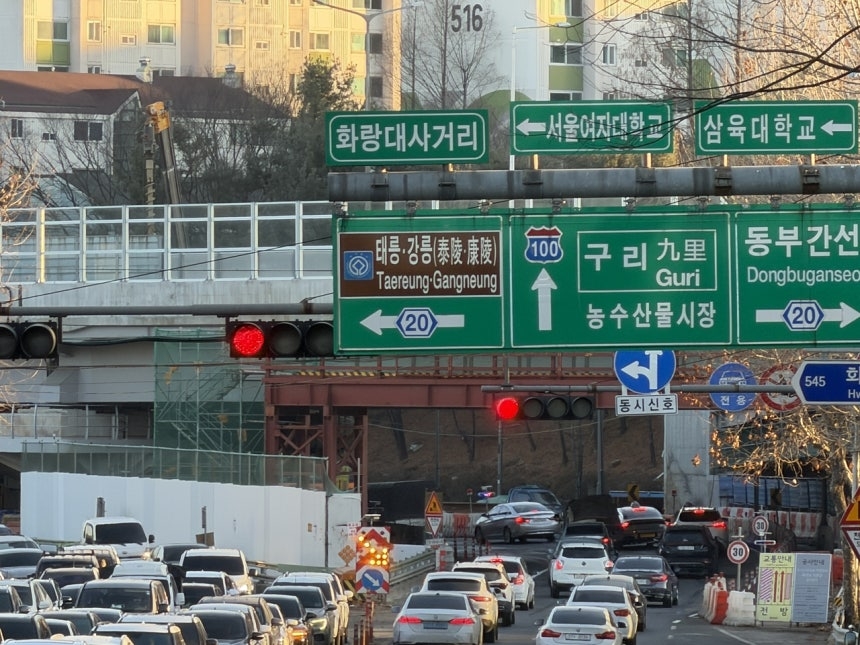
Traffic is one of the central issues surrounding the Taereung CC development. Hwarang-ro, which runs alongside the site, is a major artery connecting Nowon-gu in Seoul with Guri and Namyangju in Gyeonggi Province and is already prone to chronic congestion. Concerns have grown that additional housing supply will worsen gridlock, particularly as nearby land development — including the Byeollae and Dasan new towns in Namyangju and the Galmae district in Guri — has driven up traffic demand.
The government has also moved to address the issue. In February, the Ministry of Land, Infrastructure and Transport announced the formation of a consultative body on traffic improvement for rapid housing supply and said it would promptly resume a suspended metropolitan traffic improvement plan study for Taereung CC. When the government announced a plan in 2020 to supply 10,000 units at Taereung CC, it proposed widening Hwarang-ro, grade-separating Hwarangdae Intersection, expanding the Bukbu Arterial Expressway and introducing a new bus rapid transit line as traffic improvement measures.
In May, the ministry's Metropolitan Area Transportation Commission launched a research project on the metropolitan transport system covering the southern and eastern parts of the Greater Seoul area, including Taereung CC and Gwacheon Racecourse. The study aims to analyze usage patterns and congestion causes at major transport facilities, forecast future traffic demand, and examine improvement and financing options.
Local authorities are calling for more fundamental network expansion. Nowon-gu has called for widening road networks along Hwarang-ro and Nowon-ro and the Taereung–Guri IC section, introducing a branch line of subway Line 6, and building the Baeksa Tunnel between Nowon and Namyangju. Neighboring Guri has raised the need for a GTX-B stop at Galmae Station and construction of a new Galmae IC.
Beyond traffic, heritage preservation and greenbelt release have been major sticking points in the Taereung CC development, though recent procedural progress has cleared some of those hurdles. In May 2021, when Taereung CC was being considered as a housing supply candidate under the Moon Jae-in administration, Seoul asked the Ministry of Land, Infrastructure and Transport to reconsider the project from scratch, citing concerns over the greenbelt release.
In August this year, however, a World Heritage impact assessment for the Taereung CC development received conditional approval from the National Heritage Committee, and an exemption from the greenbelt release cap was also granted, easing some of the constraints on the project. Formal greenbelt release and remaining heritage-related procedures have yet to be completed.
The government plans to pursue district designation in March next year, district plan approval in the first half of 2028, and a ground-breaking in September 2029. As the housing supply schedule takes shape, whether transport infrastructure can be expanded in time for move-in is expected to be the key factor in the project's progress.
Park Hap-su, an adjunct professor at Konkuk University's Graduate School of Real Estate, said that if the nearby Taereung Athletes' Village and Korea Military Academy sites are also considered as development candidates, new housing supply could reach as many as 20,000 units, well beyond the current 6,800. Park added that given the scale of potential development, drawing up a metropolitan traffic improvement plan is essential, and that options such as adding new stations or extending subway Line 6 should be actively reviewed.
quq@heraldcorp.com