Average monthly rent climbs from 1.44 million won to 1.66 million won
Northeastern, southwestern districts lead gains at 16.2% and 16.1%
Monthly-rent contracts now account for more than half of all Seoul lease deals
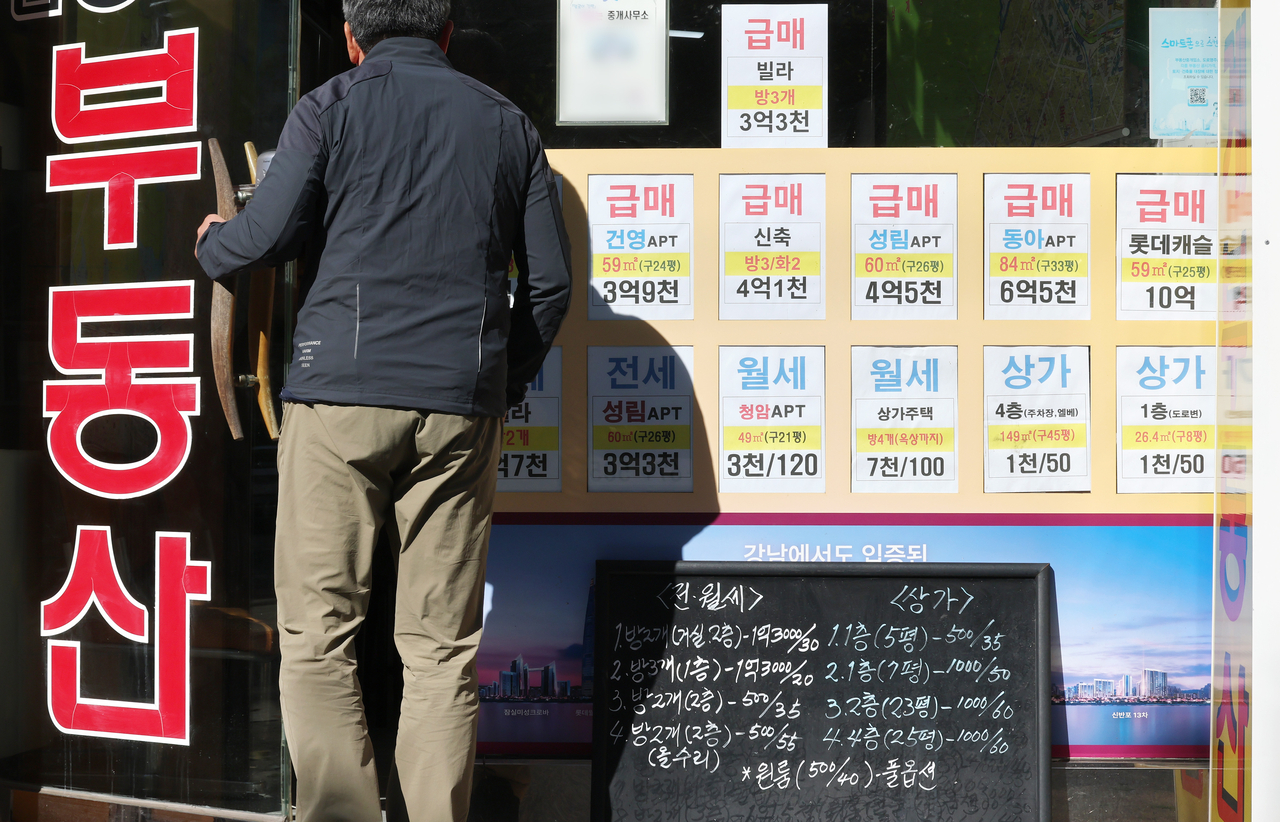
As rental costs continue to surge, average monthly rents for Seoul apartments climbed more steeply over the past year than jeonse deposits — with lower-priced outer districts bearing the sharpest increases, data show. The figures confirm a deepening housing burden for non-homeowning residents of modest means.
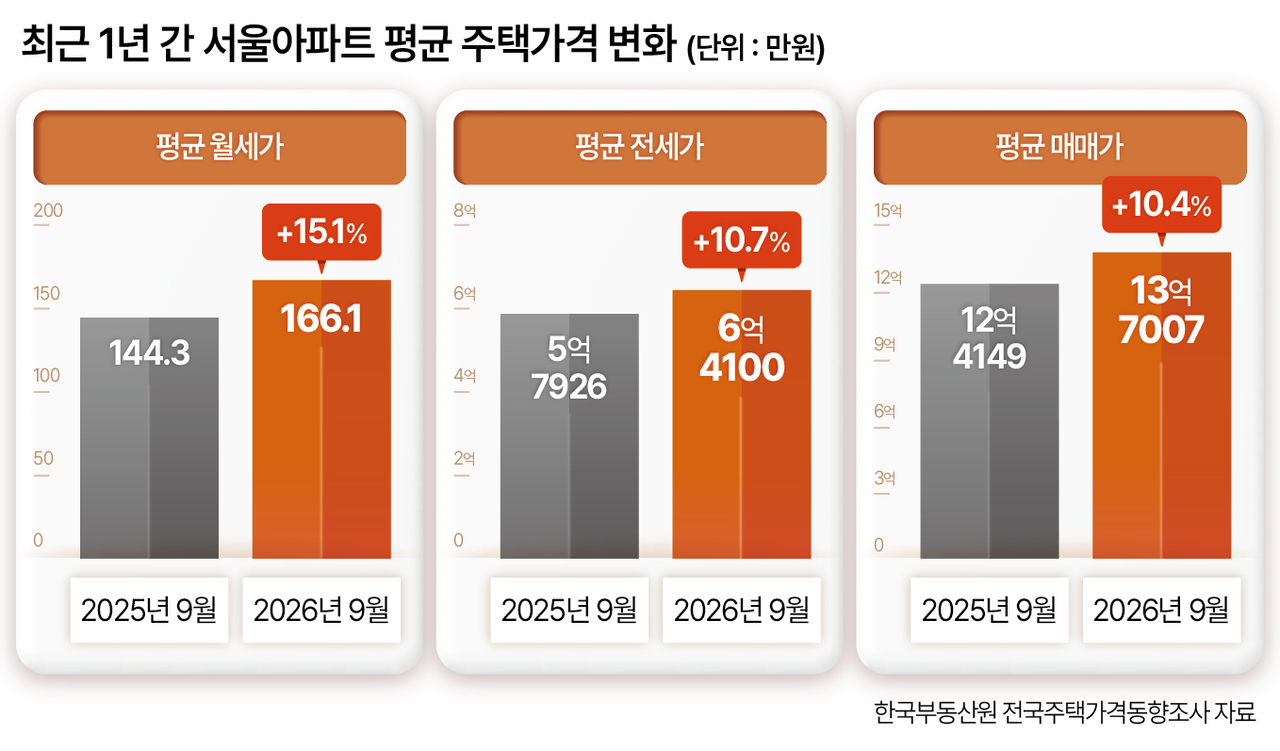
According to the Korea Real Estate Board, average monthly rents for Seoul apartments rose 15.1% in the year through September — from 1.44 million won ($1,080) to 1.66 million won — outpacing the 10.7% rise in average jeonse deposits over the same period, which moved from 579.26 million won to 641 million won. The monthly-rent increase also exceeded the 10.4% gain in average apartment sale prices, which rose from 1.24 billion won to 1.37 billion won.
The northeastern district cluster — encompassing Nowon-gu, Dobong-gu and Gangbuk-gu — posted the highest monthly-rent increase in Seoul at 16.2%, while the southwestern cluster of Geumcheon-gu, Gwanak-gu and Guro-gu followed at 16.1%. Both figures surpassed the average apartment sale-price gains in those same areas over the period: 14% in the northeast and 14.6% in the southwest. Monthly-rent increases in the remaining districts were 13.1% in the central zone, 14% in the northwest and 14.5% in the southeast.
Average jeonse deposits also rose most sharply in the northeastern cluster, up 12.9%. The average jeonse price there reached 508.46 million won in September, about 58 million won more than a year earlier at 450.48 million won. The southwestern cluster followed at 10.8%, with deposits rising from 485.71 million won to 538.35 million won. The southeastern cluster gained 9.7%, from 874.49 million won to 959.2 million won; the northwestern cluster rose 9.2%, from 526.72 million won to 575.12 million won; and the central zone increased 9.1%, from 704 million won to 768.38 million won.
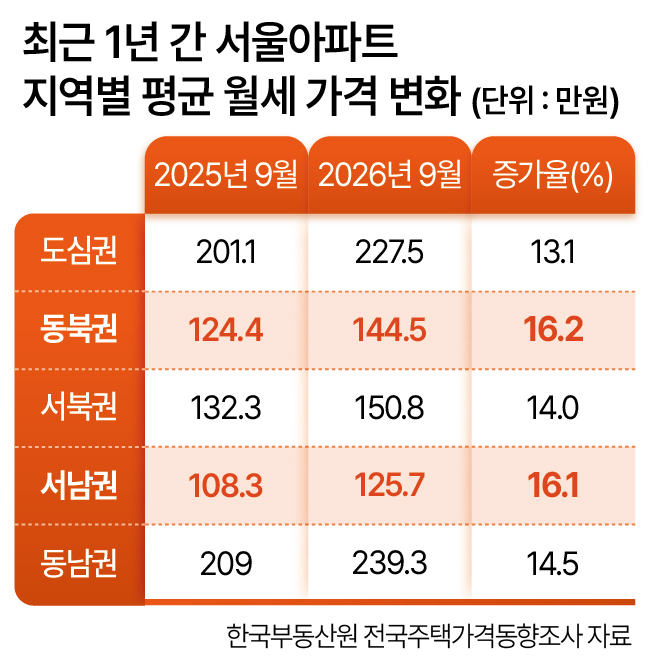
Housing prices in the northeastern and southwestern clusters are relatively low compared with the other three zones. As of September, the average monthly rent for apartments in the southwestern cluster stood at 1.26 million won — roughly half the 2.39 million won recorded in the southeastern cluster, which includes Gangnam. Yet the pace of rent increases in the lower-priced areas has been steeper, analysts say, deepening the housing-cost burden on lower-income renters without property.
By contrast, the average deposit component of monthly-rent contracts showed little movement, edging up just 0.6% across all districts over the past year — from 194.45 million won to 195.68 million won.
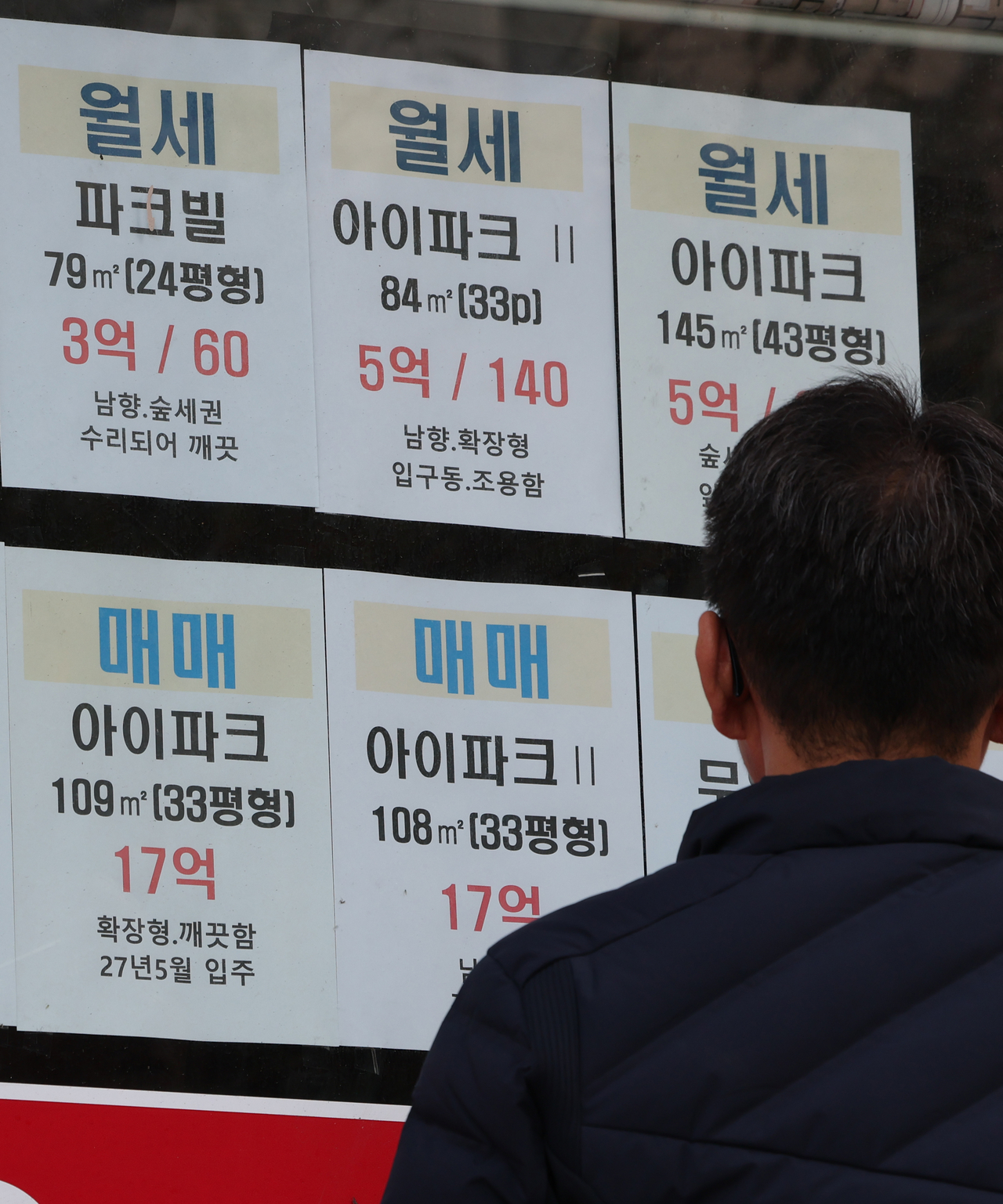
Industry analysts attribute the trend to a sharp drop in jeonse supply driven by a supply shortage and government policies favoring owner-occupancy, which pushed up jeonse prices. Tenants unable to cover the higher deposits have been making up the difference through monthly rent payments. Analysts say the shift goes beyond the conversion of jeonse to monthly rent — partial-jeonse arrangements are also increasingly converting to pure monthly rent. Outer districts are particularly exposed, as many tenants there already rely heavily on jeonse loans and cannot easily absorb deposit increases through additional borrowing.
The overheating in the monthly-rent market shows no sign of abating. According to Seoul Real Estate Information Plaza, monthly-rent contracts — including partial-jeonse arrangements — accounted for 50.9% of the 185,095 combined jeonse and monthly-rent transactions recorded in Seoul from January through October, exceeding half for the first time. If the trend holds, monthly-rent deals are on track to surpass 50% on a full-year basis for the first time since records began.
Kim Hyo-seon, a senior real estate specialist at KB Kookmin Bank, said the impact is amplified in outer areas because the absolute level of monthly rent there is lower than in the Gangnam area, meaning the same nominal increase hits harder in relative terms. "In an environment where jeonse prices are rising and loan restrictions have tightened, paying more in monthly rent rather than increasing the deposit could become the new normal for lease contracts," Kim said.
Nam Hyeok-woo, a real estate researcher at Woori Bank, said the increases likely reflect the full accumulation of rent hikes being applied at once when contracts come up for renewal after the statutory protection period ends. Nam also warned that as new rental demand in Seoul is being pushed out toward Gyeonggi Province and Incheon, areas adjacent to Seoul could also begin to see a decline in available jeonse and monthly-rent listings.
hope@heraldcorp.com