Govt. unveils plan for 76,700 units across greater Seoul
Gochon-eup site spans about 3.65 million square meters
Landowners cheer end to decades of greenbelt restrictions
National Route 48, Gimpo Gold Line congestion remain hurdles
"Gochon has been tied up in the greenbelt for so long that landowners couldn't exercise their property rights. Some of them had real pent-up resentment over it — when they saw this announcement, they said they finally felt free."
— Head of real estate agency A in Gochon-eup, Gimpo, Gyeonggi Province
The local real estate market in Gochon-eup, Gimpo, Gyeonggi Province, has been buzzing since the government announced plans to develop a new public residential site with 37,000 housing units in the area. Landowners who had been locked out of development for years were broadly welcoming the news. The key challenge going forward, however, will be resolving the area's already serious traffic congestion.
The Ministry of Land, Infrastructure and Transport announced Thursday, as part of its second regular housing supply briefing, a plan to provide a total of 76,700 units across six new public residential sites in the greater Seoul metropolitan area. The Gimpo Ara district is the largest of the six. The government plans to build 37,000 units on a roughly 3.65-million-square-meter site in Gochon-eup, Gimpo.
Real estate agencies in Gochon-eup visited Thursday afternoon were busy fielding a stream of inquiries following the announcement. In one office, the phone rang four times in the span of about 15 minutes. Some callers were prospective buyers asking to be contacted if any distressed listings came up.
The head of real estate agency B said calls were so relentless that "the navigation audio couldn't be heard over the ringing" while driving. Most callers were sellers, not buyers, asking whether their land was included in the acquisition zone, the agency head added.
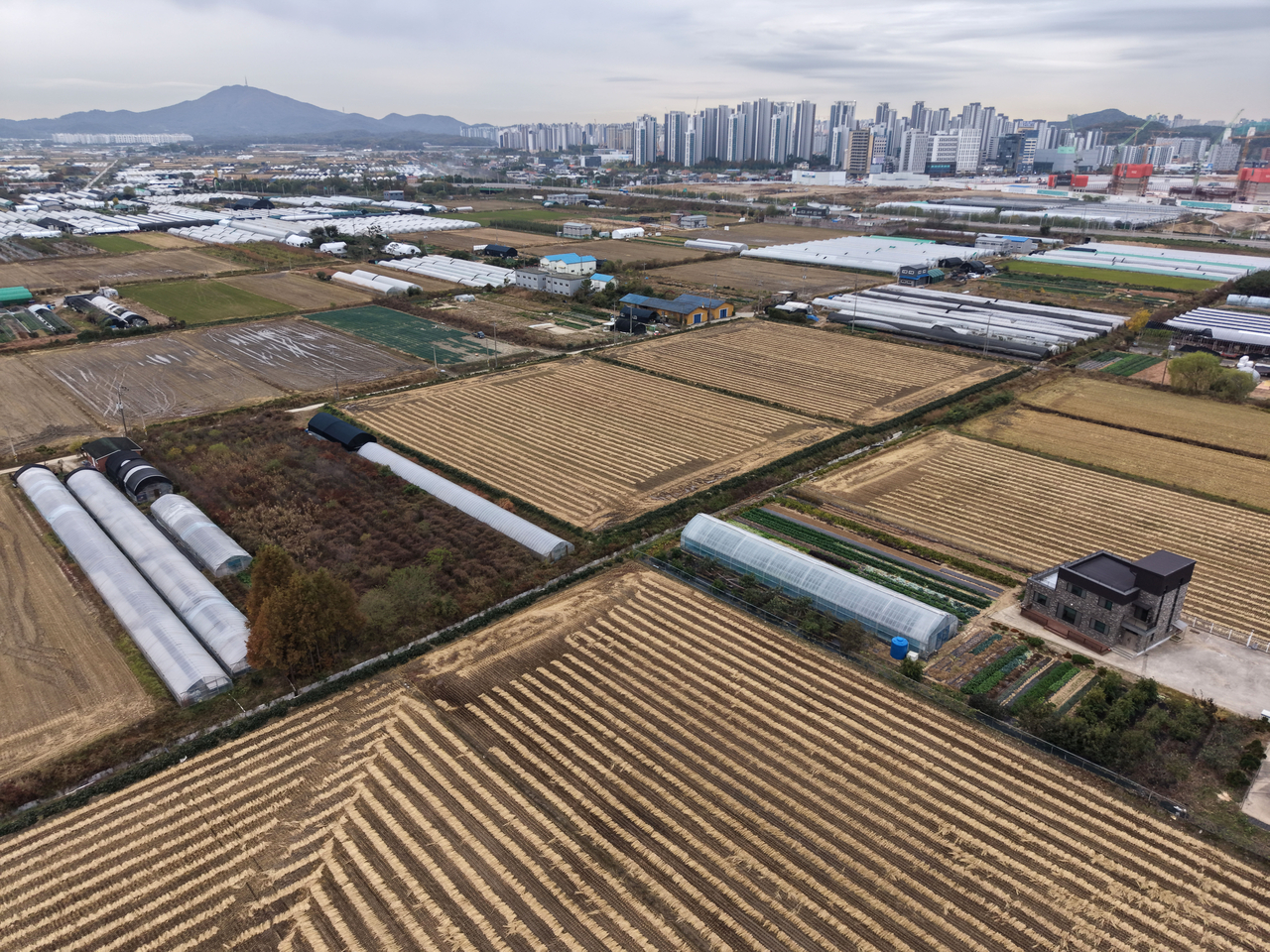
The Gimpo Ara district has locational advantages: it borders Gangseo-gu in Seoul and sits along the Han River. The government envisions improving Seoul access by linking the site to the planned extension of Seoul Subway Line 5 to Gimpo and Geomdan, while also developing the area as a self-sufficient city connected to nearby industrial complexes. The government aims to break ground in 2030 after completing the necessary procedures for district designation and land compensation.
On the ground, anticipation was palpable among landowners who had long waited for development. The head of agency B said roughly 70 to 80 percent of the area is farmland, and that landowners had been "completely stuck" amid recent comprehensive farmland inspections and tightening regulations. "Farmers have been struggling, but knowing the land will now be acquired, I think they'll find the strength to hold on," the agency head said.
Gochon-eup has come up as a development candidate several times in the past. Despite its position as a gateway to Seoul, development plans repeatedly fell through, leaving landowners cycling through hope and disappointment. The head of agency A said this feels like the third or fourth time development has been discussed. "Every time, we got our hopes up and were let down — many landowners are just relieved it's finally happening," the agency head said.
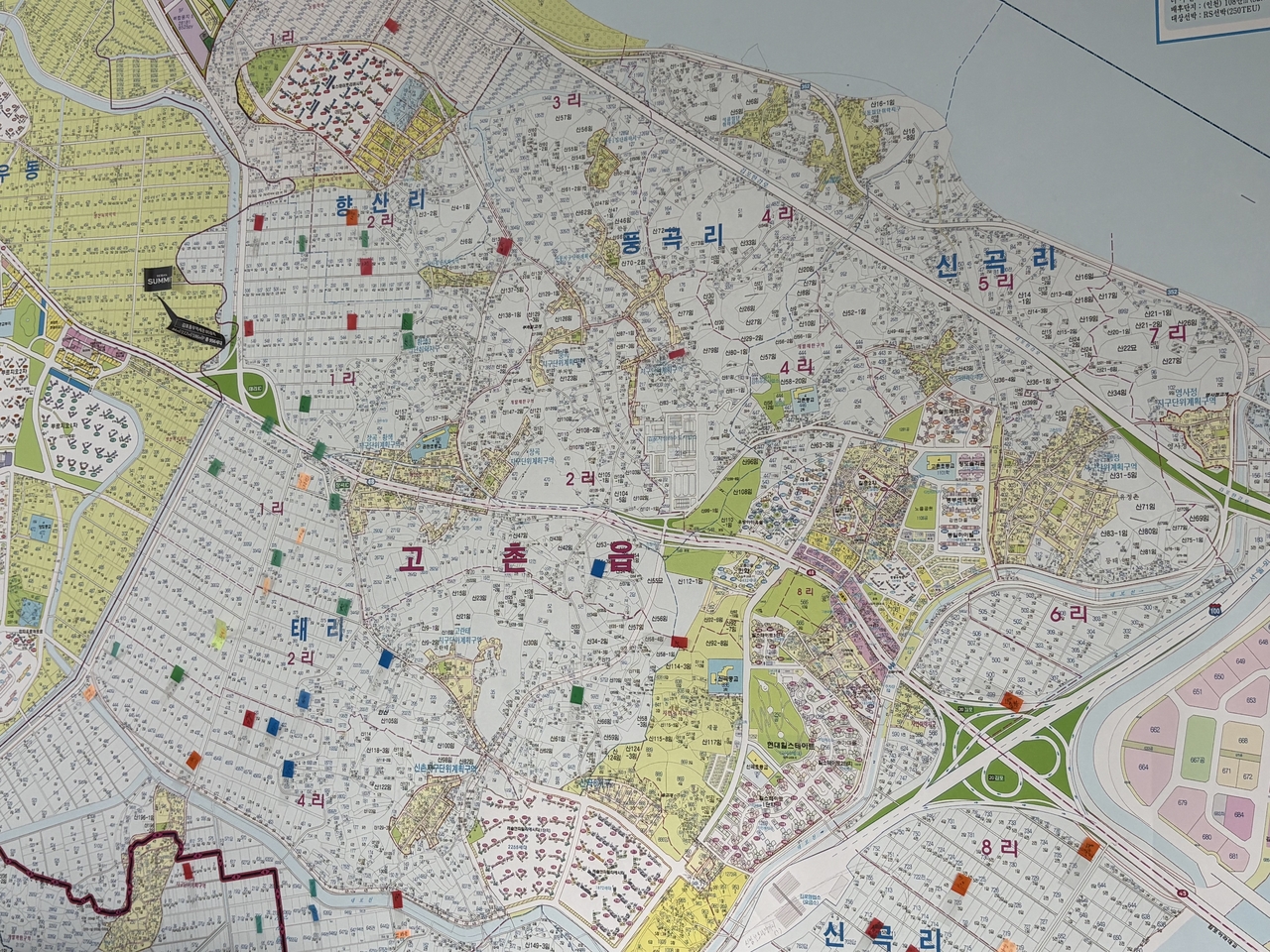
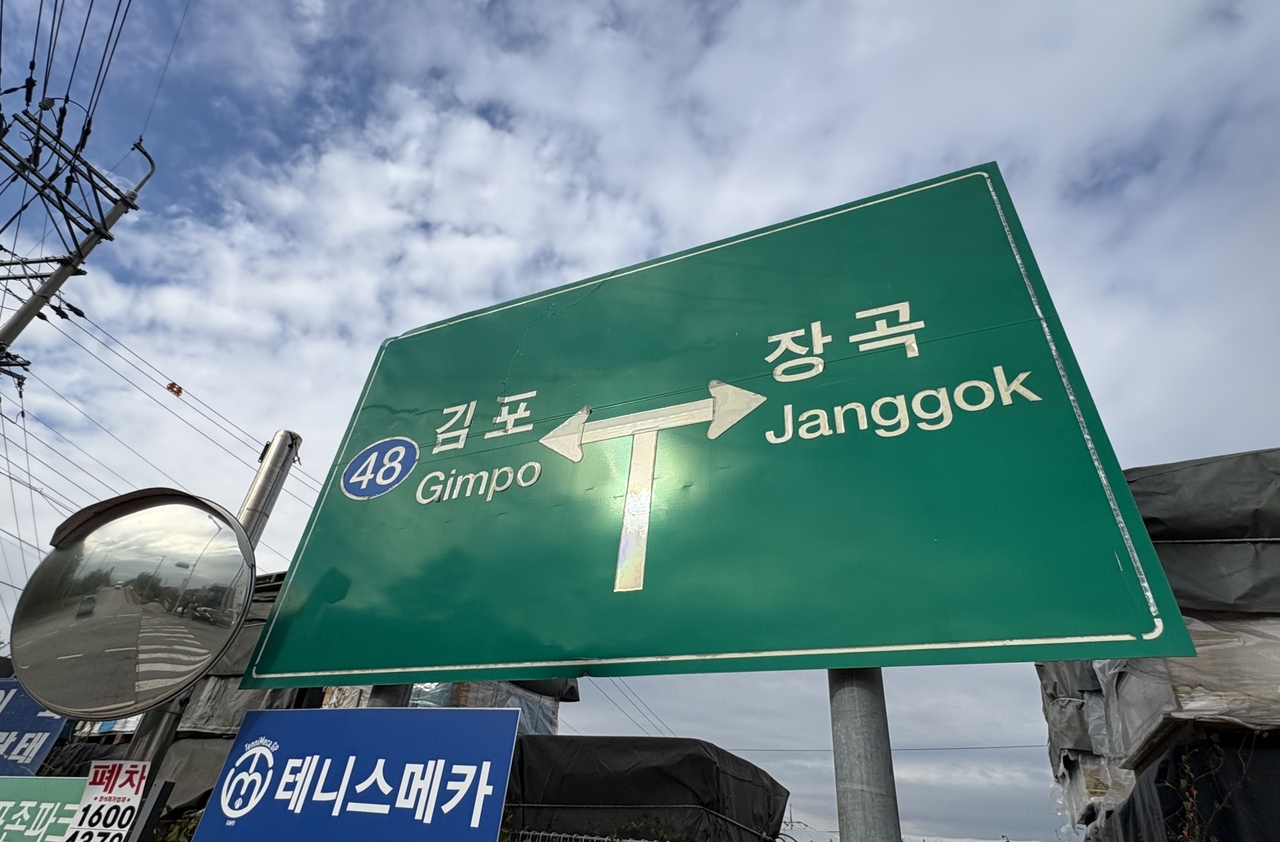
Some in the area were surprised by which land was included. The head of agency B said the expectation had been that the area south of National Route 48, where land is relatively cheaper, would be developed. "Instead, the more expensive land to the north was included — I think it was a decision made with the Line 5 extension in mind," the agency head said.
There is also a view that a new-town-scale complex on the site could help absorb Seoul housing demand. The head of agency B said Gochon-eup is "practically part of the Gangseo-gu living zone," making it convenient to reach Magok and Yeouido. "Apartments in Magok go for 2 billion won ($1.5 million), so if new units here are priced in the 700 million to 800 million won range, quite a few people would consider making the move," the agency head said.
Land prices in the area had fallen in recent years amid a real estate downturn and sluggish transactions. Farmland with completed land consolidation had traded at 1.3 million to 1.4 million won per 3.3 square meters three to four years ago, but distressed asking prices have dropped to around 800,000 won this year.
The head of agency A said asking prices are around 900,000 won per 3.3 square meters, but buyers had been dismissing even that as too expensive. "Looking at the listings on real estate sites, I can already see some sellers starting to pull their properties," the agency head added.
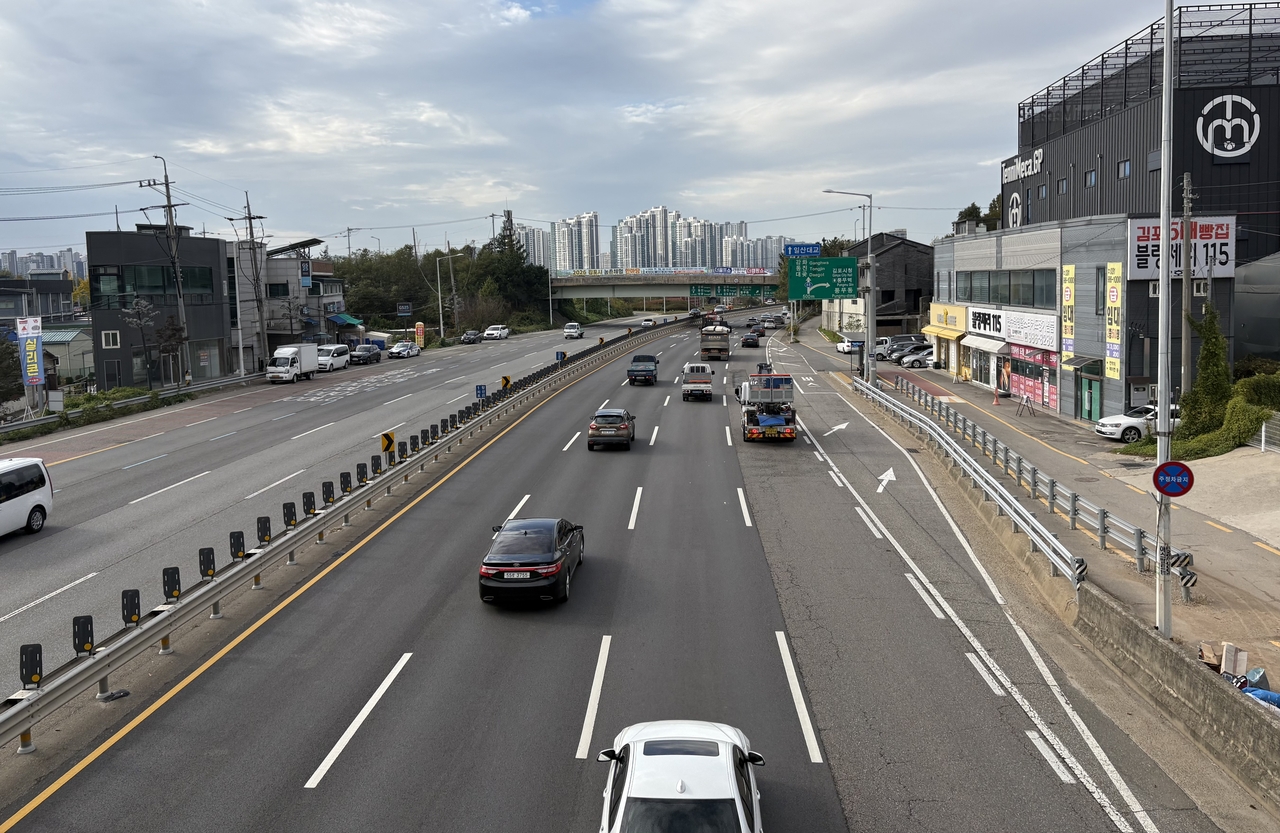
The central challenge is building the transport infrastructure to support a large-scale housing supply. Regional transit networks tend to lag behind land development. National Route 48, the main road connecting Gimpo to Seoul, and its link to the Olympic Expressway already suffer serious congestion during rush hours. The Gimpo Gold Line subway is also notorious for overcrowding.
The head of agency C said the roughly 4-kilometer stretch from Singok intersection to in front of Pungmu-dong normally takes about 10 minutes, "but during rush hour it takes 20 to 30 minutes." Widening the road would do little good, the agency head said, because traffic backs up at the Olympic Expressway entry point regardless — "and it's already eight lanes."
Annual boardings and alightings at Gochon Station on the Gimpo Gold Line have consistently risen, from 3,534,218 in 2023 to 3,747,779 in 2024 and 3,848,322 in 2025. In the first nine months of this year, the figure reached 2,925,541, up 1.5 percent from 2,882,809 in the same period last year.
The head of agency B said it is unclear whether a Line 5 extension alone would be sufficient given that 37,000 additional households would be moving in. "Adding subway stations or expanding express bus routes — the transit network as a whole needs to be improved," the agency head said.
Experts said the Line 5 extension would help ease congestion, but stressed that expanding transit infrastructure in time for residents to move in is critical. Kim Jin-yu, a professor in the department of urban and transportation engineering at Kyonggi University, said the Gold Line's current overcrowding is partly driven by passengers transferring to Line 5, and that extending Line 5 "would resolve a significant portion of the traffic problem."
Kim added that rail projects take a long time due to negotiations among multiple local governments and route adjustments. "Road widening is also difficult, so the key is having the rail network in place by the time residents move in," Kim said.
Kim described 37,000 units as "a substantial supply volume and a desirable direction in the long run," but cautioned that stabilizing the Seoul market would not be easy, given the large pool of Gyeonggi Province residents waiting to move into Seoul and the accumulated supply shortfall over the years.
shy@heraldcorp.com