Jeonse prices in Guri and Hanam up more than 10% this year, outpacing Seoul
In one 1,500-unit complex, zero jeonse listings — prices jumped 150 million won this year alone
Locals skeptical: 'The supply sites are far from where people actually live'
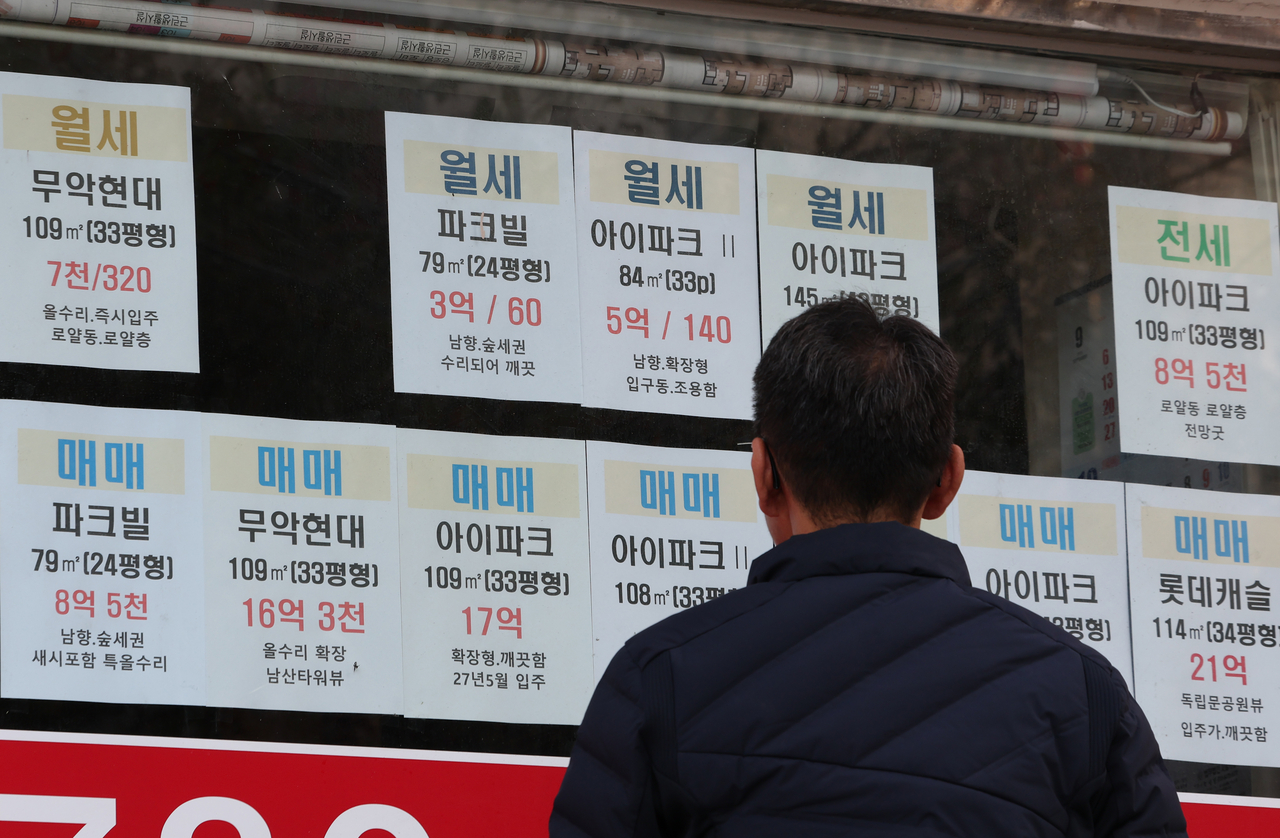
My fiancée works in Guri, Gyeonggi Province, so I've been looking for a jeonse place in that area. I called the moment a listing went up, and they told me I was 11th in line. I managed to get a viewing appointment with great difficulty, only to hear that the first person who saw it had already signed a contract. That's happened to me five times now.
— K, 34, a prospective groom
Despite the government's announcement of a plan to supply 104,000 homes across the greater Seoul area, young renters are finding little immediate relief from the jeonse and monthly rent crunch. In Guri and Hanam in Gyeonggi Province — areas with high housing demand among people in their 20s and 30s and newlywed couples — jeonse prices are rising sharply and listings have all but dried up, deepening housing insecurity. The government has pledged to build roughly 33,000 new homes across the two cities, but concerns are growing that actual move-ins remain years away, making any near-term stabilization of the rental market unlikely.
Jeonse prices rising faster than Seoul in Guri and Hanam — 'The first viewer takes it'
Among the new housing supply sites the government announced Thursday, Hanam and Guri in Gyeonggi Province are both designated regulated zones — speculative overheating districts and adjustment target areas — reflecting their high housing demand and pronounced price increases. The government plans to supply a total of 33,100 units: 14,600 in Guri's Geonwon district, 12,000 in Hanam's Misa district and 6,500 in Hanam's Gamil district.
Minister of Land, Infrastructure and Transport Hong Ji-seon said at Thursday's announcement that the government plans to supply housing "in areas with good access to city centers that young people and newlywed couples prefer." The plan is understood to involve lifting greenbelt designations in the regulated zones to promote housing stability.
According to the Korea Real Estate Board's weekly apartment price trend data, apartment sale prices in Hanam and Guri rose 13.97 percent and 13.46 percent, respectively, as of Monday. The two cities have established themselves as the most sought-after residential areas in the eastern greater Seoul area, benefiting from their proximity to Gangnam and expectations of expanded transportation links.
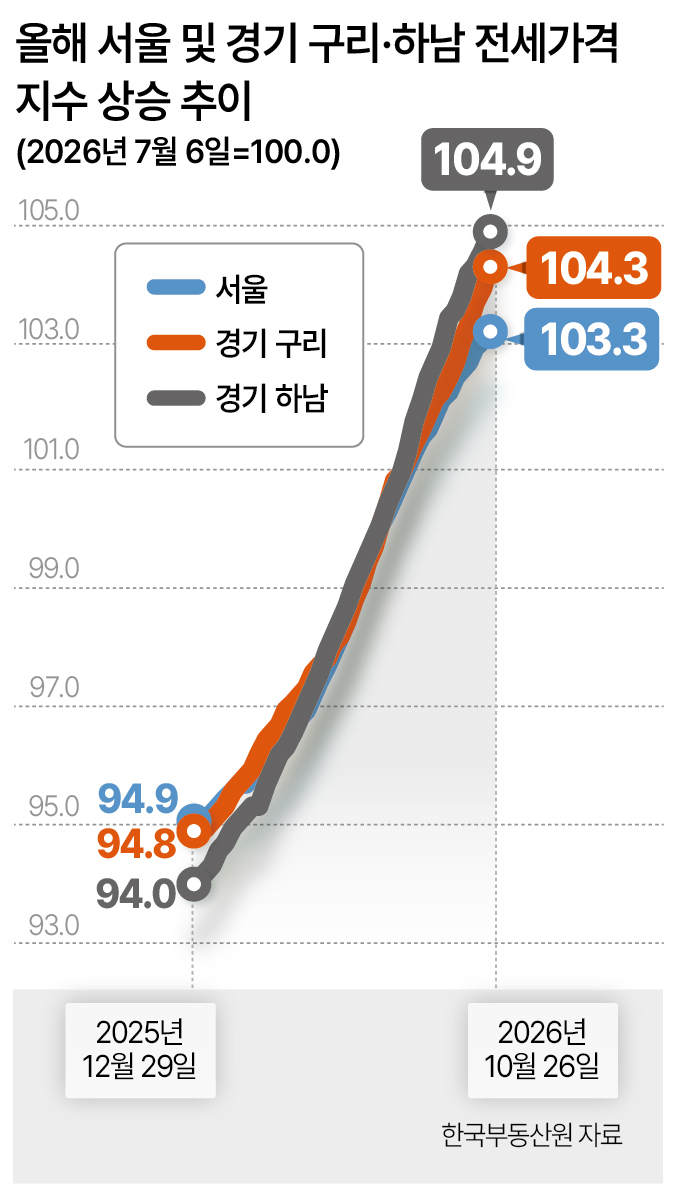
The rental market tells an even more alarming story. Hanam and Guri posted cumulative jeonse price index gains of 11.62 percent and 10.03 percent, respectively, this year — both outpacing Seoul's overall increase of 8.91 percent. Within Gyeonggi Province, the two cities ranked fifth and sixth, trailing only Gwangmyeong (14.98 percent), Hwaseong Dongtan (14.86 percent), Yongin Giheung (12.97 percent) and Suwon Yeongtong (12.13 percent).
On the ground, finding a jeonse home has become nearly impossible. Young renters and newlywed couples who need to live near specific areas because of work or commuting conditions are effectively limited to transit-oriented apartments — but listings have vanished, and the few that do appear carry steep price tags.
Inchang Jugong Complex 6 in Inchang-dong, Guri, is a large development of 1,018 units, yet it currently has zero jeonse listings. The 1,408-unit Inchang Jugong Complex 4 is similarly bare. The rare listing that does surface has come at a sharply higher price. Until early this year, a 59-square-meter unit could be leased for around 300 million won ($225,000), but since September the price has climbed to 450 million won — a jump of 150 million won in less than a year.
The situation is no different near Misa Station in Hanam. The Misa Gangbyeon Golden Centro complex — a large development of 1,541 units right next to the station — has just one jeonse listing, a 59-square-meter unit. That same unit type set a record in June when a lease was signed at a deposit of 600 million won, yet the current listing is priced at 700 million won, 100 million won higher.
The head of a real estate agency in Hanam said jeonse listings are snapped up the moment they appear. "Calls flood in for a single listing, but in most cases the first person to view it signs the contract," the agent said.
Move-ins no earlier than 2033 — locals say supply sites are far from daily life
Whether the government's supply measures can ease the rental market's instability in the short term remains uncertain. Even after new housing sites are designated, actual move-ins require completing district planning, land compensation, site preparation and construction. The government has set a target of breaking ground by 2030 and completing move-ins by 2033, but analysts say the supply effects will take even longer to filter through to the rental market.

Experts say the shortage of rental listings in existing housing stock will persist until the new homes are actually delivered. An announcement of supply alone, they argue, is not enough to ease the housing anxiety felt by young renters searching for jeonse homes right now.
A licensed real estate agent in Guri said there had not been a single inquiry about the newly announced supply plan. "The sites seem to be generating little interest because they are some distance from the areas where daily life is concentrated — near Guri Station and Jangjahosugongwon Station," the agent said.
Lee Eun-hyeong, a construction policy research fellow, noted that the third-generation new towns first announced in 2018 took eight years to see their first move-ins. "This new housing site announcement should also be viewed as having a long-term rather than short-term stabilizing effect on the market," Lee said.
Ham Young-jin, head of the real estate research lab at Woori Bank, said the measures are better suited to easing medium- to long-term concerns about supply shortages and calming market anxiety than to immediately stabilizing apartment sale prices or jeonse and monthly rent levels in Seoul. "To address the immediate instability in the jeonse and monthly rent market, the government needs to pursue not only new housing site supply but also urban redevelopment projects, public rental housing and non-apartment housing supply in parallel," Ham said.
hss@heraldcorp.com