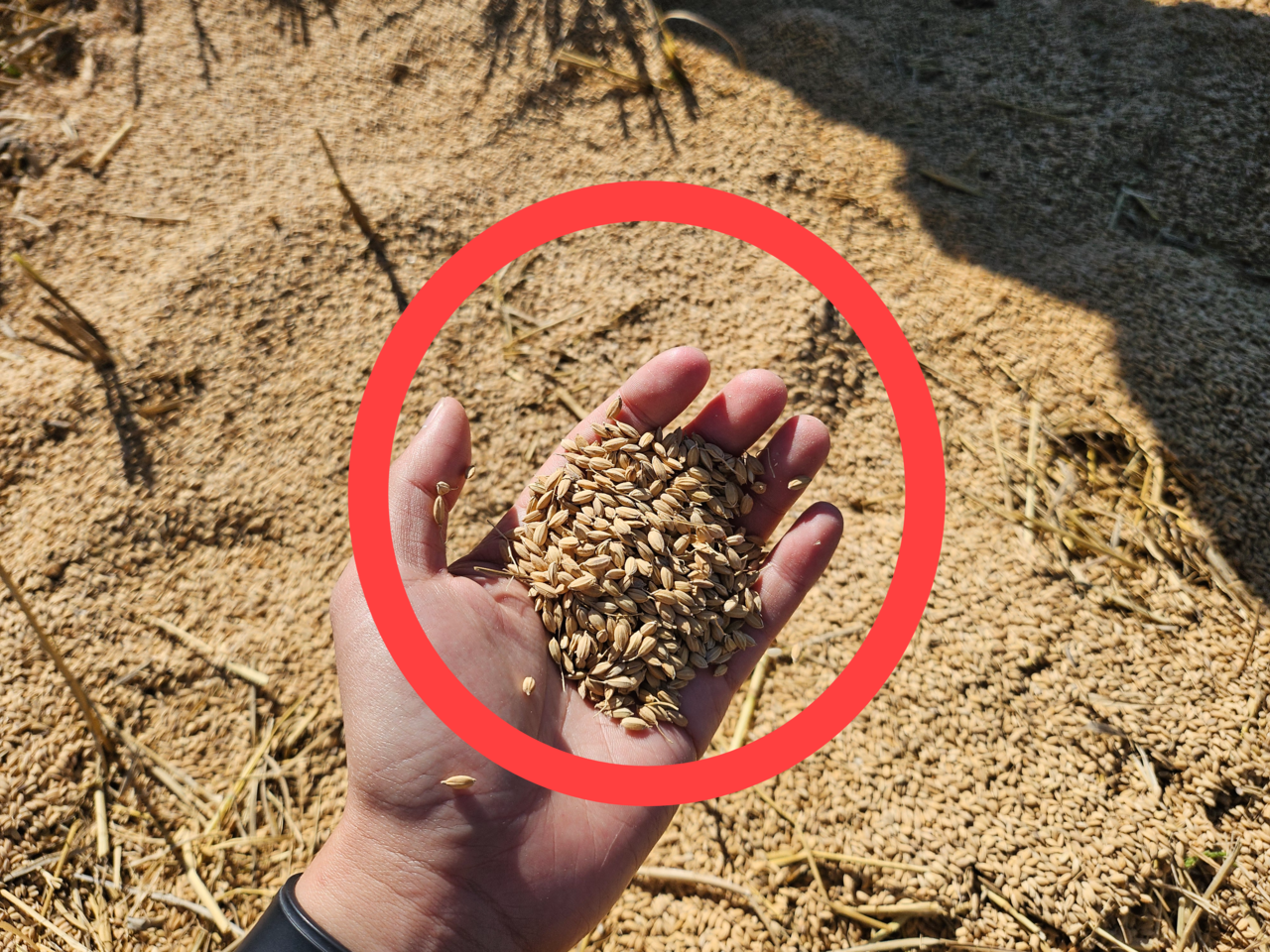
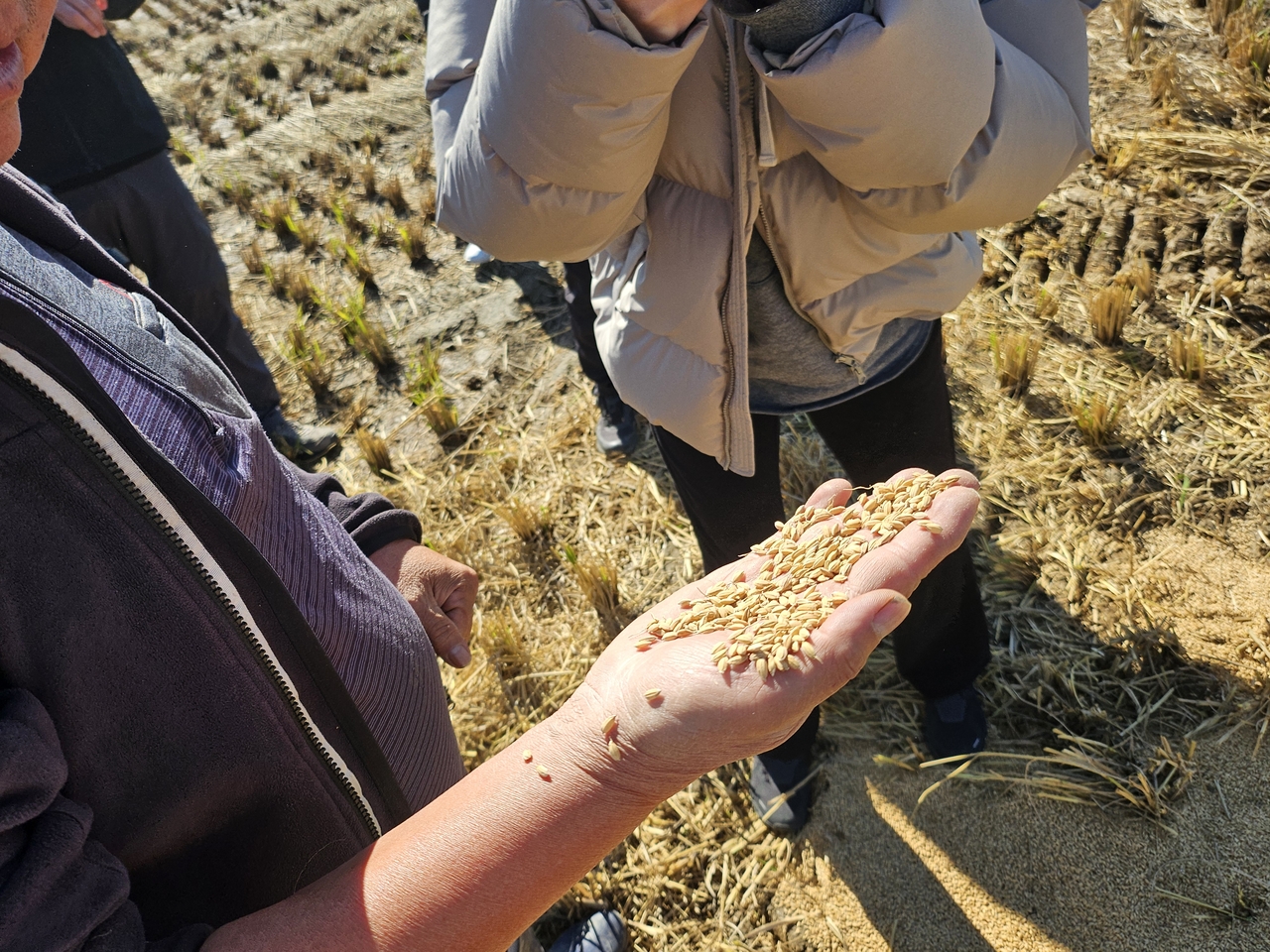
"All of this is food," a farmer said.
In a rice paddy inside the Civilian Control Zone in Cheorwon-gun, Gangwon Province, grain scattered across the ground marked the path of a harvesting machine.
The sight defies common sense. This is harvest day — the culmination of nearly a year of careful cultivation. Any farmer would want to collect every last grain. Yet perfectly good kernels were being left on the ground.
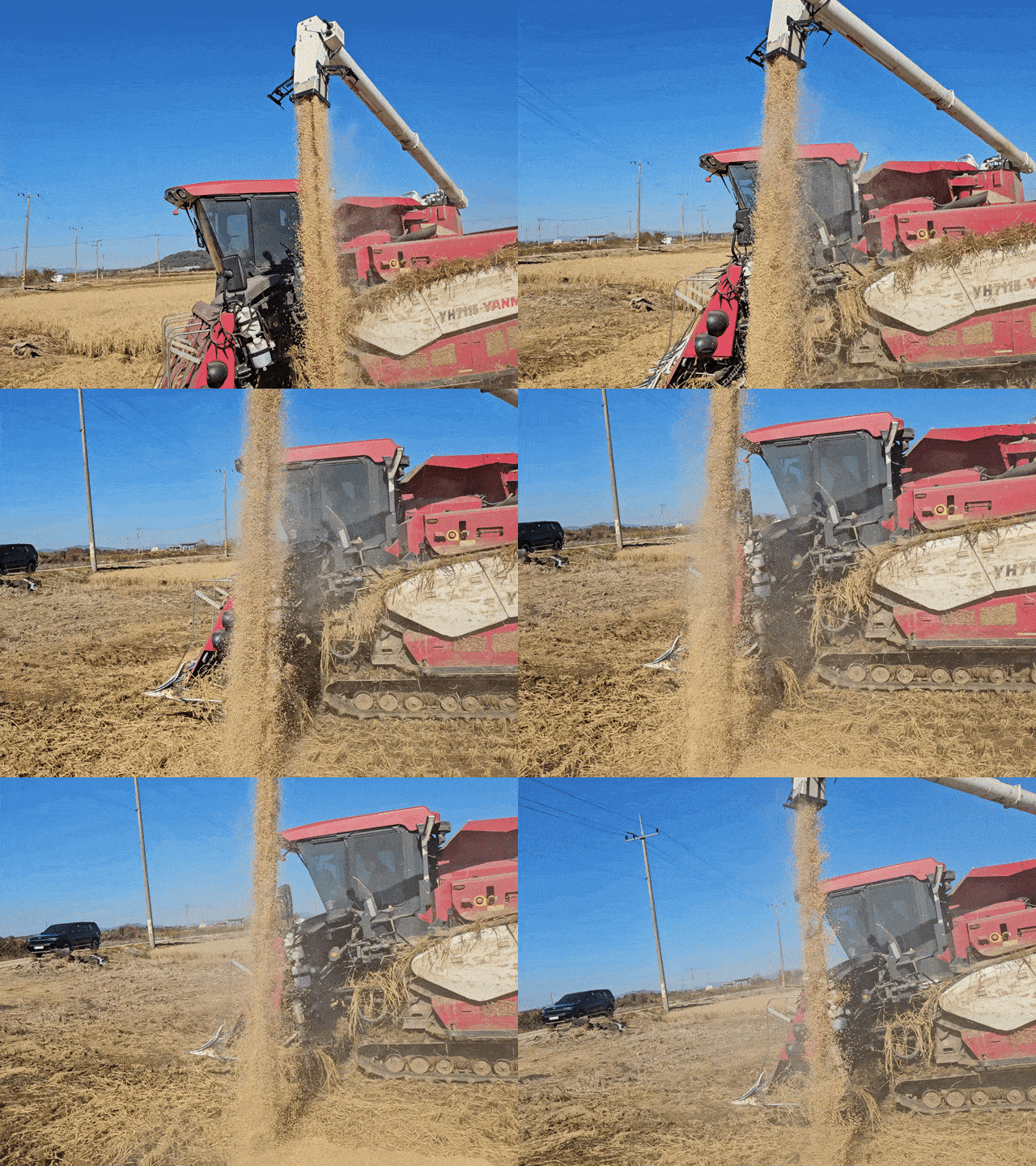
What was striking was that no one seemed to mind. A farmer at the scene picked up some of the fallen grains and said, "All of this becomes food."
Food for whom? The answer is the red-crowned crane, a natural monument. Every winter, the farmers lay out a special spread for the migratory guests that return to the Cheorwon Plain.
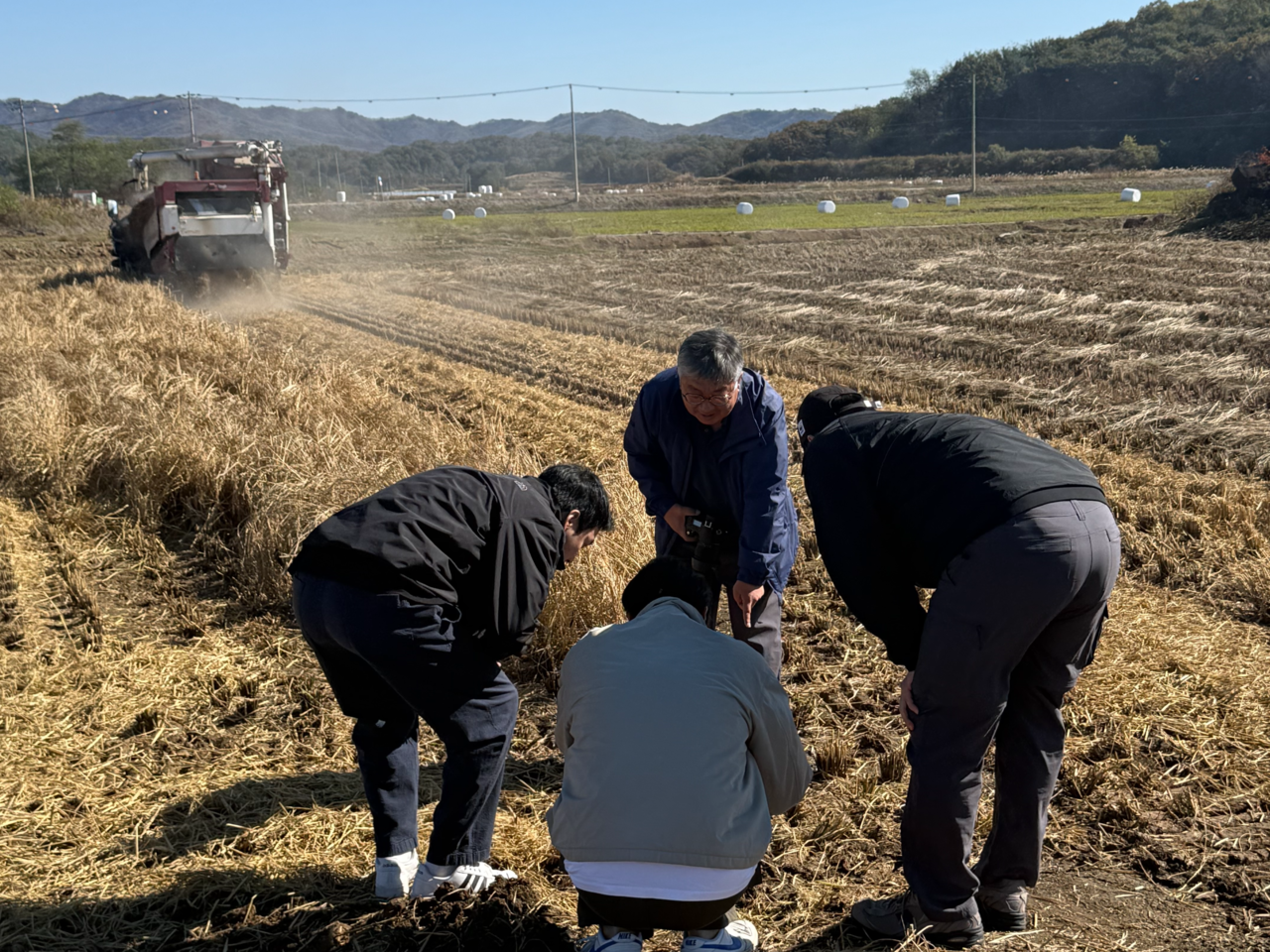
At first glance, it looks like farmers absorbing a loss to feed wild animals — something critics might call a waste of food. But this arrangement is not built on anyone's sacrifice.
South Korea's rice output already exceeds domestic demand, to the point where the government has been adjusting the area under cultivation. Rather than abandoning their fields, these farmers found a new use for what they grow: feeding an endangered species.
The farmers keep working the land and receive financial compensation; the cranes gain a reliable food source and habitat. The arrangement is also expected to raise the region's ecological and tourism value.
Cranes return to Cheorwon: 'A sight found nowhere else on Earth'
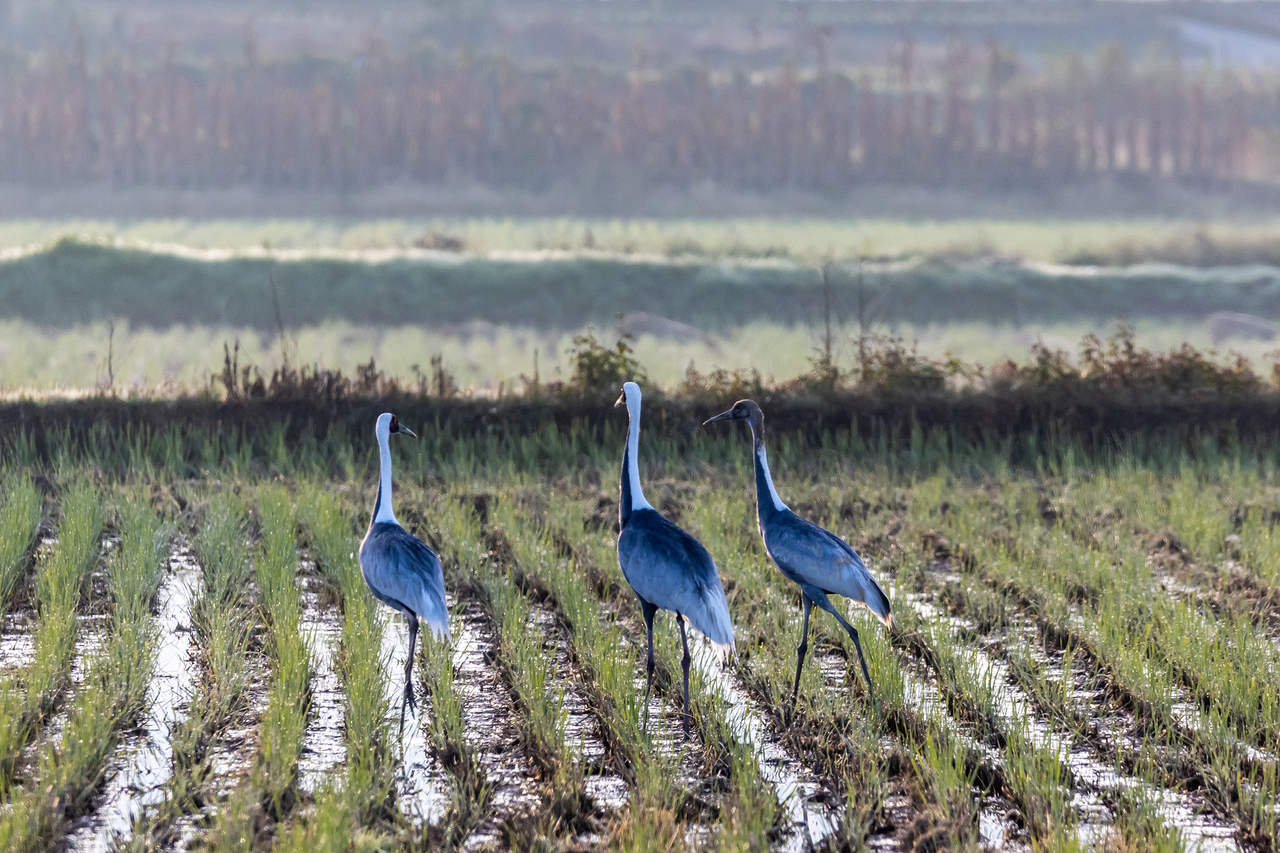
On Saturday, a visit to the crane food-rice preservation project site — a paddy inside the Civilian Control Zone in Cheorwon-gun, Gangwon Province, where the World Wide Fund for Nature (WWF) is working alongside the Cheorwon Crane Management Council — revealed a family of white-naped cranes that had arrived ahead of the main winter flock.
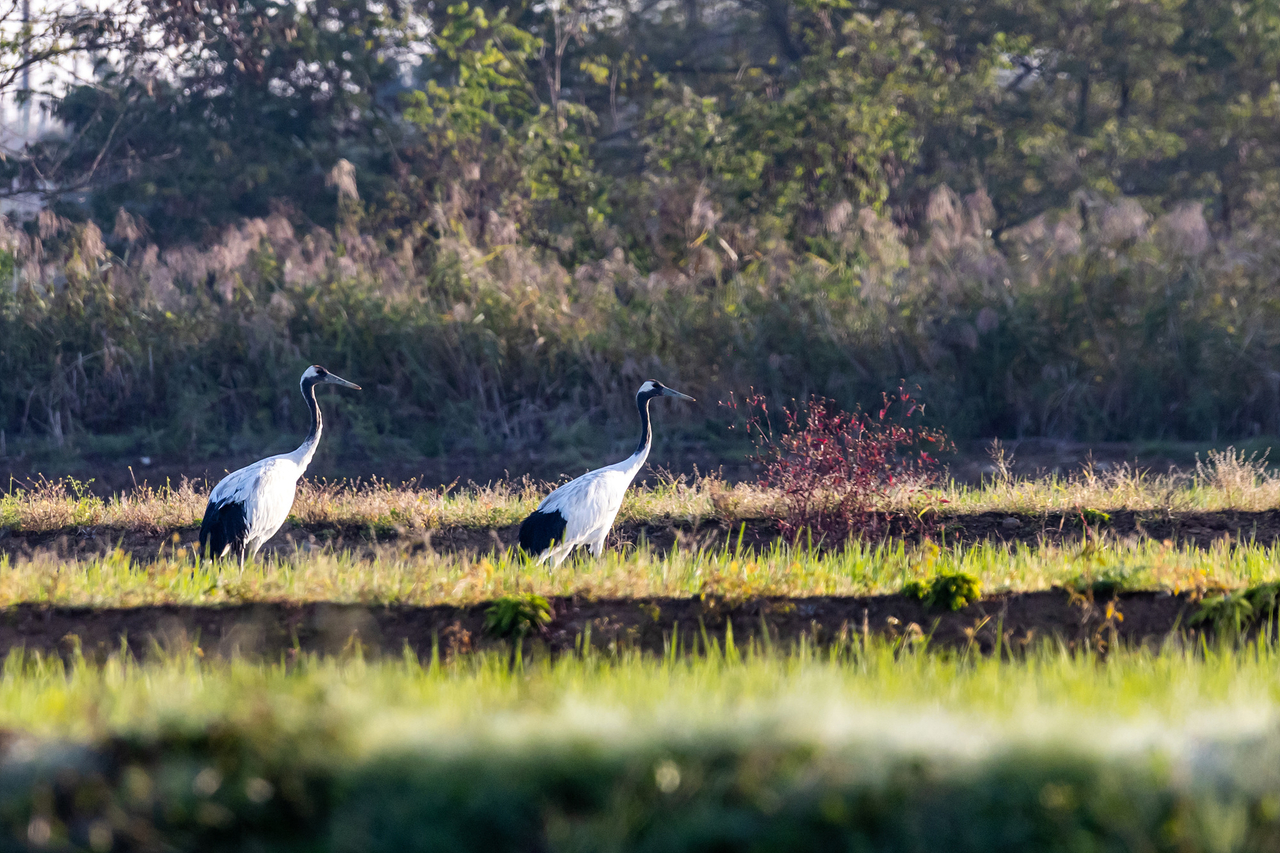
Cranes are a familiar symbol in Korea, yet genuinely rare in the wild. With a white body, black neck and a patch of bare red skin on the crown, the bird stands about 150 centimeters tall. Long known in Korean as "hak," it has been revered for centuries as a symbol of longevity and peace.
The reality, however, is far from peaceful. The red-crowned crane is designated a Class I endangered wild species — the highest protection rating in South Korea — and is also a natural monument. Only a few thousand remain on the entire planet.
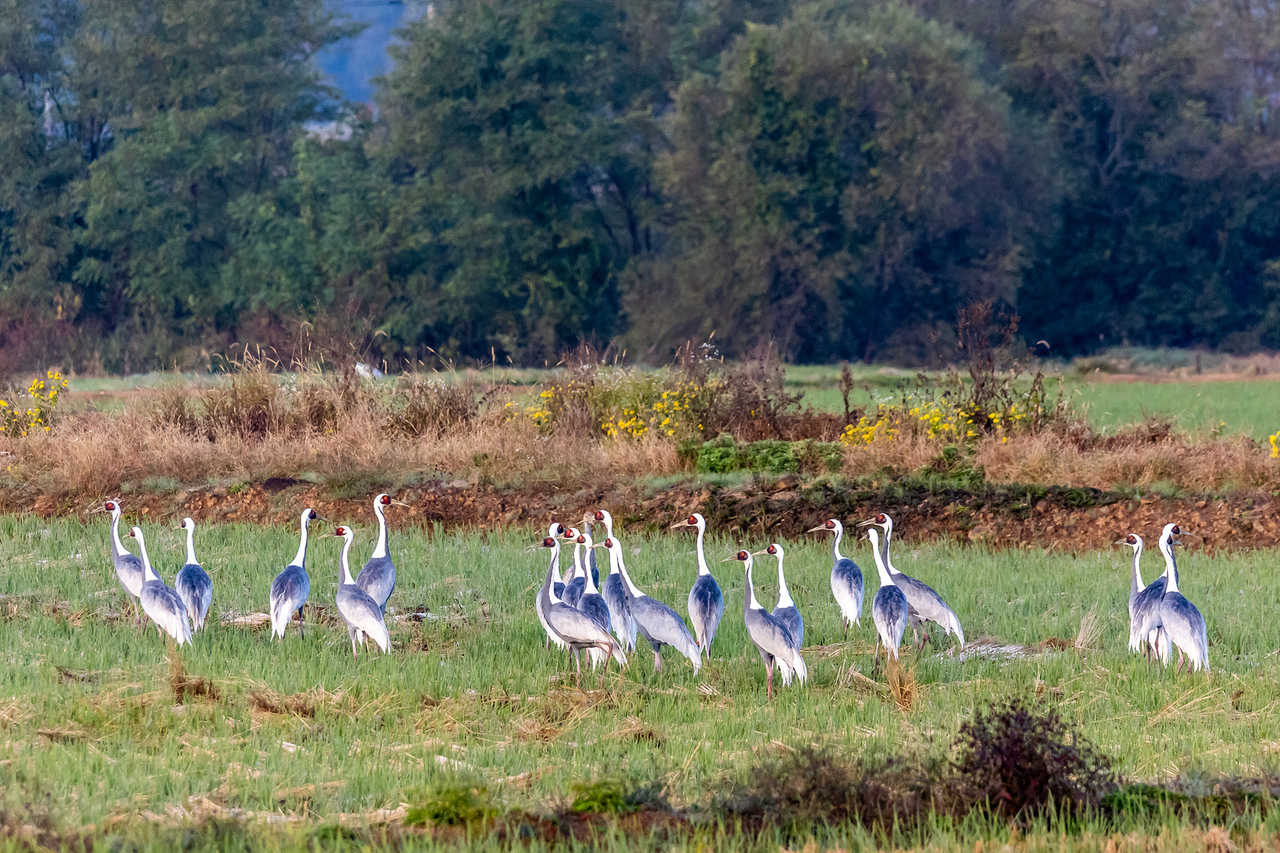
The white-naped cranes that appeared that day are in a similarly precarious position. Recognizable by the red bare skin around their eyes, gray bodies and white patches at the back of the neck, they are classified as Class II endangered wild species in South Korea, designated natural monuments, and listed as "vulnerable" on the IUCN Red List.
Both species breed mainly in the Russian Far East and northeastern China before flying south each winter to escape the cold. The Cheorwon Plain is one of their most important wintering destinations.
Baek Jong-han, former chairman of the Cheorwon Crane Management Council, said the numbers visible now are negligible compared to the peak in December. "Cheorwon is the only place in the world where you can see thousands of cranes gathered on a snow-covered plain," Baek said.
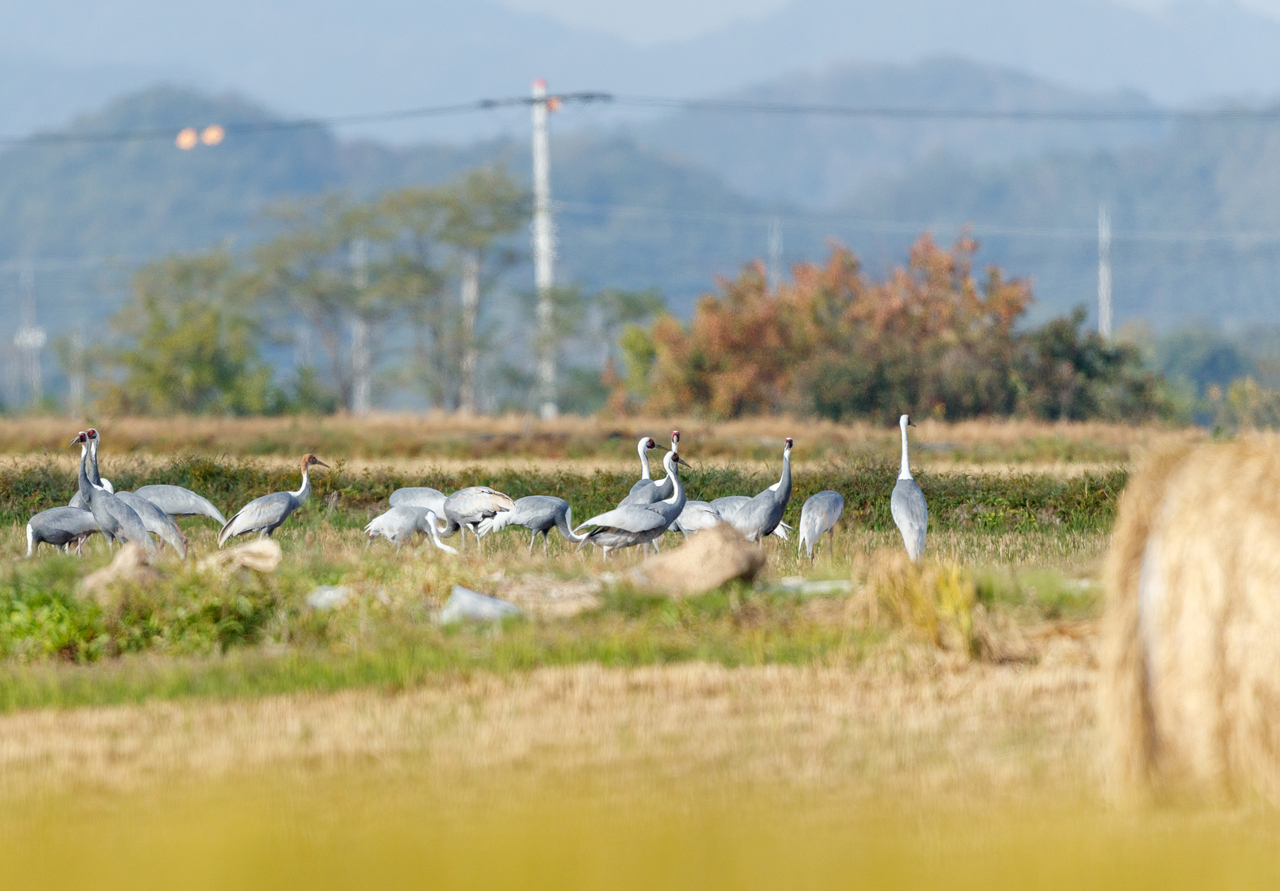
The numbers bear that out. A crane monitoring survey conducted by Cheorwon-gun on Nov. 29 last year counted a total of 11,640 birds. White-naped cranes were the most numerous at 10,002, followed by 1,567 red-crowned cranes, 60 hooded cranes, 10 sandhill cranes and one black-necked crane.
Endangered species rarely seen elsewhere are converging on the Cheorwon Plain in large numbers.
Farmers and cranes find a way to coexist
Yet no matter how many cranes arrive, their ability to safely winter in Cheorwon is not guaranteed. They need sufficient food and water, as well as safe resting spots away from predators. If any one of those conditions falls short, even the best wintering ground becomes hard to stay in for long.
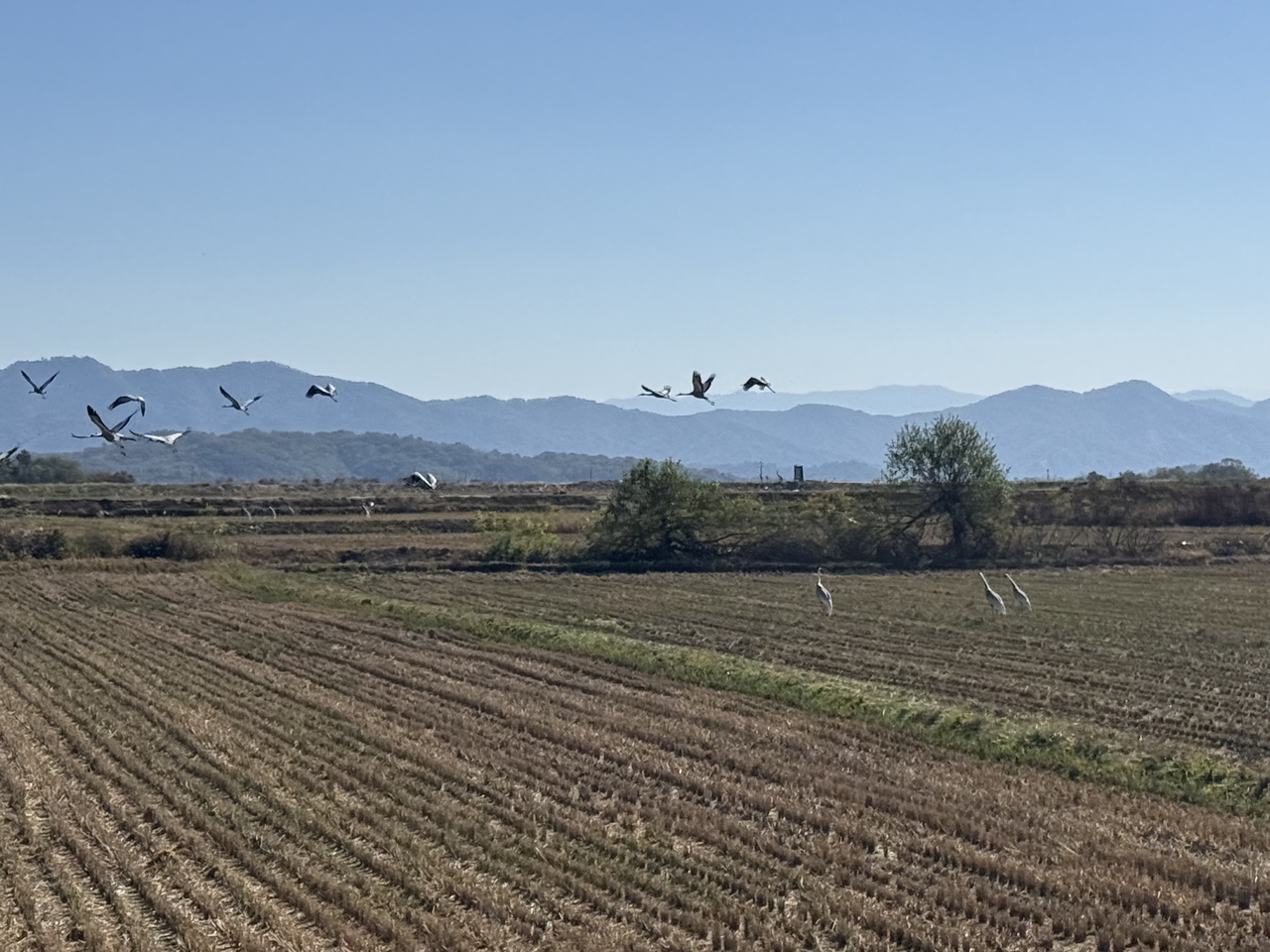
That concern brought together local farmers, the Cheorwon Crane Management Council and WWF. They shared a common goal: to make Cheorwon a better wintering habitat for cranes and pass it on to future generations as a cultural and tourism asset.
Food is the most pressing need. In winter, cranes forage through paddies and fields for grain — rice, corn and other crops. But after farmers harvest their rice, little food remains in the fields.
The initial response was a rice-straw retention project. The approach was simple: after the autumn harvest, farmers leave the straw in the paddies. Grains that fall loose during harvesting stay on the ground and become food for migratory birds.
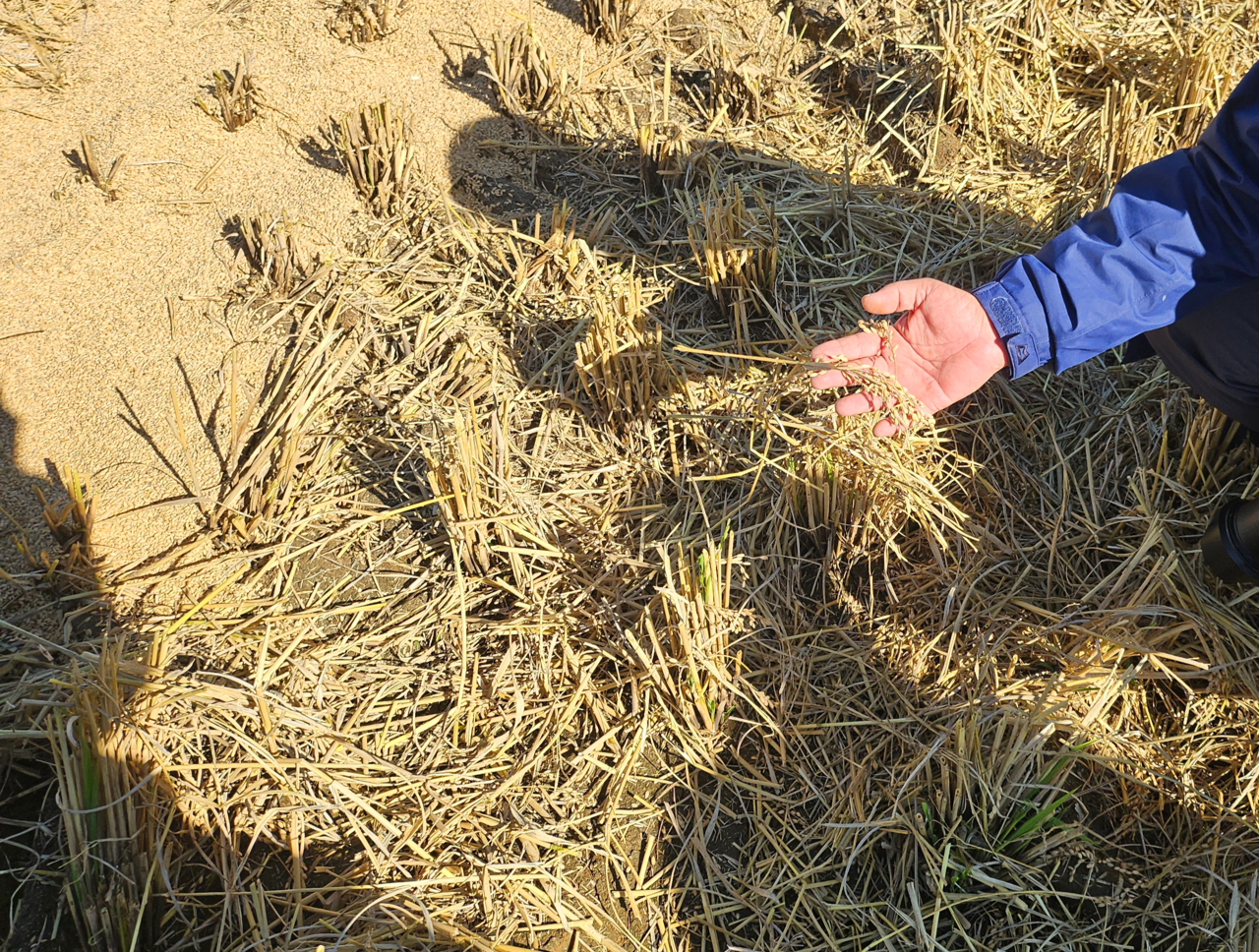
That approach has its limits, though. The fallen grain alone was not enough, and heavy autumn rains compounded the problem: grains left on the paddy floor can germinate or rot when submerged.
Yoo Jong-hyeon, secretary-general of the Cheorwon Crane Management Council, said that when heavy rain floods the paddies, the grain can rot or sprout. "That makes it inadequate as a food source," Yoo said.
The crane food-rice preservation project grew out of that problem. Where the earlier straw-retention approach relied on grain left over after harvesting, this new project goes further: a portion of the rice crop is left standing in the field from the outset, never harvested at all.
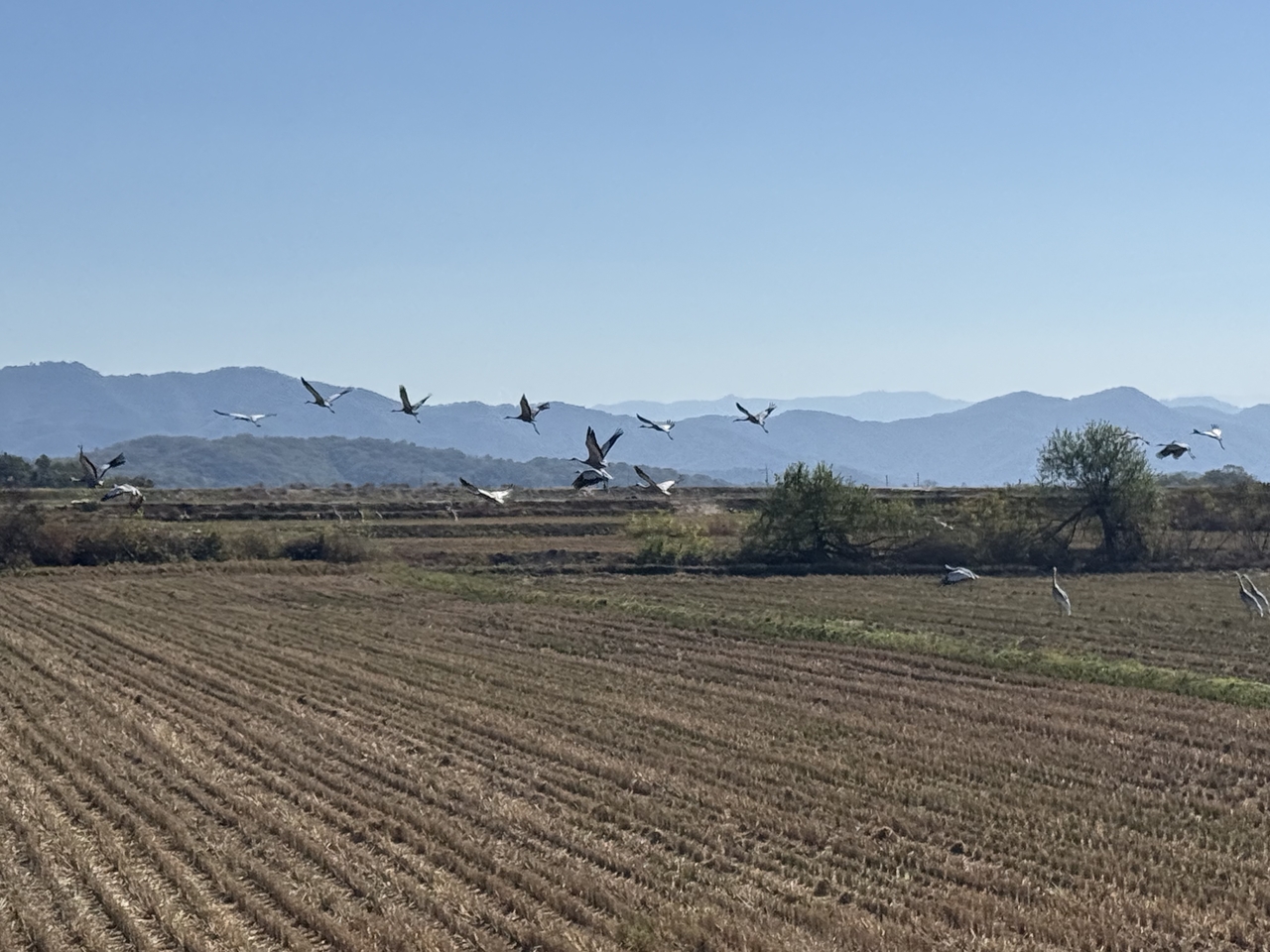
In practice, WWF signs contracts with farmers whose fields fall within the cranes' main foraging areas. The contracted paddies are not harvested at the normal time. Instead, the rice is threshed to coincide with the cranes' arrival in Cheorwon.
According to WWF, three farms in the Cheorwon area are taking part in this year's project. The rice grown across a combined 10,395 square meters of paddies will be used as crane feed.
The project also opens new possibilities for the farmers. Rather than leaving fields fallow, they can continue growing rice normally while contributing the harvest to ecosystem conservation — and receive fair compensation for making their contracted paddies available to the cranes.
Seo Gyeong-won, a member of the Cheorwon Crane Management Council, said farmers need to keep working the land to maintain the paddies. "If projects like this expand, it can benefit farmers, local authorities and the cranes alike," Seo said.
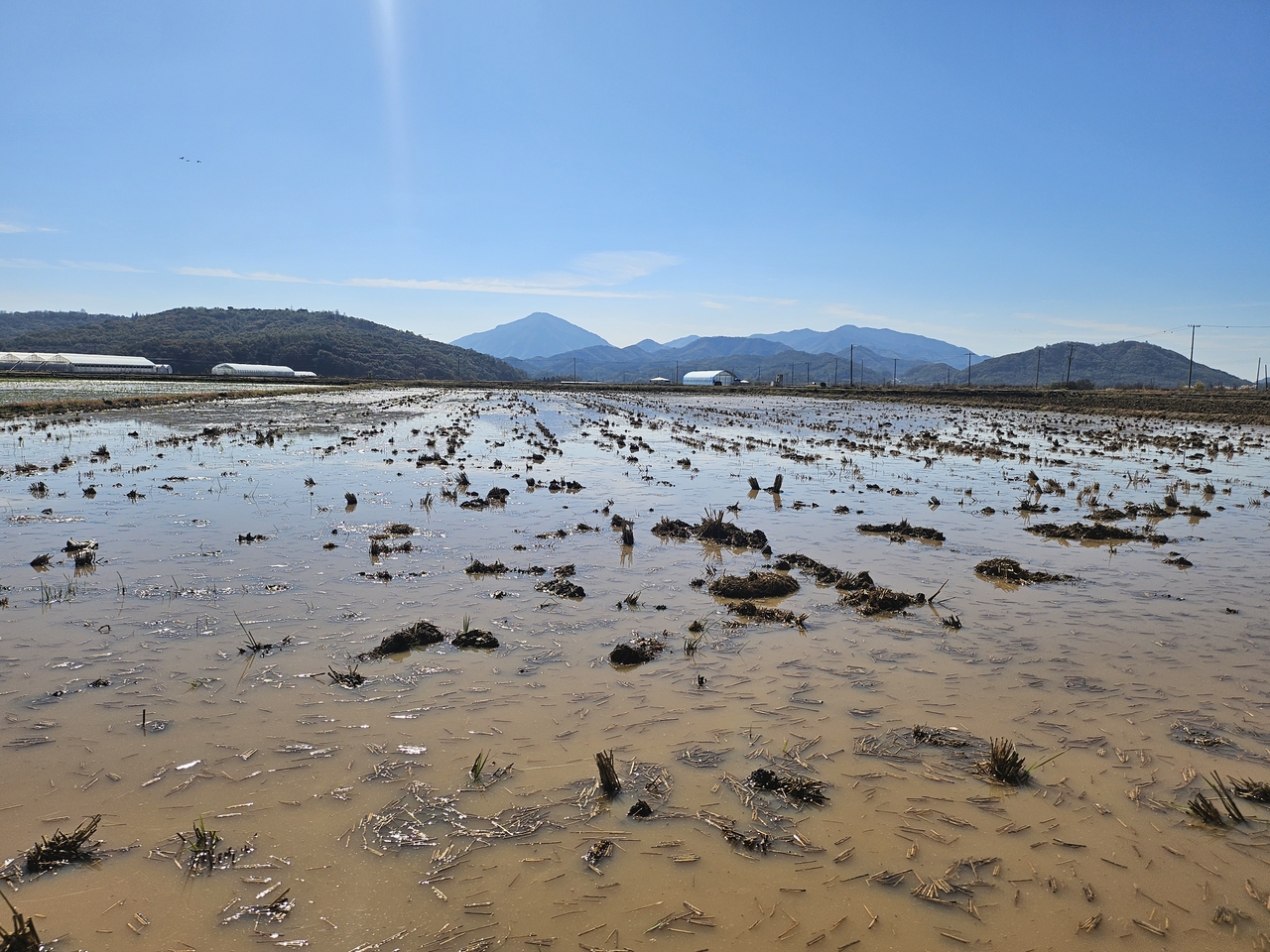
Creating flooded paddies — known as "munon" — is another key conservation measure. After the rice harvest, water is pumped back into the fields to form shallow wetlands. The standing water makes it harder for predators to approach, giving the cranes a safe place to roost.
Last year, WWF worked with 11 farms in the Cheorwon area to create a total of 280,000 square meters of flooded paddies. The organization covered farmers' operating costs and restoration expenses, helping establish safe wintering habitat for the cranes. This year, the food-rice preservation project has been added on top of that effort.
Yoo said that filling the paddies with about 30 centimeters of water prevents wildcats and other predators from getting close, making the fields a safe roosting ground for the cranes.
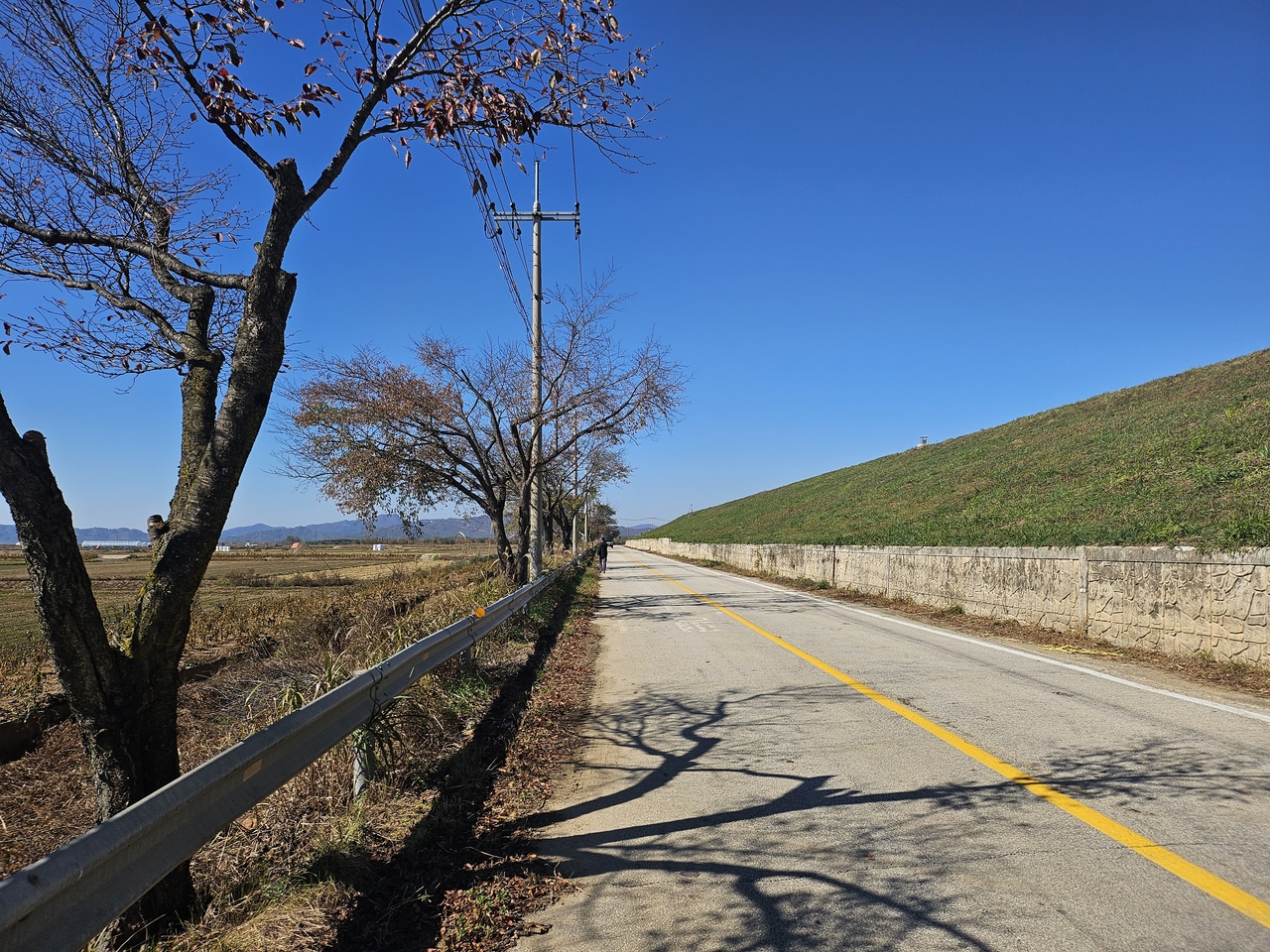
WWF is also working to prevent cranes from being injured by power lines during flight. Between 2018 and 2025, six crane-class birds were confirmed to have collided with power lines near the Dongsong Reservoir and the Daewi-ri checkpoint. In response, WWF is working with relevant authorities to remove overhead ground wires and install safety markers to prevent further collisions.
Decades of dedication to cranes — and a community won over
Behind all of these efforts stands an indispensable group: the residents of Cheorwon who have lived alongside cranes for generations. The Cheorwon Crane Management Council, in particular, brings together local farmers, residents and conservation groups. The council has sustained a wide range of activities — supplying food for the cranes, managing habitat and conducting population surveys.
Crane conservation in Cheorwon was not always welcomed. Farmers inside the Civilian Control Zone already lived under numerous restrictions tied to the protection of military facilities. When policies emerged to further limit agricultural land use in the name of environmental conservation, local resistance followed. Some residents even objected to the simple act of feeding the birds.
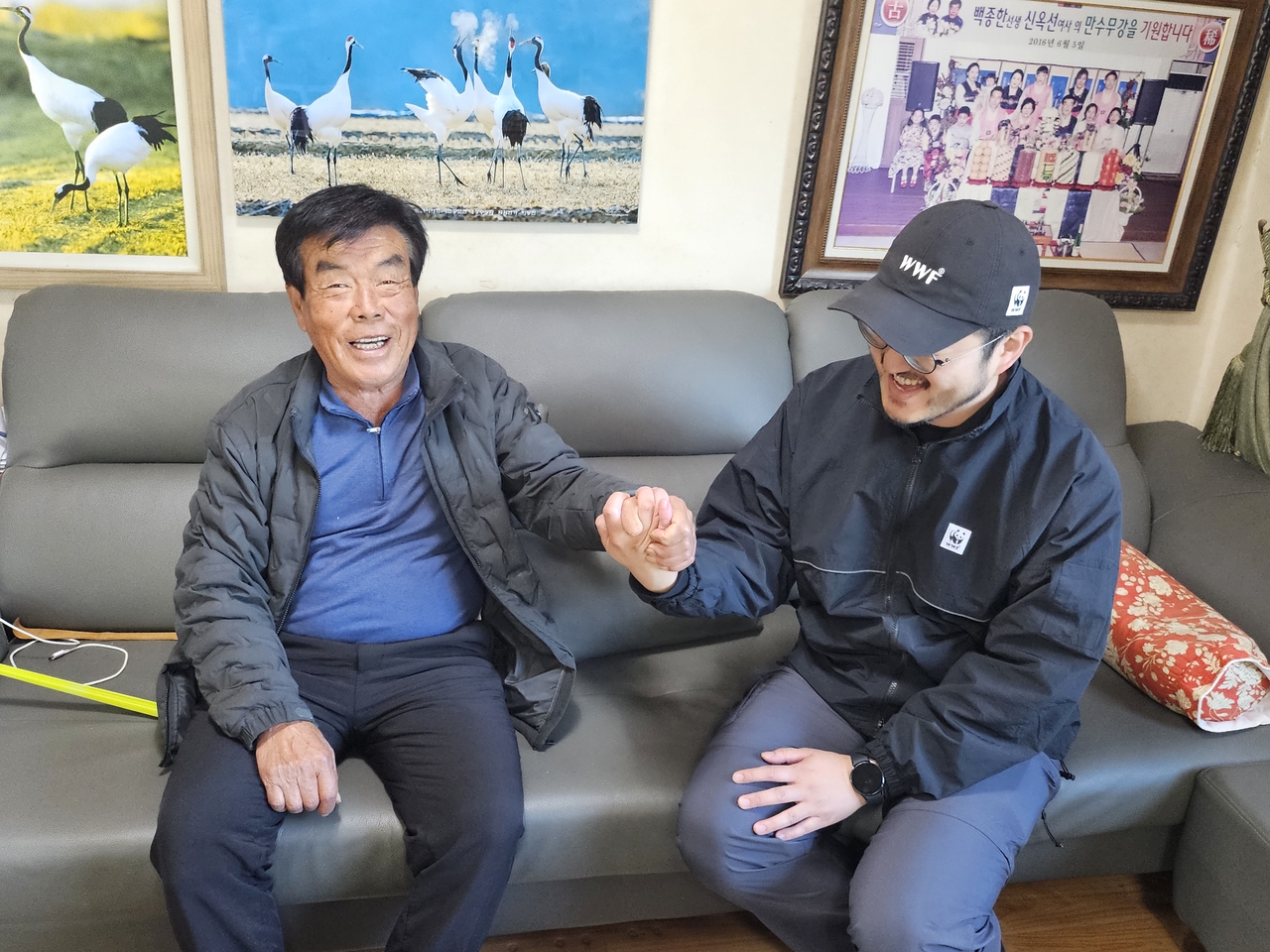
Even so, some people were determined to protect the cranes. Baek Jong-han, the council's former chairman, is the most prominent among them — and the commitment to the birds is rooted in a family memory stretching back to childhood.
Before the Korean War, Baek's mother treated the cranes that visited Cheorwon as honored guests and shared food with them. The birds disappeared during the fighting, but returned to Cheorwon after the war ended.
Baek cherished that bond with the cranes, passed down from the previous generation. Despite community resistance, Baek never gave up on protecting them, continuing to supply food while searching for ways to coexist with neighbors.
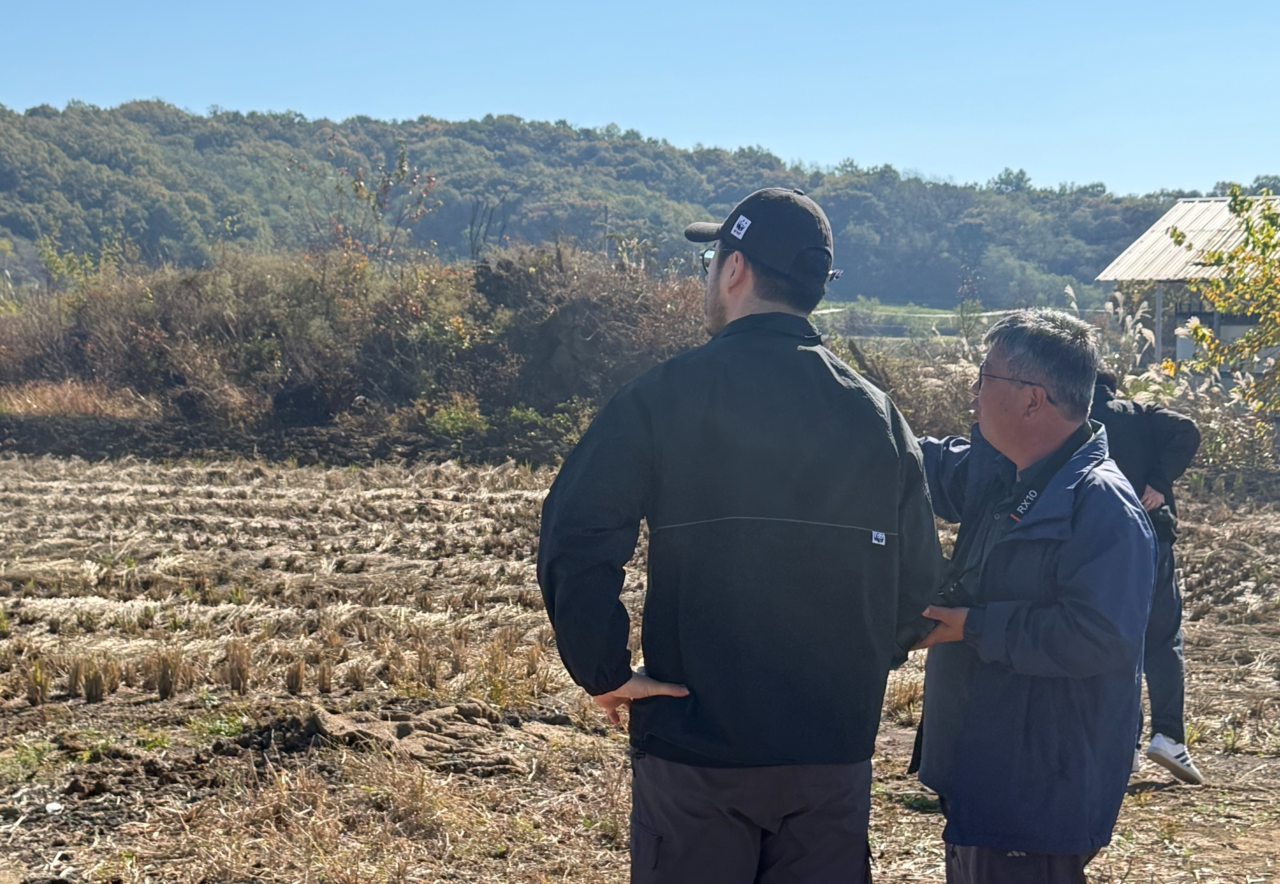
Those efforts have gradually borne fruit. Residents now voluntarily open their farmland as crane foraging grounds and take part in conservation activities themselves. Decades of persistence have grown into a community-wide conservation movement. "The cranes of Cheorwon are a cultural heritage to be passed on to future generations," Baek said.
The cranes that the community fought to protect have also become a significant tourism draw. According to Cheorwon-gun, more than 5,000 people take part in crane birdwatching programs in the county every year.
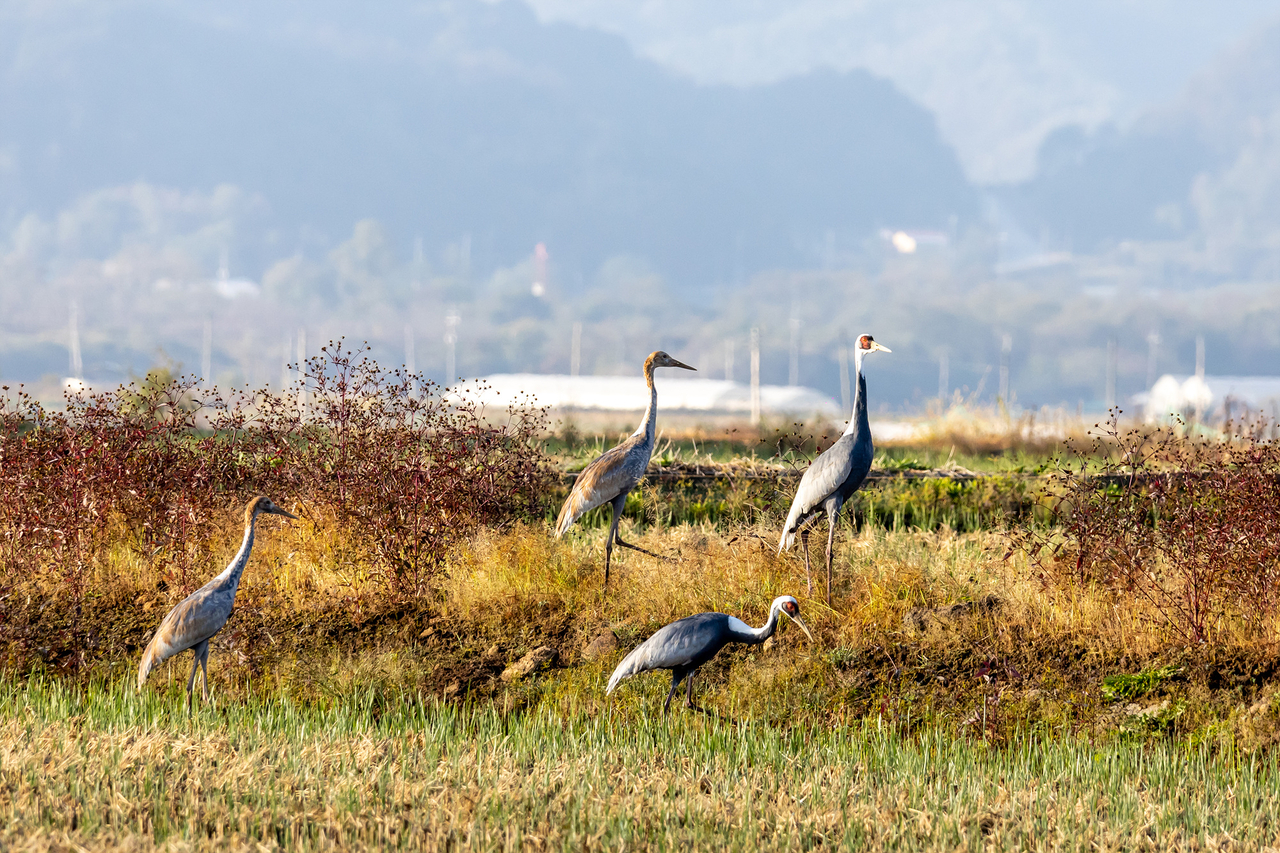
The paddies farmers set aside become feeding grounds for cranes; the cranes draw visitors to Cheorwon. What was once seen as a constraint on agricultural land use has become a precious asset for the region's future.
A WWF official said the project shows that conservation can go beyond simply providing food and shelter for cranes — and that protecting nature can become a path to coexistence with local communities. "We plan to continue working to build crane habitat, drawing on the experience of local residents," the official said.

woo@heraldcorp.com