Last digit on shell codes 1–4 indicates farming method, not quality
Only 8.3% of eggs receive an official quality rating
46% of consumers think 'teukran' is the biggest egg — new 2XL/XL labels take effect Nov. 22
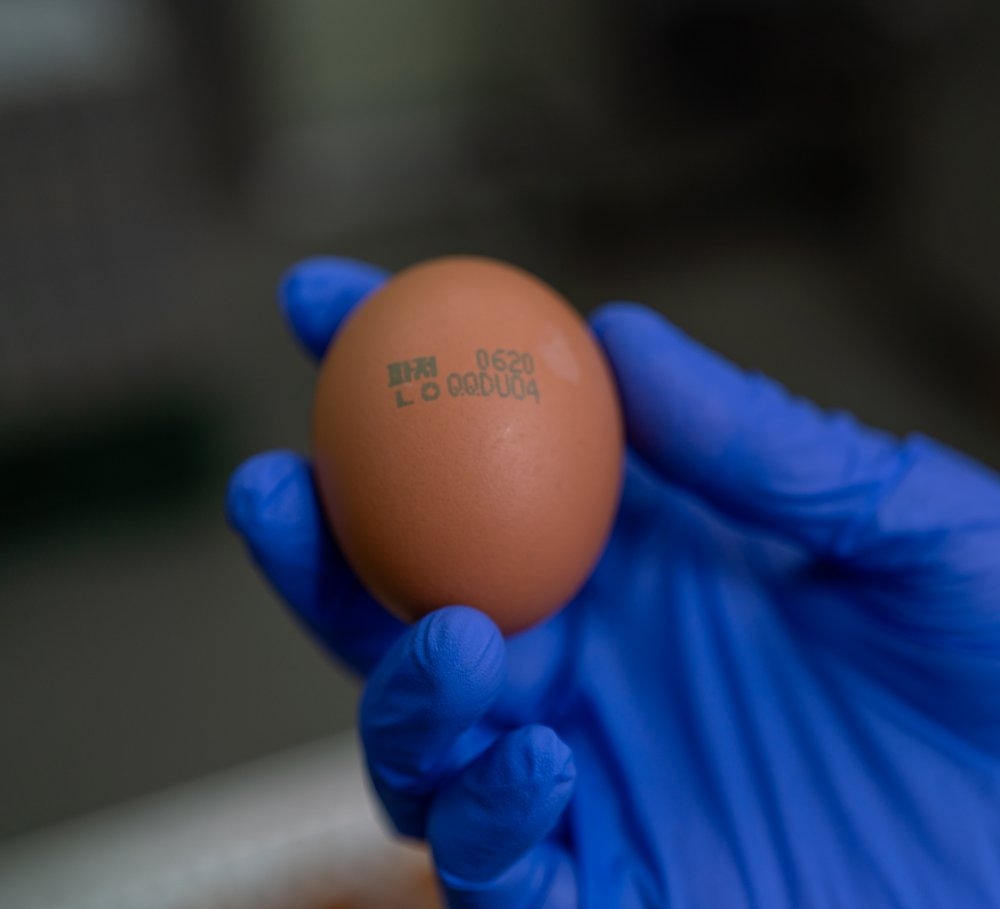
Many shoppers scrutinize the numbers stamped on egg shells when browsing the supermarket aisle. Some specifically seek out eggs ending in '1', believing a lower number signals better quality. But the final digit on an egg shell does not mean quality grade 1 — it indicates the conditions in which the hen was raised.
The same confusion surrounds egg size labels. Names like "wangran," "teukran" and "daeran" — the traditional Korean size categories — suggest a hierarchy of specialness rather than a simple weight scale. A survey found that nearly half of consumers mistakenly believe teukran is the largest egg.
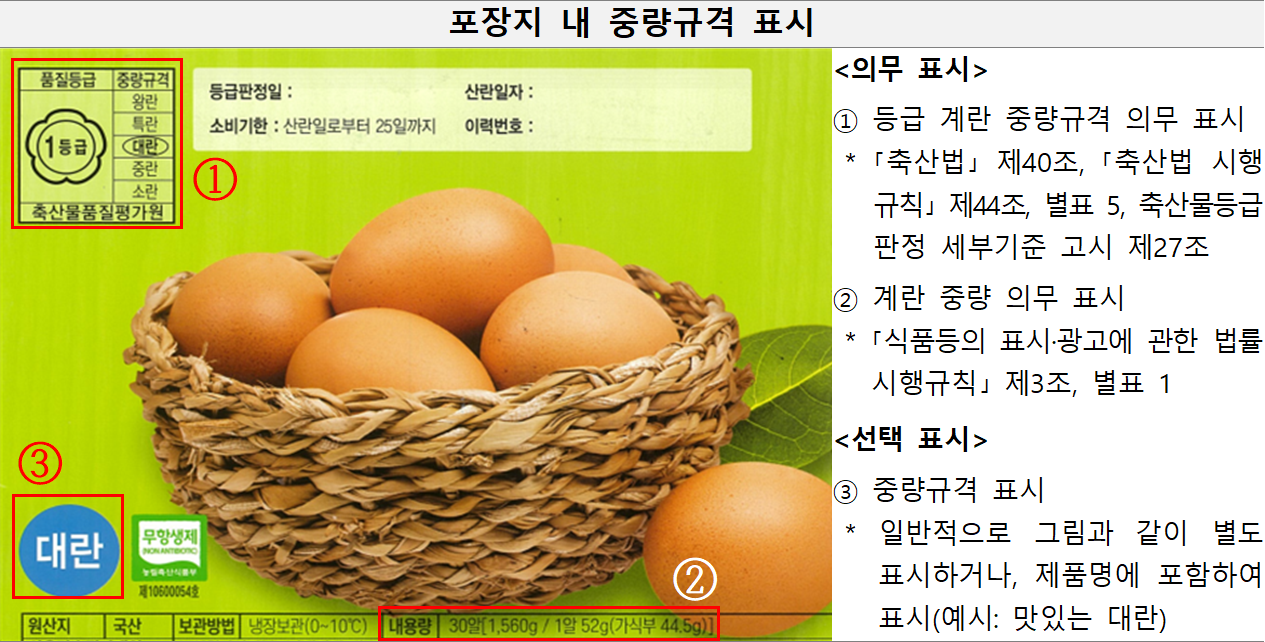
According to the Ministry of Agriculture, Food and Rural Affairs and the Korea Institute for Animal Products Quality Evaluation, the information available to consumers when buying eggs falls into four broad categories: the farming environment code, the quality rating, the weight classification, and certification marks. Each label carries a distinct meaning, even when they all appear on the same egg.
What the '1' on your egg shell actually means
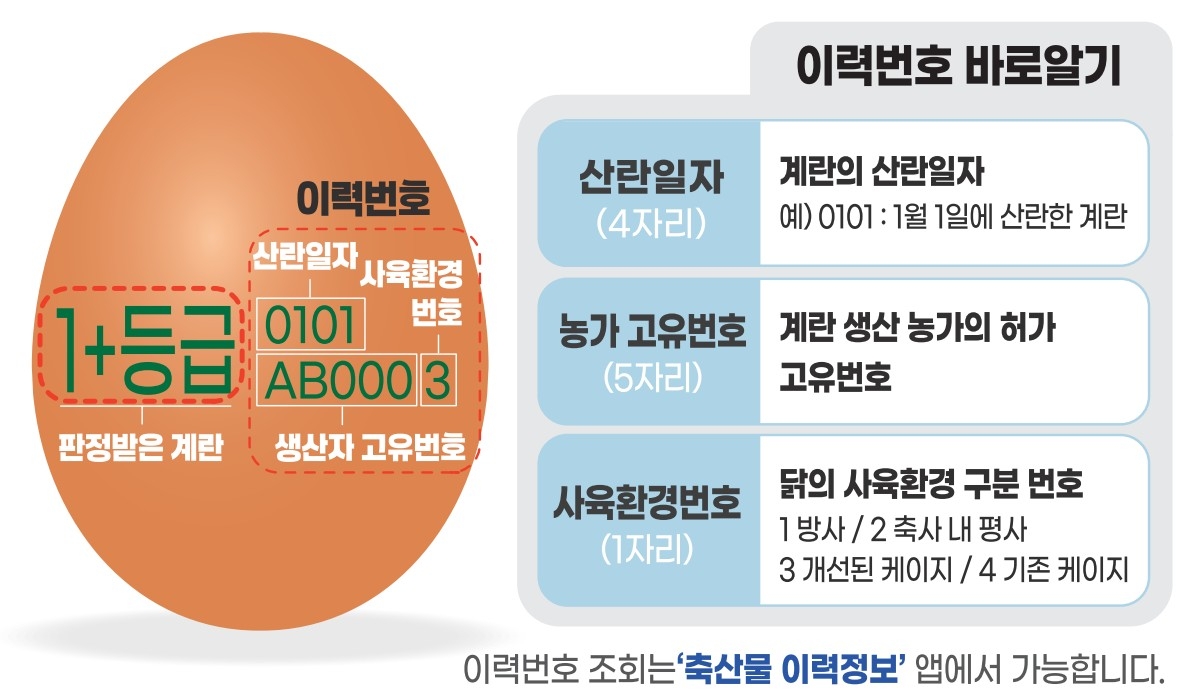
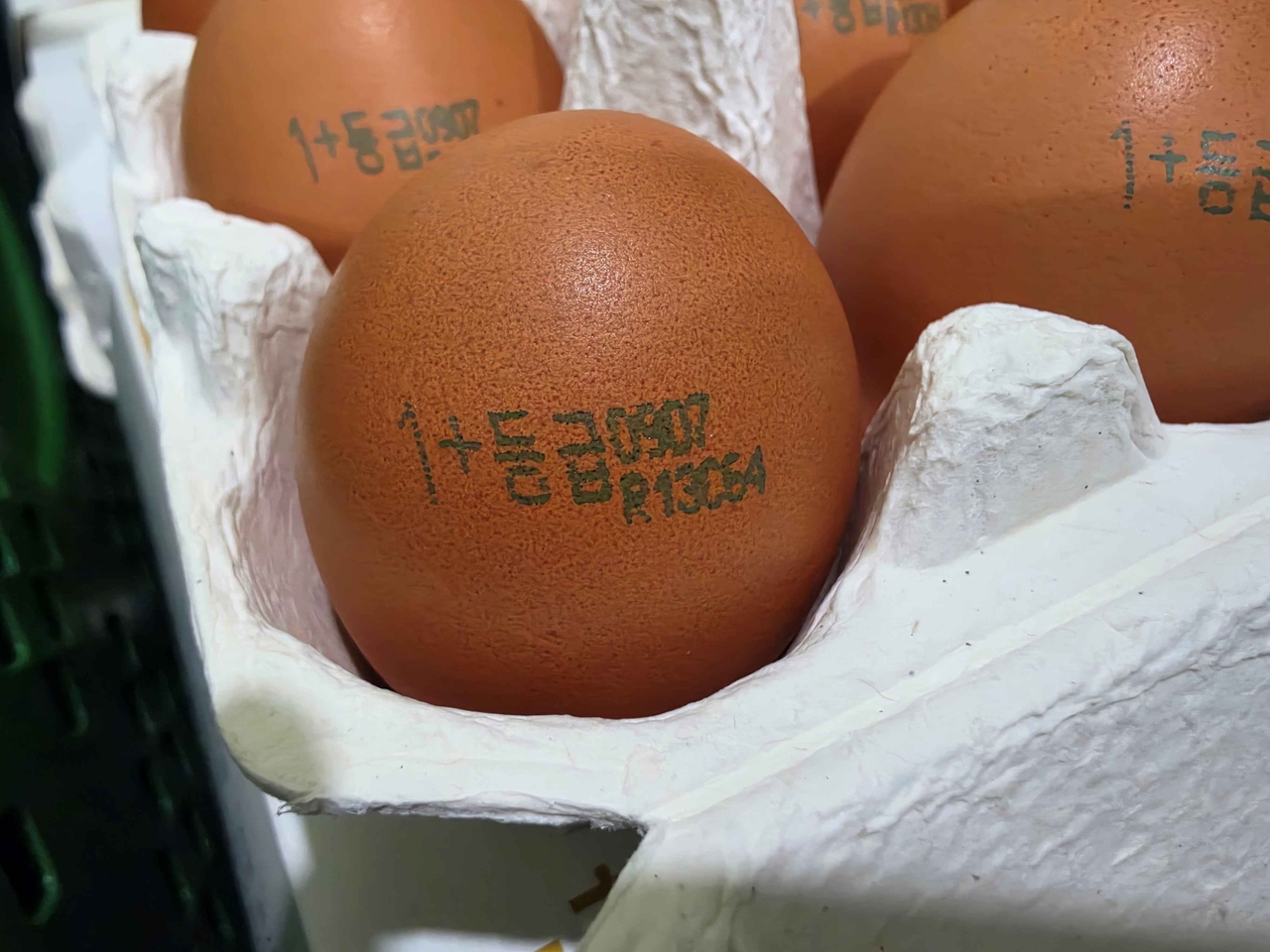
The 10-digit code stamped on every egg shell is called the shell code. The first four digits record the laying date, the next five identify the producing farm, and the final single digit is the farming environment number.
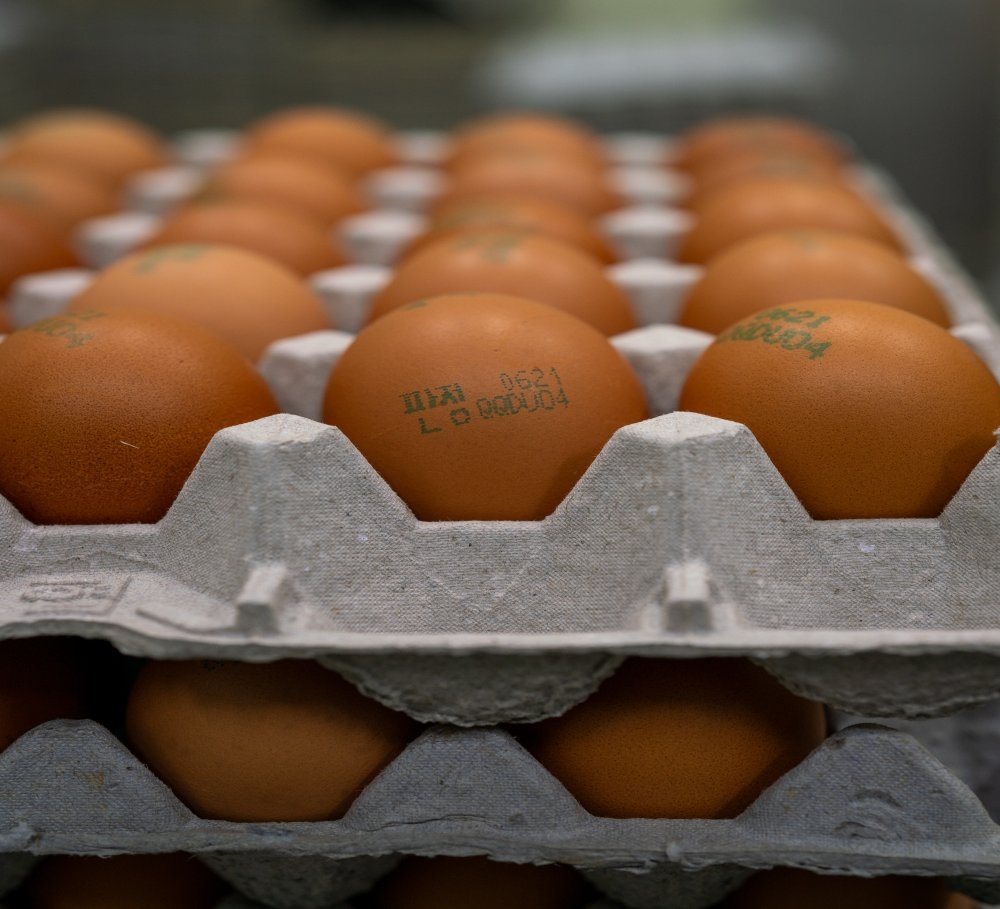
Take a shell code of "1026ABCDE1" as an example. The opening "1026" means the egg was laid on Oct. 26. "ABCDE" is the farm's unique identifier — a combination of letters and numerals — and the final "1" indicates free-range farming.
The farming environment numbers break down as follows: 1 for free-range (outdoor access), 2 for barn (indoor floor housing with no outdoor requirement), 3 for enriched cages, and 4 for conventional cages.
Code 1 means hens can move freely between the indoor housing and an outdoor activity area. Code 2 is barn housing — hens roam the floor inside the building but, unlike code 1, are not required to have access to outdoor space.
Codes 3 and 4 both involve cage housing; the difference is space per bird. Code 3, the enriched cage system, requires at least 0.075 square meters (750 square centimeters) per hen. Code 4, the conventional cage system, requires at least 0.05 square meters (500 square centimeters) — meaning code 3 provides 1.5 times more minimum space than code 4.
A lower farming environment number does not, however, automatically translate into a fresher or higher-quality egg. The code reflects only how the hen was raised, not an assessment of the egg's quality.
Does a code-1 egg also carry animal welfare certification?
The farming environment code is easily confused with the animal welfare farm certification. It might seem natural to assume that a free-range egg automatically carries animal welfare certification, but the two systems are separate.
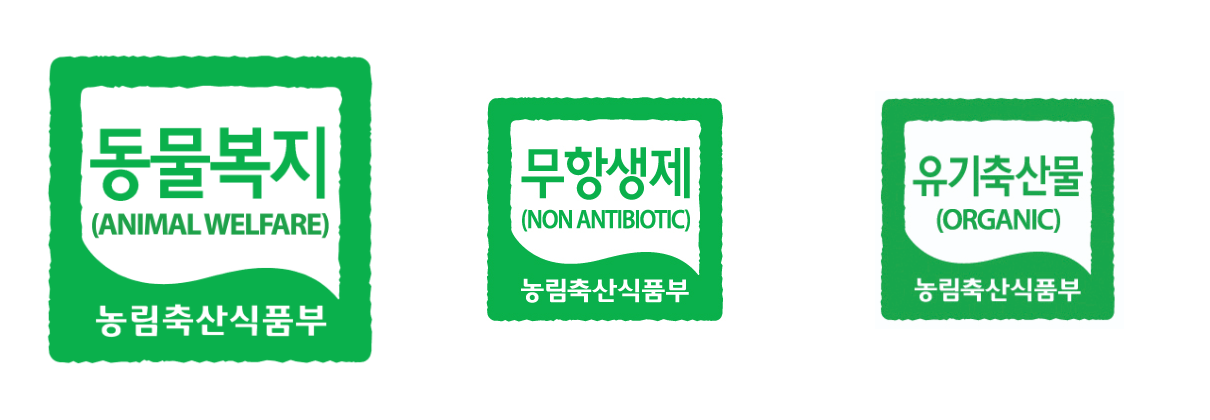
The farming environment code simply classifies how hens are kept. The animal welfare certification, by contrast, is a formal assessment of whether a farm's facilities and management practices meet established animal welfare standards.
Raising hens outside a cage is not enough on its own to qualify. Farms must satisfy multiple criteria covering stocking density, activity space, feeding and watering equipment, and hygiene and health management.
An egg ending in 1 or 2 is therefore not automatically animal welfare certified. Consumers who want to verify certification must check for the relevant mark printed separately on the packaging.
Other certifications also appear on egg cartons. The antibiotic-free livestock certification confirms that the farm met standards restricting antibiotic use. The organic livestock certification verifies compliance with organic farming requirements, including the use of organic feed.
Each certification is assessed against its own criteria and none is linked to the quality rating. Holding an animal welfare or organic livestock certification does not mean the eggs inside have earned a 1+ quality grade.
Eggs have report cards too — how is a 1+ grade decided?
Just as beef shoppers check for 1++, 1+ or 1 grades on Korean beef, eggs carry their own quality ratings. Eggs are graded 1+, 1 or 2 based on a combined assessment of shell cleanliness, the presence of cracks, internal condition, and freshness.
One key difference from beef is that quality grading is not mandatory for eggs. Only a portion of eggs produced ever go through the grading process.
Data released Thursday by the Korea Institute for Animal Products Quality Evaluation show that of approximately 18.15 billion eggs produced annually, only about 1.5 billion — roughly 8.3 percent of the total — received a quality grade. That works out to about eight eggs in every hundred. The figures are based on 2025 production and grading volumes.
An ungraded egg is not necessarily inferior. There is a meaningful difference between an egg that was never submitted for inspection and one that was inspected and received a low grade. That said, graded eggs give consumers a verified quality benchmark to compare against.
The grading process has three stages: an appearance check, a candling check, and a breaking check. The appearance check examines the shell for foreign matter and abnormalities. Candling involves shining light through the egg to detect hairline cracks and assess the interior.
The breaking check cracks the egg open to inspect the yolk and white. Freshness is measured using the Haugh Unit, a value calculated from the egg's weight and the height of the thick albumen.
Not every egg on sale is cracked open for inspection. Instead, eggs from the same farm, laying date, and quality level are grouped together, and a random sample is drawn from each batch.
The sampling rate varies with batch size: at least 7 percent for batches under 3,000 eggs; at least 5 percent for 3,000 to fewer than 15,000; at least 3 percent for 15,000 to fewer than 30,000; and at least 2 percent for batches of 30,000 or more. At least 100 eggs from the sample undergo appearance and candling checks, and at least 20 are cracked open for an internal inspection. The grade assigned to the sample then applies to the entire batch.
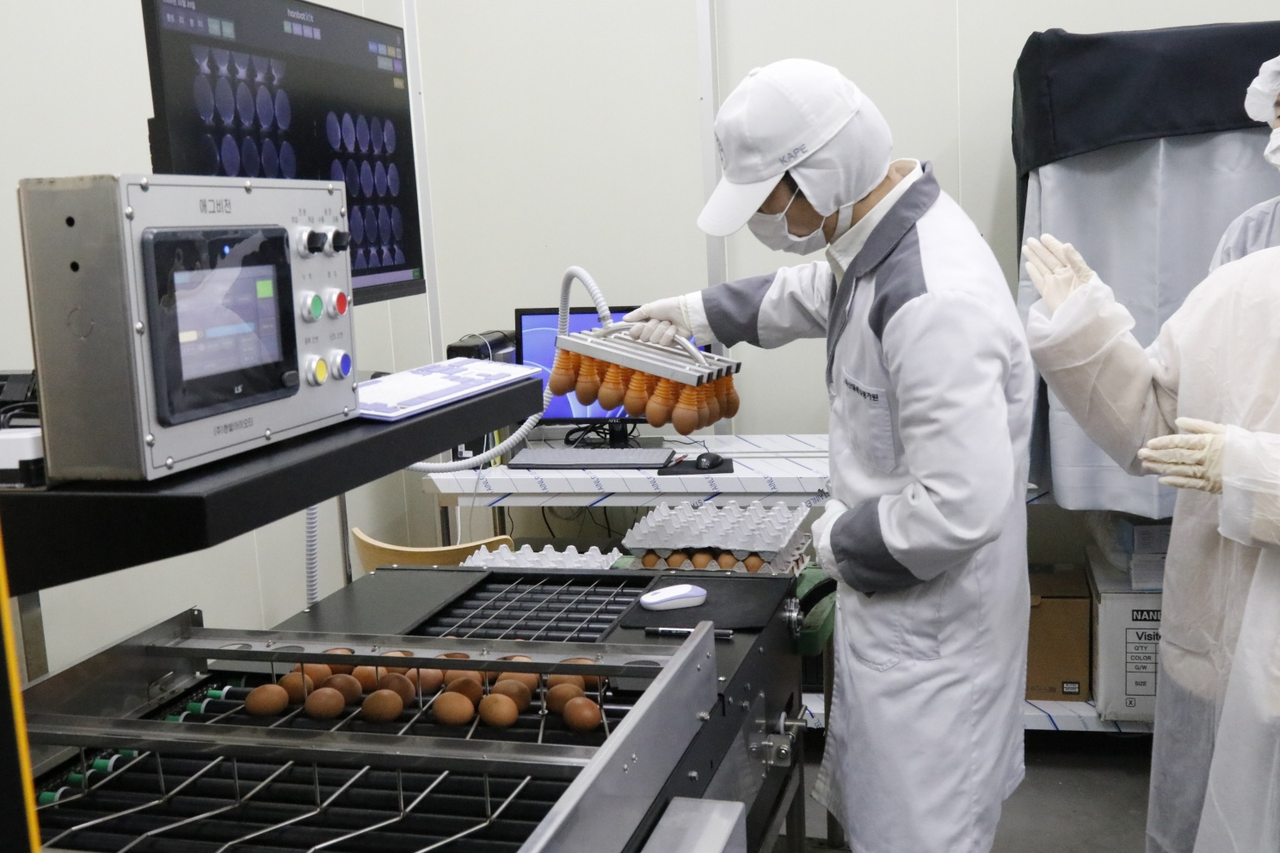
Artificial intelligence has recently entered the grading process. An AI-based grading system developed by the Korea Institute for Animal Products Quality Evaluation photographs each egg from 360 degrees and automatically analyzes shell contamination and hairline cracks.
A demonstration of the equipment at YJ Food in Pyeongtaek, Gyeonggi Province, on Thursday showed it completing the appearance and candling checks on 300 eggs in about 11 minutes — a task that previously took a human inspector roughly 30 minutes, cutting inspection time by more than 63 percent.
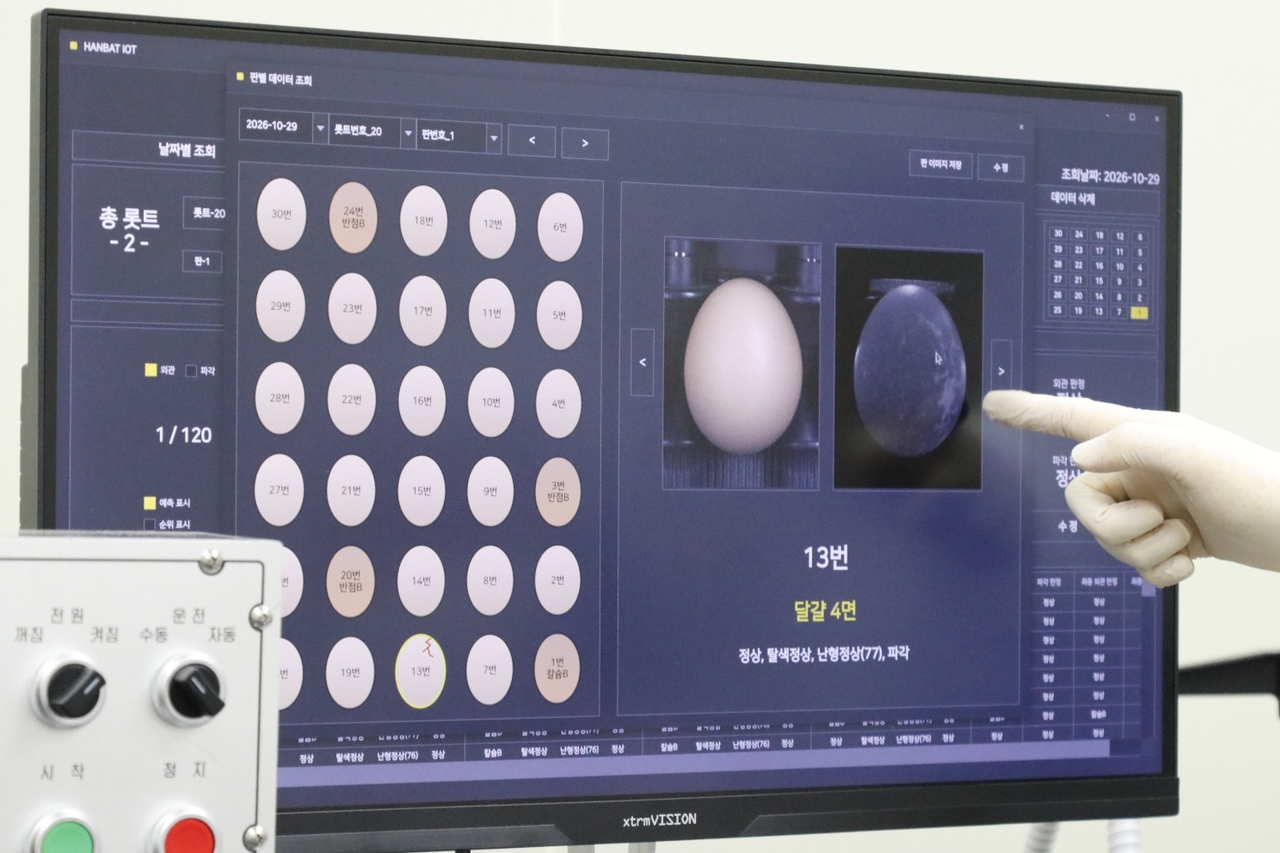
AI does not yet handle every aspect of grading, however. The current system covers appearance and candling checks; the breaking check, which measures freshness by cracking the egg open, is still carried out separately.
The institute plans to use AI equipment to expand the share of eggs that receive a quality grade. The goal is to increase the number of AI grading units from 12 this year to 52 by 2030, and to raise the grading rate from 8.3 percent to 26.6 percent of total egg production. If the plan stays on track, the annual volume of graded eggs will grow from about 1.5 billion to 4.83 billion.
A higher grading rate means more eggs on shelves will carry verified quality information for consumers to compare. Officials expect the expansion to strengthen consumer confidence by making inspection results more widely available.
46% of consumers think teukran is the biggest egg — the answer is wangran
Egg size labels cause as much confusion as shell codes. Eggs have long been sorted by weight into five categories — wangran, teukran, daeran, jungran and soran — but the names alone give little indication of which is actually the largest.
A survey of 1,000 consumers conducted by the Korea Institute for Animal Products Quality Evaluation between February and April last year found that 46.2 percent believed teukran was the largest egg. Only 41.5 percent correctly identified wangran as the biggest. A separate 42.1 percent said they did not know the weight classifications at all.
Consumers reported frustration, saying they could not tell which size was larger among wangran, teukran and daeran, or that they bought eggs expecting a certain size only to find them smaller than anticipated. Retailers also flagged the problem, noting that shoppers drawn to teukran — mistaking it for a premium product — left other sizes overstocked and difficult to manage.
A separate survey conducted through the Ministry of Interior and Safety's public opinion platform found that 53.0 percent of 1,078 respondents could not distinguish between wangran, teukran and daeran. Support for renaming the weight categories stood at 72 percent among respondents to the ministry's survey and 60.9 percent among those in the institute's own poll.
Wangran becomes 2XL, teukran becomes XL — new labels take full effect Nov. 22
The Ministry of Agriculture, Food and Rural Affairs revised the Livestock Industry Act's enforcement regulations in May to replace the traditional Korean egg size names with the letter-based sizing familiar from clothing labels, making it easier for consumers to gauge egg size at a glance.
Under the new system, wangran becomes 2XL, teukran becomes XL, daeran becomes L, jungran becomes M, and soran becomes S. Only the names change; the weight thresholds remain the same. 2XL covers eggs weighing 68 grams or more; XL, 60g to under 68g; L, 52g to under 60g; M, 44g to under 52g; and S, under 44g.
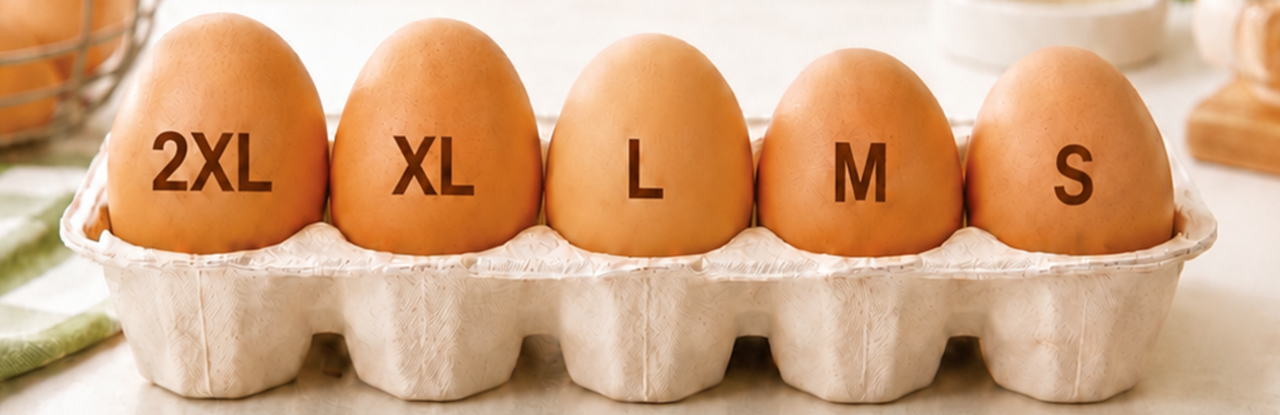
The new labels are not mandatory for all eggs, however. The change applies to graded eggs — those that have undergone the official quality assessment. Under the Livestock Industry Act, graded eggs must display both a quality grade and a weight classification on their packaging, but ordinary ungraded eggs need only show the net contents; weight classification remains optional for them.
Some retailers have already made the switch. According to the institute, 32 of the 95 businesses involved have adopted the new labels. The remaining businesses are expected to transition gradually as they work through existing packaging stock.
The government allowed a six-month grace period to ease the burden of replacing packaging materials. Once that period ends Nov. 22, the new weight classification names will be mandatory on all graded eggs. E-mart, Lotte Mart and other hypermarkets have begun posting promotional materials at their egg displays to inform shoppers of the change.
The '1' on an egg shell and the '1-grade' mark on a carton mean entirely different things. Farming environment, quality grade, animal welfare certification, and weight classification each require a separate check. Knowing what each label means gives consumers the information they need to choose the egg that suits them best.
This article is part of a series that explains useful policy information in plain language, examining the background behind policy proposals, what changes mean, and who can benefit from them and how.
adastra@heraldcorp.com