Women make up 94.9% of care workers — a primary livelihood for older women
Cumulative musculoskeletal disorders higher among women than men in care sector
Gaps in data and policy call for breakdown by gender, age and industry
South Korea's elderly poverty rate stands at 2.7 times the OECD average — and older women face even greater hardship than older men. For decades, women were expected to devote themselves to unpaid family caregiving, setting aside careers outside the home. That interrupted career history has left many with little professional standing and limited financial independence. Now in old age, they must worry about making ends meet each day. This series examines how the sacrifices women made in their younger years are being "billed back" to them in the form of poverty and insecurity in old age. — Ed.
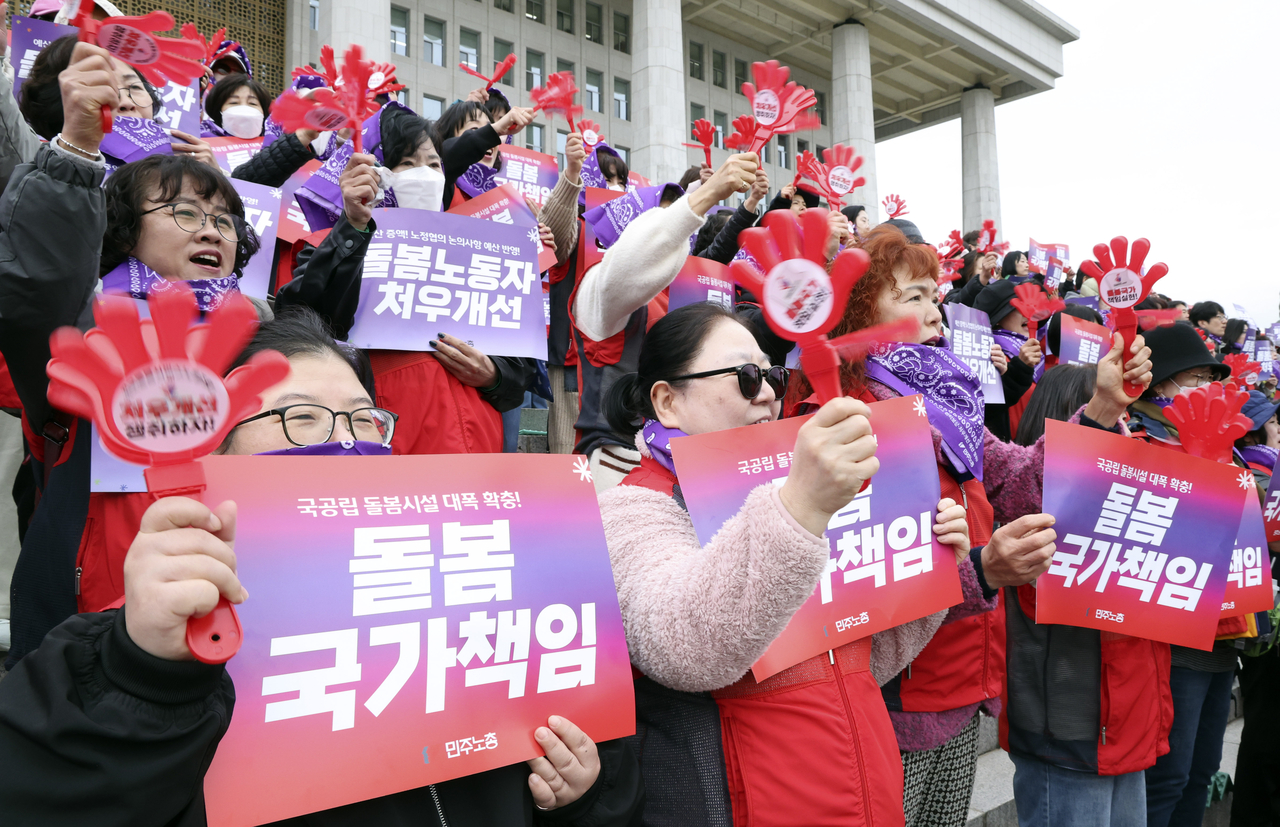
"The average age of care workers is 63," said an official at the Korean Confederation of Trade Unions' care service union. "Because they are older, injuries on the job are frequently dismissed as signs of aging rather than workplace accidents."
Older women who cannot afford to retire keep working — and the physical toll they pay on the job is more than a health issue. Even as repetitive labor wears down their bodies, taking time off or focusing on treatment is rarely an option. Stopping work altogether could mean losing their only source of income.
Care work — particularly at a nursing facility — has become one of the primary forms of employment for older women. Supporting and moving residents causes pain to accumulate in the back, shoulders and other joints. Workers cannot easily rest when they are hurting, and chronic pain built up over years is difficult to have recognized as a workplace injury. Labor taken up to escape old-age poverty ends up posing yet another threat — to both health and income.
Care workers face significant health risks and physical strain
According to the Ministry of Statistics' regional employment survey for the first half of 2026, care workers — including nursing care workers and personal caregivers — numbered 506,000 in total. Of those, 480,000, or 94.9 percent, were women. Care work has become a primary employment sector for older women, yet the physical hazards of the work environment remain insufficiently examined.
An analysis of data from the seventh Working Conditions Survey, conducted by the Korean Women's Development Institute in 2023, found that older women wage workers were exposed to three of four ergonomic risk factors at higher rates than their male counterparts.
The survey found that more than 30 percent of older women wage workers were employed in the healthcare and social welfare services sector. Within that sector, women's exposure rates exceeded men's across all four ergonomic risk factors. More than half of older women workers reported exposure to repetitive movements of the hands and arms.
On the ground, injuries occur frequently while bathing and moving residents. Kang Shin-seung, a branch chair of the National Care Service Workers' Union, said accidents happen most often during bathing assistance. "The process of supporting and moving residents puts cumulative strain not just on the back but on the shoulders, knees, elbows and finger joints as well," Kang said. Workers also frequently make sudden movements to prevent residents from falling, or collide with beds and fixtures.
In many cases, the physical environment does not adequately reduce the burden on workers. When beds are set low to prevent residents from falling, care workers must perform their duties with their backs and knees bent. Adjustable beds and other assistive equipment can ease the strain, but workers say the pace of the job leaves no time to make such adjustments.
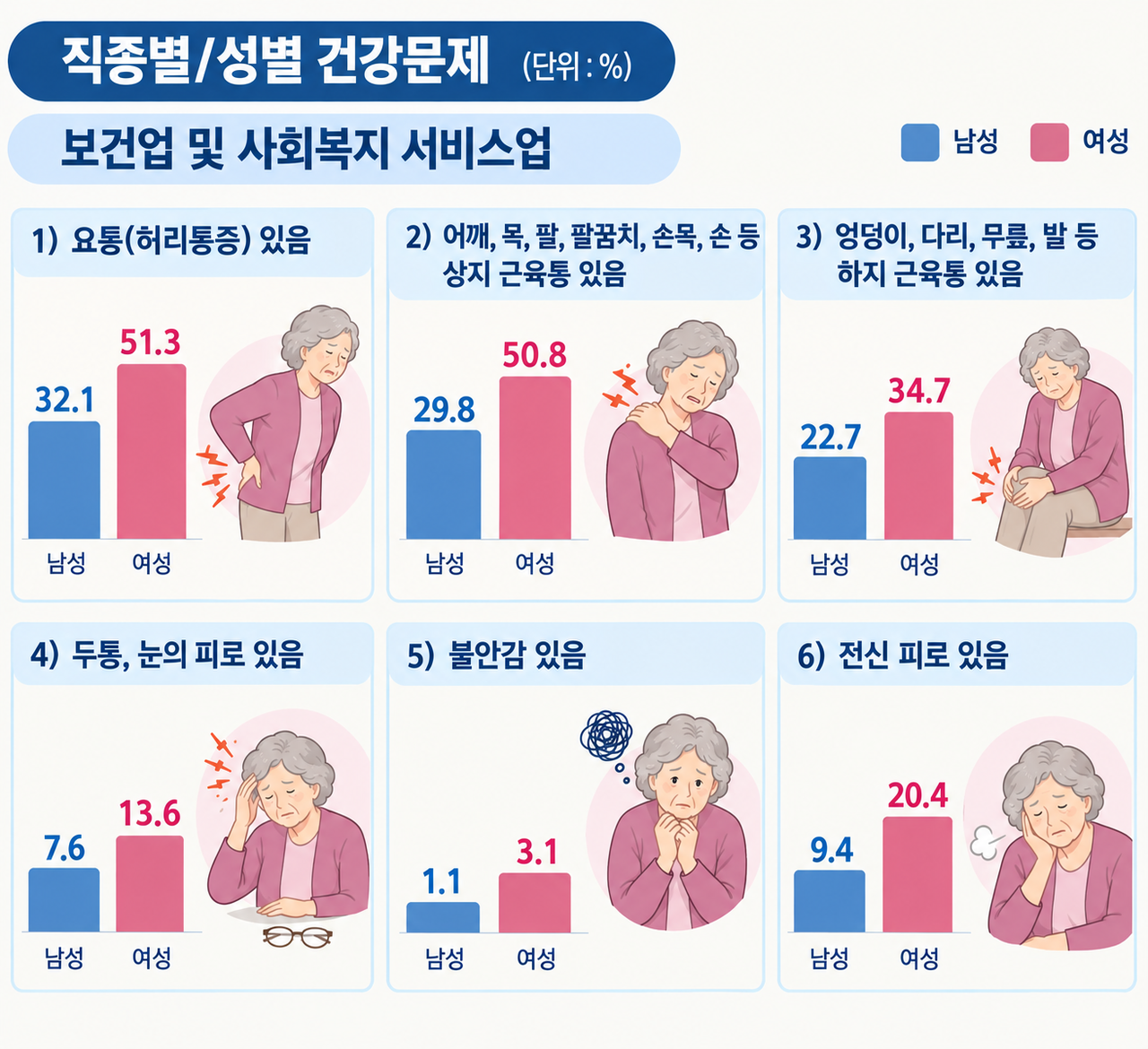
The health complaints older women report reflect this physical burden. In the same survey, more than half of older women wage workers said they had experienced lower back pain or musculoskeletal pain in the upper body — including the shoulders, neck, arms and wrists. In the healthcare and social welfare services sector, older women reported higher rates than men across all six health problems tracked. Women's response rates were higher not only for back pain and upper-body muscle pain, but also for lower-body muscle pain, headaches and eye strain, anxiety and general fatigue.
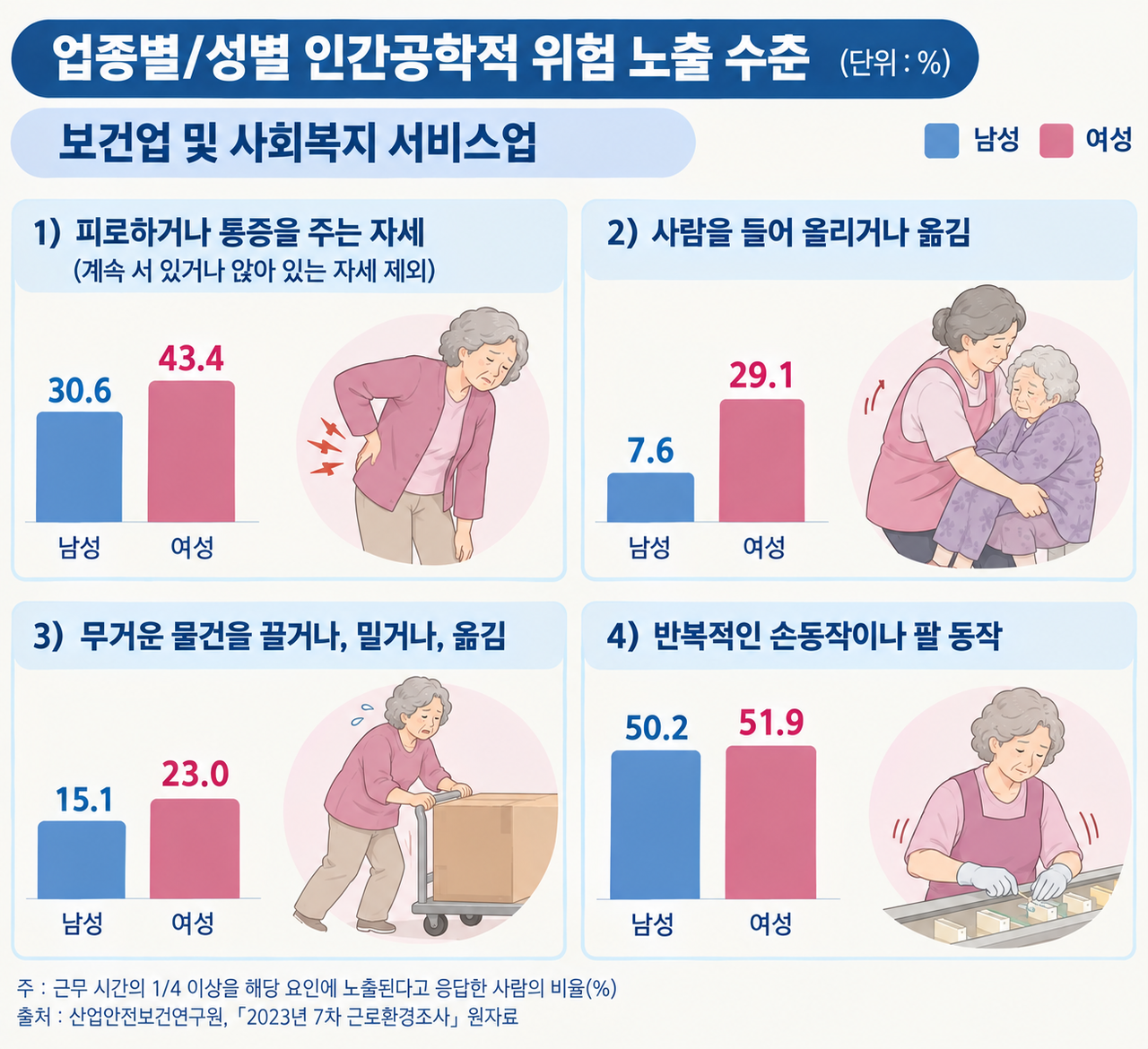
The deeper problem is that even as pain accumulates, workers have little recourse — neither to have injuries recognized as work-related nor to take time off for treatment. A care service union official with the Korean Confederation of Trade Unions said care workers' back pain, a predictable result of the physical demands of the job, is rarely accepted as a workplace injury. Because the pain stems from years of repetitive motion and physical strain rather than a single accident, establishing a causal link to the work is difficult.
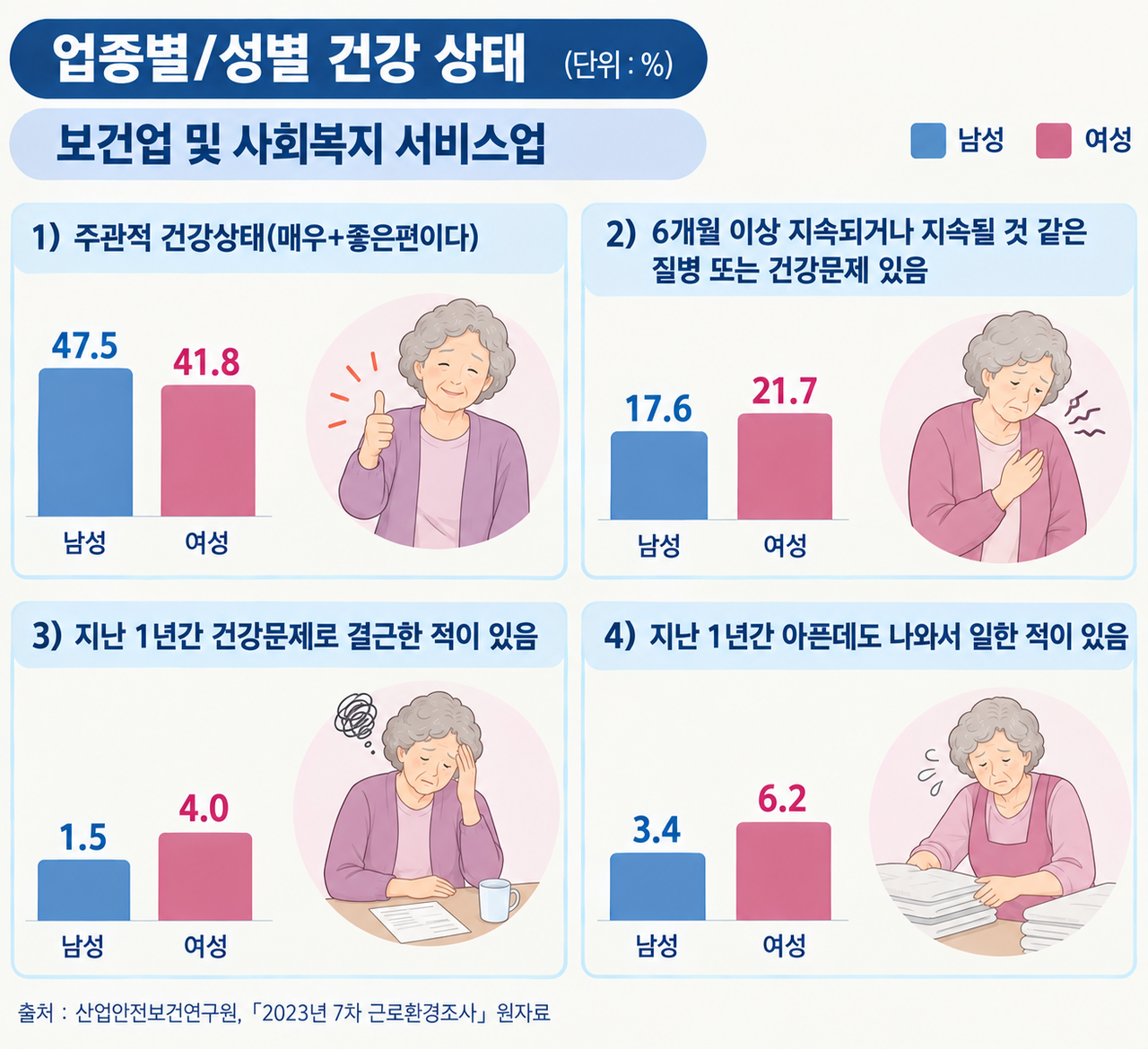
The reality of showing up to work while ill is borne out in the data. Only 39.9 percent of older women wage workers rated their subjective health as good or very good, compared with 46.8 percent of men. Older women were more likely than men to report a health problem lasting or expected to last six months or more, and more likely to say they had gone to work despite a health problem. Their rate of absenteeism due to health issues, however, was lower than men's — a telling sign of how difficult it is for older women workers to stop working, even when they are unwell.
Working conditions that make sick leave difficult to use add to the burden. The union official said few workplaces offer paid sick leave, and some restrict its use out of concern that granting it to one worker would require applying the same standard to others. Workers on renewable contracts are particularly reluctant to take sick leave, the official said, fearing it could affect their chances of contract renewal — so they endure the pain and keep working.
Experts call for clearer picture of workplace injuries in care sector
Kim Nan-ju, a research fellow at the Korean Women's Development Institute, said the first step is to get a clear picture of the actual rate of workplace injuries among older women. "Healthcare and welfare are grouped together with other service industries, making it difficult to identify the scale and characteristics of injuries specific to care workers," Kim said. Musculoskeletal pain caused by years of repetitive motion is less likely to show up in workplace injury statistics than acute injuries from falls or collisions, Kim added. Kim called for workplace injury data to be broken down by gender, age and industry, and for health findings from working conditions surveys to be examined alongside official injury statistics.
There are also calls to extend the reach of occupational safety policy to cover care settings. The Ministry of Employment and Labor this year launched a program called "Safe Workplace Guardians," targeting small businesses in industries with high rates of serious accidents — construction, manufacturing and shipbuilding. The program draws on retired workers with relevant experience or qualifications to help reduce workplace injuries.
Kim proposed expanding the program to care settings, where the number of older women workers is growing, and using retired care workers with extensive field experience as safety support personnel. "If retired workers who have spent years in care settings take on safety support roles, it would both broaden their reemployment opportunities and help create safer working conditions for current care workers," Kim said.
newday@heraldcorp.com
20ki@heraldcorp.com