Friday report urges South Korea to prepare 'Plan B'
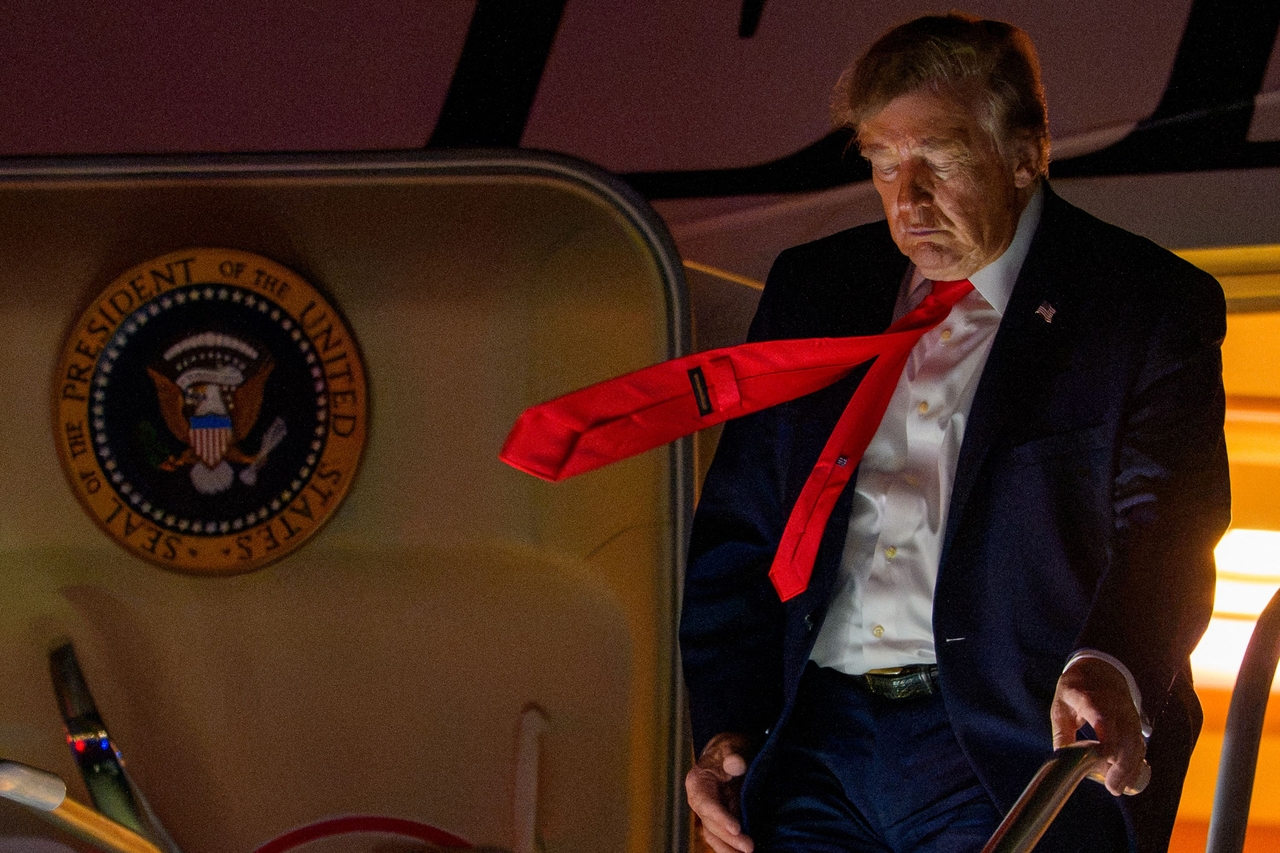
Even if the ruling Republican Party loses the US midterm elections in November, Donald Trump's broad foreign policy direction — including pushing allies to shoulder greater defense burdens — is likely to remain intact, and a defeat could actually give added momentum to North Korea-US dialogue as Trump seeks to stave off a lame-duck dynamic, a state-run research institute said.
Ha Gyeong-seok, a research fellow at the Institute for National Security Strategy, laid out the assessment Friday in a report titled "US Midterm Elections and the Trump Administration's Security Policy: Change and Continuity."
The report said that if the Democratic Party secures a majority in the House or both chambers, Trump could expand pursuit of foreign policy initiatives — including North Korea-US dialogue — driven by executive authority. A president facing domestic political constraints would likely seek an outlet in diplomacy, where presidential discretion is comparatively wide, the report said.
"If congressional checks intensify, Trump may try to prevent a lame-duck situation and seize control of the political agenda through summit diplomacy — such as North Korea-US talks — and executive action," the report said. It described a North Korea-US summit as "an agenda item whose driving force could grow as a president facing domestic political constraints pursues a diplomatic legacy."
During Trump's first term, North Korea-US summit diplomacy spanned the period before and after the midterms. The Singapore summit in June 2018 was followed by the Hanoi summit in February 2019 and the Panmunjom meeting in June of that year — both after the Democratic Party captured the House in the 2018 midterms.
However, the report cautioned that even if a Democratic-majority Congress raises the incentive for Trump to pursue talks, it does not guarantee North Korea's participation. Citing the first-term experience, the report said it "shows that a president who has lost the House majority can still pursue vigorous summit diplomacy," but also "suggests that holding a summit alone does not guarantee concessions from the other side or a sustainable agreement."
The report also said South Korea must prepare for the possibility that negotiations between Washington and Pyongyang could treat threats to the US mainland and threats facing South Korea as separate issues.
"There is a need to prepare a 'Plan B' for a partial North Korea-US agreement that does not sufficiently reflect South Korea's security interests," the report said, adding that Seoul should "consult with Washington to ensure that management of threats to the US mainland and management of nuclear and conventional threats against South Korea are not handled separately." It further recommended that South Korea "coordinate in advance with the United States on denuclearization goals and military posture, and seek common ground to connect North Korea-US dialogue to improvements in inter-Korean relations."
The report also projected that regardless of the midterm outcome, Trump's overarching security strategy of expanding allied burden-sharing would remain in place. It pointed to the 2018 midterms, in which Democrats won the House majority but failed to alter the Trump administration's competitive posture toward China.
"Even if political constraints on Donald Trump grow, demands for expanded defense cost-sharing on the Korean Peninsula and regional contributions are likely to continue," the report said. "In preparation, South Korea needs to strengthen not only consultations with the administration but also its congressional diplomacy."
arin@heraldcorp.com