Second regional field trip follows earlier Chungcheong visit
Minister hears calls for GPU support, public procurement from student entrepreneurs
Industrial hemp special zone regulation, SME transition support also on agenda
Yeongju local commercial district rounds out two-day schedule
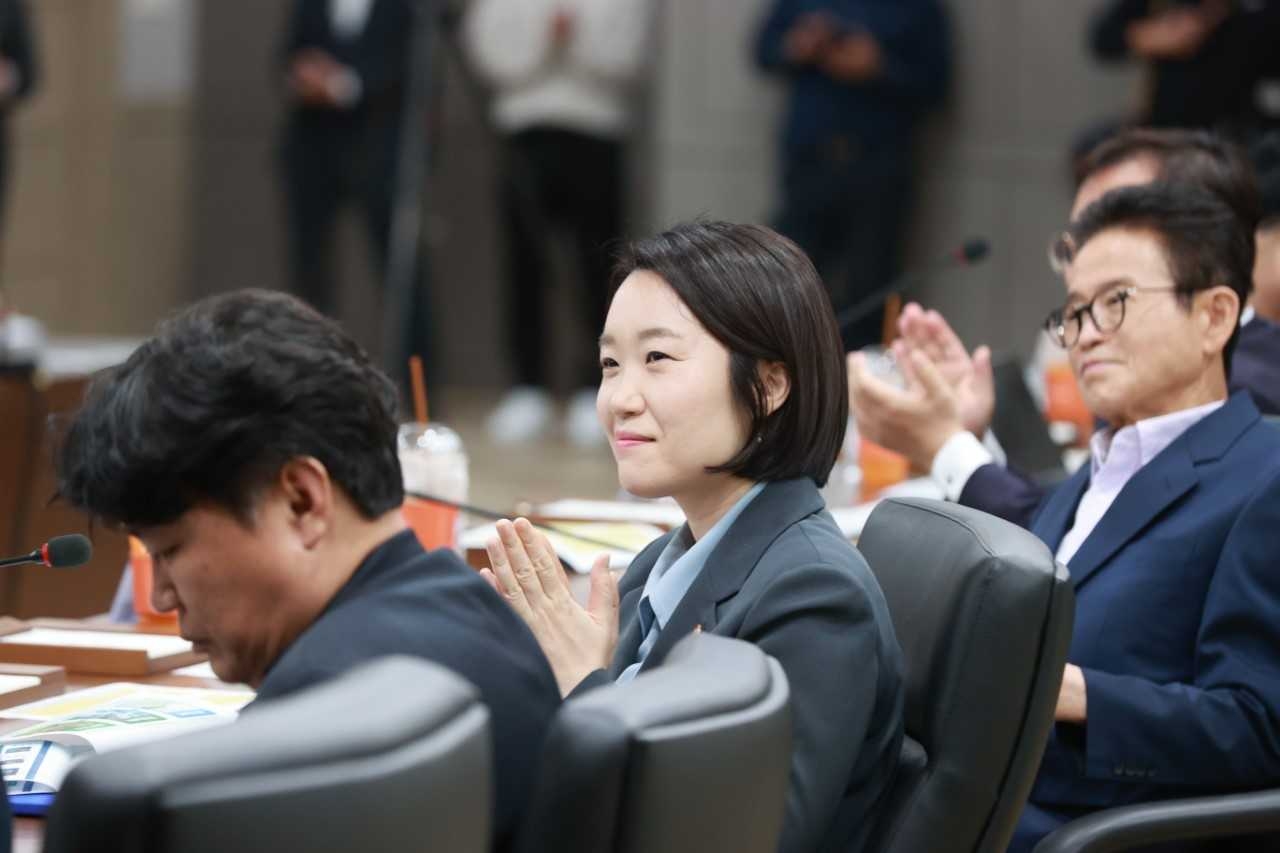
Minister of SMEs and Startups Lee So-young spent two days visiting startups, small and medium-sized manufacturers and local commercial districts across Ulsan and North Gyeongsang Province, pledging to incorporate calls for new-industry transition support and regulatory reform into policy.
Lee conducted the overnight "Into the Field" schedule from Friday through Saturday, staying in each region to listen directly to businesses and entrepreneurs. The trip was the second in a series of regional overnight field visits, following an earlier stop in the Chungcheong region.
Lee began at Ulsan National Institute of Science and Technology (UNIST), touring research facilities that underpin deep tech startups and meeting student entrepreneurs and startup club members. Discussions focused on ways to energize the local startup ecosystem by drawing on the university's research capabilities and the industrial base of nearby large corporations.
Students urged the government to extend startup support beyond the proof-of-concept stage to include actual procurement of products and services by public institutions. They also called for expanded infrastructure support, including GPUs needed for AI development.
Lee then visited HanJungNCS, an ESS cooling system manufacturer in Yeongcheon, North Gyeongsang Province. The company started out as an auto-parts maker and, over 15 years of technology development, pivoted to become a specialist in ESS cooling systems.
Lee reviewed the company's manufacturing processes and smart-factory operations, describing HanJungNCS as a small and medium-sized enterprise capable of playing a key role in realizing an "Electro-state" and in the government's three major mega-projects.
Company representatives said established small businesses sometimes find it difficult to access government support when pivoting to new industries, and requested policy-level assistance.
Companies that already have production facilities and a workforce need more than technology development when entering a new sector — they also require equipment conversion and improvements to production processes. The visit surfaced calls to broaden the scope of government support to cover the full business-transition process for existing firms.
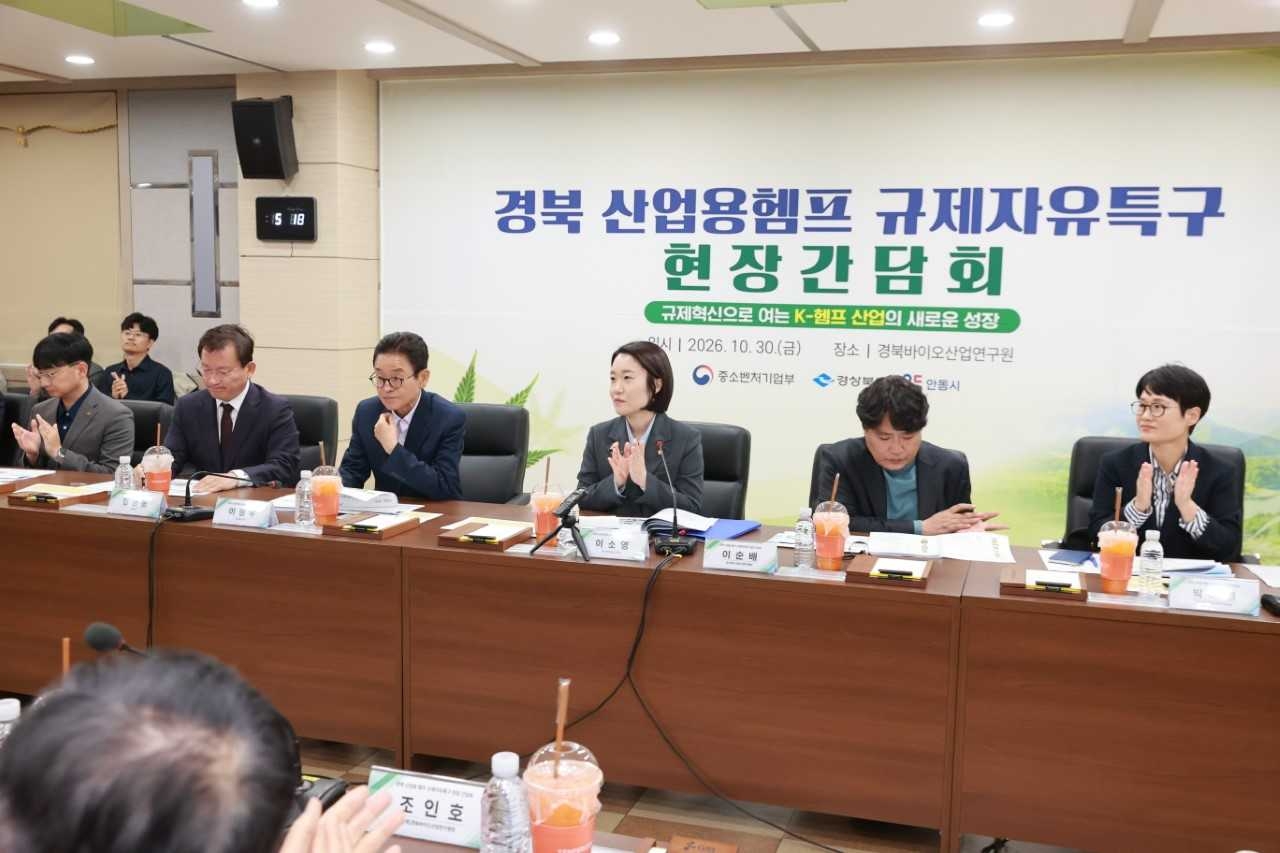
On the same day, Lee visited the industrial hemp regulatory-free special zone in Andong, North Gyeongsang Province. Joined by North Gyeongsang Province Governor Lee Cheol-woo and Assembly member Kim Hyeong-dong, Lee reviewed the zone's pilot results and discussed regulatory reform and institutionalization with companies operating there.
Key issues raised on the ground included the need to amend the Narcotics Control Act, the establishment of Good Manufacturing Practice facilities and other production infrastructure, and stronger commercialization support.
"We will take a comprehensive look at the cultivation and extraction technologies accumulated in the North Gyeongsang Province hemp special zone, the full-cycle safety management pilot results, and the rationale behind existing regulations," Lee said. "Working with the Ministry of Food and Drug Safety and other relevant ministries, we will seek a direction for building a rational regulatory framework that ensures safety while supporting the growth of new industries."
On the second day, Lee visited the original downtown commercial district of Yeongju, North Gyeongsang Province. Yeongju was selected this year as one of the Ministry of SMEs and Startups' "glocal" commercial districts in recognition of its competitiveness built around local food products such as octopus, apples and ginseng. The district is currently developing its commercial identity around the "Yeongju Octopus 1955" brand.
After touring the area, Lee held a tea-table meeting with small business owners and commercial district planners to discuss ways to revitalize the district using local resources.
"Yeongju is a place that can build differentiated competitiveness on the strength of its unique stories and rich local resources," Lee said, emphasizing the leading role of local merchants, local entrepreneurs and commercial district planners.
Lee also attended the opening ceremony of the "Korea Grand Festival" in Andong. Running from Thursday through Nov. 15, the event is a cross-ministry consumer festival involving 10 government ministries, large corporations and small businesses — about 40,000 companies in total. "We will make every effort to develop this into a world-class representative festival," Lee said at the ceremony.
Wrapping up the two-day schedule, Lee said, "The starting point of government policy — on regional startups, manufacturing innovation, new-industry regulation and small-business vitalization — is the policy customers in the field," adding, "Building on this visit, we will create changes that citizens and businesses can actually feel, through regulatory reform and policy feedback."
The Ministry of SMEs and Startups plans to continue regional field visits nationwide to identify policy needs by area and expand communication with small businesses and small business owners.
Within the small and medium-sized business community, there are calls for these field visits to translate into substantive policy improvements rather than one-off trips. Because startup ecosystems, key industries and the business environments companies face differ by region, tailored policies that reflect on-the-ground needs are seen as more effective than uniform support. How much of the regulatory reform and expanded support requested in the field will be reflected in interministerial consultations and follow-up policy is cited as the key challenge going forward.
boo@heraldcorp.com