Fall detection, sleep management and care handoffs integrated into one platform
AI robots cut labor costs as patrol function planned for expansion
Senior market projected to reach 168 trillion won by 2030
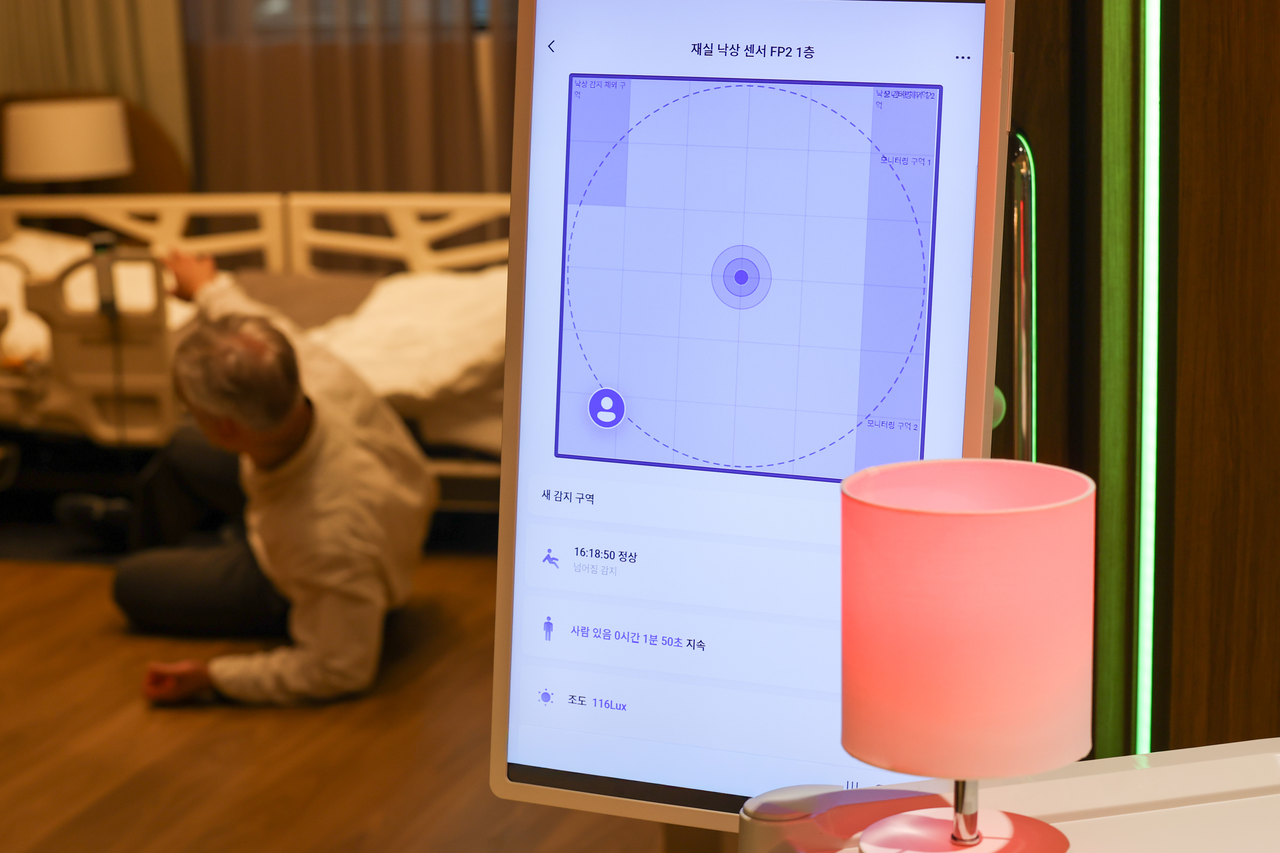
"A fall has been detected."
On Tuesday at Solache Home Misa, a senior care facility in Hanam, Gyeonggi Province, a reporter watched as staff staged a fall inside one of the resident rooms. The moment the scenario played out, a smart light at the nursing station flashed red. Seconds later, a tablet held by a nurse displayed the room number and the time of the incident. A radar sensor installed near the bed had detected the fall and immediately alerted caregivers.
Stepping into the bathroom triggered a yellow light. Getting out of bed brought up a blue one. The system is designed so that caregivers can monitor residents' movements and spot warning signs without checking each room in person.
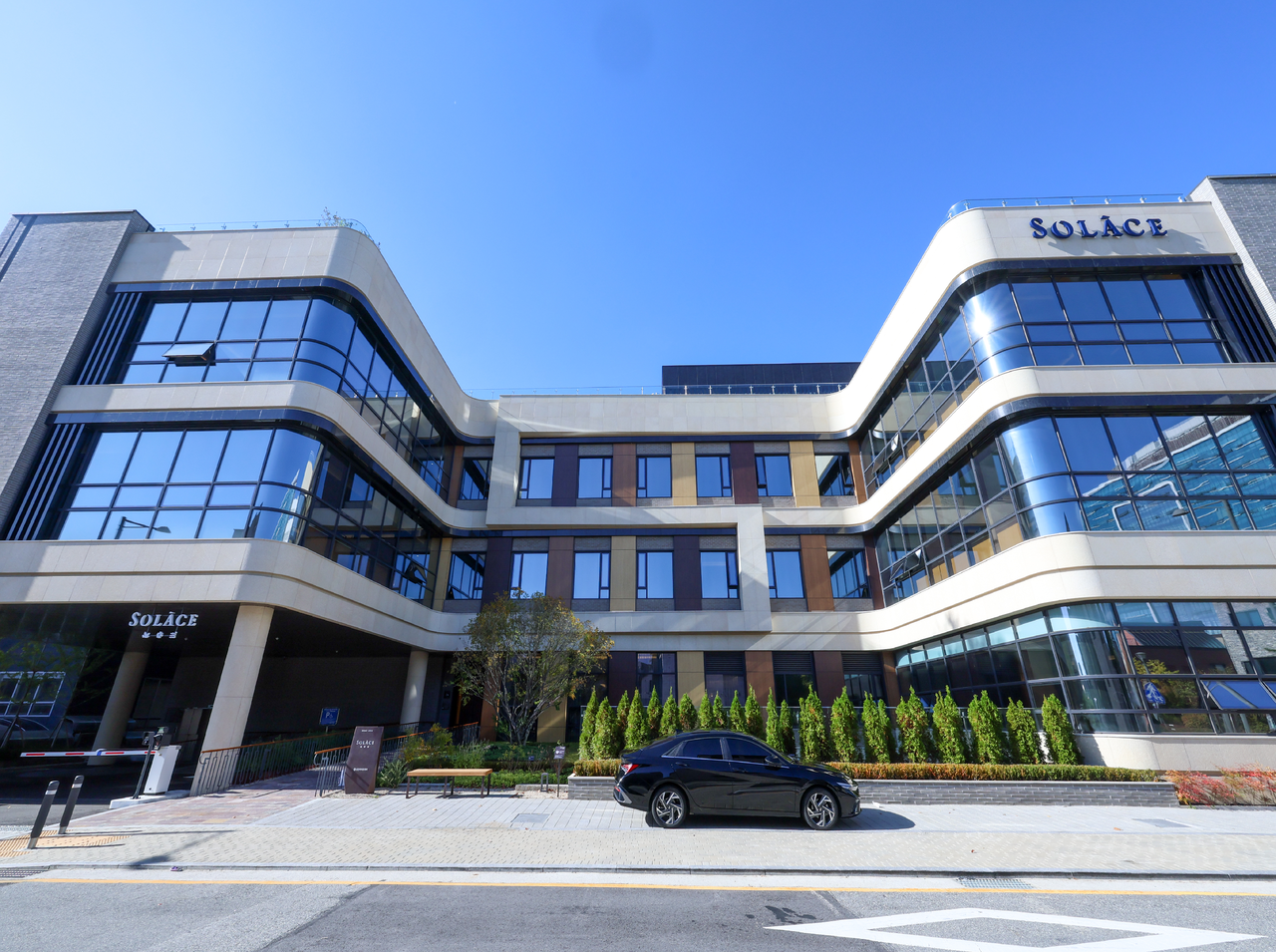
The demonstration took place at LG Uplus's proof-of-concept site for "AI Building Net by ixi," deployed at Shinhan Life Care's Solache Home Misa. AI Building Net is an AI platform that connects Internet of Things sensors, closed-circuit television cameras and robots inside a building to deliver tailored services to occupants. Unlike conventional smart-building systems focused on facility management, the platform centers on the health and safety of the people who use the space.
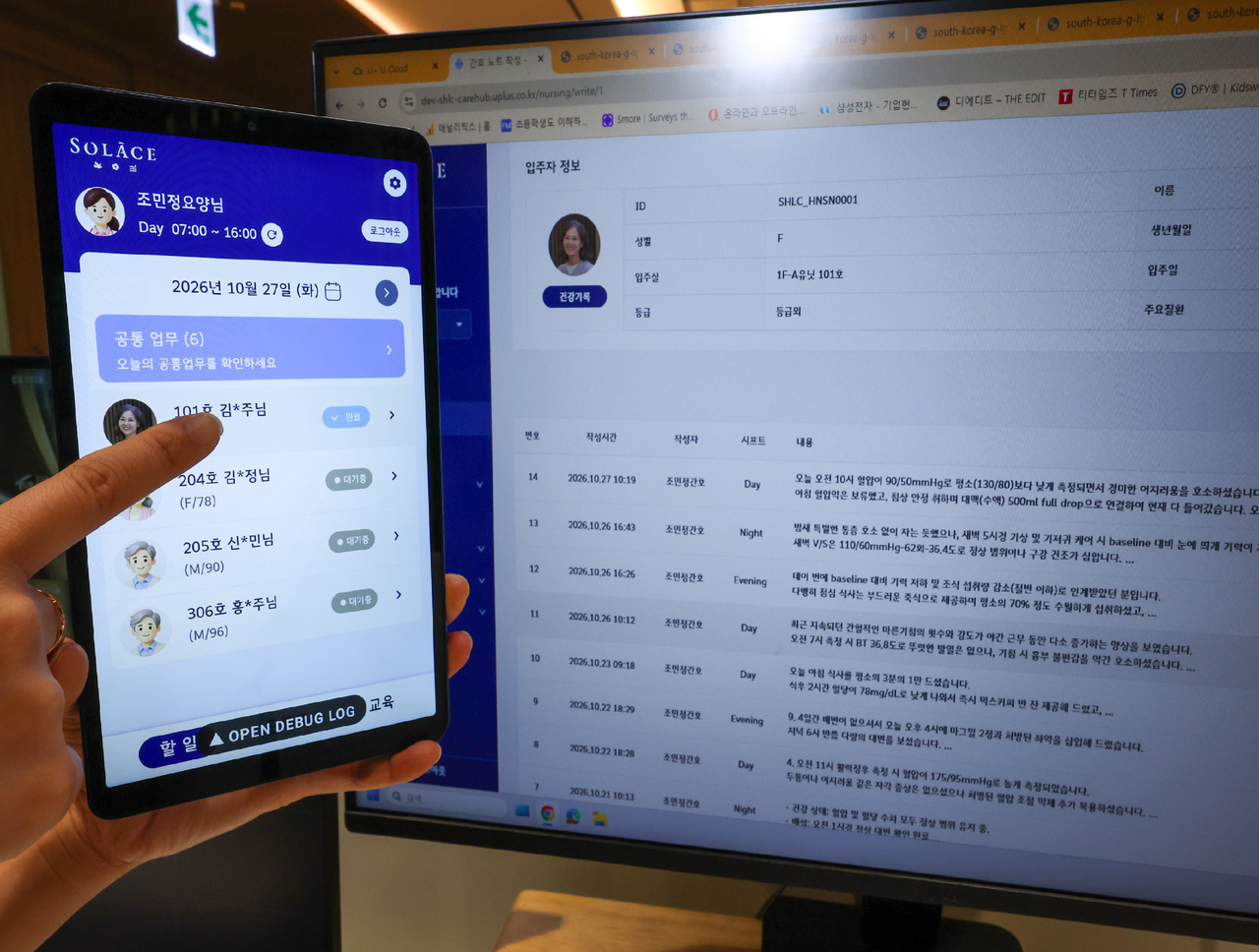
The platform's core service is Wellness Note, an integrated system that manages caregivers' tasks alongside individual residents' health records. It digitizes the health status updates and special notes that nurses and care workers previously wrote by hand, and automatically passes the information to the next shift. During the on-site demonstration, the Wellness Note screen showed each staff member's task list and completion status. When a nurse entered a required action for a specific resident, it was automatically added to the assigned care worker's task list as well.
Shinhan Life Care said it plans to use the system to raise the quality of care its staff delivers. "Because employees work in shifts, we needed a system that could manage information continuously," said Jung Han-na, a division head at Shinhan Life Care. "Previously, handwritten records meant details were sometimes missed during shift handovers — that problem has now been resolved." Jung added that the company plans to develop the system further so staff can review data more efficiently and communicate more smoothly with residents' families.
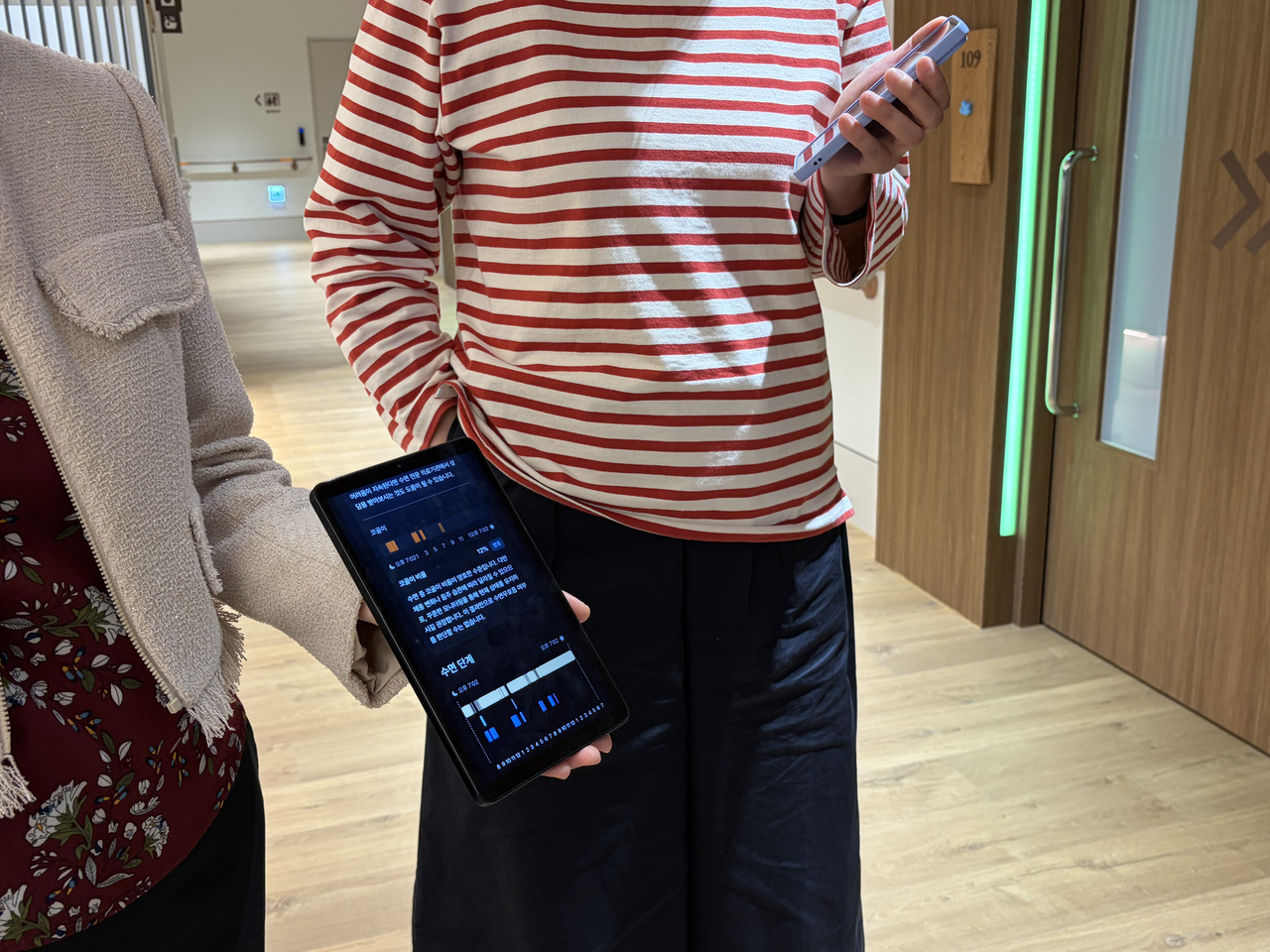
AI-assisted sleep management is also being tested at the site. During the visit, staff demonstrated "AI Call," a feature in which an AI places a phone call to a resident to check on sleep quality. When a user told the AI that sleep was not coming easily, the AI responded at natural intervals, suggested using a nightlight and kept the conversation going in a relaxed tone. "Poor sleep the previous night increases the likelihood of a fall the following day — that is the problem we developed this technology to address," said Jung Eun-jin, a team leader in LG Uplus's fixed-line business division. "We built it around ixi, our in-house AI, and blend in various AI models to bring the technology to life."
LG Uplus said it sees significant value in the on-site data the solution collects. The company aims to analyze residents' movement patterns, lifestyle habits and spoken interactions to deliver AI-personalized care. Given the sensitivity of the data being accumulated, the company said it has invested heavily in privacy protection. "Data ownership rests with Shinhan Life Care, and LG Uplus cannot access it without authorization," Jung said. "For AI analysis, we use data processed at the room level with personally identifiable information such as names masked."
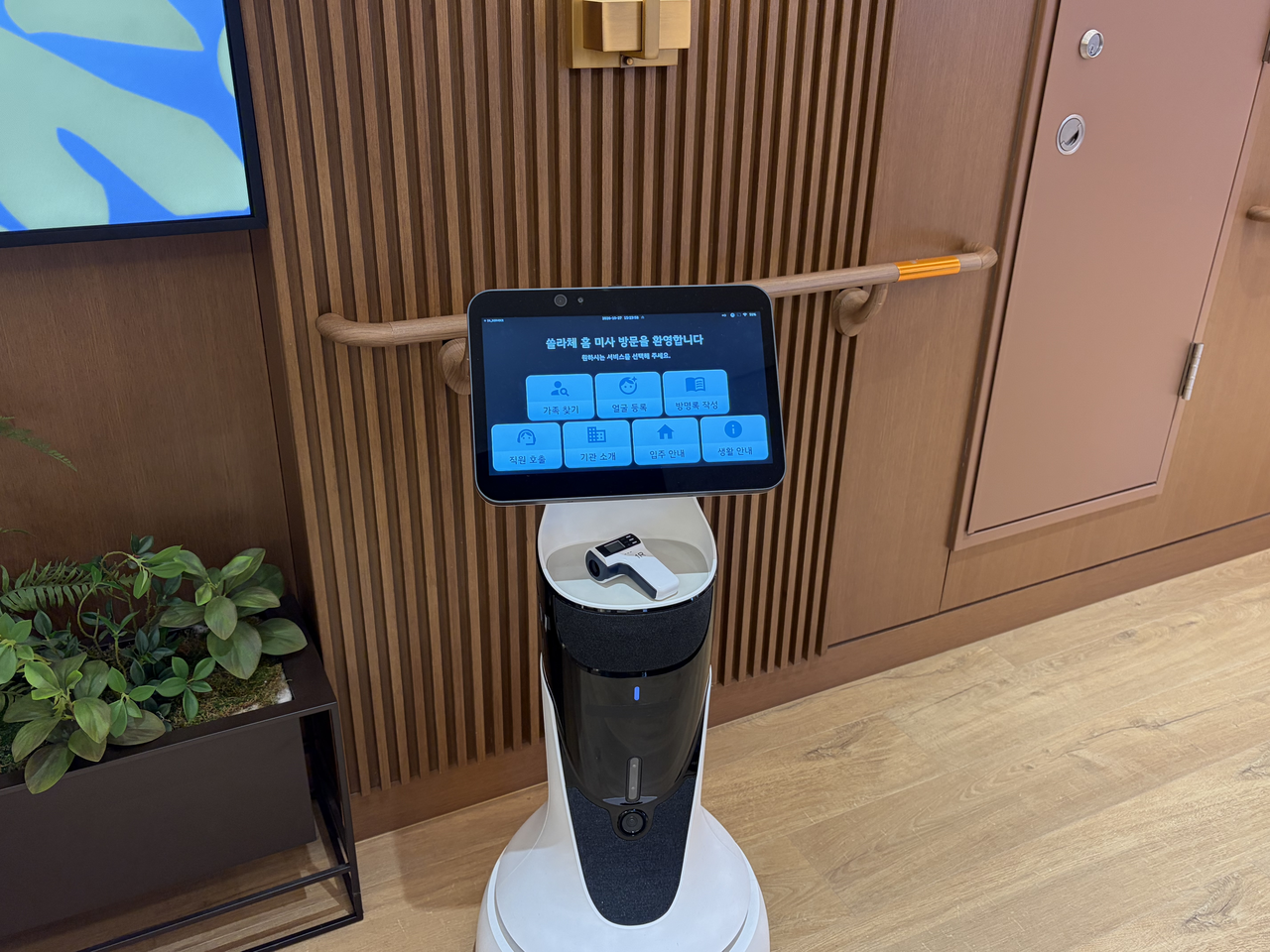
The platform is also designed to improve cost efficiency through labor savings. The AI robot Wico, deployed in the facility's first-floor lobby, is a prime example. As the reporter entered, Wico offered a greeting and assisted with visitor registration. The robot provided directions to the elevator and could connect visitors with staff via video call. "We also plan to add a patrol function so that when IoT sensors detect an anomaly, the robot goes to check the scene," Jung said. "For a care facility housing around 200 residents, we expect one Wico unit to handle the workload of one staff member, which we estimate would improve annual operating profit by about 1.5 percent."
LG Uplus is currently running a proof-of-concept for AI Building Net with some of the rooms and residents at Solache Home Misa. Starting next year, the company plans to officially add safety and space solutions to the platform and expand the project to senior residential facilities, general housing and office buildings. Shinhan Life Care also plans to roll out the technology at a new facility in Busan's Haeundae district scheduled to open in April next year.
LG Uplus said it aims to capture an early lead in the fast-growing care services market. As of last September, about 1.16 million people were certified for long-term care, and the long-term care market stood at around 16.2 trillion won ($12.1 billion), according to the company. The age-friendly industry is projected to grow to 168 trillion won by 2030. "Looking at our senior-related business as a whole, we are targeting sales of between 40 billion and 50 billion won next year," said Joo Eom-gae, a senior managing director in LG Uplus's fixed-line business division.
chami@heraldcorp.com