Carcinogens detected in all tobacco products tested, including heated and liquid e-cigarettes
NNN and NNK found in heated tobacco emissions; arsenic detected in liquid e-cigarette base
Officials warn lower readings do not mean safer products, threaten legal action over misleading marketing
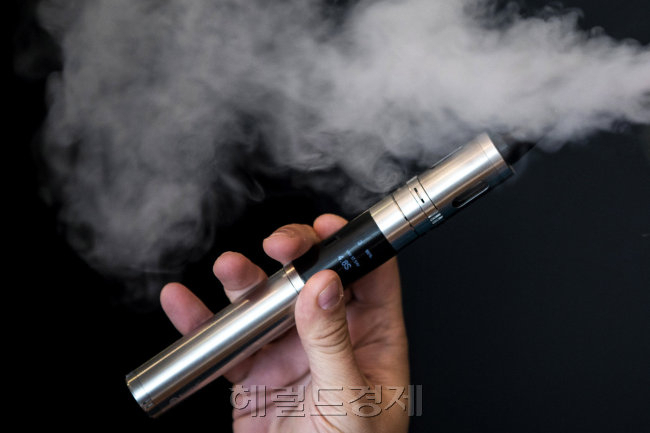
Formaldehyde, NNN and other Group 1 human carcinogens designated by the International Agency for Research on Cancer have been detected not only in conventional cigarettes but also in heated tobacco products and liquid e-cigarettes — devices long marketed as less harmful alternatives.
The findings emerged from the government's first comprehensive hazardous-substance survey of 465 tobacco products sold in South Korea, scientifically confirming that no tobacco product is safe.
The Tobacco Hazard Management Policy Committee, composed of officials from the Ministry of Food and Drug Safety and the Ministry of Health and Welfare, released the results Thursday for the first time under the Act on the Management of Tobacco Hazards, which took effect in November last year.
The survey covered 256 conventional cigarettes, 104 heated tobacco products and 105 liquid e-cigarettes from 20 manufacturers and importers. Previously, tobacco packaging was required to list only nicotine and tar content along with the names of six carcinogens. This time, authorities measured and disclosed for the first time the specific concentrations of 46 major toxic and carcinogenic substances, including formaldehyde and benzene.
All 104 heated tobacco products tested positive for formaldehyde — a Group 1 carcinogen — in their emissions, at levels of 5.4 to 12.1 micrograms per stick.
In addition, NNN, a tobacco-specific carcinogen that causes genetic mutations, was found in 87 products, and NNK in 88 products. One product also contained benzo[a]pyrene, another Group 1 carcinogen, at 3.6 nanograms per stick. Nicotine (0.1–1.2 mg) and tar (10.3–32.0 mg) were detected across all products.
Liquid e-cigarettes did not escape scrutiny either. Formaldehyde was found in 99 of the 105 products tested — 94 percent of the total — at concentrations ranging from 3.0 to 83.8 micrograms per gram of base liquid. Some products also contained NNN (two products), NNK (one product) and the heavy metal arsenic (two products, at 27.3–28.6 nanograms per gram).
For the 256 conventional cigarettes, testing under the latest international standard that reflects real-world smoking patterns — known as the intense smoking regimen — detected Group 1 carcinogens including formaldehyde, benzene, 1,3-butadiene and cadmium across all products, in addition to nicotine (0.8–2.6 mg per stick) and tar (11.7–40.4 mg per stick).
The government particularly cautioned against the misconception that lower detected levels of certain substances make e-cigarettes less harmful. Officials noted that measurements for conventional and heated tobacco products are taken from emissions per stick, while liquid e-cigarettes are measured per gram of base liquid, making direct comparisons across product types impossible. Even minimal exposure to carcinogens in tobacco cannot rule out cancer risk, they said, because multiple substances interact inside the body.
Authorities said they would strictly enforce the Act on Fair Labeling and Advertising and the National Health Promotion Act against tobacco industry marketing that misleads consumers by highlighting lower readings of specific substances.
"While the types and quantities of hazardous substances vary by product category and brand, the fact that some substances were detected at lower levels should not be taken to mean a product is less harmful to health," the committee said. "This survey confirms the presence of hazardous substances in tobacco products and must not be misread as a guide for choosing a less harmful tobacco option."
The government also plans to begin hazardous-substance testing and disclosure for synthetic nicotine e-cigarettes — recently brought under the legal definition of tobacco through an amendment to the Tobacco Business Act — starting in 2027. Authorities said they would also review regulatory measures for flavoring agents such as menthol that increase inhalation dependence.
silverpaper@heraldcorp.com