'Different parties, same goal — serving citizens'
Ko emphasizes respect and cooperation across party lines, recommending Han Sin of the transportation committee as the next honoree
Editor's note: On the floor of local councils, there are quiet, often unnoticed efforts that bring small but meaningful changes to citizens' lives. This series spotlights lawmakers recommended by their peers, exploring the work and motivations behind those recommendations. By focusing on results and cooperation rather than political conflict, it aims to show a different side of the Seoul Metropolitan Council.
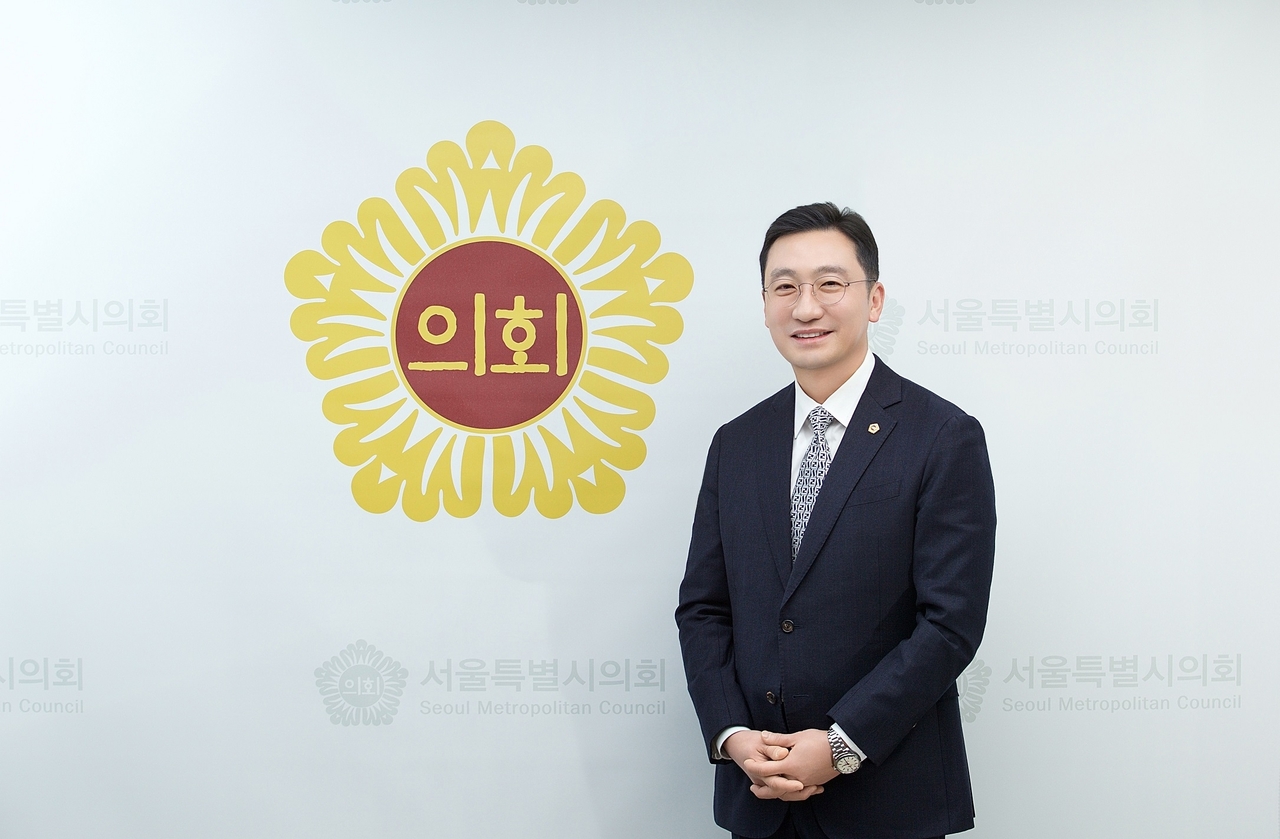
What is the secret to earning praise from fellow lawmakers across party lines? Ko Kwang-min, chair of the Seoul Metropolitan Council's Urban Planning and Balanced Development Committee (People Power Party, Seocho 3), finds the answer not in political positioning but in mutual respect. Different parties, he says, share the same goal: working for citizens.
Ko is the third subject of The Herald Business planning series "Praise over politics." Park Seung-jin, chair of the council's Housing and Space Committee (Democratic Party of Korea, Jungnang 3), recommended Ko, citing the way Ko respects and considers fellow lawmakers regardless of party affiliation.
Ko deflected the praise, saying there was nothing particularly remarkable about what he does. But as the conversation continued, his philosophy came through clearly: he values trust and cooperation among colleagues over political rivalry. A local council, in his view, should be a place where lawmakers acknowledge differing political positions yet still find ways to work together for citizens.
'Different parties, same colleagues' — a politics of respect and cooperation
The word Ko kept returning to was "colleague." Within a party, members are comrades pursuing shared goals — but inside the council chamber, all lawmakers are colleagues working for citizens, regardless of which party they belong to, Ko said.
"Members may think differently depending on their party, but I believe the purpose we pursue as city council members is the same," Ko said.
Ko also finds special meaning in the customary greeting used on the floor of the full council session — "Respected sunbae and fellow lawmakers." The phrase carries more than formality, Ko said: it embodies a council culture of recognizing and respecting one another's roles.
A constituency lawmaker must deal with a wide range of issues — transportation, housing, education, welfare — and that reality makes cooperation across committee and party lines unavoidable, Ko said. Differing political views, in his thinking, are no reason to let personal relationships grow distant.
Local councils are particularly important sites of cooperation, Ko said, because they deal directly with the everyday concerns of residents. When it comes to the inconveniences people face in their neighborhoods, there is no ruling party or opposition — solving problems requires listening to each other and finding common ground.
Even on issues where political confrontation is unavoidable, Ko said, a lawmaker must never lose the willingness to understand the other side's position.
A political dream formed in his 20s — and the responsibility that came with voters' trust
Ko's interest in politics took root when he was in his 20s. From that time, Ko carried a desire to make a meaningful contribution to the community where he would build his life. That conviction held through work, marriage and raising children, and Ko set a personal goal: enter politics before turning 50.
The path proved difficult. It was a period of division and realignment within conservative parties, and running for office as a political rookie was no easy challenge. Those around Ko gave him little chance of winning, but Ko decided to trust the judgment of residents.
When Ko ran for the Seocho-gu council and went door to door, the same message came up repeatedly: people had a positive impression of Ko personally, but doubted he could win given the state of his party.
Ko won anyway, defeating an incumbent to enter local government. The sense of responsibility toward the residents who had chosen Ko despite the odds became the foundation of his political life.
For Ko, that first election meant more than simply winning or losing. It was also a process of hearing directly what residents expected from their politicians, and of confirming how important it is to actually solve the problems a community faces.
Moving from the Seocho-gu council to the Seoul Metropolitan Council expanded Ko's stage — and deepened the sense of accountability to citizens, Ko said. The voices encountered firsthand at both the district and metropolitan levels became the standard by which Ko judges policy.
Revisiting old policies through citizens' eyes — reforming rules to fit the times
Ko's political philosophy also shapes how he looks at policy. Rather than preserving existing systems as they are, Ko believes the effectiveness of policies must be re-examined against the changed realities of citizens' lives.
Citing work on the Namsan Tunnel congestion toll and an ordinance to verify policy effectiveness, Ko said that even long-standing policies must be reviewed for revision if the conditions of the times have changed.
On Seoul's housing challenges, Ko said the city must think not only about securing new development sites but also about making more efficient use of existing urban space and removing unreasonable regulations.
When citizens' lifestyles change, government cannot remain anchored to past standards, Ko said. The benchmark for deciding whether a policy should continue must be citizens' actual lives — not administrative convenience.
Urban planning, Ko said, goes beyond arranging buildings and infrastructure. It connects directly to the environment in which citizens live and prepare for the future. Policies that strengthen the city's competitiveness and improvements that residents can feel in their daily lives must advance together.
Ko said it is important to distinguish between the original rationale behind a policy and its actual effects today. Even when a policy's intent is sound, if citizens are experiencing inconvenience in practice, reviewing and improving it is the council's job.
'More tortoise than hare' — politics aimed at goals, not rivals
Asked about political goals going forward, Ko reached for Aesop's fable of the tortoise and the hare.
"The hare ran with its eyes on its rival; the tortoise ran with its eyes on the goal," Ko said. "I'm actually more of a tortoise type."
The point, Ko said, is to focus on faithfully carrying out the role entrusted to him rather than chasing external achievements or competing with other politicians. National Assembly members, metropolitan council members and district council members each have their own roles, and what matters is quietly doing what citizens expect in that position.
Underlying that view is a conviction that a politician's accomplishments should not be measured solely by title or the size of the stage. Creating change in people's daily lives, close to where citizens are, is itself an important political responsibility.
At the end of the interview, when asked to name the next subject for "Praise over politics," Ko recommended Han Sin, chair of the Seoul Metropolitan Council's Transportation Committee (Democratic Party of Korea, Seongbuk 1). Ko said he wanted to introduce a colleague in keeping with the series' spirit of shining a light on fellow lawmakers' strengths across party lines.
Ko — who turned a dream of community service formed in his 20s into political participation and learned accountability through voters' trust — closed the interview with characteristic modesty, saying he had only shared what he normally thinks about.
Political success, Ko said, lies not in getting ahead of rivals but in how faithfully one has pursued the goal of serving citizens. Cooperation over competition, action over slogans — that, Ko said, is the approach he intends to keep consistently.
7toy7@heraldcorp.com