- 450 billion won invested, 8,496 GPUs installed
- To support national strategic R&D and AI-driven scientific innovation
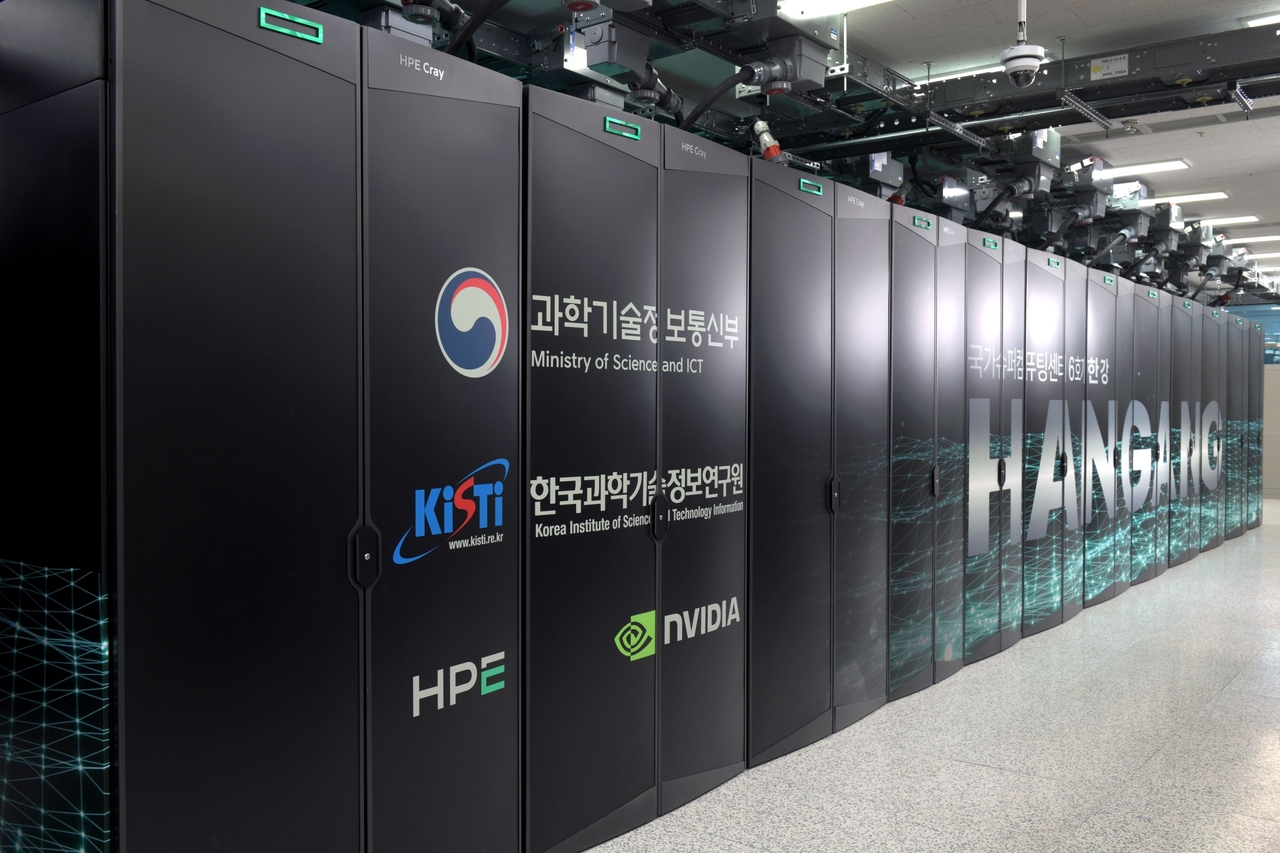
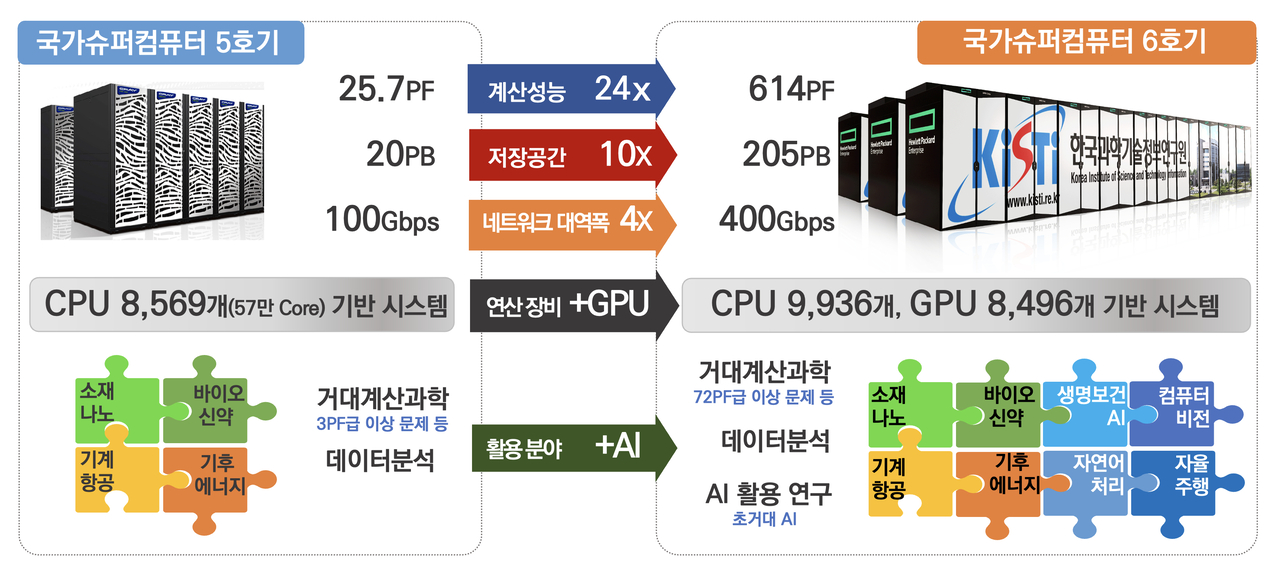
South Korea's sixth national supercomputer, Han River, has begun full operation, capable of performing 614,000 trillion calculations per second. Built at a cost of about 450 billion won ($337 million), the machine delivers computing performance 24 times greater than its predecessor and ranks among the top 10 supercomputers in the world.
The Ministry of Science and ICT and the Korea Institute of Science and Technology Information (KISTI) held a launch ceremony for Han River at KISTI's headquarters in Daejeon on Monday.
Han River replaces Nurion, the fifth national supercomputer introduced in 2018. Although construction ran about two years behind schedule, the new system delivers major gains in computing performance, storage capacity and data processing speed.
Han River's theoretical computing performance stands at 614 petaflops, enabling 614,000 trillion operations per second. The system is built around Nvidia's GH200 integrated CPU-GPU accelerators and is equipped with 8,496 GPUs and 9,936 CPUs. Storage capacity reaches 205 petabytes — 10 times that of Nurion — while network performance is four times faster.
The system is expected to break into the top 10 of the Top500, the global supercomputer performance ranking, when results are announced later this month.
Unlike much of the current race to build AI infrastructure, Han River is designed with an emphasis on large-scale scientific computing and simulation. Computing resources are allocated with 70 percent dedicated to traditional high-performance computing and 30 percent to AI workloads.
"Scientific research is not conducted through experiment and theory alone — supercomputers are essential for simulation, data analysis and AI research," KISTI President Lee Sik said. "Han River is focused on large-scale scientific simulation performance rather than AI capability per se."
Han River's research resources are allocated with 55 percent going to basic and applied R&D, 30 percent to national strategic research, and 15 percent to manufacturing AI convergence and new industry development.
The system is set to support a wide range of national priorities — including the government's "K-Moonshot" initiative to tackle major scientific challenges — as well as research into next-generation batteries and semiconductors, extreme weather forecasting and advanced materials development.
Nurion supported 1,730 research projects over eight years and produced 1,520 papers indexed in SCI(E) journals, including 70 published in Nature, Science, Cell and their sister journals. The system maintained an uptime rate of 99 percent and an average utilization rate of 78 percent.
Han River is currently in a pilot service phase and will begin official service on Dec. 16.
KISTI also plans to introduce a quantum computer next year, with the aim of building a hybrid computing environment that links the quantum system with Han River to tackle complex scientific problems beyond the reach of conventional computers alone.
"We plan to unveil a quantum computer next year and pursue hybrid computing in conjunction with the supercomputer," Lee said.
nbgkoo@heraldcorp.com