Korea, Singapore sign smart farm MOU
Korea contributes 72% of ASEAN emergency rice reserve, to supply 5,900 tons this year
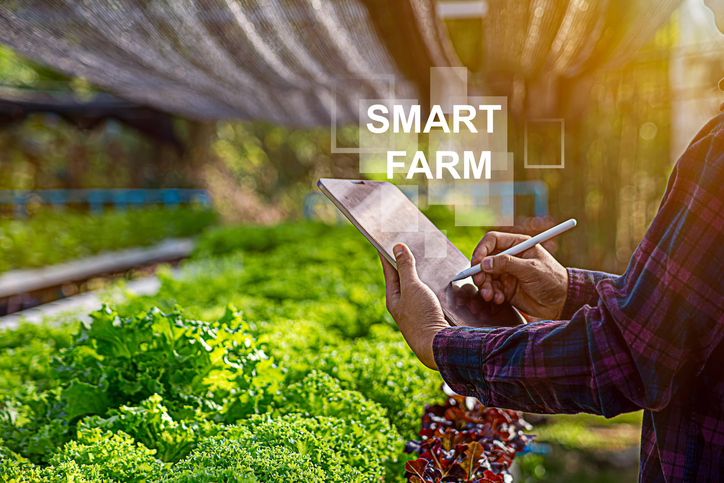
South Korea and Singapore will establish a joint committee to expand cooperation in smart farming, with plans to share agricultural technology and policy information and promote collaboration between companies and institutions in both countries to help Korean smart farm firms enter the Singaporean market.
South Korea's Ministry of Agriculture, Food and Rural Affairs said Monday that Vice Minister Kim Jong-gu met Singapore's Minister for Sustainability and the Environment Grace Fu in Singapore on Friday and signed an MOU on smart farm cooperation.
The MOU covers the establishment of a bilateral smart farm joint committee, exchanges of smart agriculture technology and policy information, and the promotion of cooperation between related companies and institutions. The ministry said it plans to use the agreement to invigorate agricultural industry exchanges between the two countries and support Korean smart farm companies seeking to enter the Singaporean market.
Kim also attended the 26th ASEAN+3 Ministers on Agriculture and Forestry meeting held the same day, where participants discussed ways to strengthen regional food security and respond to climate change.
South Korea participates in the ASEAN Plus Three Emergency Rice Reserve, known as APTERR, which was established to prepare for emergencies such as natural disasters in the ASEAN region. Of the 780,000 tons accumulated since APTERR began operating in 2013, South Korea has contributed 72 percent. The country plans to supply an additional 5,900 tons this year.
In a keynote address, Kim called for building emergency food security networks, coordinating responses to climate change, and accelerating the spread of digital technology in agriculture. Kim also introduced South Korea's smart agriculture capabilities, including data-driven crop growth management, AI-based pest and disease monitoring, drone-based pest control, and the use of agriculture- and forestry-dedicated satellites.
Kim also visited local agricultural facilities and hansik distribution sites. At GreenPhyto, a Singapore-based indoor vertical farming company, Kim examined automation and AI-driven precision agriculture technology and explored ways to facilitate technology exchanges with Korean smart farm companies.
Kim then met with representatives from local Korean restaurants, agricultural food importers and distributors, and local subsidiaries of Korean food companies to review consumer trends for Korean products including Hanwoo beef, Hanu pork and traditional liquors. Kim also visited Culina, a premium food retail store, to discuss ways to expand exports.
"This ASEAN+3 Ministers on Agriculture and Forestry meeting was meaningful in that it strengthened solidarity and cooperation among member states to ensure regional food security amid natural disasters made more frequent by climate change and the global supply chain crisis," Kim said. "We will spare no support — through information exchange, technology cooperation, research collaboration and marketing — to expand exports of our agricultural industry, including smart farms, and K-food to Singapore."
adastra@heraldcorp.com