Korea Institute of Civil Engineering and Building Technology develops AI-based underground environmental risk management system
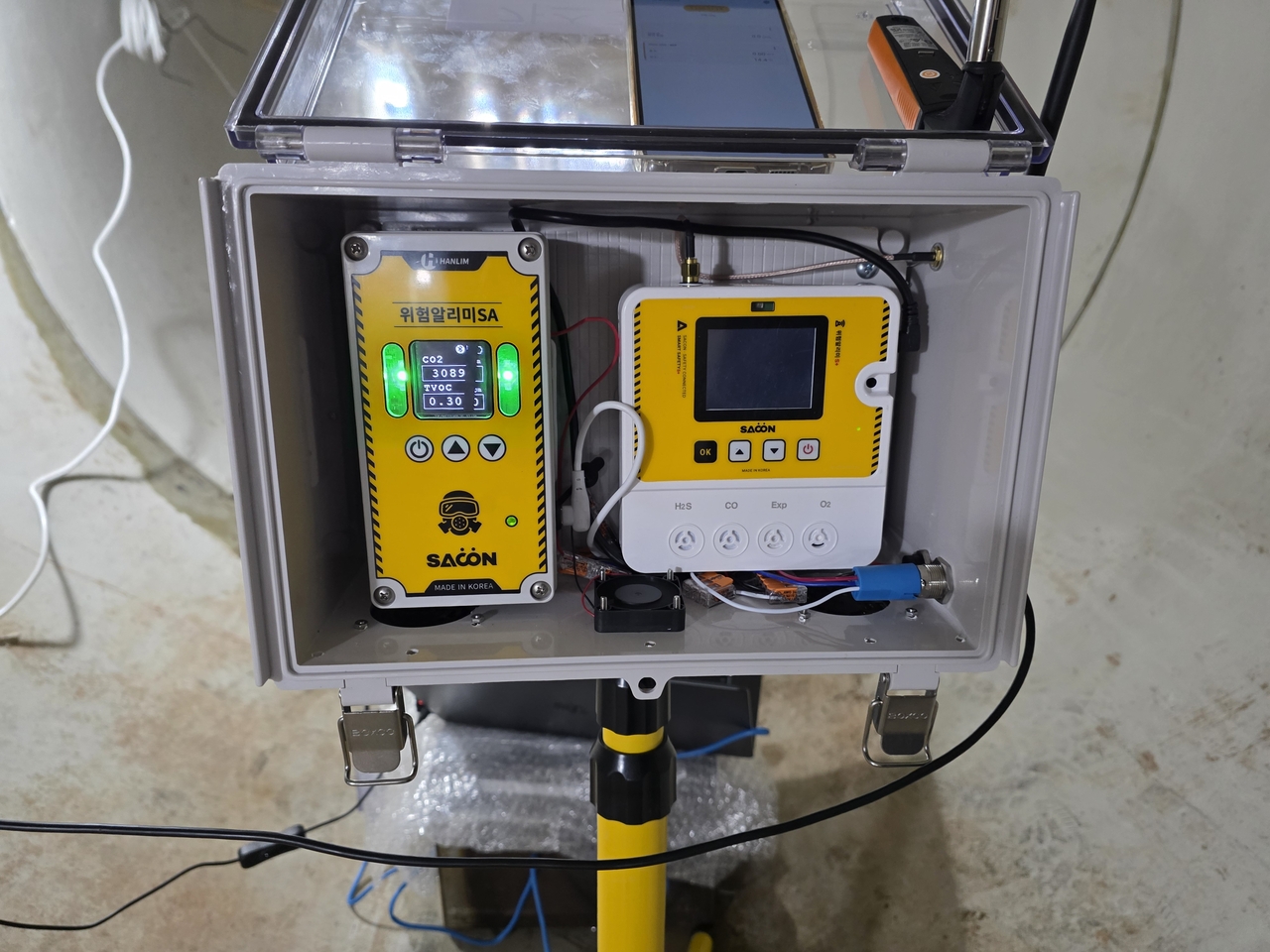
South Korean researchers have developed AI technology capable of predicting toxic gas concentrations even in underground spaces where no sensors are installed.
The Korea Institute of Civil Engineering and Building Technology announced Monday that a research team led by Senior Research Fellow Kim Young-seok of the Geotechnical Engineering Research Institute has developed an "underground environmental risk management system" combining the Internet of Things and AI.
Enclosed construction sites such as tunnels and underground pipelines carry a high risk of toxic gas accidents. Excavation, blasting, diesel equipment operation and welding can all generate carbon monoxide, hydrogen sulfide and volatile organic compounds. Without adequate ventilation, toxic gases can spread rapidly or oxygen levels can drop, potentially causing mass casualties.
Existing safety management systems measure gas concentrations at points where sensors are installed and trigger alarms when readings exceed danger thresholds. They have been limited, however, in detecting hazards in blind spots without sensors or predicting where toxic gases might spread.
To address these shortcomings, the research team developed technology that uses AI to analyze toxic gas concentrations, temperature, humidity and airflow data measured on site.
The core capability is estimating the gas concentration distribution across an entire underground space using only a limited number of sensor readings. The AI analyzes real-time measurement data to predict the movement paths and concentration changes of toxic gases, and identifies both the source location and the direction of spread.
The research team conducted indoor experiments simulating various environments as well as tests in actual large-diameter pipelines and box-culvert tunnels. As a result, the team succeeded in estimating gas concentration distribution across 14 points using measurements collected from just two sensors.
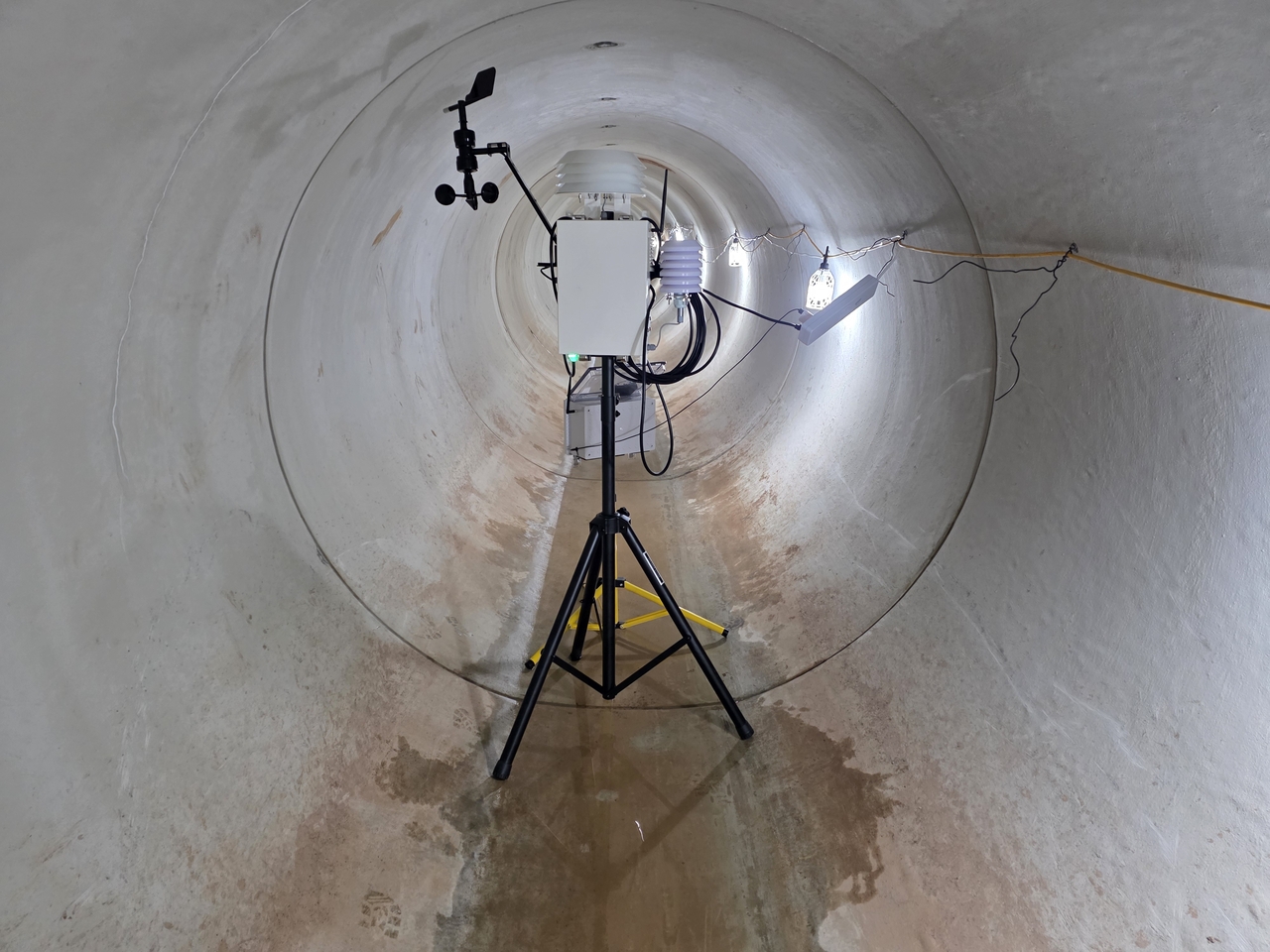
The team also confirmed that data collected over roughly 30 seconds after a gas release can pinpoint the section where the toxic gas originated. The system can integrate and analyze data from different types of sensors, making it compatible with existing on-site measurement equipment.
The technology marks a shift away from the conventional safety management approach of sounding an alarm only after an incident occurs, enabling hazards to be anticipated and addressed in advance. It is also expected to help reduce safety blind spots in underground spaces where installing sensors is difficult.
The institute plans to first apply the technology at tunnel construction and maintenance sites to further verify sensor placement, communication reliability and concentration prediction performance. It will then expand the scope to a range of underground infrastructure, including underground pipelines, power cable tunnels and utility tunnels.
Korea Institute of Civil Engineering and Building Technology President Park Sun-gyu said the technology "is meaningful in that it identifies risks in underground work environments that are invisible to the eye, giving workers time to respond." Park added that the institute would "contribute to preventing serious accidents at construction sites by applying it to tunnels first and then to various other underground spaces."
nbgkoo@heraldcorp.com