Financial Services Commission announces reform of accounts-receivable-backed loan system
Maximum maturity on trade receivables cut from 90 days to 60 days
117 trillion won in assets eligible for early cash conversion; annual interest savings of 36.3 billion won
Recourse rights imposed on selling firms to be abolished
South Korea's financial authorities will sharply reduce the interest burden on accounts-receivable-backed loans — known locally as "oedamdae" — used by small and medium-sized enterprises and small business owners. The government plans to cut the maximum maturity on trade receivables from 90 days to 60 days, lowering interest costs and accelerating cash conversion. The change is expected to save borrowing companies up to about 36.3 billion won ($27.1 million) a year in interest and expand assets eligible for early cash conversion to 117 trillion won.
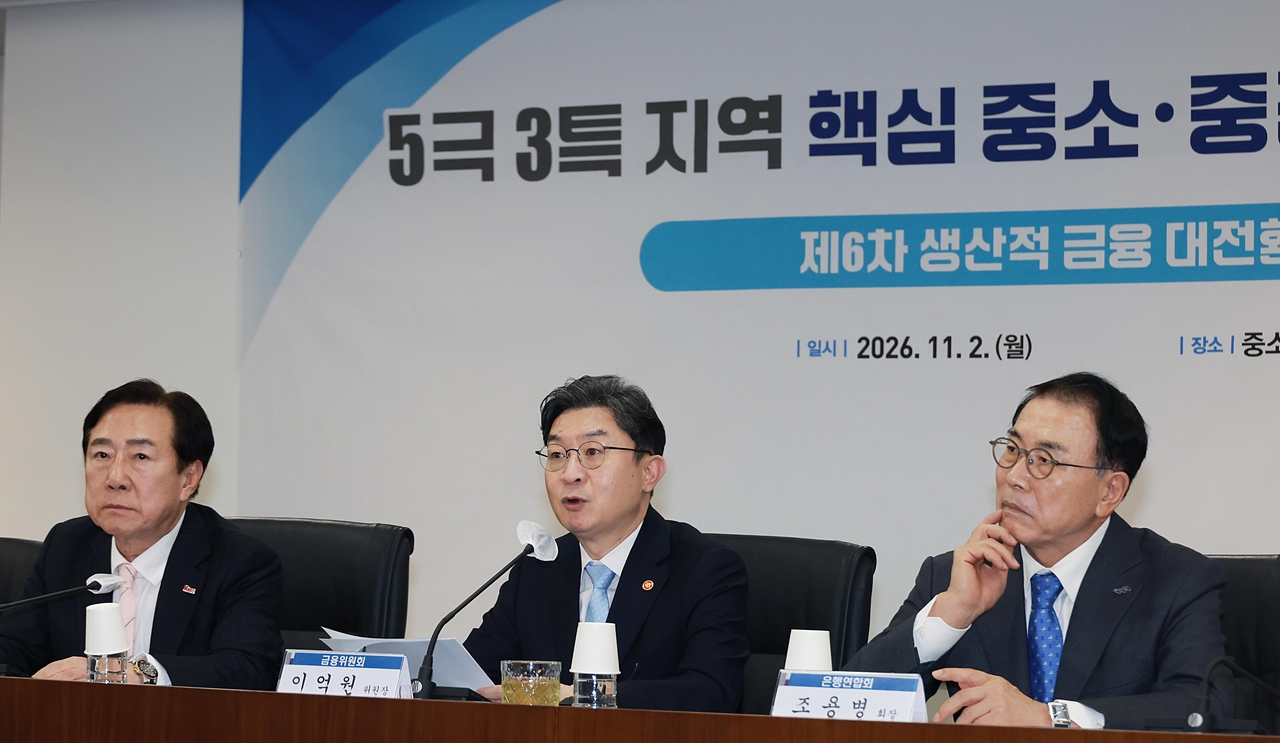
The Financial Services Commission finalized the reform plan Monday afternoon at the sixth Productive Finance Transformation conference held at the Korea Federation of SMEs in Yeouido, Seoul.
Small and medium-sized enterprises typically participate in the supply chains of large or mid-sized conglomerates, delivering goods and receiving payment in cash, trade receivables or promissory notes. In this arrangement, the supplying firm is the selling company and the large or mid-sized conglomerate is the buying company.
When a selling company cannot receive payment immediately, it takes out a loan backed by its trade receivables — the so-called oedamdae. As of the end of last year, the total value of trade receivables issued stood at 527 trillion won, while oedamdae lending reached 56 trillion won. More than 97 percent of oedamdae borrowers were small and medium-sized enterprises or small business owners.
Under the reform, the settlement cycle and loan maturity on trade receivables — currently up to 90 days — will be shortened to 60 days. A shorter maturity translates into a lower interest rate, and the FSC estimates the change will reduce annual interest costs for oedamdae users by up to about 36.3 billion won.
"If payments are received more quickly, we believe the financial situation of suppliers can improve," FSC banking division chief Shin Jang-su said at a briefing Monday.
The authorities will also abolish the recourse rights that banks currently hold against selling companies. Banks have set recourse rights against selling companies on roughly half of all new oedamdae loans — effectively transferring the repayment risk to the selling firm, even though the actual repayment obligation lies with the buying company.
The FSC decided to abolish recourse rights in principle on all new oedamdae loans starting in January. The move is expected to reduce contingent liabilities by 26.9 trillion won.
The FSC also directed banks to refund prepaid interest collected from selling companies when a buying company settles its payment early and the selling company repays the oedamdae ahead of schedule. Some banks had previously been refunding such early-repayment interest only to buying companies.
The FSC will also expand eligibility for "win-win payment loans" — financing that second-tier and lower-tier suppliers receive based on the creditworthiness of buying companies — to include firms with a credit rating of BBB or above, bringing the threshold in line with the standard applied to oedamdae lending.
The FSC said it will shorten the settlement cycle for trade receivables and oedamdae loans starting in February, following the completion of system development. The remaining measures will take effect Jan. 1.
Some observers have raised concerns that banks may tighten their oedamdae lending standards in response to the changes. Shin acknowledged the theoretical possibility but played down the risk. "Banks could theoretically do that as part of strengthening risk management, but given the discussions we have had through the relevant TF, I do not think it is a cause for concern," Shin said. Another FSC official added that oedamdae is "not a product banks sell to turn a profit" and that they would step up "in a spirit of mutual benefit."
hyuk@heraldcorp.com