Korean Academy of Engineering's semiconductor panel to present 10-month study
Forum to outline strategy for sustaining South Korea's semiconductor boom
Samsung Electronics, SK hynix record earnings backdrop to future growth talks
South Korea's leading semiconductor experts are set to unveil a development strategy aimed at sustaining the country's chip industry through an unprecedented boom.
With the semiconductor sector riding a wave of AI-driven demand and emerging as a key force shaping global technological supremacy, the forum will lay out a direction for South Korea's chip industry to follow.
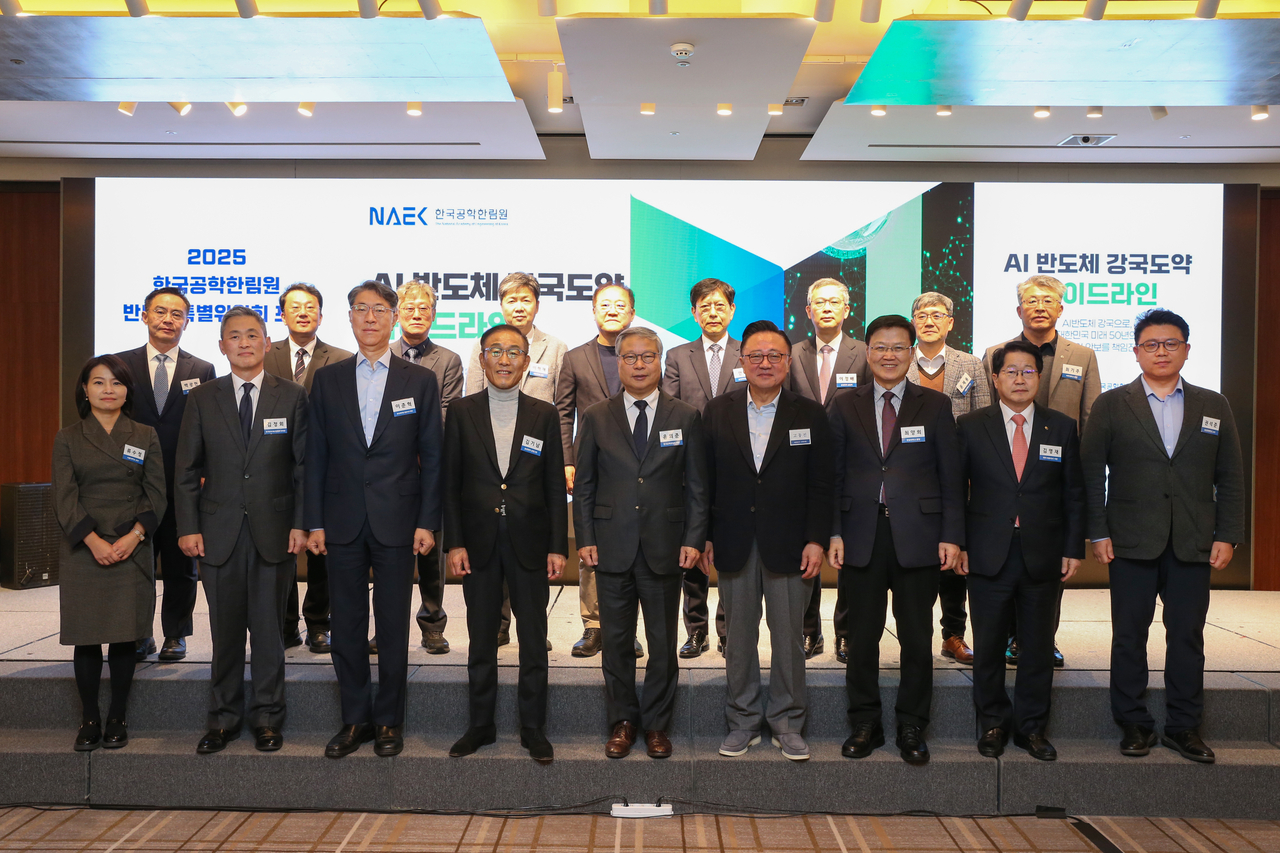
According to industry sources, the Semiconductor Special Committee of the National Academy of Engineering of Korea will hold the "2026 Semiconductor Special Committee Forum" at L Tower in Seocho-gu, Seoul, on Nov. 30, presenting the results of 10 months of research.
Top executives from South Korea's major chipmakers and leading academics are expected to attend, analyzing the current boom in the domestic semiconductor industry and presenting strategies to address rising process complexity and China's accelerating technological catch-up.
The Semiconductor Special Committee has held an annual forum at the end of each year since 2024, exploring ways to advance South Korea's chip industry. The forums have drawn wide attention for issuing warnings about the challenges facing the sector while offering guidelines for the country to emerge as a leader in AI semiconductors.
This year's forum is drawing particular interest as it comes while Samsung Electronics and SK hynix — South Korea's two semiconductor giants — have both declared their AI memory chips sold out and are posting record earnings, even as doubts grow over the profitability of big tech companies' AI investments.
Samsung Electronics and SK hynix, which count Nvidia and major big tech firms among their customers in the AI chip market, expect the memory supply shortage to persist beyond 2028 and are confident their earnings will continue to grow.
Concerns about the semiconductor industry's long-term growth prospects have persisted, however, as warning signs emerge over Google's and Meta's ability to generate returns amid the enormous financial burden of their AI investments.
At this year's forum, Lee Hyuk-jae, a professor in the Department of Electrical and Computer Engineering at Seoul National University and an outside director at Samsung Electronics who co-chairs the Semiconductor Special Committee alongside SK hynix President Ahn Hyun, will introduce the committee's activities to date. Kwon Seok-jun, a professor in the Department of Chemical Engineering at Sungkyunkwan University, will then assess the opportunity currently facing South Korea's chip industry.
Kim Dong-soon, a professor in the Department of Semiconductor Systems Engineering at Sejong University, will follow with a presentation on strategies for sustaining South Korea's semiconductor boom, after which committee co-chair Lee will outline the expected impact of the proposals.
The Semiconductor Special Committee was established in 2024 under the leadership of Kim Ki-nam, former president of the National Academy of Engineering of Korea and a Samsung Electronics adviser, to explore survival strategies for South Korea's chip industry. The committee brings together the country's top experts to assess the state of the domestic semiconductor sector and develop concrete proposals, which are shared with the government, relevant agencies and companies.
When the committee released its first research findings in 2024, it highlighted an unprecedented crisis facing South Korea's chip industry and drew attention for proposing four remedies: strengthening manufacturing competitiveness, reinforcing the system semiconductor ecosystem, pursuing research and development to create new markets, and improving talent recruitment policy.
Last year, the committee recommended that South Korea move beyond its heavy reliance on memory chips and build competitiveness across the broader semiconductor industry, including fabless design and foundry manufacturing. Members also noted that the United States, China and Taiwan have deployed vast capital and strong policy support to build ecosystems that surpass South Korea's, and called on the country to benchmark those approaches.
joze@heraldcorp.com