'Expanding community sports facilities and achieving fiscal independence are urgent'
Salary step system introduced for staff, 27 neighborhood sports associations activated to strengthen local sports foundation
Park golf courses and tennis courts expansion underway, use of idle urban spaces proposed
Pay gap among Seoul's 25 district sports associations to be addressed through improved compensation system
Expansion of public sports facility management contracts emphasized as path to financial stability
Creating an environment where any resident can enjoy their preferred sport close to home is the starting point of community sports policy. Yet facility expansion has failed to keep pace with growing public interest and participation, leaving a recurring shortage of venues by sport and persistent inconvenience for users. Local sports associations, which bear responsibility for grassroots athletics, face the added challenge of securing a stable operational foundation amid tight budgets and staffing constraints.
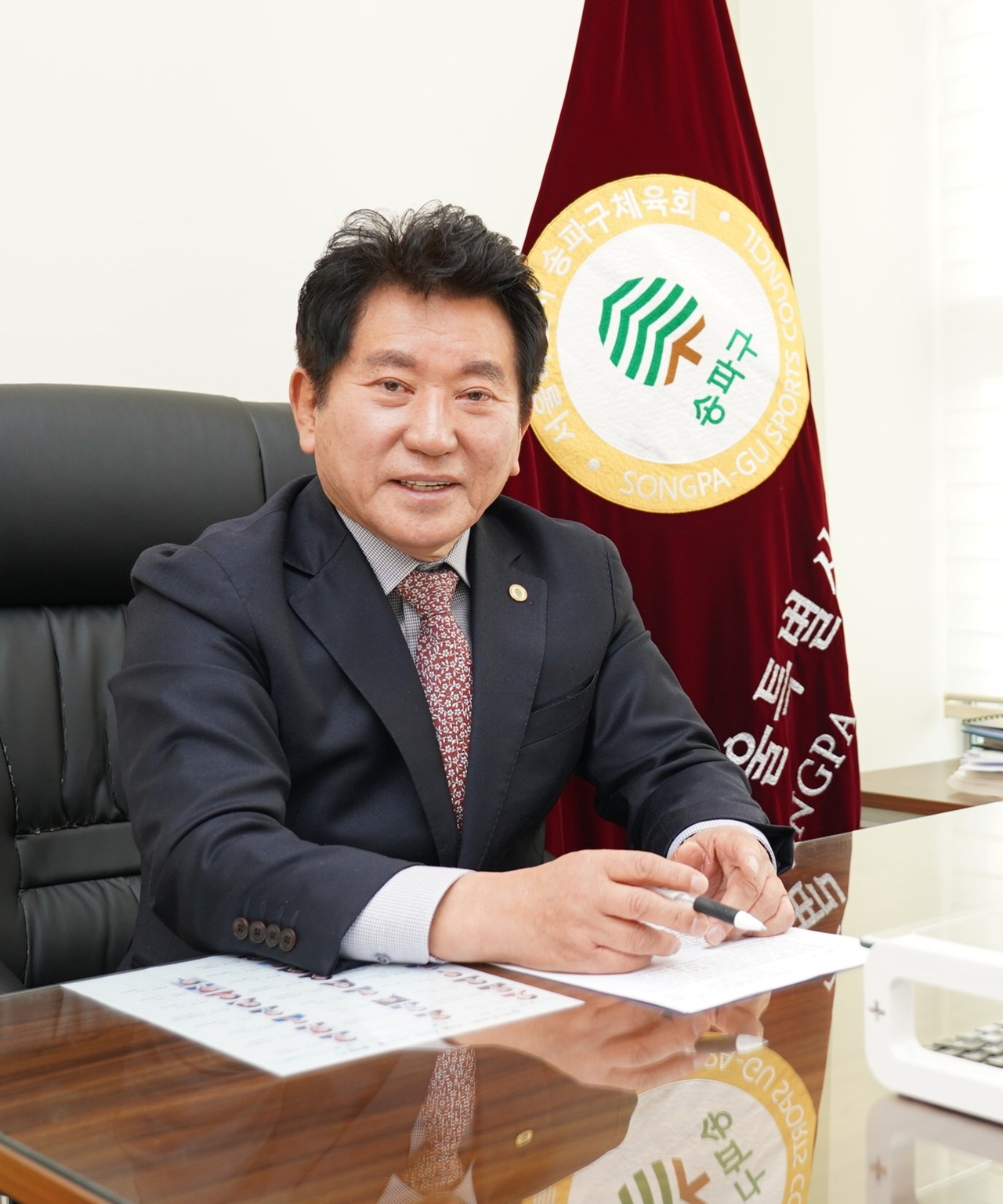
Kim Won-seop, chairman of the Seoul District Sports Association Council and head of the Songpa-gu Sports Association, said expanding community sports facilities and stabilizing the finances of local sports associations must be pursued together to address these problems. His view is that community sports can only grow when the organizations and funding that support residents' athletic opportunities are themselves sustainable.
In an interview Monday, Kim outlined operational achievements at the Songpa-gu Sports Association — including the introduction of a salary step system for staff and the activation of 27 neighborhood sports associations — and proposed institutional reforms to address the financial and staffing challenges common to all 25 district sports associations in Seoul. He said local sports associations should be given a greater role in managing public sports facilities so they can generate their own revenue and reinvest it in residents' athletic programs, creating a virtuous cycle.
Salary step system introduced, neighborhood sports associations revitalized
Since taking office, Kim has focused on building a stable operational foundation for the association. He believes improving staff compensation — so employees can plan long-term careers and accumulate expertise — is a prerequisite for developing local sports.
The Songpa-gu Sports Association had previously lacked a pay structure that adequately reflected years of service and job responsibilities, meaning the gap between long-serving and newly hired staff was minimal. Kim negotiated with Songpa-gu to introduce a salary step system that accounts for job grade and length of service. By restructuring salaries and allowances along the lines of the civil servant pay scale, the association created more stable working conditions for its employees.
Kim also invested effort in activating the neighborhood sports associations that form the grassroots of community athletics. By supporting all 27 neighborhood associations in Songpa-gu and expanding local sports events, he broadened residents' opportunities to participate — with the aim of making sports a catalyst not just for exercise but for neighborly exchange and community cohesion.
Administrative conditions for sport-specific organizations were also improved. Several associations — including those for soccer and baseball — had lacked dedicated office space, so Kim secured offices for them, raising operational convenience and efficiency. He said improving staff compensation, activating neighborhood associations, supporting sport-specific bodies and expanding facilities have been his four core priorities in building the local sports foundation.
'There is nowhere to exercise' — more sports facilities urgently needed
Alongside organizational improvements, the shortage of community sports facilities remains a pressing challenge. Songpa-gu does not have enough sports venues relative to its population, and the high cost of land makes it difficult to secure new sites. Demand has become particularly acute as interest in park golf, gateball and tennis has surged, widening the gap between supply and demand for those facilities.
Kim said securing space to exercise is the most fundamental requirement for broadening the base of community sports. With dedicated facilities for sport-specific associations in short supply, he argued, simply expanding programs or increasing participation numbers has its limits.
"The dream of people in sport associations is a playing field," Kim said. "There's just nothing available. If you want to play park golf, you have to go all the way to Hwacheon or Yangpyeong."
As a practical alternative, Kim proposed making active use of idle urban spaces. The plan involves building sports facilities under elevated roads and on unused public land, and securing indoor sports venues for residents through linkage with redevelopment and reconstruction projects.
He also said it is worth considering a system of incentives for developers who install publicly accessible sports facilities as part of urban renewal projects. The idea is to expand the supply of sports facilities by making efficient use of existing spaces, given the difficulty of acquiring new land in the city.
Kim also proposed developing park golf courses on public land along the Han River and elsewhere. He added, however, that questions of land management authority and environmental regulations must first be resolved through consultations with the relevant agencies. He also said that where facilities are shared between sports — as is the case with gateball — space must be allocated with each sport's specific requirements in mind.
Kim sees expanding sports facilities as more than just adding exercise space — he believes it can lead to improved public health and a more vibrant local community. To that end, he plans to work with National Assembly members and local government bodies to secure community sports facilities that residents can use conveniently in their daily lives.
Fiscal stability and better pay for district sports association staff urgently needed
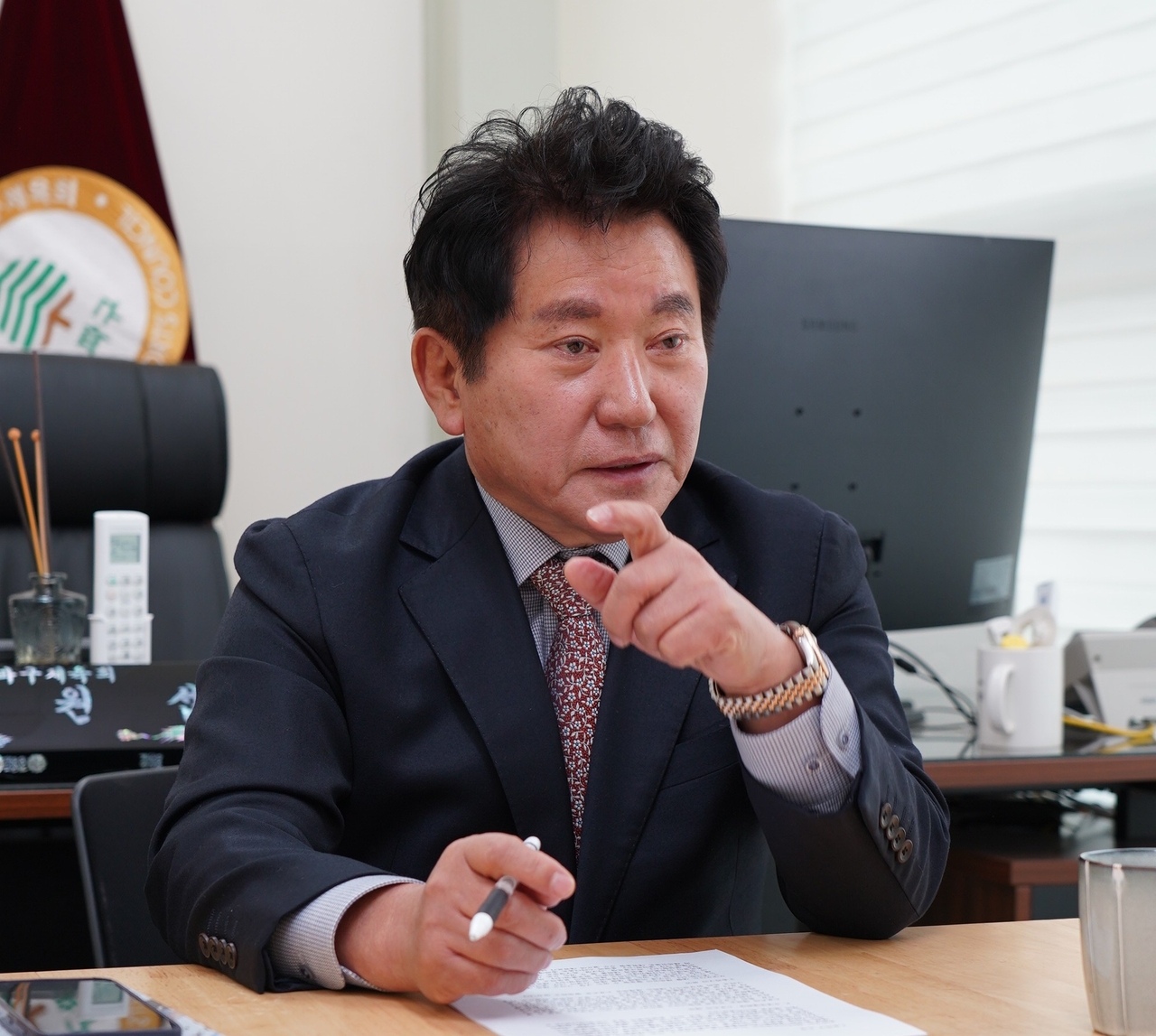
Kim's concerns extend beyond Songpa-gu to the operating conditions of all 25 district sports associations in Seoul. As chairman of the Seoul District Sports Association Council, he said improving the uneven staff compensation and financial support systems across districts is an urgent priority.
While Seoul's district sports associations share the common mission of promoting community sports, they differ considerably in staff pay structures, budget sizes and facility management conditions. Only some districts operate a salary step system, creating pay disparities even among staff performing essentially the same work.
"Almost none of them have a step system," Kim said. "Right now only about five or six do — Songpa, Dobong and a few others."
He said the Korean Sport & Olympic Committee, the Seoul Metropolitan Sports Association and local governments must work together to systematically overhaul the job grades, salary steps and pay structures for local sports association employees. His reasoning is that employment stability and professional expertise among association staff ultimately determine the quality of community sports services delivered to residents.
Reforming the financial structure is another challenge that can no longer be deferred, Kim said. District sports associations currently rely heavily on funding from local governments, which constrains their ability to pursue independent projects and draw up medium- to long-term operational plans.
To raise the financial self-sufficiency of local sports associations, Kim proposed expanding their role in managing public sports facilities under contract. His idea is to make active use of provisions in the National Sports Promotion Act that allow local sports associations to take over management of public property, thereby broadening their participation in running community sports facilities.
When local sports associations manage public sports facilities, they can raise the standard of facility management while generating their own revenue — which can then be channeled back into community sports programs and support for sport-specific associations, Kim said. He acknowledged, however, that for this to translate into genuine financial stability, the framework governing authority, responsibility and revenue use under such contracts must also be put in order.
"The hardest thing is the budget," Kim said. "It would be great if the funding were allocated directly as the association's own money, but that's really not easy."
Kim also raised the need to reform how sports promotion funds — including lottery proceeds — are distributed, calling for a system that provides stable funding to local sports associations based on factors such as regional population and community sports demand.
He also stressed the importance of balanced development between community sports and elite sports. For the integration of the two sectors to produce real results at the local level, he said, policy support is needed to strengthen the operational base of sport-specific associations and to ensure that broader community sports participation feeds into the development of elite athletes.
The vision Kim has laid out for local sports associations comes down to three challenges: facilities, people and finances — securing spaces where residents can exercise close to home, creating stable working conditions for sports administrators, and reforming the system so local associations can build their own financial base.
Going forward, Kim plans to continue pushing for the expansion of community sports facilities in Songpa-gu while working through the Seoul District Sports Association Council to strengthen cooperation on improving staff compensation, reforming financial support systems and expanding public facility management contracts. His goal is to lay the institutional groundwork for local sports associations to evolve from bodies that simply disburse grant funding into professional organizations that drive local sports policy.
7toy7@heraldcorp.com