Interview: Korea Automobile Manufacturers Association President Jeong Dae-jin
'Benefits must flow to consumers and parts makers'
'Chinese EVs threaten domestic production base and jobs'
'Battery support alone is not enough' — trade friction concerns rebuffed
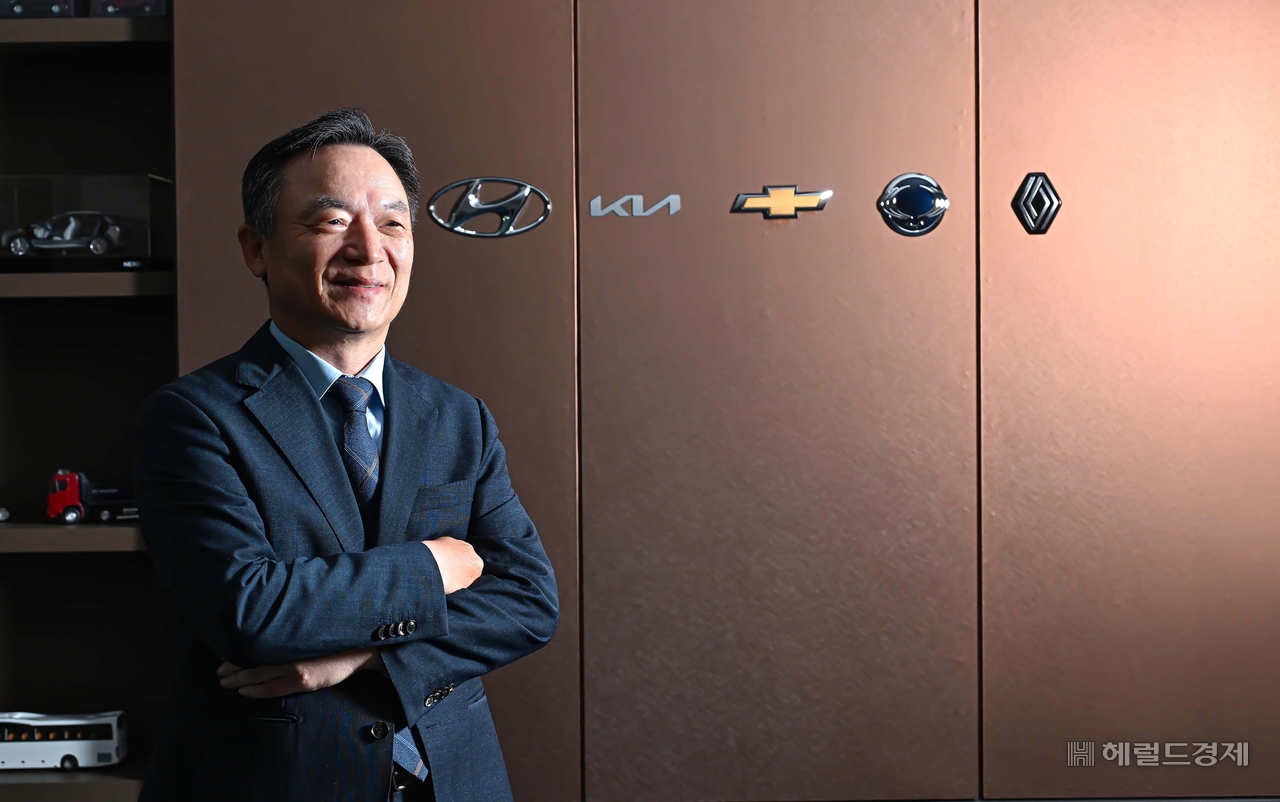
"If a production tax credit for electric vehicles is introduced, the benefits will not stop with automakers — they will flow through to consumers and parts suppliers, and ultimately strengthen the domestic production base."
Jeong Dae-jin, president of the Korea Automobile Manufacturers Association, made the remarks in an interview on Oct. 27, stressing the need to introduce a tax credit for electric vehicles produced in South Korea.
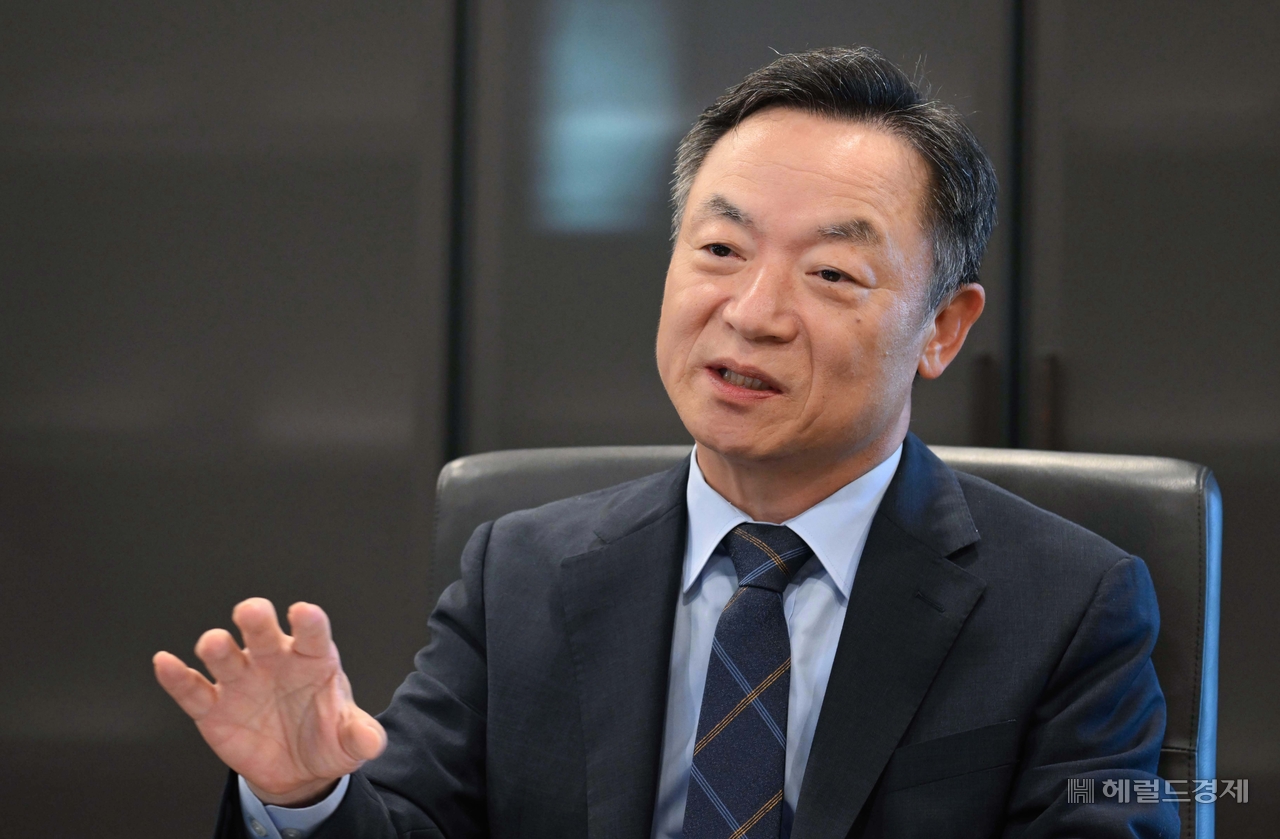
"We would use the savings from the tax credit to lower consumer prices and help parts suppliers transition to future-mobility vehicles," Jeong said. The association's position is that the tax benefit would spread across the entire automotive industry ecosystem, not be concentrated among large automakers.
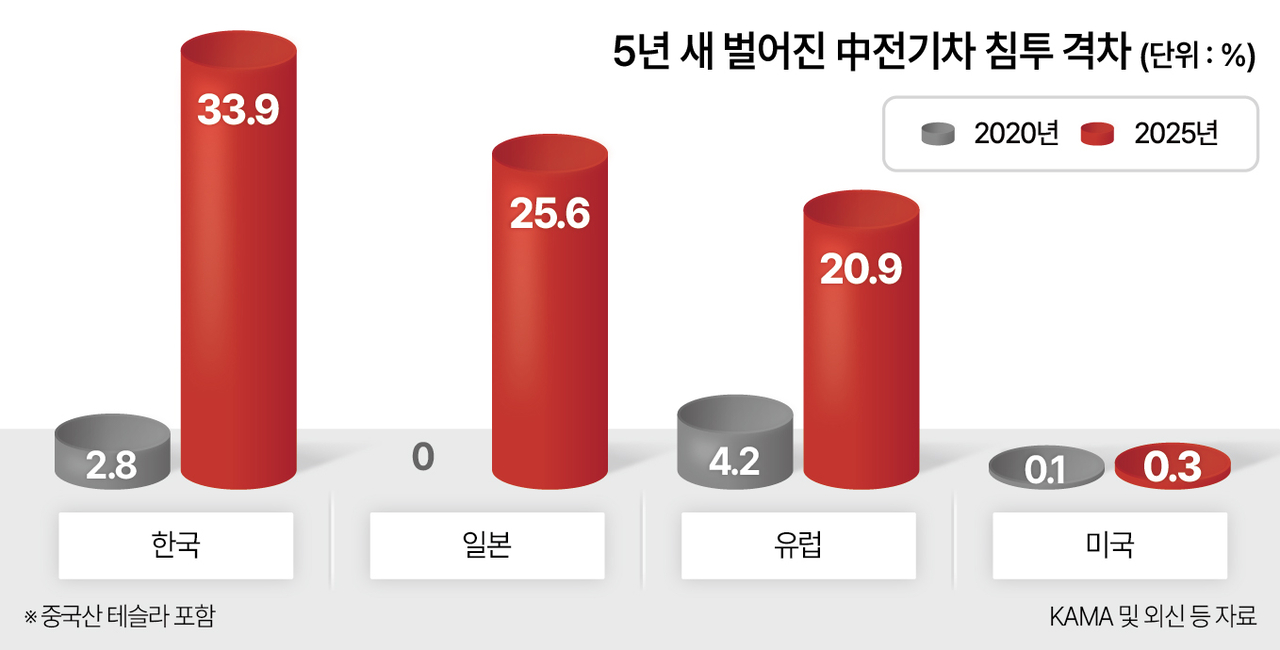
Behind Jeong's push for the tax credit is the intensifying advance of Chinese-made electric vehicles. According to KAMA, Chinese-made EVs accounted for 112,968 units — or 38.1 percent — of the 296,801 EVs newly registered in South Korea from January through September this year, up 6.5 percentage points from the same period last year. The figure includes not only Chinese brands such as BYD but also global brands like Tesla that manufacture in China.
"Sales by Chinese brands through September have already surpassed three times their full-year total from last year," Jeong said. "With new Chinese brands also preparing to enter the Korean market, this trend will only accelerate."
The price competitiveness of Chinese EVs stems from large-scale government subsidies and a vertically integrated supply chain spanning raw material extraction to battery and vehicle production, analysts say. Domestic automakers, by contrast, still hold a competitive edge in safety and after-sales service.
Against this backdrop, the government's tax reform package announced in August included six sectors — among them secondary batteries and semiconductors — as eligible for a domestic production tax credit, but excluded finished electric vehicles. The domestic production tax credit reduces corporate tax liability based on the sales performance of goods manufactured in South Korea.
Bills to add electric vehicles to the list of eligible products have been introduced in rapid succession in the National Assembly. On Oct. 16, 19 ruling and opposition lawmakers jointly submitted an amendment to the Special Tax Treatment Control Act. An earlier bill proposed a tax credit of 4 million won ($2,990) per electric vehicle produced.
"The association has been calling for a tax credit at least on par with what Japan introduced in 2024," Jeong said. "We need support at a level that can offset, to some degree, the production cost gap with China." The association is seeking the credit only for EVs produced and sold domestically, Jeong noted, and is not asking for it to be extended to export volumes.
The government is understood to have excluded electric vehicles from the tax credit scheme partly on the grounds that support for the battery industry was sufficient, and partly out of concern over potential trade friction.
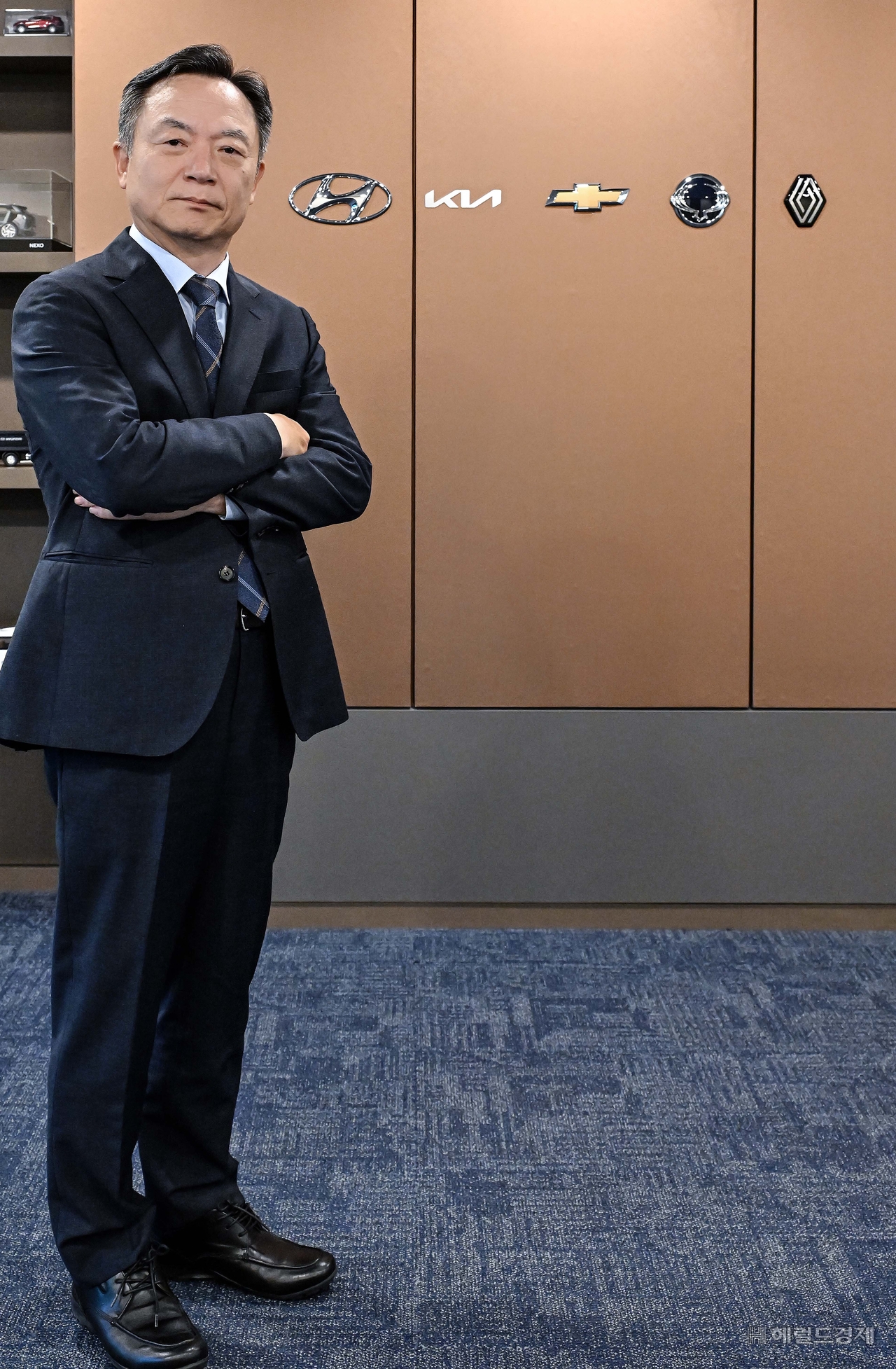
Jeong rebuffed both concerns. "A significant portion of battery production takes place overseas, so a battery tax credit alone has a limited effect on domestic EV manufacturing," he said. "And since the credit would apply only to vehicles produced and sold in South Korea, the risk of trade friction is low."
Jeong also drew a sharp distinction between purchase subsidies and production tax credits. "Purchase subsidies are a policy to grow the EV market," he said. "A production tax credit is about which country's vehicles capture that market."
He was more cautious, however, about imposing steep tariffs on Chinese-made vehicles as the United States and the EU have done. Jeong, a trade and industrial policy specialist who previously served as deputy minister for trade at the Ministry of Trade, Industry and Energy, took office as KAMA president in March this year.
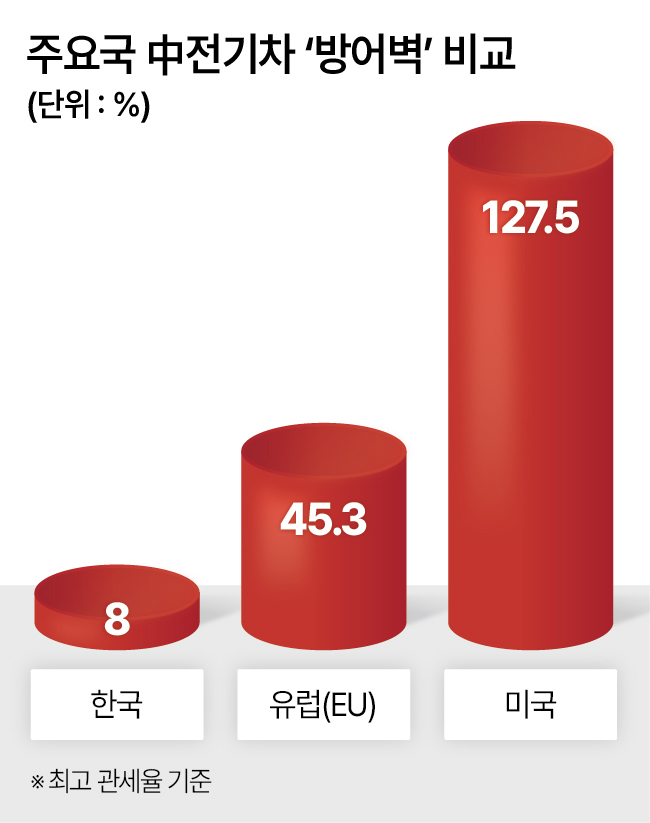
"The United States and Europe can leverage their massive domestic markets in negotiations, but South Korea is a country that depends heavily on exports," Jeong said. "We have to consider the overseas exports of our own vehicles, so trade remedy measures such as tariff increases need to be approached with caution."
Maintaining the domestic automotive production base is another pressing challenge, Jeong said. South Korea produced about 4.1 million vehicles last year, 67 percent of which were exported. Output for the first nine months of this year came to about 3.015 million units, down 2.2 percent from the same period a year earlier. Full-year production is expected to remain roughly flat with last year's level.
"Both the government and the industry agree that domestic production must be kept above 4 million units," Jeong said. "Since expanding the domestic market is difficult, minimizing trade risks to protect export volumes is critical." He added that stabilizing labor relations, strengthening domestic research and development, and expanding South Korea's role as a "mother factory" — where advanced products are manufactured domestically first — are also necessary.
Jeong also warned that a weakening of automakers' competitiveness could ripple through to parts suppliers and regional economies. A survey of the automotive parts industry found that only 6.1 percent of companies had pursued or were planning business diversification.
"When I meet with parts suppliers, many say they don't know where to start," Jeong said. "What they need is not just financial support but consulting to point them in the right direction, along with technology and workforce assistance."
On EV purchase subsidies, Jeong said the assessment of domestic industry contribution should be strengthened. "Factors such as how much a vehicle's production contributes to domestic employment and regional economies, and how much research and development is conducted in South Korea, should be more actively reflected in subsidy calculations," he said.
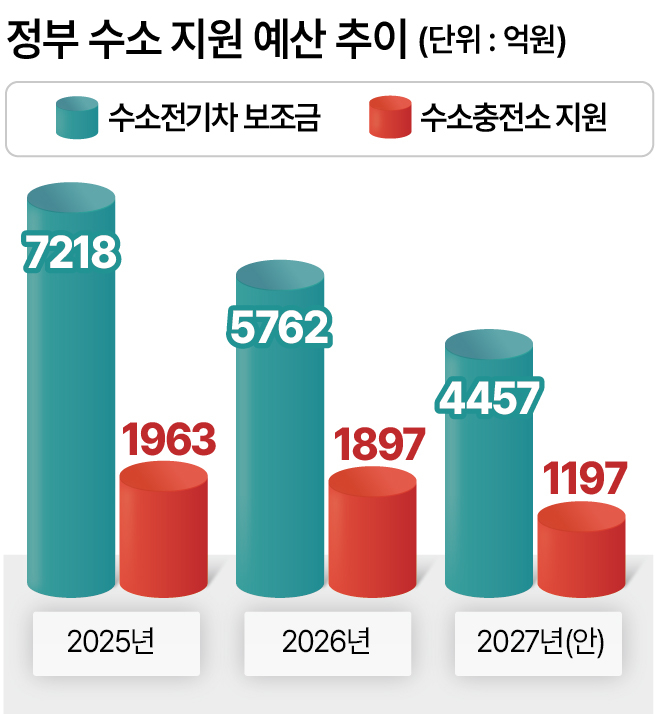
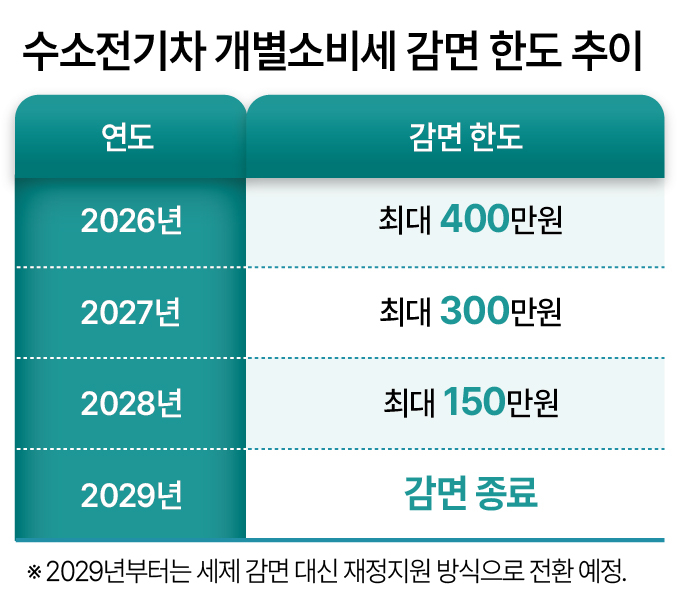
Jeong also expressed concern over the government's plan to scale back tax benefits for eco-friendly vehicles. Under the proposed tax reform, the individual consumption tax exemption for hybrid vehicles — worth up to 700,000 won — would end next year. The exemption ceiling for electric vehicles would fall from 3 million won to 2 million won, and for hydrogen fuel-cell vehicles from 4 million won to 3 million won.
"Reducing tax benefits could push up vehicle prices," Jeong said. "There is a risk of dampening consumer demand across the entire auto market, regardless of whether the vehicles are domestic or imported."
Looking ahead to next year, Jeong identified strengthening autonomous driving competitiveness as a top priority for the association. "Autonomous driving will be the next battleground in the global auto market," he said. "We need to ease regulations on data collection and use, and significantly expand the scope of real-world testing, while ensuring both speed and safety."
In his capacity as co-organizing committee chair of the World Hydrogen Expo 2026 (WHE 2026), to be held at Kintex in Goyang, Gyeonggi Province, from Wednesday through Friday, Jeong also spoke to the need for continued support for the hydrogen industry.
"Hydrogen is still an early-stage market, so it needs to be approached from a medium- to long-term perspective rather than on immediate economic viability," he said. "South Korea is a country with a diverse portfolio spanning internal combustion engine vehicles, hybrids, electric vehicles and hydrogen fuel-cell vehicles. To maintain that competitiveness, we must continue to nurture the hydrogen industry."
kwater@heraldcorp.com