- Korea Institute of Machinery and Materials, ETRI build dedicated data production facility for bipedal humanoid robots
- Accumulating daily and industrial task data to accelerate self-reliant 'K-humanoid' development
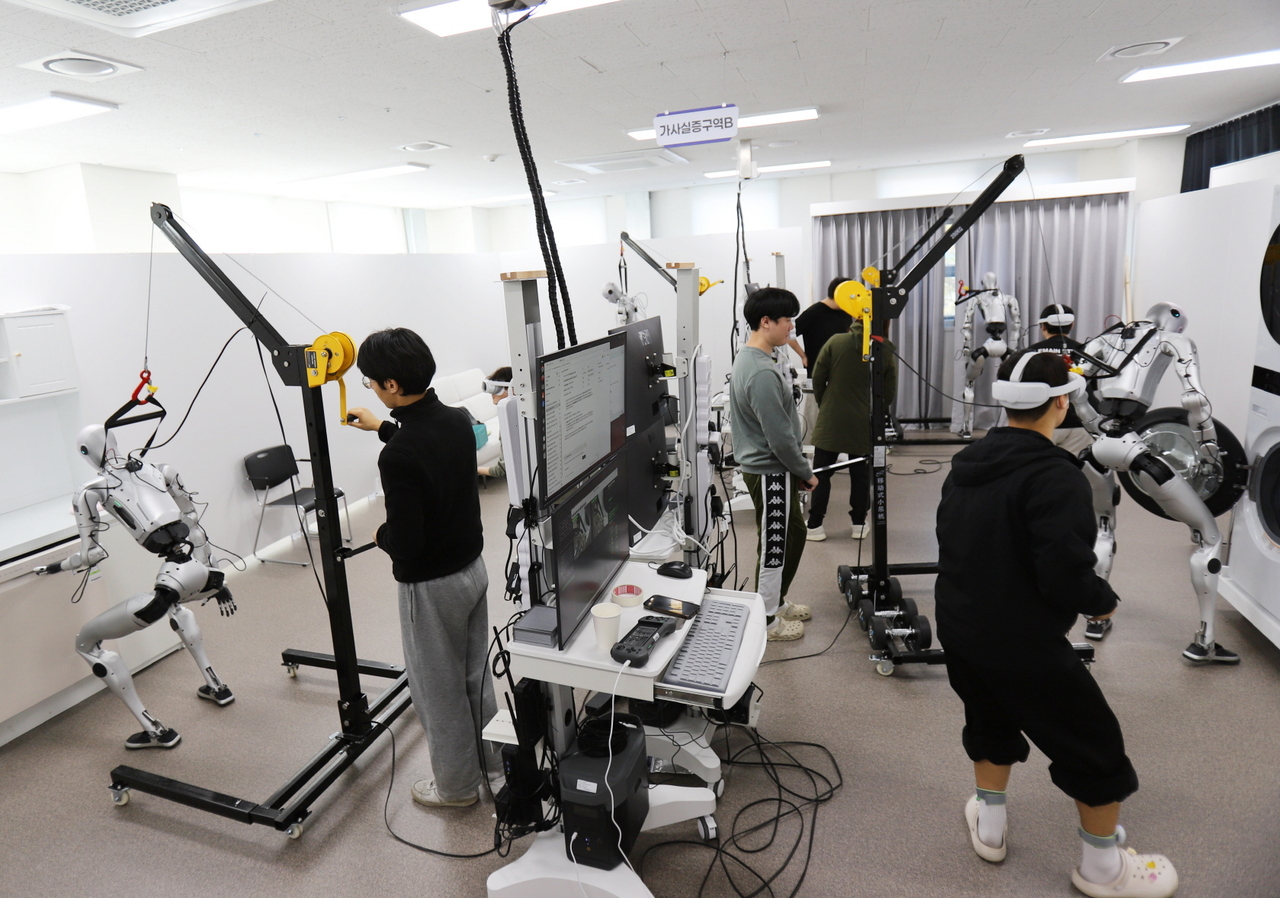
South Korea has opened its first dedicated data production facility for teaching humanoid robots how to work — walking on two legs and manipulating objects with two hands just as humans do. The facility deploys 12 humanoid robots to train them on a wide range of movements, from household chores to industrial tasks. It is expected to serve as a critical foundation for reducing dependence on foreign technology and strengthening the AI competitiveness of domestically developed humanoid robots.
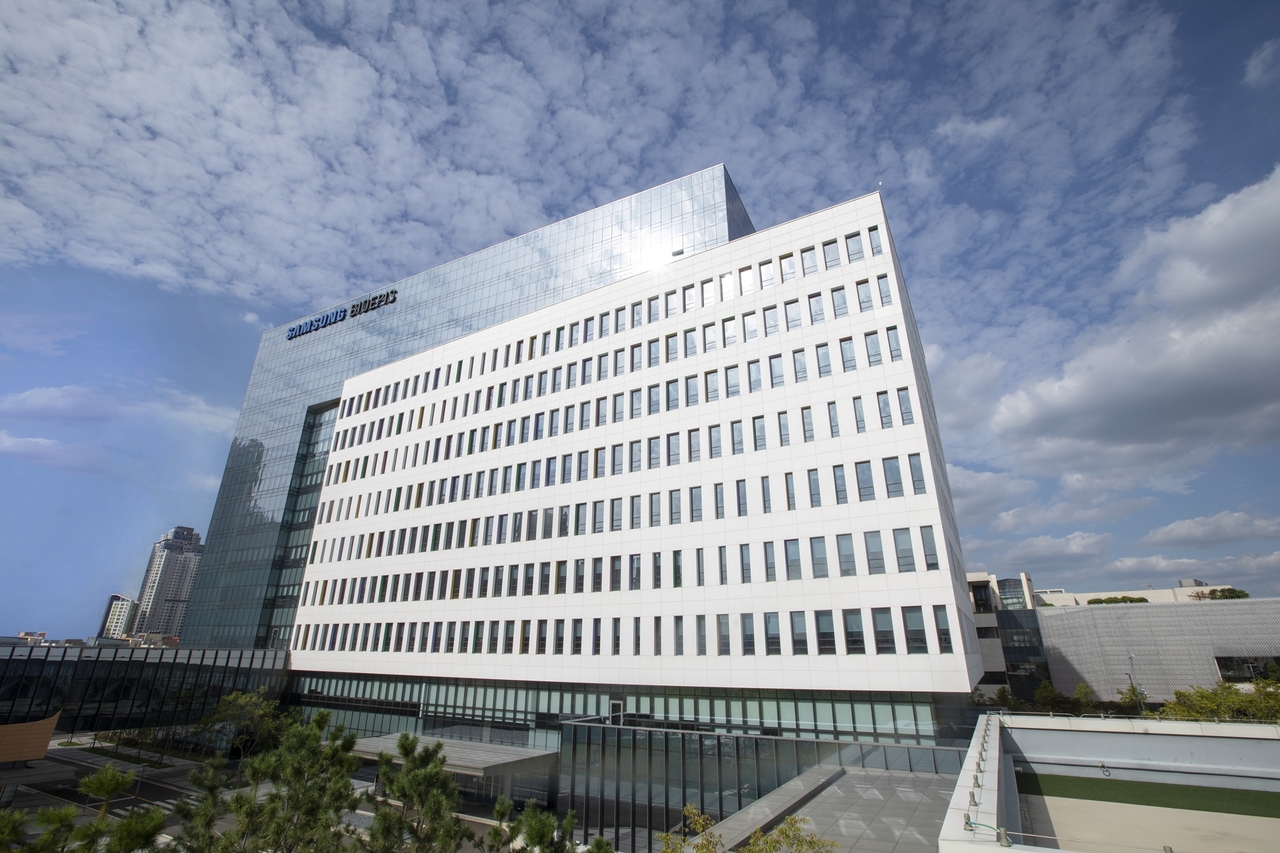
The Korea Institute of Machinery and Materials said Tuesday it had jointly established the "AI Humanoid Data Factory" with the Electronics and Telecommunications Research Institute (ETRI) — the country's first data production facility dedicated to bipedal humanoid robots — and held an opening ceremony that day.
The facility was built by the institute's Global Top Strategic Research Center for Autonomous-Growth AI Humanoid Robots, which the Korea Institute of Machinery and Materials oversees. Its core mission is to produce the data needed to train AI on complex tasks involving not only arm and leg movements but full-body coordination.
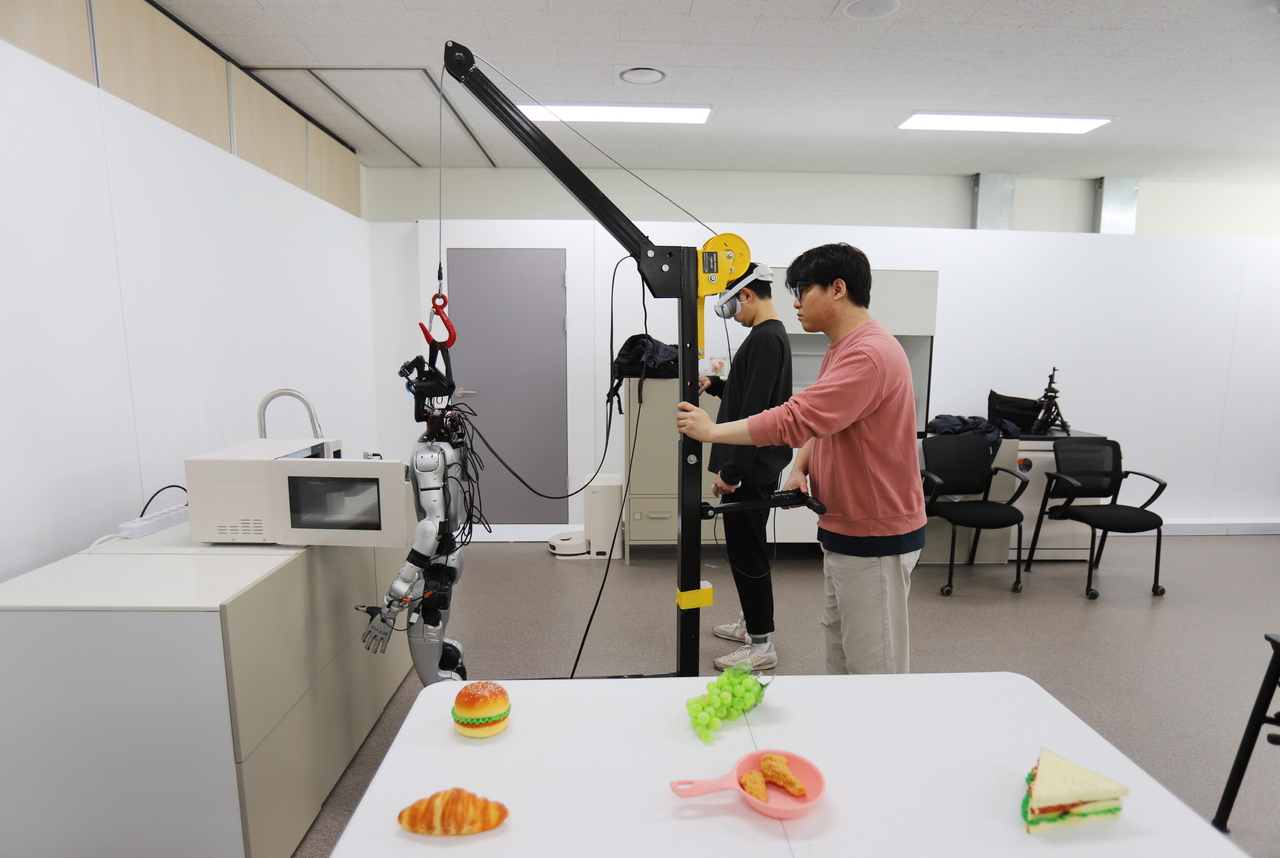
Twelve humanoid robots are currently deployed at the factory. Operators remotely control the robots to perform various tasks, recording the robots' movements and the information generated in the process. The data collected is then used to train AI to understand human motion and carry out real-world tasks.
The facility goes beyond simple data collection. It is designed around a virtuous cycle: collected data trains the AI, the trained AI is applied to actual robots, performance is verified, and new task data from that process feeds back into the next round of training.
The aim is to use this cycle to improve the performance of a general-purpose AI model applicable across a range of humanoid robots — not limited to any single platform — as well as a standard platform for domestically developed humanoid robots.
At Tuesday's opening ceremony, humanoid robots demonstrated everyday tasks including retrieving items from a refrigerator, handling laundry and tidying a sofa. The facility also showcased the process of collecting industrial task data, with robots operating buttons and levers inside a vehicle.
KAIROS, a domestically developed humanoid robot under development at the Korea Institute of Machinery and Materials, demonstrated precision object manipulation and technology for mimicking full-body human movement.
One of the biggest challenges in developing humanoid AI is securing high-quality data for real-world tasks. For robots to make independent judgments and move autonomously across diverse environments, they must train on vast amounts of task experience — but the time and cost required to build that experience are substantial.
The new data factory is significant because it establishes a domestic base for directly producing and accumulating humanoid task data. It is expected to reduce reliance on foreign data and AI models while accelerating the development of independent physical AI technology.
The Korea Institute of Machinery and Materials plans to gradually expand the range of robots and tasks covered by the factory, and to open the facility to domestic industry, universities and research institutions on a rolling basis starting in late 2027.
"Securing large volumes of high-quality robot task data is central to national technological competitiveness," said Ryu Seok-hyeon, president of the Korea Institute of Machinery and Materials. "We will accelerate development of the domestically made humanoid robot KAIROS and, by opening the data factory, raise the competitiveness of South Korea's physical AI industry."
The Ministry of Science and ICT also said it would support the development of independent humanoid technology through the AI humanoid mission under K-Moonshot, a national strategic research and development project.
nbgkoo@heraldcorp.com