Ministry of Agriculture, Food and Rural Affairs names five 2026 honorees
Sugar-free wine, new jujube variety among recognized achievements
Total of 503 farmers honored since program's 1999 launch
Farmers who developed new processing technologies using grain byproducts and boosted the value of grapes through sugar-free winemaking have been named this year's New Knowledge Farmers of the Year. Achievements in developing a new jujube variety, processing domestic sesame and improving the marketability of super-sweet corn were also recognized.
South Korea's Ministry of Agriculture, Food and Rural Affairs selected five farmers who created added value through new knowledge and technology as the 2026 New Knowledge Farmers of the Year, presenting them with the New Knowledge Farmer Award at the 21st New Knowledge Farmer Knowledge Sharing Competition held Thursday at the Hanieum Culture and Sports Center in Hwasun-gun.
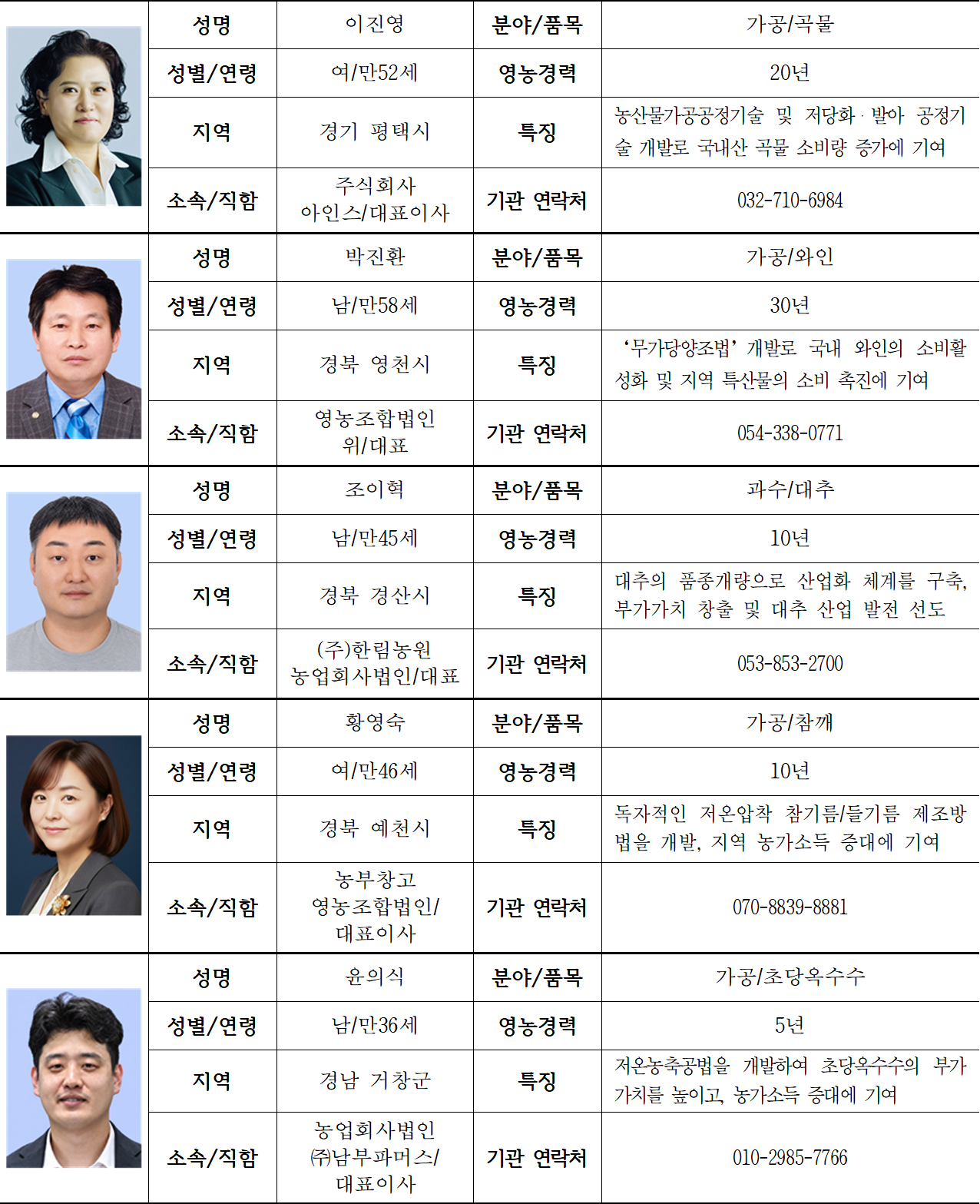
This year's honorees include one from Gyeonggi Province, three from North Gyeongsang Province and one from South Gyeongsang Province. They were chosen from 40 candidates recommended by their respective cities and provinces through a process involving document screening, expert interviews, on-site inspections and deliberation by an operating committee.
Lee Jin-young, chief executive of Ains in Pyeongtaek, Gyeonggi Province, developed a low-saccharification and germination process technology using grain byproducts. The technology enhances the functional properties of grains while lowering production costs and raising sale prices. Lee also expanded contract farming and pursued overseas exports, contributing to greater consumption of domestically grown grain and higher farm incomes.
Park Jin-hwan, chief executive of Wi Winery in Yeongcheon, North Gyeongsang Province, improved wine quality through a brewing technique that adds no sugar. Beyond creating added value by processing grapes, Park linked wine experience programs to tourism to help expand consumption of local specialty products.
Jo I-hyeok, chief executive of Hallim Farm in Gyeongsan, North Gyeongsang Province, developed a late-harvest jujube variety called Hallim No. 8. Jo was recognized for adjusting the shipping season to raise sale prices and reduce the labor required for harvesting, and has promoted the industrialization of the variety by sharing its cultivation techniques with other farms.
Hwang Yeong-suk, chief executive of Farmer's Warehouse in Yecheon, North Gyeongsang Province, developed a manufacturing technique that cold-presses sesame and perilla seeds at low temperatures. The process reduces the generation of harmful substances during processing while improving nutrient retention. Hwang expanded contract purchasing with local farms and pursued overseas exports to broaden the consumer base for domestically grown sesame.
Yun Ui-sik, a young farmer and chief executive of Nambu Farmers in Geochang, South Gyeongsang Province, developed a low-temperature concentration method that preserves the flavor and nutrition of super-sweet corn. By standardizing the processing workflow and establishing a year-round distribution system, Yun expanded the commercial reach of a crop whose sales had previously been concentrated in a single season.
The New Knowledge Farmer designation is awarded to farmers who apply new knowledge and technology in the field to create added value and share their expertise with fellow farmers. Since the program's launch in 1999, a total of 503 people have received the honor.
The Agriculture Ministry said it plans to spread innovation across the agricultural sector by having the honorees share their accumulated knowledge and experience with farmers in their regions.
"They are raising the value of agriculture and driving innovation based on creative ideas and the technology and know-how they have built up in the field," Agriculture Minister Song Mi-ryeong said. "We will continue to provide more support so that the capabilities and activities of New Knowledge Farmers can translate into tangible results on the ground."
adastra@heraldcorp.com