- Outage time cut by 93%; power grid technology now self-reliant
- AI, secondary batteries and power semiconductors to drive next chapter
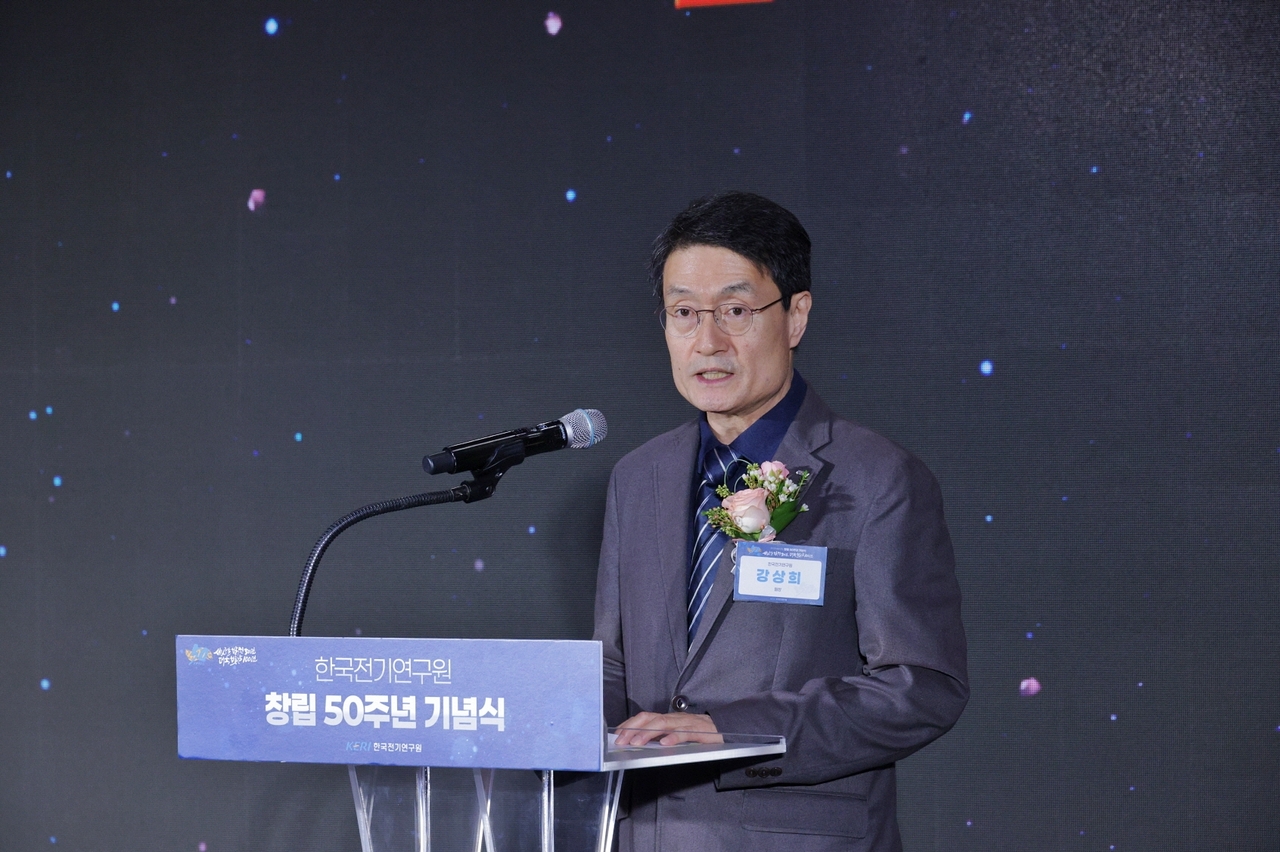
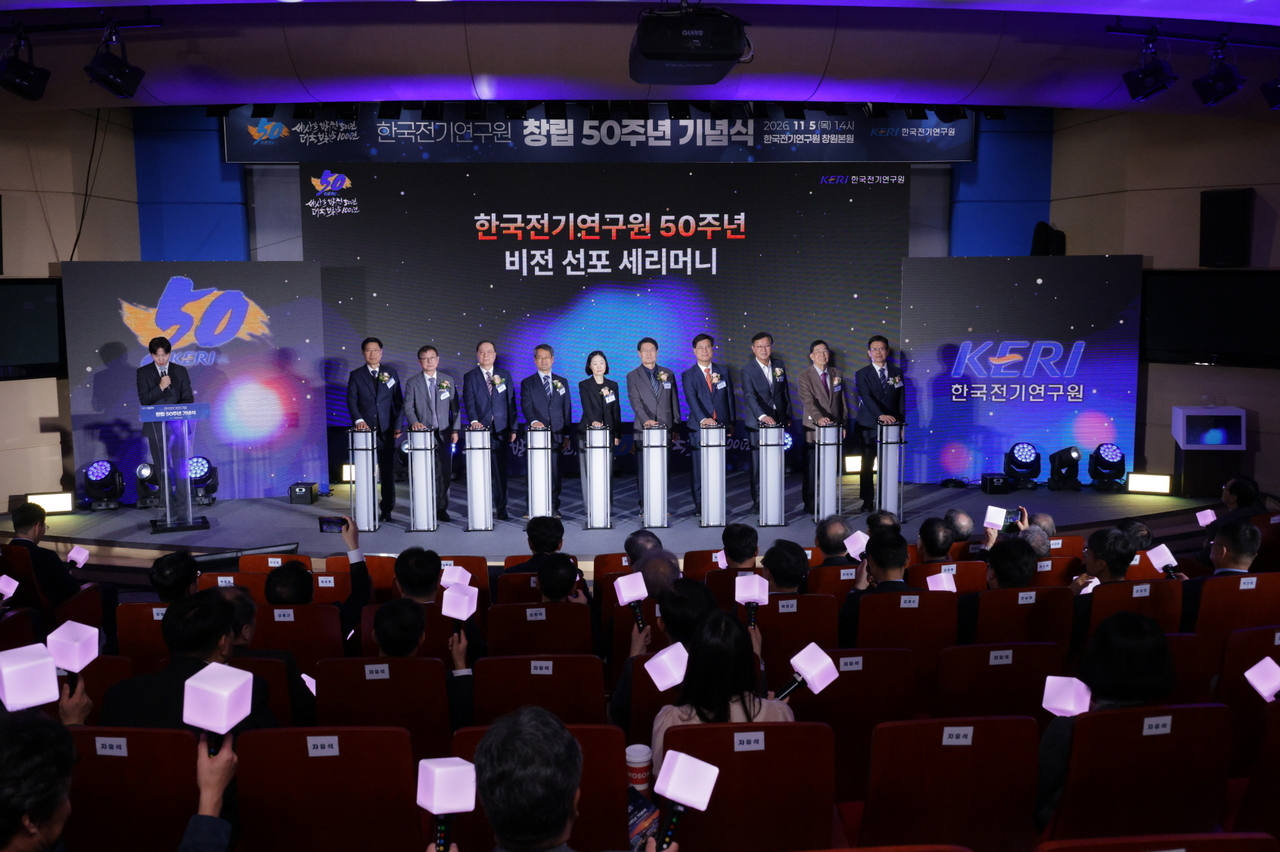
The Korea Electrotechnology Research Institute, which has driven South Korea's technological self-reliance in the power industry, unveiled a blueprint Thursday to lead the future era of electrification, centering on AI and advanced power technology, as it marks its 50th anniversary.
KERI held a 50th anniversary ceremony at its headquarters in Changwon, South Gyeongsang Province, and proclaimed a new vision: "With the power of electricity! With the light of innovation! KERI at the heart of a future electrified world."
Founded in 1976 as the Korea Electrical Apparatus Testing and Research Institute with just 43 researchers and a budget of 700 million won ($522,000), KERI has grown over five decades into a national core electrotechnology research institution with 902 staff and an annual budget of 191.5 billion won.
Among its most significant achievements is a dramatic improvement in the stability and efficiency of the national power grid.
KODAS, the Korean Distribution Automation System developed domestically for the first time in 1997, cut average outage times from 53 minutes to 3.6 minutes. In 2003, KERI became the first in the world to commercialize a 765-kilovolt double-circuit vertical ultra-high-voltage power facility, helping meet surging electricity demand.
In 2014, KERI became the fifth country in the world to develop a next-generation energy management system for preventing large-scale blackouts, establishing a foundation for technological independence in critical grid operations that had previously relied on foreign expertise.
KERI's research scope has also expanded into national security and advanced industries. In 2015, it built a land-based test site for electric ships — the third in the world after the United States and the United Kingdom — supporting performance verification of submarine propulsion systems.
More recently, KERI has accelerated efforts to secure next-generation electrical and electronic materials technology, including the domestic development of silicon carbide power semiconductors, large-scale synthesis of solid electrolytes for all-solid-state batteries, and high-performance electrode development based on carbon nanomaterials.
In testing and certification, KERI has helped Korean companies enter overseas markets. After gaining full membership in the Short-Circuit Testing Liaison in 2011, test reports issued by the institute gained international recognition, reducing the time and cost that domestic power equipment companies spend on overseas certification.
The economic impact has been substantial. According to research by Kang Tae-won, a professor at Chungnam National University's Graduate School of National Policy, KERI's production-inducing effect over the past 50 years totals 102 trillion won ($76.1 billion). The value-added inducement effect reached 26.87 trillion won, and the employment-inducing effect was estimated at 154,675 jobs.
For the next 50 years, KERI has identified three core strategies: AI-based power grid innovation, securing national strategic technologies, and building a cooperative framework linked to regional industries.
The institute plans to evolve into a power policy think tank supporting construction of a national energy highway through AI and digital transformation technologies. It also aims to strengthen competitiveness in advanced strategic technologies such as power semiconductors and secondary batteries, while deepening collaboration among local governments, universities and companies through its testing and certification infrastructure.
"Our 50 years of sincere dedication to electricity — invisible as it is — has blossomed into the most vivid miracle of South Korea's industrial development," KERI President Kang Sang-hee said. "We will press forward boldly toward 100 years of innovation that will enrich the world, standing at the center of the national electrification era."
nbgkoo@heraldcorp.com