Behind every public figure's polished appearance lies a personal wellness routine. This series examines the diets, workouts, procedures, and beauty and fashion choices of notable figures as practical lifestyle information.
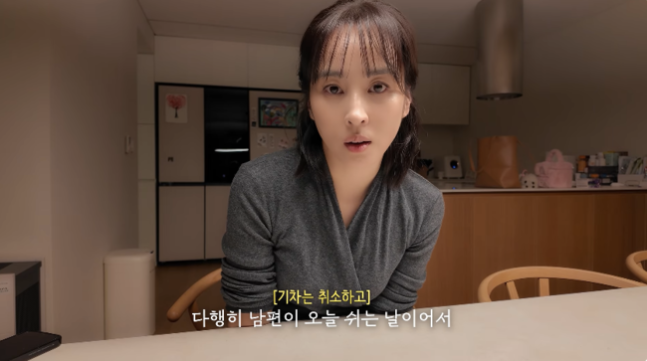
Actor Han Hye-jin has drawn attention by revealing she does Gyrotonic exercises twice a week, even amid a busy schedule. Gyrotonic is a workout that trains the muscles supporting the torso by moving the spine and joints in multiple directions. Domestic clinical research has found it may help improve lower-back strength and flexibility while easing chronic lower-back pain.
Han shared her routine in a video posted Friday to her YouTube channel, "Actor Han Hye-jin," showing herself heading out to exercise. "I really dread going, but once I'm done I feel so good," she said. "I try to make sure I work out at least twice a week."
Han said she carves out time for regular exercise while balancing broadcasting work and parenting. Gyrotonic, the method she has chosen, is known alongside Pilates among those interested in posture management and core strengthening. It is particularly distinguished by combining not only bending and extending movements but also rotation and circular motion.
Similar to Pilates but different — a workout that moves the spine in three dimensions
Gyrotonic is an exercise system developed by former dancer Juliu Horvath. It uses a dedicated apparatus fitted with pulleys and rotating handles to move the spine and limbs in multiple directions, building strength and flexibility.
A signature movement involves rounding the spine into a curve and then extending it back out, linked with rotations of the torso from side to side and lateral tilts. Movements are repeated in coordination with the breath, training both the range of motion in the joints and the muscles' ability to control movement.
Where conventional strength training typically repeats the contraction and relaxation of specific muscles, Gyrotonic focuses on connecting the movements of the torso and limbs in a continuous flow. Because many of its movements trace circular arcs around the spine, the body must maintain balance from multiple directions at once.
Understanding Gyrotonic's benefits requires a look at the role of the core muscles — those surrounding the abdomen, lower back and pelvis that stabilize the torso and regulate the forces placed on the spine.
Among them, the erector spinae are involved in extending the back and maintaining posture, while abdominal muscles such as the transverse abdominis and obliques help stabilize the spine and pelvis during torso movement.
In Gyrotonic, the body must stay centered even while rotating the torso or moving the limbs. In doing so, the muscles around the lower back and abdomen work together, training postural control.
Pilates also emphasizes torso stability and movement control. The distinction is that Gyrotonic places comparatively greater emphasis on linking circular and spiral movements in a continuous sequence. The effects of either workout can vary depending on how the program is structured, its intensity and the individual's physical condition.
Eight weeks of Gyrotonic: lower-back strength up 57%, pain down 49%
Domestic clinical research examining Gyrotonic's effects on lower-back health has shown improvements in strength, flexibility and pain measures.
A study published in 2009 in the Korean Journal of Sports Medicine compared the effects of Gyrotonic and lumbar resistance exercise in 24 patients with chronic lower-back pain.
Researchers divided participants into two groups of 12 and had them exercise twice a week for eight weeks. They measured lumbar extension strength, lower-back flexibility and pain levels before and after the program to assess changes.
The Gyrotonic group saw lumbar extension strength increase by an average of 57.49 percent and flexibility improve by 7.5 percent. Pain levels fell 49.12 percent compared with before the program.
The lumbar resistance exercise group also showed a 56.30 percent increase in extension strength, a 6.0 percent improvement in flexibility and a 43.71 percent reduction in pain — indicating that both forms of exercise had positive effects on lower-back function and pain.
A 2019 study published in the Journal of Exercise Rehabilitation reached similar conclusions.
Researchers at Daegu University randomly assigned 26 patients with chronic lower-back pain to either a Gyrotonic exercise group or a trunk stabilization exercise group. Participants exercised three times a week for four weeks, and the researchers compared muscle activation, lumbar stability and the degree of functional limitation in daily life.
The Gyrotonic group showed significant increases in the muscle activation of the erector spinae and external obliques. The trunk stabilization group also saw increased activation in the erector spinae, external obliques and rectus abdominis.
Both groups improved in lumbar stability and functional limitation in daily activities, and no statistically significant difference in improvement was found between the two groups.
These findings suggest Gyrotonic can serve as one method for activating the muscles around the lower back and improving trunk stability. Both studies, however, involved small numbers of participants and short observation periods, so additional research is needed to confirm the effects of long-term practice.
Extra caution needed for those with back pain — intensity and consistency are key
The rotational and flexion movements that characterize Gyrotonic develop the spine's capacity to move in multiple directions. People who experience pain in the lower back or joints, however, should carefully manage their range of motion and exercise intensity.
Particularly for those with spinal conditions such as a herniated disc, or whose pain worsens with certain movements, it is advisable to avoid forcefully twisting the torso or bending the lower back deeply. Identifying the cause of pain and assessing one's physical condition before selecting an appropriate exercise program is essential.
In 2023, WHO issued guidelines on non-surgical treatment for patients with chronic primary lower-back pain, recommending structured exercise programs. Chronic primary lower-back pain refers to lower-back pain lasting three months or more that cannot be explained by a specific underlying condition.
A systematic review conducted to inform the WHO guidelines confirmed that exercise programs help improve pain and physical function in patients with chronic lower-back pain. A comprehensive analysis of relevant clinical trials found that groups who exercised showed reductions in pain and functional limitation compared with those who did not.
The types of exercise varied and included aerobic exercise, Pilates and trunk control training. Selecting an exercise program based on the individual's symptoms and physical function is important.
For healthy adults as well, regular exercise helps maintain strength and flexibility. The US Centers for Disease Control and Prevention recommends that adults get at least 150 minutes of moderate-intensity aerobic exercise per week along with muscle-strengthening activities on two or more days a week.
Gyrotonic can incorporate elements of strength training depending on the equipment used, the movements performed and the intensity applied. Whether it adequately substitutes for aerobic exercise depends on the actual intensity and duration of each session, however, so pairing it with other physical activities such as walking or cycling is advisable.
For those just starting out, it is best to learn proper breathing and posture with the help of a qualified instructor and to gradually increase the range of joint movement without overexertion. If pain occurs during exercise, the movement should be stopped and the cause identified.
The health benefits of regular exercise are influenced not only by the type of exercise but also by consistency. Choosing a workout that can be enjoyed and sustained, and continuing it in line with one's fitness level and daily routine, helps maintain strength and physical function over time.
rainbow@heraldcorp.com