Governor Woo Sang-ho vows to revive economy amid tight fiscal conditions; plan to relocate provincial office quietly shelved
Gangwon Province announced its 2027 budget at 9.08 trillion won ($6.68 billion), an 8.4 percent increase of 702.2 billion won from this year's 8.37 trillion won.
It is the first time the province's base budget has exceeded 9 trillion won.
The budget was drawn up under difficult fiscal conditions — local tax revenues are declining, and the growth of ordinary local allocation tax transfers has been capped as the central government redirects excess national tax revenue into a future-response fund. Despite these constraints, the province said it focused on ensuring key projects proceed without disruption while laying the groundwork for provincial development.
General account revenue was set at 8.06 trillion won, up 616 billion won (8.3 percent) from this year, driven by a record 11 trillion won in central government funding secured for the province and increased non-tax revenue from a future-growth support fund — even as local tax receipts declined.
On the expenditure side, the province held down routine operating costs and directed funds primarily toward welfare programs linked to central government support, centrally backed projects aimed at securing future growth engines, and locally driven initiatives with a direct impact on residents.
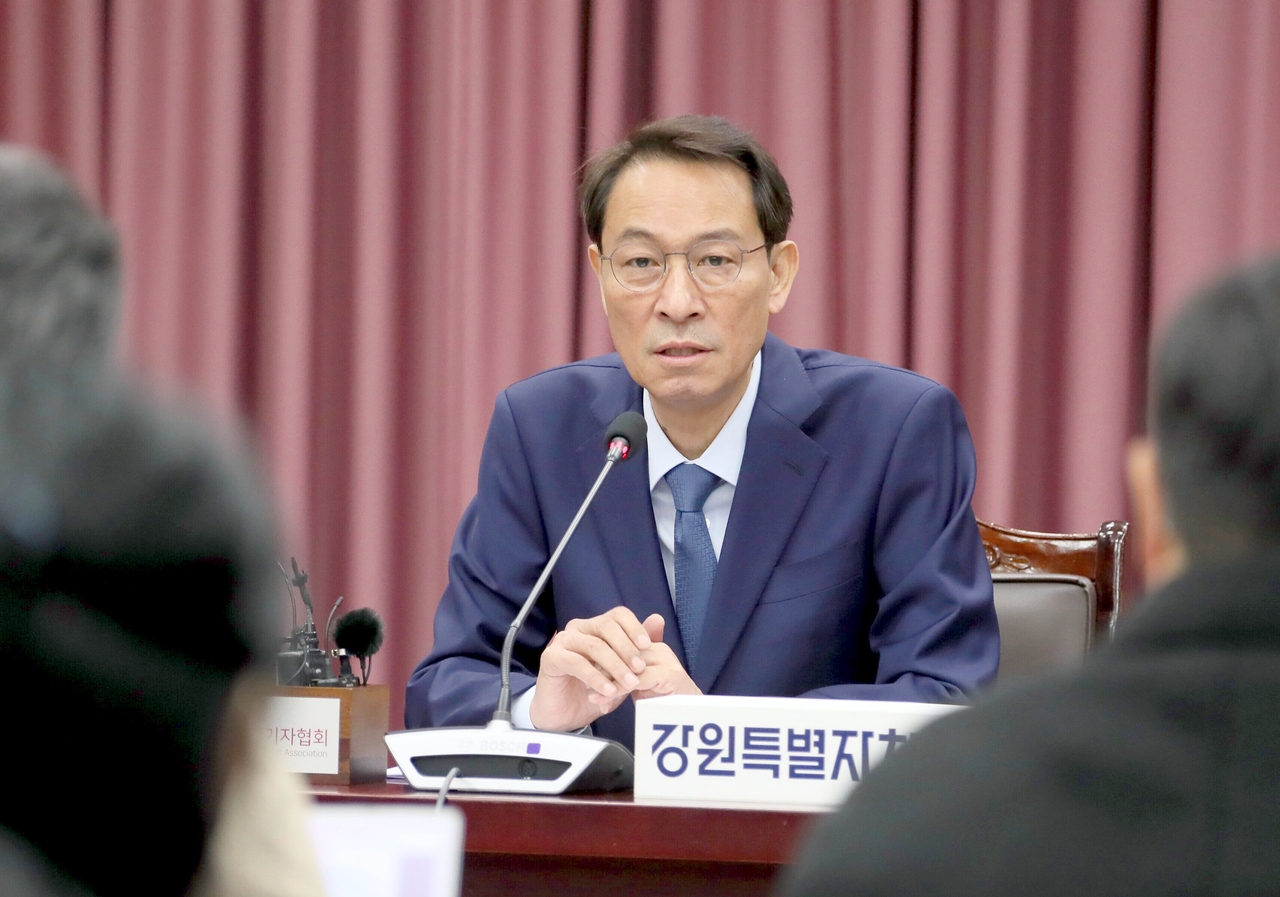
For the first six months since taking office in the ninth directly elected term, Governor Woo Sang-ho operated within a budget shaped by his predecessor. The 2027 budget marks the first spending plan fully of his own making. Woo said the province will concentrate resources across three priorities: securing future growth engines, reviving the local economy, and improving residents' quality of life.
"The 2027 budget was put together after countless deliberations on how to revive a sluggish local economy and fully protect the livelihoods of young people and residents, even under difficult fiscal conditions," Woo said. "We will prepare thoroughly so that the budget can be executed swiftly once it passes the provincial assembly."
To help young people settle stably in the region and build an advanced-industry ecosystem for sustainable local development and future economic opportunities, the province allocated a total of 34.2 billion won under the future growth engines priority.
Youth residential support (24.2 billion won) covers rental housing supply for young residents (10.6 billion won), interest subsidies on youth monthly-rent and jeonse loans (9.9 billion won), interest subsidies on newlywed home-purchase and jeonse and monthly rent loans (2.2 billion won), a cultural-arts theme town development project (1.2 billion won), and support for self-sustaining smart farms for young farmers (300 million won).
Advanced-industry ecosystem development (10 billion won) includes a hydrogen storage and transport cluster (4.4 billion won), a regional innovation cluster program (2.5 billion won), a Gangwon medical AI transformation industry demonstration hub (1.1 billion won), an electric vehicle remanufactured battery safety evaluation project (500 million won), and an AI data center industry ecosystem initiative (200 million won).
A provincial official said the industry, small and medium-sized enterprises and energy sector (336.1 billion won, 4.2 percent of the budget) and the transport and land and regional development sector (639.2 billion won, 7.9 percent) both received significantly larger allocations than the previous year, centered on nurturing advanced future growth industries and expanding regional infrastructure such as roads and transport networks.
To stabilize the operations of small business owners and farmers and fishers struggling with high prices and high interest rates, and to stimulate local domestic demand through region-specific tourism resource development, the province set aside a total of 142.2 billion won under the local economy recovery priority.
Support for small businesses and traditional markets (23.1 billion won) includes interest subsidies on business stabilization loans for small business owners (12.4 billion won), interest subsidies on disaster-recovery loans for small business owners (800 million won), modernization of traditional market facilities and construction of parking lots (5.2 billion won), promotion of Gangwon gift certificate circulation (3 billion won), and safety management support including traditional market security personnel (1.7 billion won).
Rural and fishery income and forestry and energy industries (108.5 billion won) are addressed through a basic income program for fishing village residents (75.1 billion won), a Gangwon-style forest economy industry belt initiative (17.6 billion won), livestock waste recycling and clean energy industry development (10.3 billion won), agri-food industry promotion and signature product development (4 billion won), and agro-industrial complex revitalization and infrastructure expansion (1.5 billion won).
Regional tourism resource development received 10.6 billion won — a relatively modest allocation — covering a local garden development and garden expo (3.4 billion won), East Coast fishery market improvements (2.1 billion won), provincial airport support and international tourism promotion (1.8 billion won), the Pyeongchang Daegwallyeong Music Festival (1.6 billion won), and the youth culture festival Wave on Gangwon (1 billion won).
To improve residents' quality of life through better public transit access, expanded community sports infrastructure and a stronger social safety net, the province plans to invest a total of 123.3 billion won under the quality-of-life priority.
Transport and community sports and cultural infrastructure (72.4 billion won) includes eco-friendly public transit expansion and infrastructure development (32 billion won), community sports facility expansion (25.4 billion won), and expanded special transport services for people with disabilities (15 billion won).
Inclusive welfare and care system development (41.3 billion won) covers independence support and employment programs for people with disabilities (19.2 billion won), an integrated Gangwon medical, long-term care and caregiving support system (11.9 billion won), expanded social-service jobs for senior citizens (6.5 billion won), childcare facility support (1.6 billion won), infant meal and snack subsidies for daycare centers (1 billion won), programs to promote women's economic independence (800 million won), and development of the Gangwon integrated care platform "Hanbonae" (300 million won).
Residential environment improvement and social economy revitalization (9.6 billion won) includes social solidarity economy and village community programs (6.1 billion won), vacant house clearance and repurposing (2 billion won), support for establishing a Gangwon-style companion animal culture (1.3 billion won), and strengthened protection of workers' safety rights (200 million won).
The province said general account expenditures were distributed systematically across all policy areas without concentration in any single sector, so that every area of provincial administration can grow together — including the question of what becomes of the planned provincial office relocation.
Social welfare and public health claimed the largest share at 3.40 trillion won — 42.2 percent of the total general account — with funds prioritized for guaranteeing residents' basic livelihoods and addressing the low birth rate and rapid aging of the population.
Agriculture, forestry, marine and fisheries followed at 959.3 billion won (11.9 percent), with allocations aimed at stabilizing farm household finances through rural and fishery basic income payments, farmer and fisher allowances, and expanded public benefit direct payments.
Public order and safety received 666.7 billion won (8.3 percent), directed at disaster-risk area improvements and fire department safety infrastructure to significantly strengthen the province's capacity to respond to climate change and natural disasters.
By contrast, funding for the planned relocation of the provincial office to Goeun-ri near the Chuncheon outer tollgate appears to be in short supply. Starting next year, the province will dissolve its "Provincial Office Relocation Task Force" and reorganize it into a "Public Building Architecture Division" in line with changes in the new building plan and project conditions — effectively dropping the costly word "relocation" from the initiative's name.
The People Power Party, which holds a majority in the provincial assembly, may press for budget allocations for the Goeun-ri relocation, and it remains to be seen how Governor Woo — working with limited funds — will respond.
The 2027 budget proposal is scheduled to be submitted to the provincial assembly Wednesday. It will then go through review and approval by the assembly's standing committees and the budget and accounts special committee before final adoption at a plenary session on Dec. 11.
abc@heraldcorp.com