Running through March 15 next year, the four-month plan targets cold waves, snow removal, safety and lifestyle — expanding warming shelters and road heating cables while stepping up inspections at traditional markets and vulnerable facilities
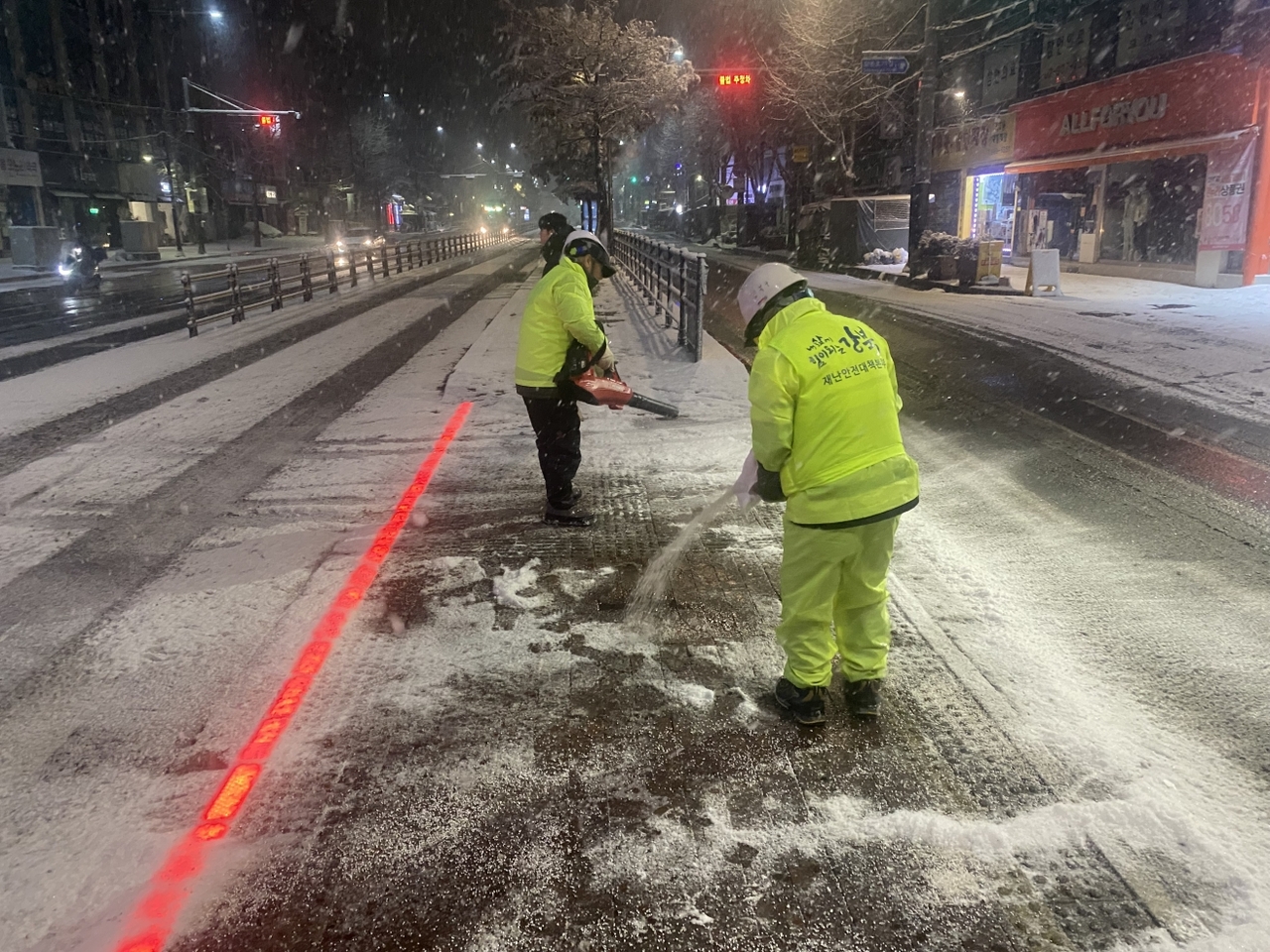
Gangbuk-gu in Seoul will run its "2026 Winter Comprehensive Plan" from Sunday through March 15 next year, a four-month initiative aimed at preventing winter disasters and safety accidents while minimizing inconvenience for residents.
The district will pursue measures across four areas: cold-wave response, snow removal, safety and lifestyle management. The plan calls for proactive action against natural winter hazards such as cold snaps and heavy snowfall, with a particular focus on protecting vulnerable groups, managing facility safety, reducing fine-dust pollution and handling household waste.
On the cold-wave front, the district will expand warming shelters from 91 to 96 locations, increase heated bus-stop seats from 122 to 127, and add wind-blocking screens at three more sites, bringing that total from 27 to 30. A mobile warming shelter and a hand-warmer vending machine will each be newly introduced.
Welfare checks and home health visits will be conducted for cold-vulnerable residents, including elderly people living alone, people with disabilities and those with chronic illnesses. Officials will also identify households in crisis and connect them with winter welfare services such as cold-weather supplies. Elderly residents living alone will receive regular check-ins through lifestyle support workers, and low-income seniors at risk of skipping meals will receive extra side dishes and dosirak. Seventy-one senior warming shelters will also operate to help older residents escape the cold.
For snow removal, the district will reinforce its response in vulnerable stretches. Road-heating cables will be extended by a total of 545 meters across three sections — including the area around 32 Insubong-ro 20-gil — bringing the number of heated-road sites from 37 to 40. Priority snow-clearing routes will increase from 211 to 221 to speed up removal on back streets and other vulnerable roads. Snow-removal equipment will also be bolstered with one large spreader and four blade units.
The district will activate its disaster safety command center in stages based on snowfall forecasts and accumulation levels, deploying snow-removal crews and equipment quickly. Eco-friendly de-icing agents will be supplied to senior centers and warming shelters in uphill areas prone to snow buildup, and de-icing materials will be stocked at 162 back-street locations so residents can clear snow in front of their own homes and shops.
Safety measures will center on wildfire prevention and winter facility inspections. An AI-powered wildfire surveillance camera network and drones will be deployed for early detection and rapid response. Traditional markets and alley-type shopping streets will undergo safety checks focused on electrical, gas and fire-suppression systems, with particular attention to aging outlets and heating appliances in individual shops that could spark fires.
Alongside this, the district will inspect disaster-vulnerable facilities including apartment complexes, steep slopes, private construction sites and aging buildings, and will verify fire, electrical and gas safety at multi-use facilities such as daycare centers and social welfare institutions. Winter mosquito-larva control and infectious-disease prevention campaigns will also be stepped up.
Lifestyle measures will cover fine-dust reduction, household waste collection and price stability. When high-concentration fine-dust alerts are issued, emergency reduction steps — including an odd-even vehicle restriction for public-sector vehicles and dust-suction sweeper operations — will be swiftly implemented. Winter household waste, kimchi-making refuse and coal-briquette ash will be collected on schedule, and waste pickup and snow clearing in vulnerable areas will run in tandem during heavy snowfall. Price-labeling compliance checks and price-stability monitoring for key consumer goods will continue throughout the period.
Gangbuk-gu District Mayor Jeong Chang-su said advance preparation against winter hazards — cold waves, heavy snow and fires — is paramount. "We will thoroughly review our response systems across every area and pay close attention to everything from protecting vulnerable residents to easing everyday inconveniences, so that all district residents can enjoy a safe and warm winter," Jeong said.
seouldream01@heraldcorp.com