Nvidia loses $192.1 billion in market cap
Oil prices fall 4-5%, easing inflation concerns
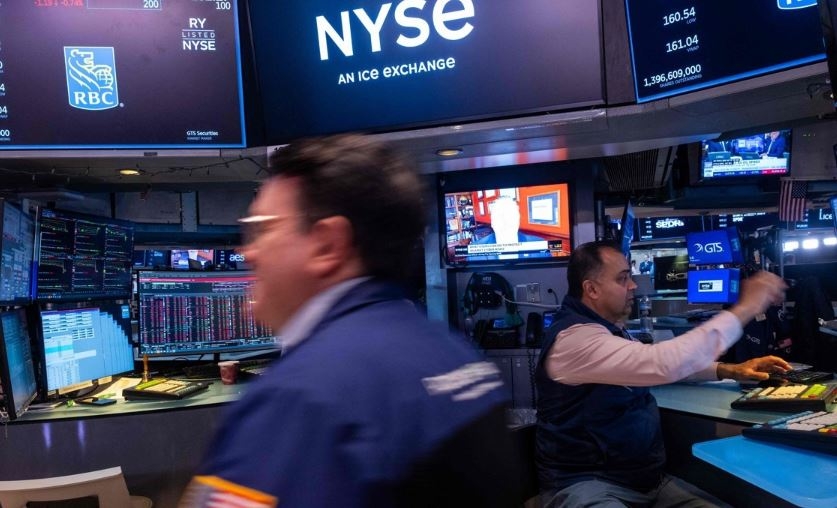
All three major US stock indexes rose more than 2% Monday (local time), driven by a sharp drop in oil prices and a broad rally in semiconductor shares. Bargain hunters poured back into AI-related stocks that had tumbled last week, fueling the rebound. Nvidia was the notable exception, however, tumbling more than 4% amid a personal controversy surrounding CEO Jensen Huang.
The Dow Jones Industrial Average closed up 1,104.02 points, or 2.15%, at 52,389.75 on the New York Stock Exchange. The S&P 500 rose 173.08 points, or 2.35%, to 7,549.94, while the Nasdaq Composite gained 673.71 points, or 2.74%, to finish at 25,253.14.
The day's gains were led by semiconductor stocks that had sold off sharply last week. AMD surged 13.26%, while Marvell Technology and Broadcom climbed 9.49% and 8.78%, respectively. Micron Technology rose 6.25%, and SK hynix's American depositary receipts advanced 5.53%. The Philadelphia Semiconductor Index, which had shed more than 12% on Thursday alone, jumped nearly 7%.
Nvidia bucked the trend, closing down 4.27% at $178.67. The stock fell as low as $170.24 during trading, a decline of 8.79% at its intraday trough. The company shed roughly $192.1 billion in market cap in a single session.
The selloff came after Huang acknowledged an extramarital relationship with a businesswoman suspected of ties to Chinese intelligence, raising concerns about management uncertainty. Investors were also rattled by fears that US authorities could tighten scrutiny of semiconductor exports to China in the wake of the affair.
A sharp drop in crude oil prices added to the bullish mood. West Texas Intermediate futures settled at $86.85 per barrel, down $3.98, or 4.38%, from the previous session. Brent crude futures fell $5.75, or 5.85%, to $92.57 per barrel.
US President Donald Trump said a large-scale additional military strike on Iran was highly unlikely, raising hopes for an easing of military tensions in the Middle East. The drop in oil prices also bolstered expectations that inflationary pressure could ease ahead of the Federal Open Market Committee meeting in December.
Despite the rebound, some market watchers cautioned that concerns about overconcentration in AI-related stocks have not gone away. Mark Hackett, head of investment research at Nationwide, said the market "is showing the resilience needed to turn last week's weakness into another buying opportunity."
Ulrike Hoffmann-Burchardi, a senior official at UBS's chief investment office, characterized the recent tech selloff as a repositioning of investment positions rather than a structural downturn in the AI investment cycle, but said "this rebound has not resolved the risks stemming from overconcentration and excessive expectations around certain stocks."

hajun825@heraldcorp.com