LH launches study for metropolitan transport plan, traffic impact assessment
Planning alone takes 24 months, with individual project procedures still ahead
Transport gap feared if ground-breaking comes in 2030 and first move-ins in 2033
Experts urge faster Line 5 extension and parallel alternatives
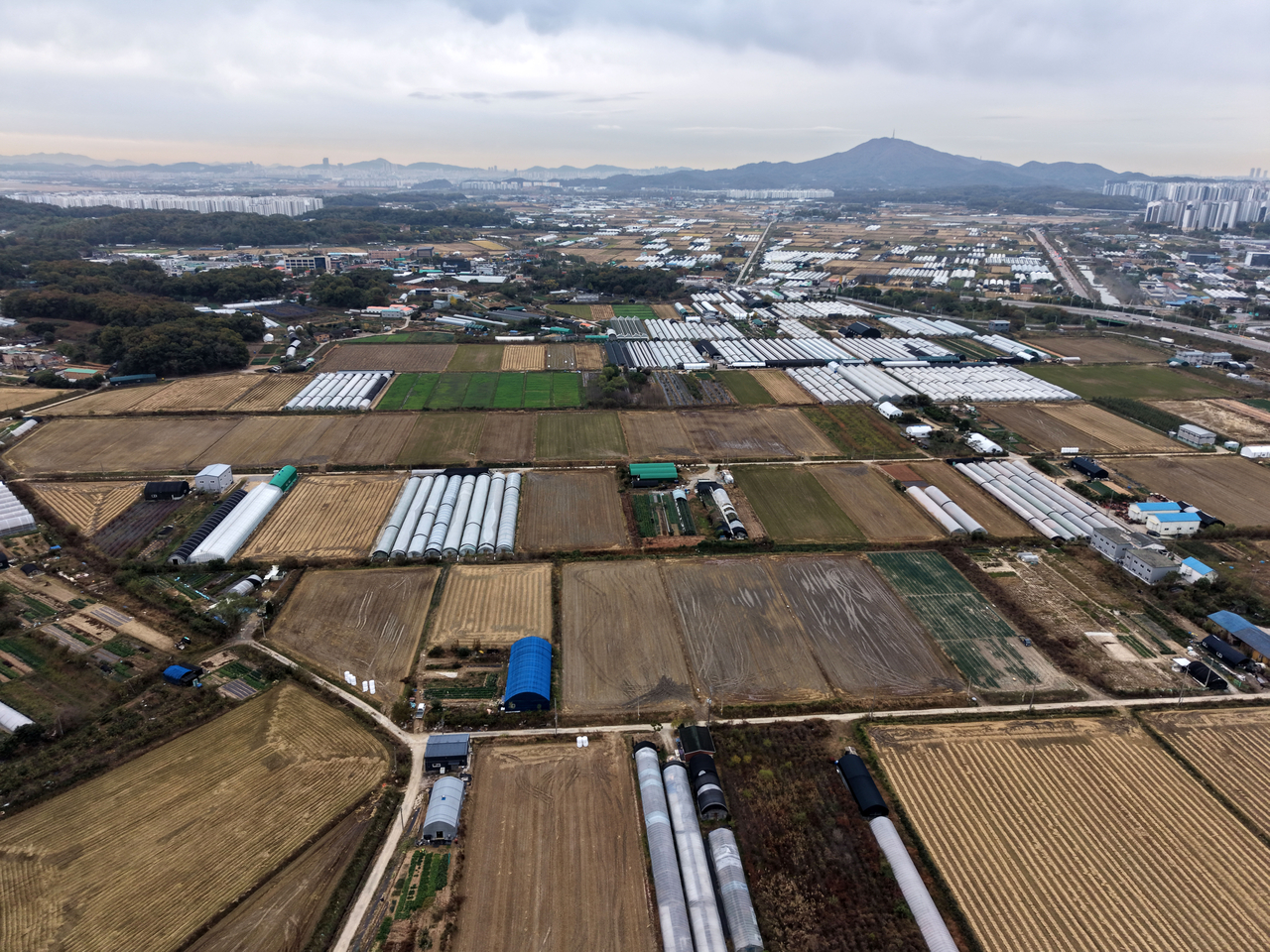
Korea Land and Housing Corporation has begun procuring a study to develop a metropolitan transport improvement plan for the Gimpo Ara district, where the government has announced plans to supply 37,000 housing units. While expanding the transport network ahead of large-scale housing supply is urgent, concerns are mounting that infrastructure could lag behind the housing timeline — the planning and traffic impact assessment alone will take 24 months after the study kicks off, with further procedures for individual transport projects still to follow. With the government projecting that units breaking ground in 2030 could see their first move-ins in 2033, experts say transport projects must move faster to ensure infrastructure is in place before residents arrive.
Korea Land and Housing Corporation said Monday it had issued a tender for a "Gimpo Ara public housing district metropolitan transport improvement plan and traffic impact assessment study." The total study period is 60 months, of which the core work — drawing up the metropolitan transport improvement plan and conducting the traffic impact assessment — will take 24 months from the start date.
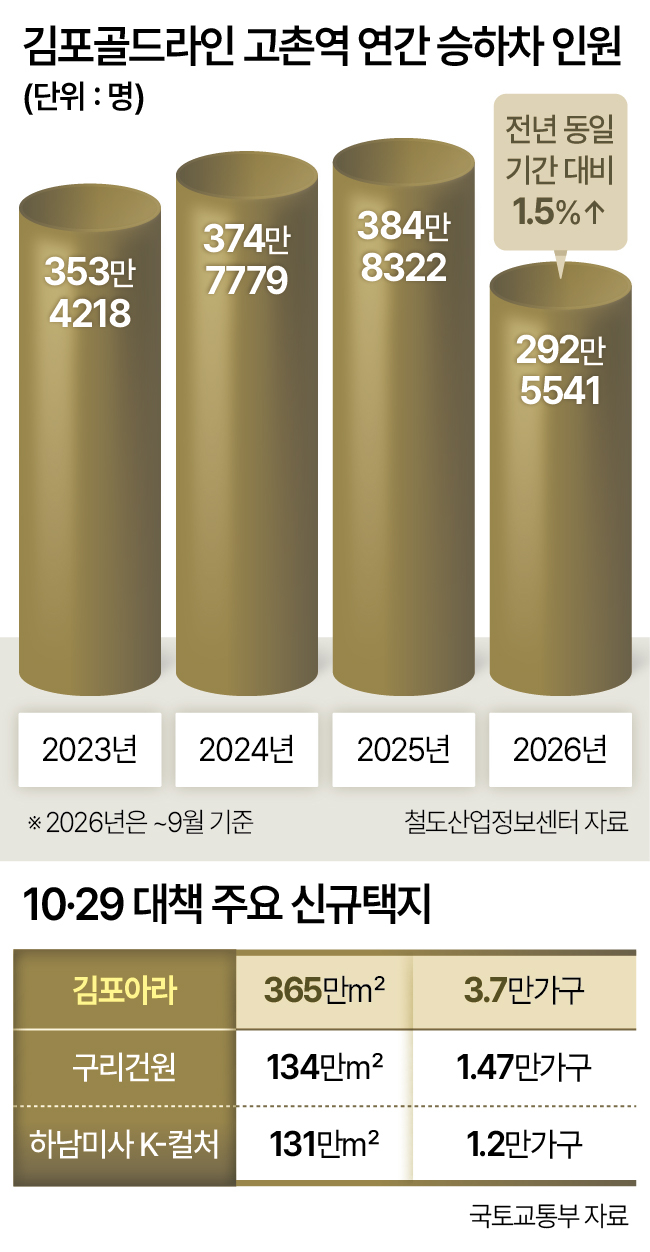
The Gimpo Ara district is the largest of six candidate sites for new public housing in the greater Seoul area announced by the government on Oct. 29. The plan calls for 37,000 units across roughly 3.65 million square meters in Gochon-eup and Sau-dong, Gimpo. The city of Gimpo pushed back almost immediately after the announcement, arguing that the transport measures were insufficient.
On the day of the announcement, the city held an emergency news conference and expressed regret that the government had proceeded with naming the candidate site over its objections. On transport, the city particularly stressed the principle of "transport first, move-ins later." It called for the costs of the existing Line 5 extension project and Gimpo Ara-related works to be tracked separately, and also proposed a direct Line 9 connection to Gimpo, widening of the Olympic Expressway between Gaehwa IC and Dangsan Station, and the introduction of a BRT system linking Gimpo Hangang-ro to the Olympic Expressway.
The study will reflect these concerns by analyzing how the development of the Gimpo Ara public housing district will shift transport demand and by identifying ways to expand the metropolitan transport network. Specifically, it will project future transport demand with and without the project, and will comprehensively review surrounding development plans and existing transport infrastructure. The study will also examine who will implement each project, when, and how costs will be shared.
The central concern is speed. Factoring in the roughly three months needed to sign a contract, drawing up the metropolitan transport plan alone is expected to take at least 27 months.
Experts warned that even if the metropolitan transport improvement plan includes rail and road expansion projects, actual completion could take considerably longer. Because the plan itself does not guarantee that individual transport projects will proceed, they said alternatives are needed to minimize the transport gap when residents first move in.
Lee Dong-min, a transportation engineering professor at the University of Seoul, said the metropolitan transport improvement plan is essentially a master plan, and that not all projects included in it are guaranteed to go ahead. "Each individual project must go through its own separate procedures, so there is a real possibility that transport infrastructure will not be in place until well after residents have moved in — or may not be built at all," Lee said. Lee added that unless feasibility reviews are strengthened from the planning stage and subsequent procedures are shortened — for instance by waiving preliminary feasibility studies — residents will inevitably face prolonged transport inconvenience.
Park Hap-su, an adjunct professor at Konkuk University's graduate school of real estate, said the Line 5 extension must be pushed forward quickly while other alternatives are pursued at the same time. "When you factor in not just Gimpo Ara but also the Gimpo Hangang 2 public housing district supply plan, there is no longer any room to delay the Line 5 extension," Park said. "Rail design, land compensation and all related procedures need to be pushed through at full speed so the transport network is ready when residents move in."
Park added that the Line 5 extension alone would not be enough to handle transport demand across the Gimpo area, and that the Gimpo Gold Line cannot be extended from two to three cars per train due to platform length constraints. "The western metropolitan express railway must be pursued in parallel, and road traffic must be dispersed — only then can Gimpo residents be freed from their commuting hardship," Park said.
shy@heraldcorp.com