Ministry of Health and Welfare unveils 2026–2027 winter protection plan for vulnerable groups
Illegal lending, utility arrears data to be used to identify at-risk households early
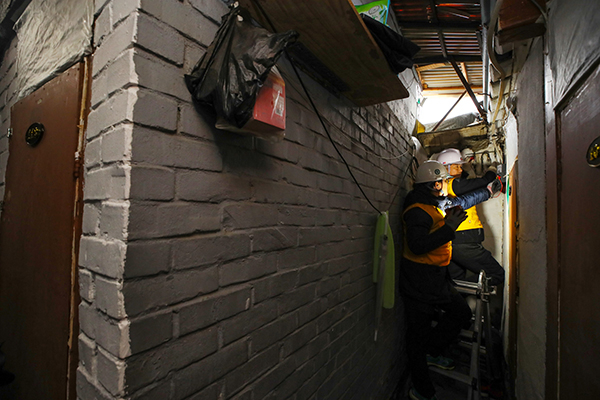
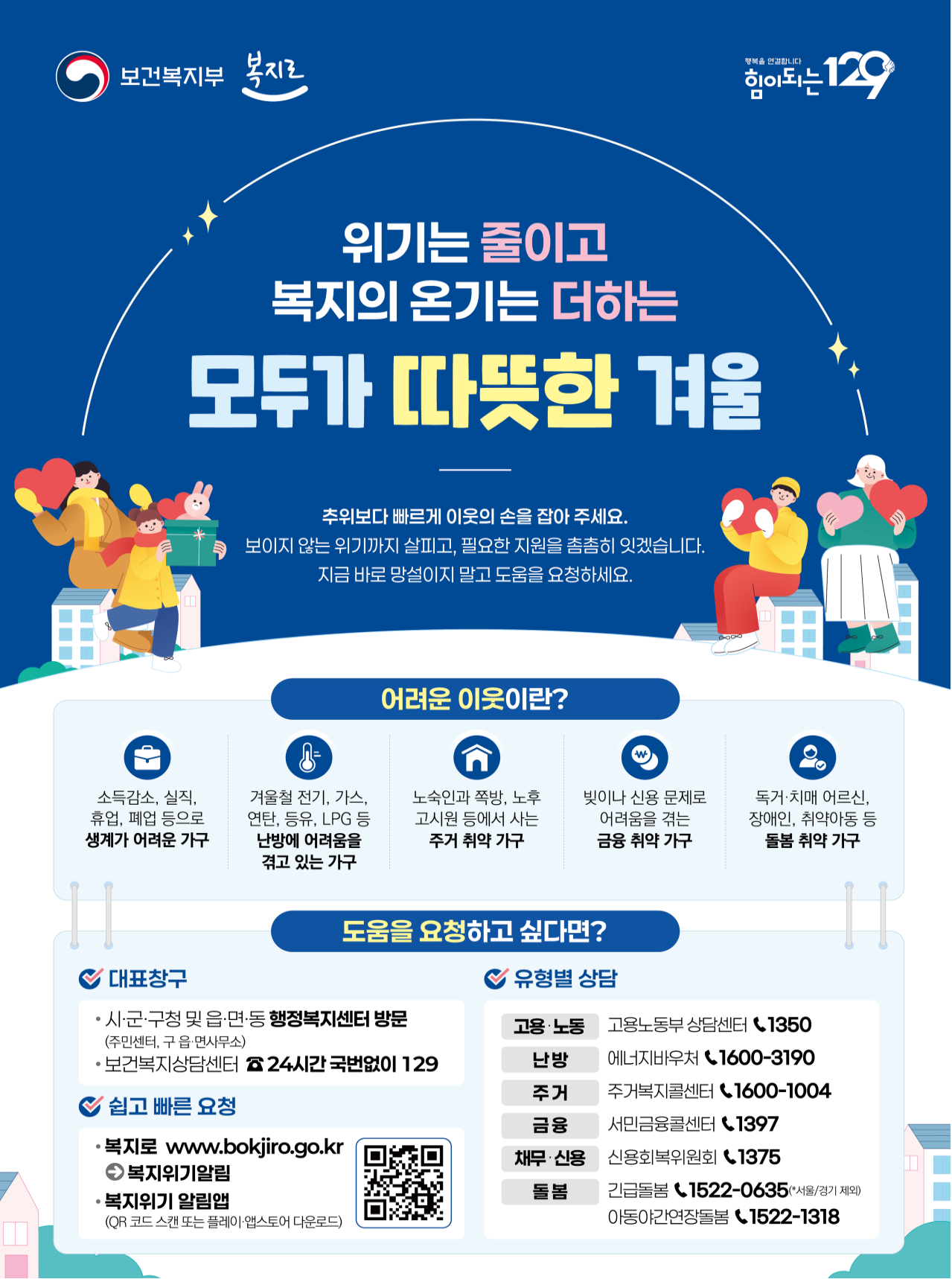
The government plans to proactively identify households vulnerable to cold snaps and social isolation, providing emergency living expenses of 300,000 won upfront while expanding heating subsidies and overnight childcare.
The Ministry of Health and Welfare announced the "2026–2027 Winter Protection Plan for Vulnerable Groups," jointly prepared with related ministries, at a Cabinet meeting Tuesday.
The government will expand the number of crisis-indicator data types used to identify welfare blind spots from 47 to 50, aiming to reach about 400,000 at-risk households. Newly added data on victims of illegal lending and financially distressed debtors will help authorities more quickly locate households in financial crisis, while energy- and housing-vulnerable households — those showing signs of utility cutoffs or long-term arrears on apartment management fees — will be a priority focus.
To ensure no one misses out on welfare services due to lack of awareness, the number of services promoted through the welfare membership program will grow from 164 to 209. Starting this month, four winter lifestyle-stabilization services — energy vouchers, gas and electricity bill discounts, and agricultural food vouchers — will be proactively flagged to eligible recipients.
Heating support will also be strengthened. About 1.44 million energy-vulnerable households will receive annual energy vouchers worth 367,000 won, and 220,000 households that rely primarily on kerosene or liquefied petroleum gas for heating will receive an additional 147,000 won, bringing their total annual support to 514,000 won. Vulnerable households using district heating will receive up to 73,000 won per month per unit, while electricity bill support will reach up to 16,000 won per month and city gas bill support up to 148,000 won per month.
Low-income households eligible for emergency welfare support will receive an additional 150,000 won per month in fuel costs on top of living expense assistance. Starting in January, households requiring immediate crisis relief will be able to receive 300,000 won upfront at the discretion of on-site caseworkers. The measure is designed to provide rapid support to those unable to afford essential items such as infant formula and diapers, or facing imminent eviction due to unpaid monthly rent.
The government will also move to close childcare gaps during the winter school break. Community children's centers and shared childcare centers will extend their operating hours to either 9 a.m.–6 p.m. or 11 a.m.–8 p.m. Children who need care late into the evening will be offered extended overnight childcare until 10 p.m. or midnight. The number of participating facilities is set to grow from 347 this year to at least 393 next year.
When cold-wave advisories are issued, high-risk individuals — including elderly people with limited mobility — will be checked on at least once a day by phone or in person.
"We will reach out to neighbors in need one step ahead, and actively support everyone so that the warmth of welfare permeates every corner of our society and we can all get through a warm winter together," Health and Welfare Minister Jeong Eun-kyeong said.
thlee@heraldcorp.com