Group of 20-plus lawmakers forms caucus, plans policy forum
Members cite jeonse and monthly rent crisis, call for revised government proposal
Dissenting voices within party signal growing unease
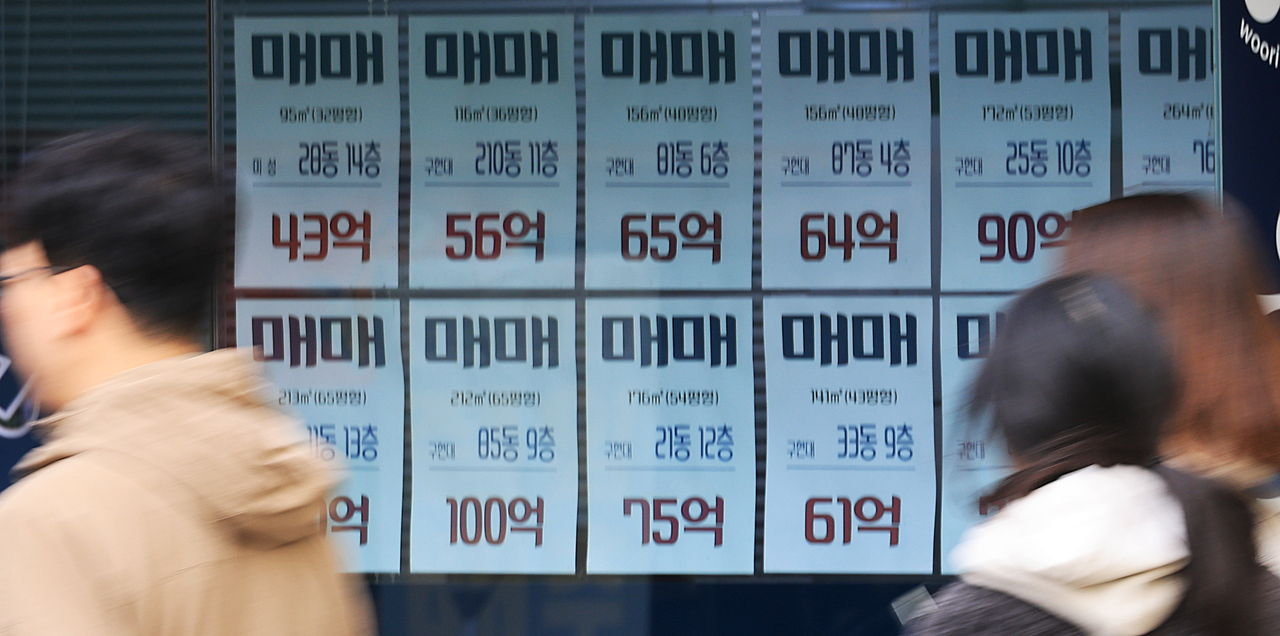
Calls within the Democratic Party of Korea to ease the comprehensive real estate tax threshold are growing louder by the day, led by lawmakers from the greater Seoul metropolitan area, as the National Assembly prepares to review next year's tax revision bills.
Some have gone so far as to form a formal caucus, pressing for a uniform 1.4 billion won ($1.03 million) basic deduction threshold for all single-homeowners regardless of residency status. The push is expected to deepen tensions within the party, given that the government has already revised the threshold once.
About 20 Democratic Party lawmakers representing constituencies in Seoul and Yongin, Gyeonggi Province, have formed a caucus focused on real estate pragmatism for housing stability — aimed at stabilizing jeonse and monthly rent — and plan to hold a policy forum Wednesday.
The caucus said lawmakers would debate current real estate regulations, problems and alternatives at the forum. The discussion is also expected to address the argument that tax policies differentiating between owner-occupants and non-occupants have, contrary to their intent, fueled the jeonse and monthly rent crisis and driven up home prices, threatening housing stability.
The rift between the party, the government and Cheong Wa Dae over real estate tax policy came into the open following a senior party-government consultative meeting held Sunday.
Democratic Party Chief Spokesperson Park Sung-jun, speaking to reporters after the meeting, addressed questions about further discussions on the comprehensive real estate tax. "Once this year's budget-related bills and real estate tax legislation pass, property taxes on housing will be levied next July, land property taxes in September and the comprehensive real estate tax in December," Park said. "Ultimately, one of the most important issues for public sentiment in Seoul is the tax burden. There were views that the government should examine the tax issue closely."
Earlier, the government's tax reform package announced in August proposed raising the basic deduction threshold for owner-occupant single-homeowners from the current 1.2 billion won to 1.4 billion won, while lowering the threshold for non-occupant single-homeowners from 1.2 billion won to 900 million won. Facing pushback from within the ruling party, the government submitted a revised proposal to the National Assembly in September that kept the non-occupant threshold at the current 1.2 billion won.
Yet Democratic Party lawmakers from the metropolitan area are again pressing the case that the comprehensive real estate tax threshold for non-occupant single-homeowners should be raised to 1.4 billion won — the same level as for owner-occupants.
The persistent disagreement over the deduction threshold has unsettled both Cheong Wa Dae and some within the party itself. One participant at the senior party-government meeting shrugged off the push, saying the comprehensive real estate tax was not on the official agenda. "It's something that needs to be discussed later — it just popped up out of nowhere," the participant said. "Given that lawmakers in Seoul and elsewhere are fielding constituent complaints about real estate taxes, it was an opinion put forward too aggressively."
Park Ju-min, a lawmaker with a Seoul constituency, also appeared on SBS Radio that day and urged caution. "It is right to approach the issue of easing the comprehensive real estate tax burden carefully. The tax exists as a mechanism to curb real estate speculation and improve tax equity," Park said. "The government has also arrived at its current position after extensive deliberation."
Whether the party and government will reach a further agreement on a revised real estate tax proposal remains to be seen. Metropolitan-area lawmakers view this month — before the tax revision bills are processed alongside the budget — as a critical window and plan to push for additional consultations.
Kim Young-bae, chair of the party's Seoul chapter, told reporters Monday that "the government is now in a position where it must finalize its stance," adding that further coordination would follow on how to reflect in the tax bill review the positions conveyed to party leadership after a general assembly of Seoul lawmakers last week.
Policy committee chair Kwon Chil-seung also said Monday that "since we need to do a final review and confirm the year-end tax-related bills, we will continue to consult between the party and the government over time."
addressh@heraldcorp.com