Survey to cover spending, participation rates and reasons for hagwon enrollment
Kindergarten board candidates to face background checks before election
Public daycare installation threshold to vary by region, from 500 to 1,000 units
Child abusers who receive prison terms to face 15–20-year ban from running daycares
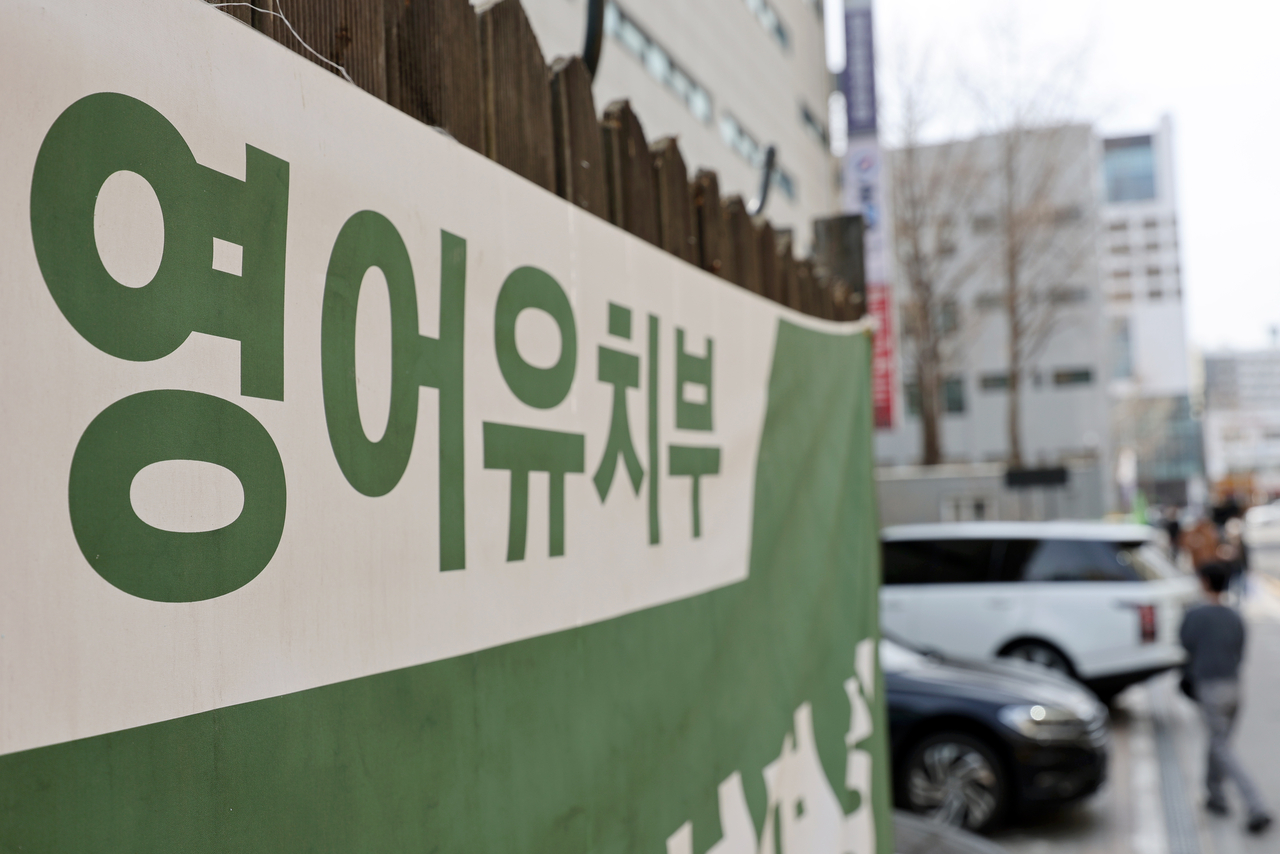
Starting in 2027, the government will conduct annual surveys on how much parents spend on private education for preschool-age children and why they enroll them, with the results made public each year. The mandatory threshold for installing public daycare centers in apartment complexes will also vary by region.
The Ministry of Education said Tuesday that the Cabinet approved amendments to the enforcement decrees of the Early Childhood Education Act and the Infant Care Act.
The survey will cover household spending on private education, participation rates, reasons for enrollment, and the overall size of the private education market. The ministry will select survey subjects, notify them in advance of the schedule and content, and conduct the survey through in-person visits, written questionnaires, phone calls or online channels. Results will be published annually on the ministry's website and other platforms.
This year, the first full-scale survey is already underway following its designation as an officially approved national statistic by the Ministry of Statistics. The sample covers 16,000 children under age 6 across the country. A pilot survey conducted in 2024 found that 47.6 percent of infants and toddlers were receiving private tutoring, with the participation rate among 5-year-olds reaching 81.2 percent.
Among children receiving private tutoring, average monthly spending per child reached 332,000 won ($245). The enforcement decree setting out the survey methodology takes effect Nov. 20, while the provision requiring annual surveys will apply starting next year.
Rules governing kindergarten operations will also change. Starting Dec. 3, schools will be able to check whether candidates for kindergarten operating committees have disqualifying records before an election is held. Under the current system, criminal background checks can only be run after a candidate is elected, meaning a new election must be held if a disqualifying record surfaces after the fact.
Going forward, a kindergarten principal will be able to request a background check from police or other relevant agencies after obtaining the candidate's consent. Sitting committee members may also be checked during their term if circumstances arise suggesting a new ground for disqualification.

The threshold requiring apartment complexes to install public daycare centers will also differ by region. Until now, complexes of 500 units or more were in principle required to include a public daycare center, even in areas with low childcare demand. Local governments will now be able to raise that threshold to as high as 1,000 units based on local childcare demand.
For example, if a municipality sets the threshold at 800 units by ordinance, a complex of 700 units would be exempt from the requirement. Areas that do not set their own threshold will continue to apply the existing 500-unit standard.
The period during which a person convicted of child abuse is barred from operating a daycare center will also vary by sentence. A prison or imprisonment term of less than one year carries a 15-year ban; a term of one year or more but less than two years carries a 17-year ban; and a term of two years or more carries a 20-year ban. Those who receive a suspended sentence of imprisonment or heavier will be barred for an additional 10 years after the suspension period ends.
Convictions for child abuse resulting in death carry a 20-year ban regardless of whether the sentence is a prison term or a suspended sentence. The same standards apply when a daycare center director or childcare teacher whose license was revoked for child abuse seeks to have it reinstated.
Meanwhile, the Cabinet also approved an amendment to the Educational Public Officials Appointment Decree that will allow foreign university professors to take up positions at domestic universities without resigning from their current posts abroad.
The measure applies to fields in advanced industries and emerging technologies — including AI and big data — as well as specialized areas recognized by individual universities. University presidents may approve such concurrent appointments after review by the university's personnel committee. The rule takes effect Nov. 20 at both public and private universities.
brunch@heraldcorp.com