Largest single facility of its kind in South Korea, completed in June, opened to media for first time
Operating below 10% capacity amid weak global demand for low-carbon steel
Continuous charging, unmanned cranes among advanced automation features
Can cut carbon emissions by up to 75%; premium steel production targeted by 2030
Industry calls for government support on electricity costs, nuclear power access
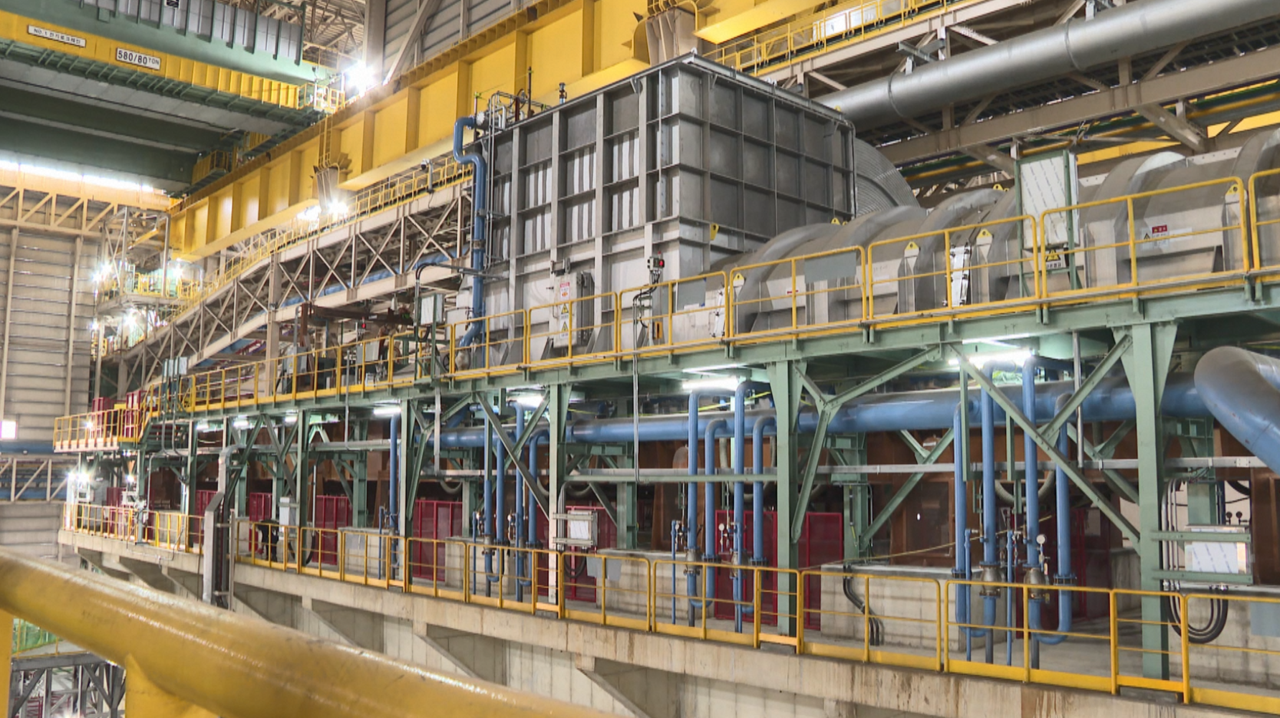
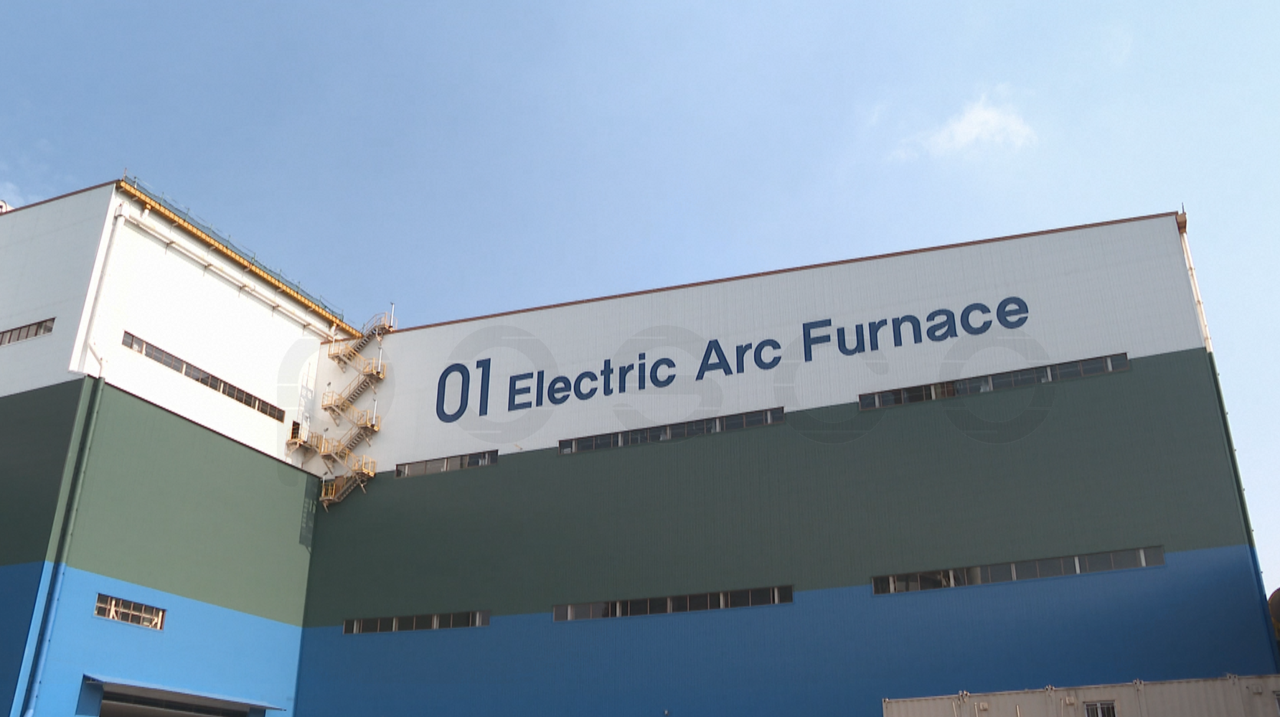
Stepping past the towering blast furnaces at Posco's Gwangyang Steelworks in South Jeolla Province on Nov. 2, a light-blue building comes into view — the company's new electric arc furnace factory. Inside, mountains of steel scrap are stacked in rows, connected by a web of large conveyors and pipes. The furnace itself, however, stood still.
Posco invested about 600 billion won ($443 million) to build the facility, which was completed in June and is the largest single electric arc furnace operation in South Korea, with an annual capacity of 2.5 million tons. It can produce about 280 tons of molten steel per heat, but economic constraints have kept its utilization rate below 10%. The steel industry agrees that meaningful government policy support is urgently needed to accelerate the low-carbon transition.
Technology in place, but high costs persist — 'we need more low-carbon customers'
The main obstacle to running the furnace at full capacity is not technology — it is economics. Production costs are higher than those of conventional blast furnaces, and there are not enough customers willing to pay a premium for low-carbon steel.
Blast furnaces use iron ore and coal as primary raw materials to produce molten steel, while electric arc furnaces melt steel scrap using electricity. The process reduces coal consumption and lowers carbon emissions, but securing scrap and electricity at scale is costly. Electricity is one of the biggest drivers of manufacturing costs for a facility that consumes power in such large quantities.
Unlike blast furnaces, which rely on iron ore and coal, electric arc furnaces produce molten steel by melting scrap. Cutting coal use lowers carbon emissions, but producing steel of consistent quality requires a large, steady supply of scrap with the right composition. The cost of purchasing that raw material is substantial, and electricity bills add another layer of expense.
The steel industry had expected major customers such as automakers to pay a so-called green premium — an added price for steel produced with lower carbon emissions. Actual buying demand, however, has grown more slowly than anticipated. "Global economic weakness has been prolonged, and demand for low-carbon steel has been slow to recover," said Shin Jong-hun, factory manager of the electric arc furnace plant at Gwangyang Steelworks.
That is why the utilization rate has yet to reach 10%. With insufficient buyers secured, ramping up output would only widen losses, so the plant is effectively running at a trial-production level.
Posco expects the economics of the electric arc furnace to improve over time as carbon credit prices rise and demand for low-carbon steel expands.
Shin said he does not expect the furnace to run at full capacity until after 2030. Even if global low-carbon steel supply increases around 2028, he said, demand will need more time to catch up.
The challenge of making low-carbon steel economically viable is not unique to Posco. According to a Reuters report in March, only about one-third of the 28 million tons of planned annual green steel capacity worldwide had actually entered the construction phase, as major steelmakers have been slowing their low-carbon transition under the weight of high capital costs and profitability concerns.
Within South Korea's steel industry, voices are growing louder for government support — including regulatory reforms to allow greater use of stable power sources such as nuclear power plants, and relief on industrial electricity tariffs. Critics note that the K-Steel Act, which took effect in June, did not include electricity cost support measures, and that concrete relief on operating costs must follow.
From unmanned cranes to waste-heat recovery — every avenue explored to cut costs
The Gwangyang electric arc furnace concentrates steelmaking technology and automation capabilities aimed at reducing production costs. Inside the factory's indoor scrap yard, steel scrap is sorted and stacked by type across 12 separate bays, allowing precise control over the composition and ratio of raw materials depending on the steel product being made.
Unmanned cranes lift the scrap into hoppers, from which it travels along a roughly 100-meter conveyor into the furnace. Unlike conventional electric arc furnaces that charge scrap all at once in large baskets, the Gwangyang facility uses a continuous charging method that feeds raw material in a steady stream. Because the furnace lid does not need to be repeatedly opened, heat loss is also reduced.
Hot exhaust gases from the furnace are also put to use. As scrap moves along the conveyor, waste heat from the exhaust preheats the material before it enters the furnace. Heating the scrap to roughly 250 to 300 degrees Celsius cuts electricity consumption by more than 10%.
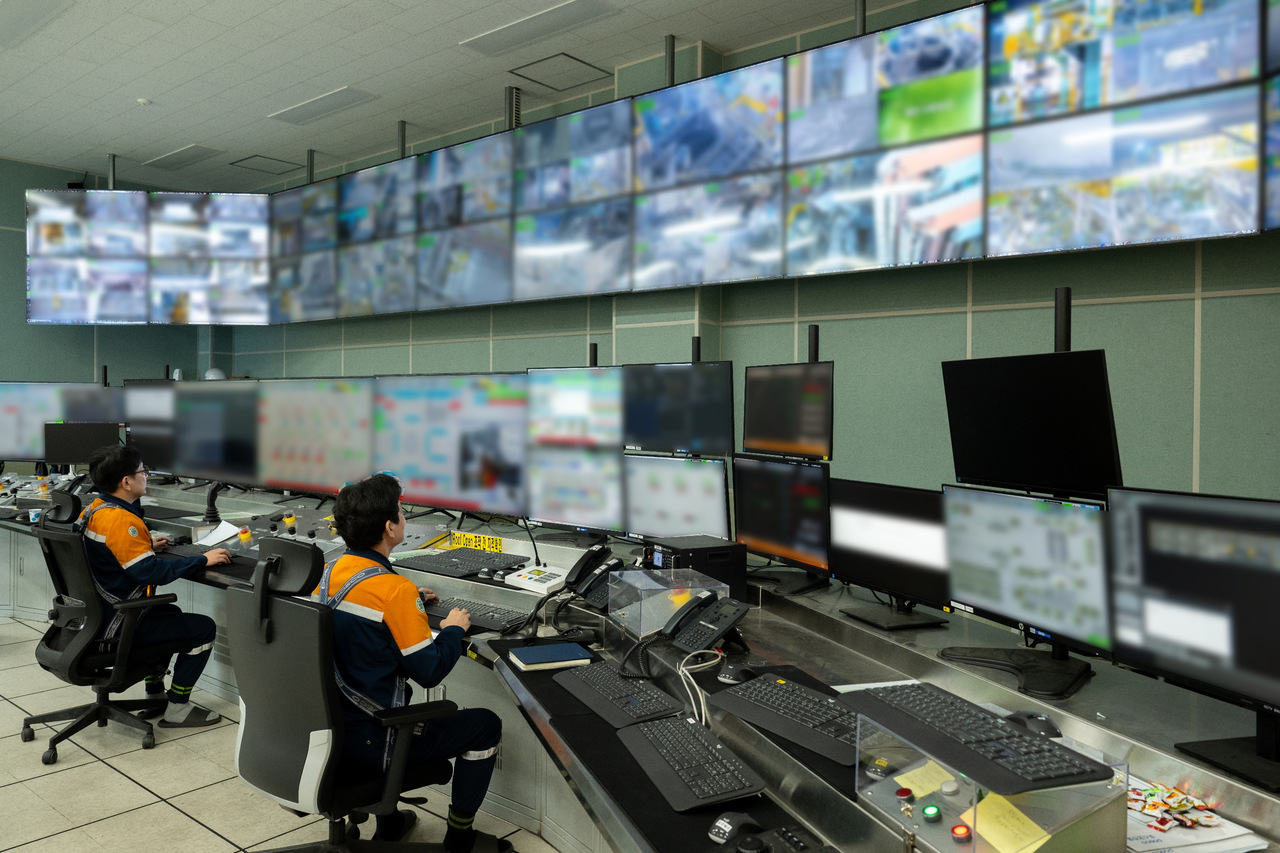
The factory's control room has no windows overlooking the production floor. Instead, operators monitor conditions through about 80 cameras placed throughout the facility — a design choice intended to protect workers from extreme heat and hazardous equipment. Industrial robots handle molten steel temperature measurements and sample collection for composition analysis.
Blending blast furnace and electric arc furnace output to produce premium steel while cutting emissions
The electric arc furnace also differs from conventional blast furnaces in how it operates. Blast furnaces must run continuously for extended periods to maintain internal temperatures, while electric arc furnaces can be started and stopped relatively freely by adjusting the power supply.
Molten steel produced in the electric arc furnace is transported in large vessels called ladles. Posco's core proprietary process — known as hot metal blending — involves mixing that molten steel with output from existing blast furnaces.
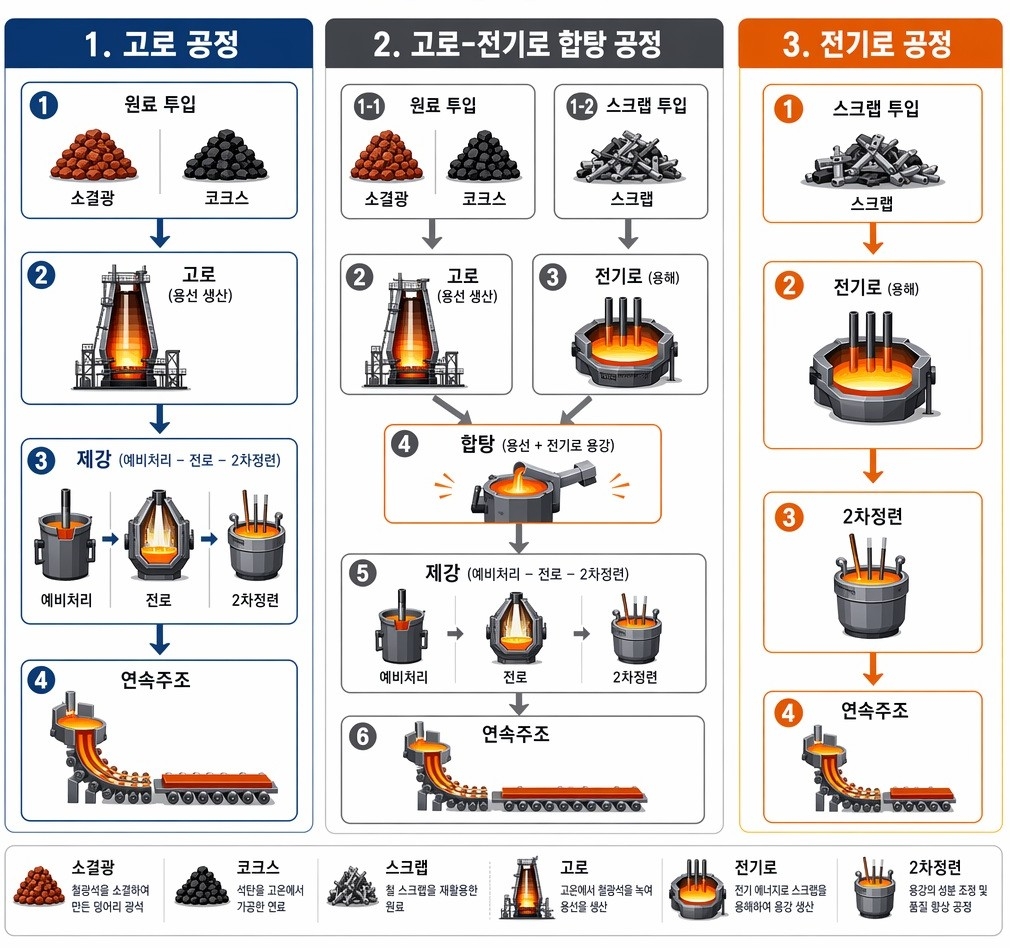
Posco applies the blending technology because producing the quality required for premium steel products such as automotive sheet metal is relatively difficult using the electric arc furnace process alone. The plan is to mix low-carbon molten steel from the electric arc furnace with conventional blast furnace output to achieve both quality standards and carbon reduction targets simultaneously.
Compared with conventional blast furnace steelmaking, the electric arc furnace can reduce carbon emissions per ton of crude steel by up to about 75%. Posco plans to refine the blending technology and establish a mass production system for premium steel grades — including automotive sheet and electrical steel — by 2030.
Posco intends to use the Gwangyang electric arc furnace as a bridging technology to reduce carbon emissions until its longer-term hydrogen direct reduction ironmaking project reaches commercial scale. The company is also pursuing a hydrogen-based direct reduction demonstration project at its Pohang works, replacing coal with hydrogen.
kwater@heraldcorp.com