9,712 victims assisted through September; 304,009 support cases logged
Government to upgrade AI system to strengthen removal of illegal content
The number of digital sex crime support cases handled this year has surpassed 300,000, amid a surge in illegal content produced using deepfake technology. Nine out of 10 victims of deepfake and other synthetic or manipulated content were in their teens or 20s.
The Ministry of Gender Equality and Family announced the performance results of the National Digital Sex Crime Victim Support Center, known as the National DiSung Center, at the Korea Women's Human Rights Institute of Korea in Jung-gu, Seoul on Tuesday, and disclosed the operational status of its AI-based content removal support system.
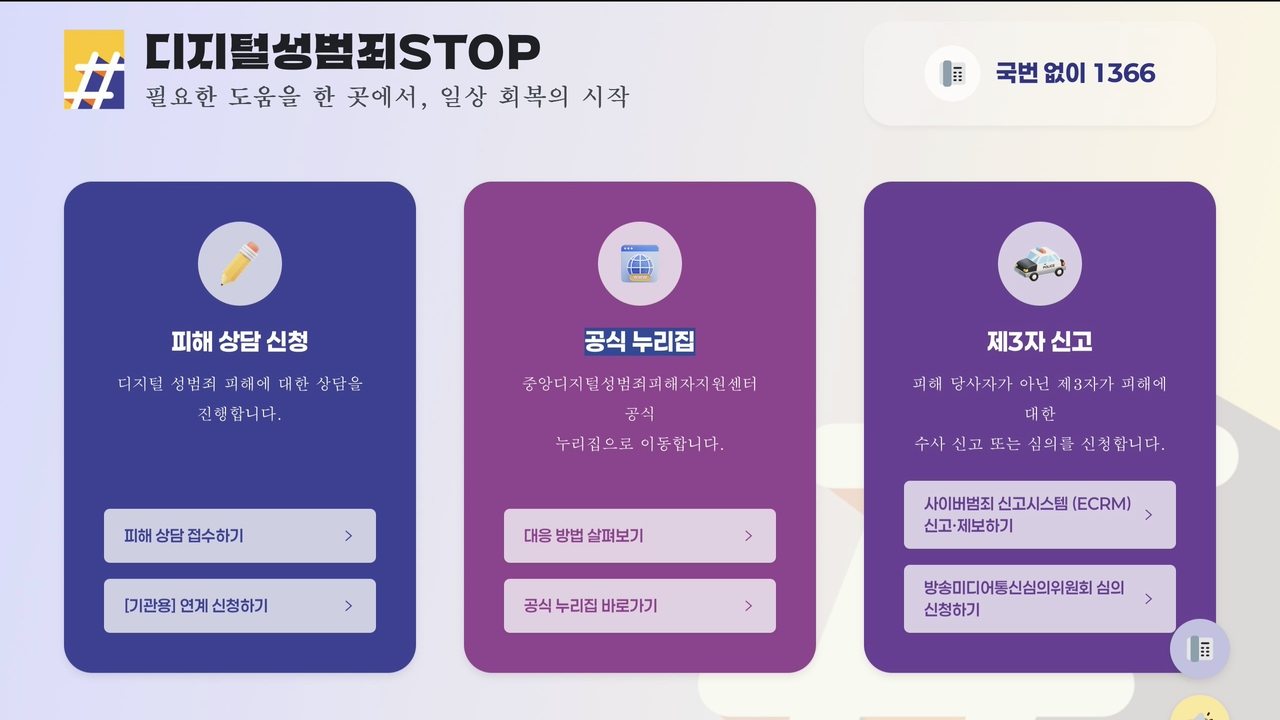
The National DiSung Center has provided comprehensive support services to digital sex crime victims since April 2018 under the Act on the Prevention of Sexual Violence, including counseling, removal support for illegal content, legal assistance, and medical referrals. It currently has a staff of 47, comprising 43 permanent employees and four contract workers.
Digital sex crimes persist as social media removal cases spike
According to the Ministry of Gender Equality and Family, 9,712 victims received support from the center this year as of Sept. 30, with a total of 304,009 support cases handled. The breakdown was: removal support, 276,192 cases; counseling support, 25,592 cases; investigation and legal referrals, 2,164 cases; and medical referrals, 61 cases.
Last year, the center recorded 17,629 cases by type. Fear of distribution was the most common, accounting for 27.7 percent (4,884 cases), followed by illegal filming at 21.9 percent (3,856 cases), actual distribution at 17.7 percent (3,113 cases), distribution threats at 12.2 percent (2,154 cases), synthetic or manipulated content at 9.2 percent (1,616 cases), and cyberbullying at 2.5 percent (448 cases).
Digital sex crime victims were particularly concentrated among those in their teens and 20s. Of the 1,616 victims of deepfake and other synthetic or manipulated content, 1,474 — or 91.2 percent — were in that age group.
As illegally distributed content continues to spread repeatedly, the number of victims requiring long-term support is also growing. Of the 9,712 victims assisted through September this year, 4,318, or 44.5 percent, were receiving ongoing support. Last year, 4,797 of the 10,637 total victims — 45.1 percent — were in ongoing support.
The distribution channels for illegal content have also shifted. Social media accounted for the largest share of removal support cases handled by the center through September this year, at 106,005 cases, or 38.4 percent, followed by illegal and harmful websites at 37.7 percent (104,056 cases), search engines at 15.8 percent (43,738 cases), cloud services at 2.7 percent (7,573 cases), and online communities at 0.2 percent (455 cases).
The share of social media in total removal support cases has risen sharply compared with last year, when it stood at 13.5 percent.
AI system supports removal of 96,000 sexual exploitation cases, with faster processing ahead
To respond to the rapid spread of illegal content, the National DiSung Center has operated an AI-based detection and reporting system for online child and youth sexual exploitation material since April.
Using approximately 220 keywords, the system automatically collects suspicious posts around the clock from 14 online channels, including social networking services such as X (formerly Twitter) and Telegram, as well as chat applications. The AI analyzes images and text in the posts to determine whether they constitute child or youth sexual exploitation material, after which a staff member conducts a final review before requesting removal.
The center said it supported the removal of approximately 96,000 cases over the past six months using this method. The average number of removal requests processed per staff member per day also rose roughly 9.7-fold, from 20.8 to 202.1.
The Ministry of Gender Equality and Family plans to collaborate with the Ministry of Science and ICT to upgrade the AI system by 2027 and significantly expand the range of platforms covered.
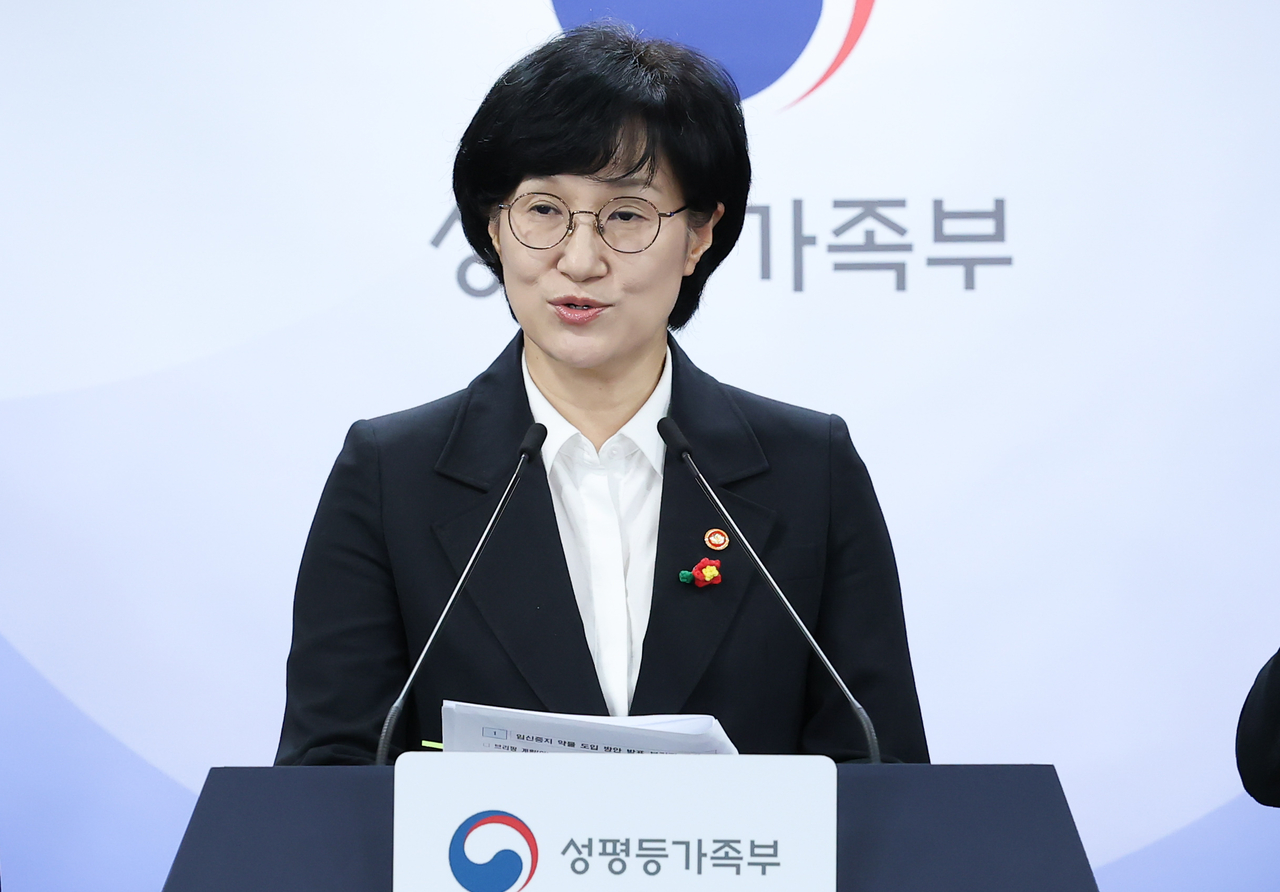
Minister of Gender Equality and Family Won Min-kyung said a government-level technological response is essential to counter rapidly evolving digital sex crimes swiftly and forcefully. "We will actively deploy the latest technologies, including AI, on the ground to improve response speed and accuracy, build a more robust support system, and help victims quickly return to their daily lives," Won said.
kido@heraldcorp.com