Korea's first ore-based hydroxide production line
Annual capacity of 43,000 tons — enough for about 1 million EVs
67 billion won loss in Q3; profitability remains elusive
Proprietary refining technology commercialized; customer base to expand
Posco Group has succeeded in refining Australian lithium ore domestically to produce battery-grade lithium hydroxide, establishing a local production system for a critical material that South Korea had long relied on imports to supply. Even so, the company continues to struggle against Chinese rivals on price.
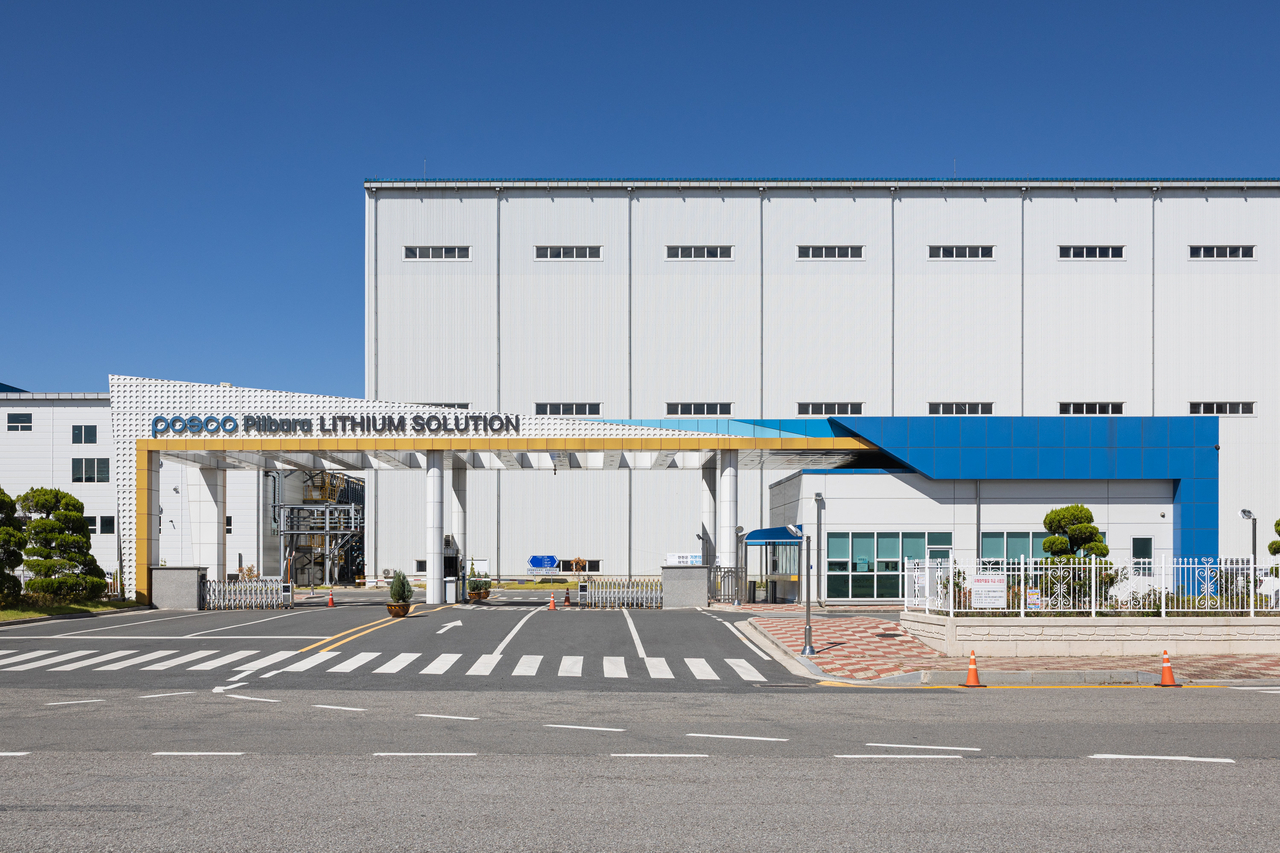
A visit to the Posco Pilbara Lithium Solutions factory at the Yulchon Industrial Complex in Gwangyang, South Jeolla Province, on Nov. 3 found that high electricity costs and raw material expenses remain the plant's biggest headaches. Industry observers say that now that the technology has been localized, the time has come for government policy support to help bring down production costs and sharpen price competitiveness.
67 billion won loss: electricity and raw material costs weigh
"The biggest weakness of Korean manufacturing is high electricity rates," said Kim Sang-min, head of the planning and raw materials group at Posco Pilbara Lithium Solutions. "China applies differentiated electricity tariffs by region and industrial complex, giving it a cost advantage."
High electricity costs also weigh on the economics of Posco's proprietary lithium refining technology. The company's in-house process uses electricity to separate lithium ions, reducing the need for auxiliary chemicals and allowing sulfuric acid to be recycled — but it consumes more power than conventional chemical methods. "There is an advantage in that we can reduce the use of auxiliary materials, but there is also the limitation of relatively high power consumption," said Son Hong-rok, head of the technology and quality division at Posco Pilbara Lithium Solutions.
Raw material costs have compounded the electricity burden and weighed on earnings. Posco Pilbara Lithium Solutions posted an operating loss of 67 billion won ($49.4 million) in the third quarter of this year, as the cost of spodumene ore remained high relative to lithium hydroxide selling prices and inventory valuation losses were also reflected in the results.
However, raw material cost pressures have eased somewhat of late. The share of spodumene costs in the company's lithium hydroxide selling price has fallen from 83–87 percent in the first half of this year to below 70 percent recently. Profitability is improving as ore prices decline, but the company has yet to reach operating profit territory.
Posco Holdings is targeting an EBITDA-level profit from its ore lithium business next year, meaning a full recovery in profitability will still take time.
"This is a core industry in which the entire world is competing, so clear national-level support to ease the electricity cost burden is needed," Kim said.
Korea's first integrated lithium hydroxide production system
Despite these challenges, the significance of the lithium production technology Posco has secured is considerable.
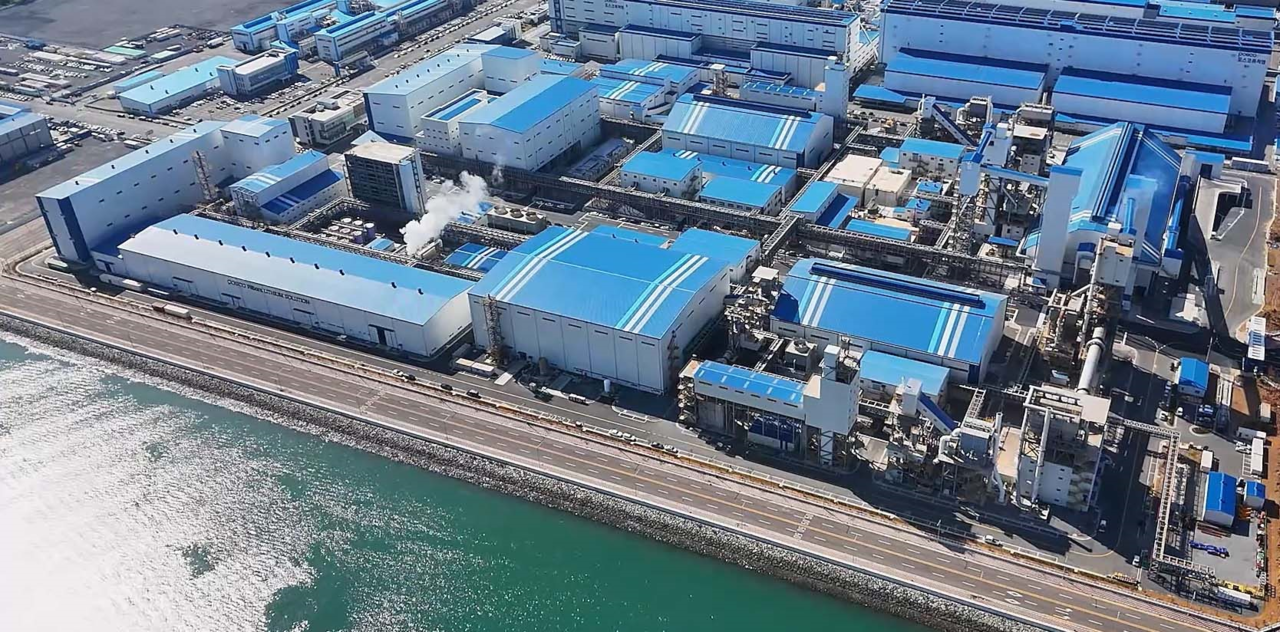
Posco Pilbara Lithium Solutions is a joint venture in which Posco Holdings holds an 82 percent stake and Australia's Pilbara Minerals holds 18 percent. Established in 2021, the company refines Australian spodumene concentrate domestically and produces battery-grade lithium hydroxide.
Domestic producers had previously been limited to reprocessing lithium compounds imported from abroad. Posco Pilbara Lithium Solutions, by contrast, has built an integrated production system that extracts lithium hydroxide directly from ore. "We produce the first battery-grade lithium hydroxide for electric vehicles in Korea made from ore-based raw materials," Kim said, underscoring the significance of the technology localization.
The company completed its first factory in 2023 and its second in 2024. Combined annual capacity stands at 43,000 tons — enough lithium hydroxide to supply about 1 million electric vehicles.
The company has also secured its raw material supply chain. Through its partnership with Pilbara Minerals, Posco Group has arranged a stable supply of spodumene concentrate for 20 years or until the mine's end of life. Raw materials are sourced from Australia while refining is carried out domestically, a structure designed to reduce dependence on China-centered supply chains.
Lithium separated by electricity: proprietary refining technology commercialized
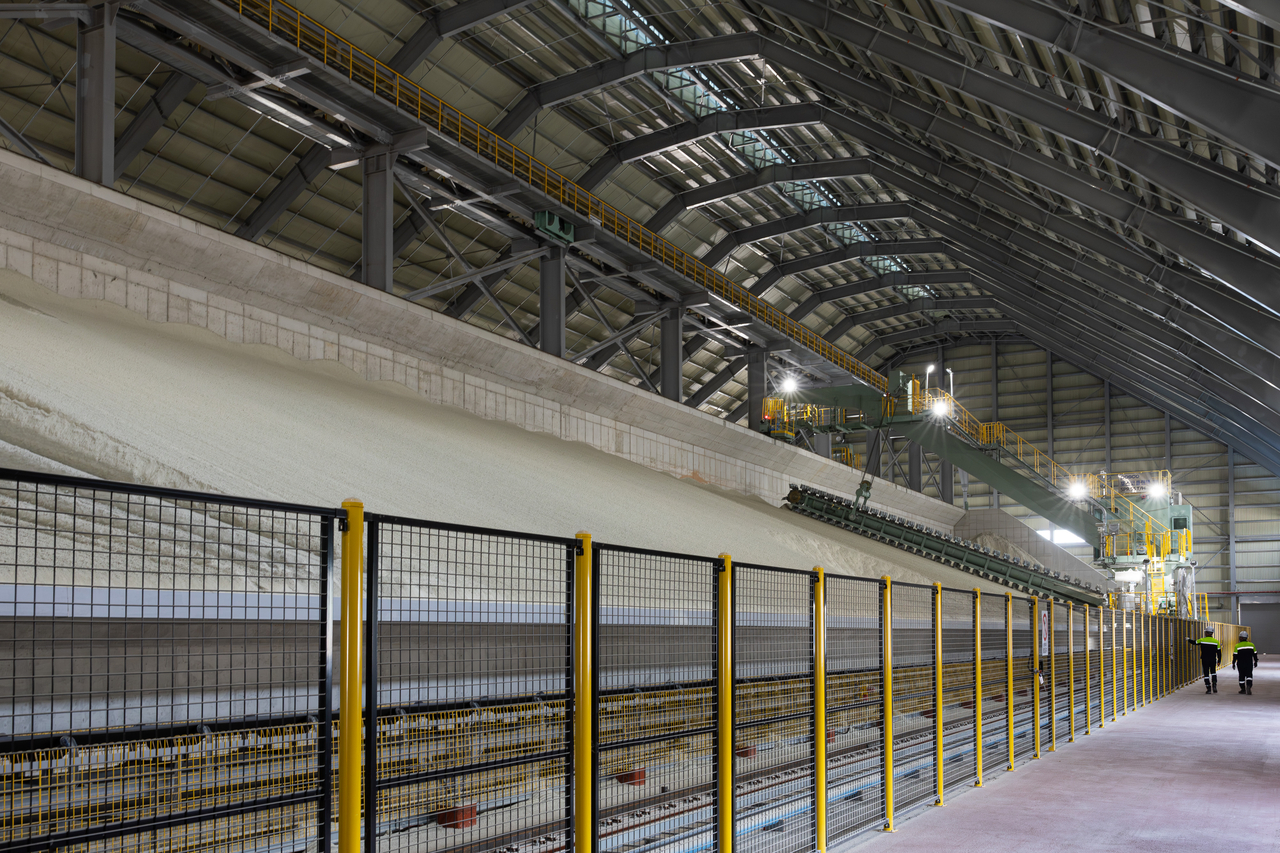
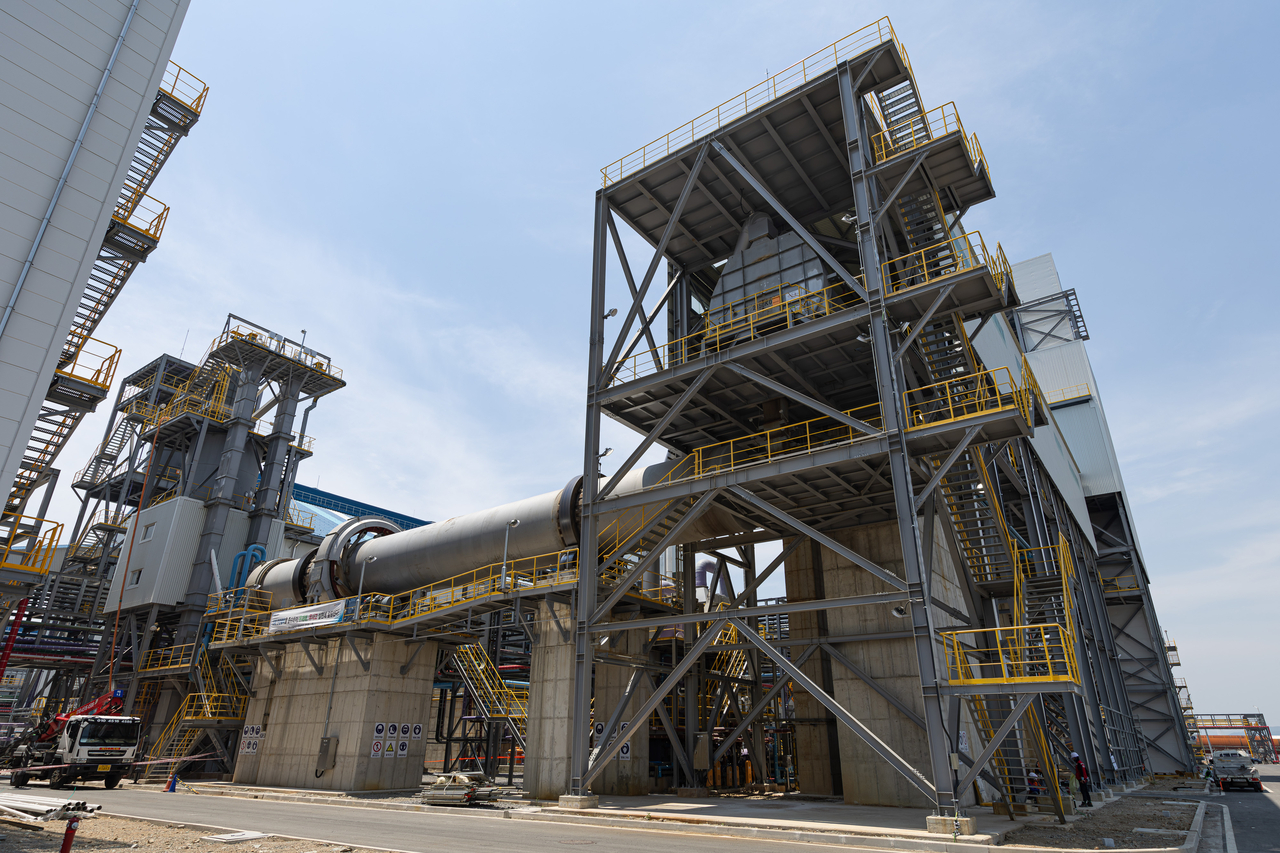
At the Gwangyang factory, the full journey from Australian lithium ore to battery-ready lithium hydroxide is visible on the production floor. The ore is first roasted at around 1,000 degrees Celsius to allow sulfuric acid to permeate it, after which lithium is extracted and impurities are removed.
The critical step is converting the resulting lithium sulfate solution into lithium hydroxide. Posco has developed and commercialized its own technology for this process. The first factory uses an in-house "electrodialysis" method, in which an electric current is passed through a specialized membrane to separate lithium ions; the sulfuric acid generated in the process is then recycled, reducing byproduct generation.
The second factory uses the chemical production method widely employed in China and elsewhere. Sodium hydroxide is added to produce lithium hydroxide, and the sodium sulfate generated as a byproduct is sold to markets in Southeast Asia and other regions.
The quality of lithium hydroxide produced by both methods is identical. The finished product takes the form of a white powder and is shipped in large 500-kilogram bags. Posco Group plans to apply both production technologies to future overseas lithium business expansion.
The company is also working to secure external customers to improve profitability. Posco Pilbara Lithium Solutions signed a long-term contract with SK On in 2024 to supply up to 15,000 tons of domestically produced lithium hydroxide over three years beginning last year. In August this year, it signed an MOU with Chinese cathode material maker Ronbay Group for the supply of battery-grade lithium. The company plans to complete product quality certification by the fourth quarter of this year and pursue mass production supply going forward.
kwater@heraldcorp.com