Gwangyang complex anchors 90,000-ton annual ternary cathode output
Pohang line converted to LFP; mass production targeted by year-end
Supply deals secured with SK On for 1.1 trillion won, Samsung SDI for 6 trillion won
Battery recycling arm strengthens raw-material supply chain
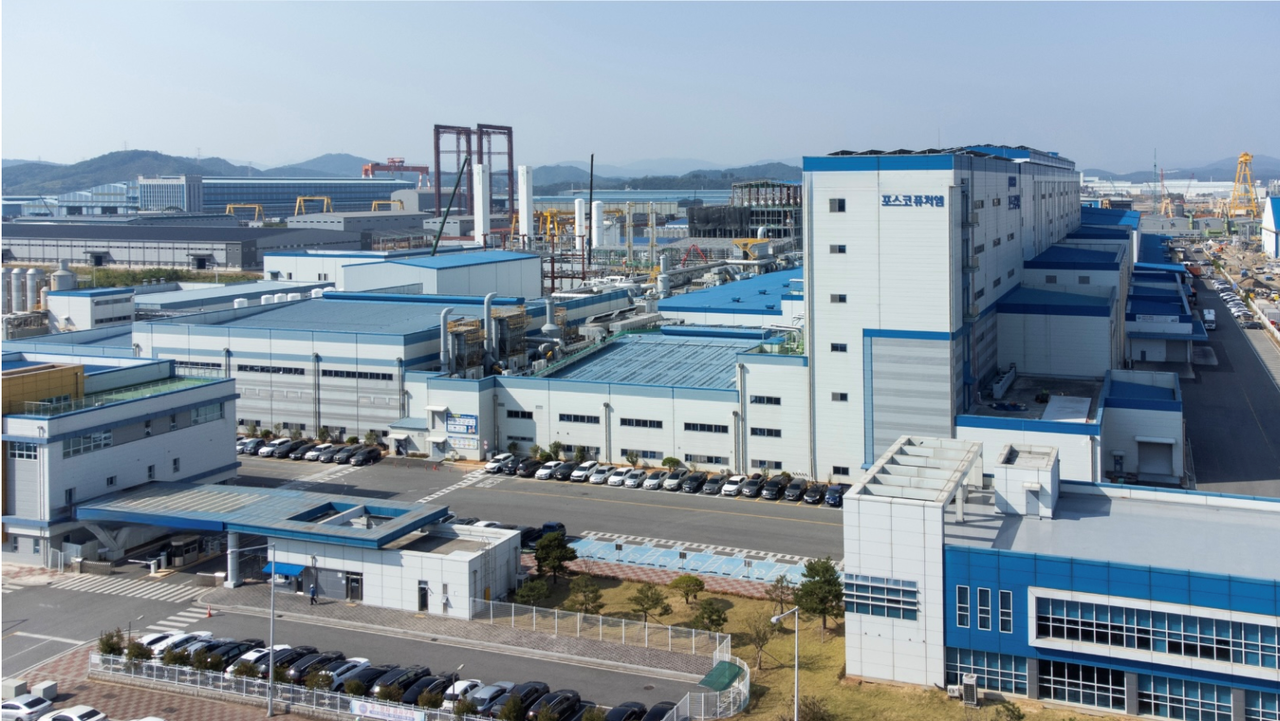
Posco Future M, long known as a leading producer of ternary cathode materials, is now moving into the lithium iron phosphate (LFP) cathode market — a segment dominated by Chinese manufacturers. The company has recently locked in large-scale supply agreements with domestic battery makers and begun converting production lines, accelerating its push toward full-scale LFP mass production.
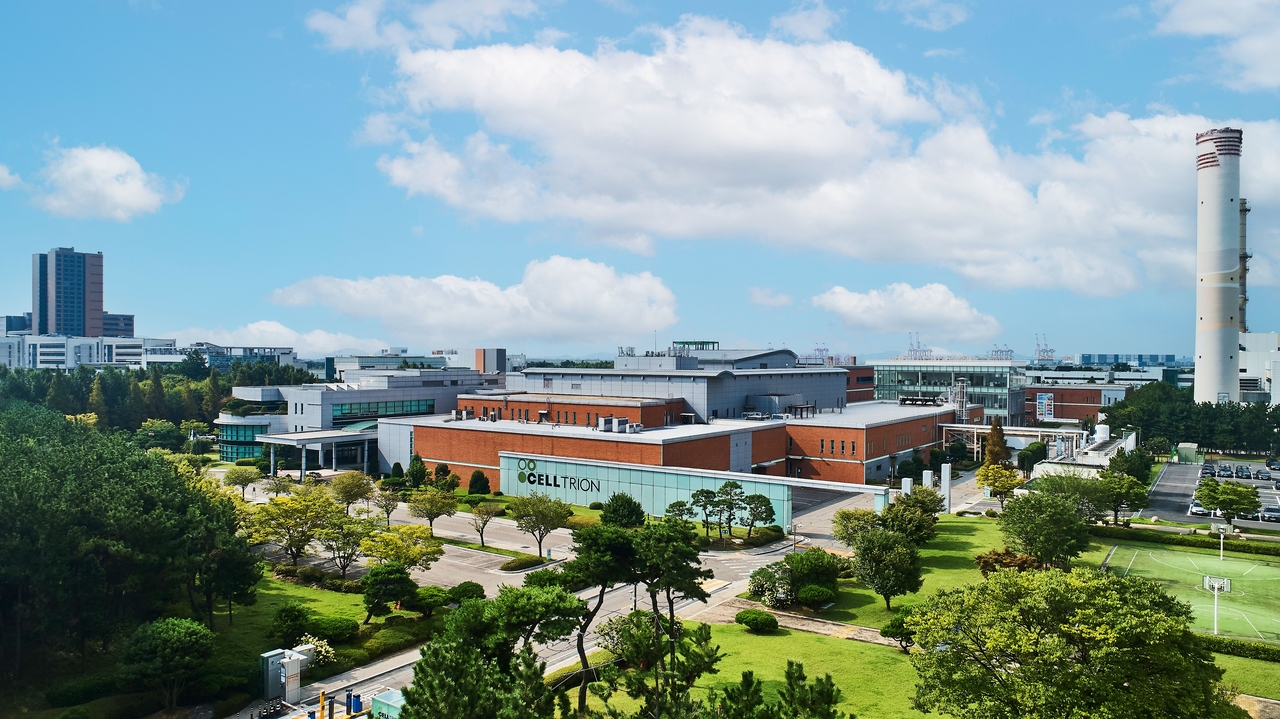
The Posco Future M cathode factory at the Yulchon Industrial Complex in Gwangyang, South Jeolla Province — visited Nov. 3 — serves as the foundation for this expansion. The company produces ternary cathode materials used primarily in high-performance electric vehicles at Gwangyang, while converting existing production lines at its Pohang facility for LFP use, broadening its product lineup.
LFP batteries offer lower energy density than ternary batteries, which use nickel and cobalt, but are cheaper and longer-lasting. Demand has been rising as the market for energy storage systems (ESS) needed by AI data centers grows alongside the uptake of entry-level electric vehicles. That shift is drawing South Korean materials companies into a market that Chinese firms have long controlled.
Pohang line converted to LFP; partnerships with all three domestic battery makers
Posco Future M is pressing ahead with its LFP business expansion, backed by a string of major supply contracts.
In September, the company signed a supply agreement with SK On to deliver LFP cathode materials worth about 1.1 trillion won ($811 million) from 2027 through 2029.
In October, Posco Future M revised an existing long-term supply contract with Samsung SDI to include roughly 6 trillion won worth of LFP cathode materials. The revision more than doubled the previously agreed LFP volume and extended the partnership — originally centered on nickel-cobalt-aluminum (NCA) cathodes — to cover LFP and other product types.
The company is also deepening its ties with LG Energy Solution. Under an MOU signed Oct. 30, the two companies plan to supply a combined 720,000 tons of cathode and anode materials over seven years from next year through 2033. The agreement expands the scope of cooperation from ternary cathode materials to include LFP cathodes and artificial graphite anodes, with a formal contract targeted before the end of this year.
To meet rising demand, Posco Future M has also reorganized its production facilities. The company has converted part of its high-nickel cathode production line at the Pohang factory for LFP use, with mass production supply set to begin by the end of this year and capacity to be expanded in line with additional orders.
A dedicated LFP factory is also under construction. The joint venture CNP New Material Technology is building an LFP cathode plant at the Pohang Yeongil Bay 4 General Industrial Complex, with operations slated to begin next year and annual capacity to be expanded in stages to a maximum of 50,000 tons.
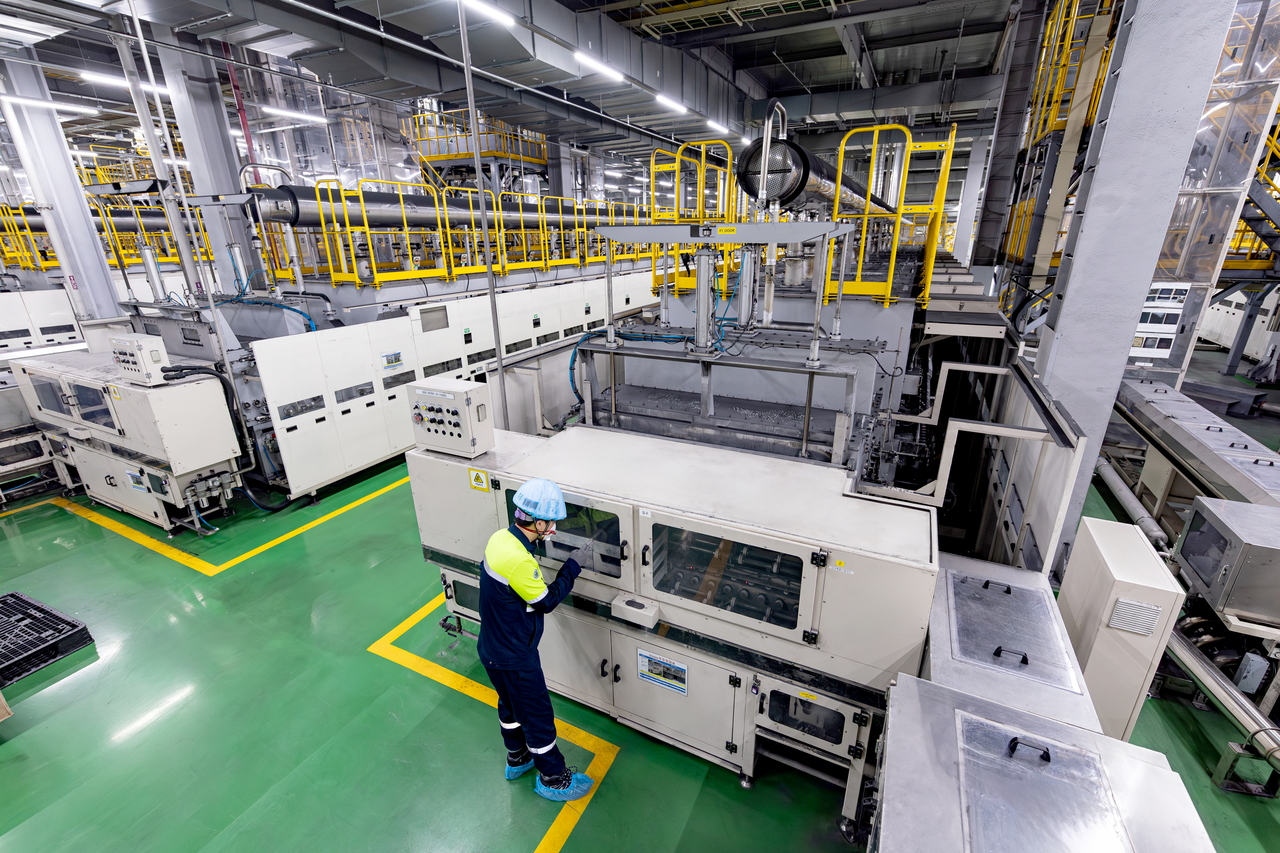
Gwangyang complex: 90,000-ton annual capacity, precursor production in-house
Posco Future M's existing competitive strength has already been demonstrated in ternary cathode materials.
The Gwangyang cathode factory is the world's largest single-plant facility of its kind, with an annual production capacity of 90,000 tons — enough to supply batteries for roughly 850,000 electric vehicles equipped with 70-kilowatt-hour battery packs. Thirteen production lines turn out a range of ternary cathode materials, including NCM, NCA and NCMA types.
Jeong Jae-yong, plant manager of Posco Future M's Gwangyang cathode factory, said the facility began commercial production of high-nickel single-crystal cathode materials in March 2023 — the first in South Korea to do so — and highlighted the company's capabilities in high-value-added products.
The factory also employs extensive automation to improve production efficiency. Automated guided vehicles transport raw materials and finished products, while samples collected on the production floor are sent automatically to quality analysis labs via pneumatic tubes. Jeong said the automation was introduced because cathode materials come in powder form, which carries risks of human error and safety incidents during manual handling.
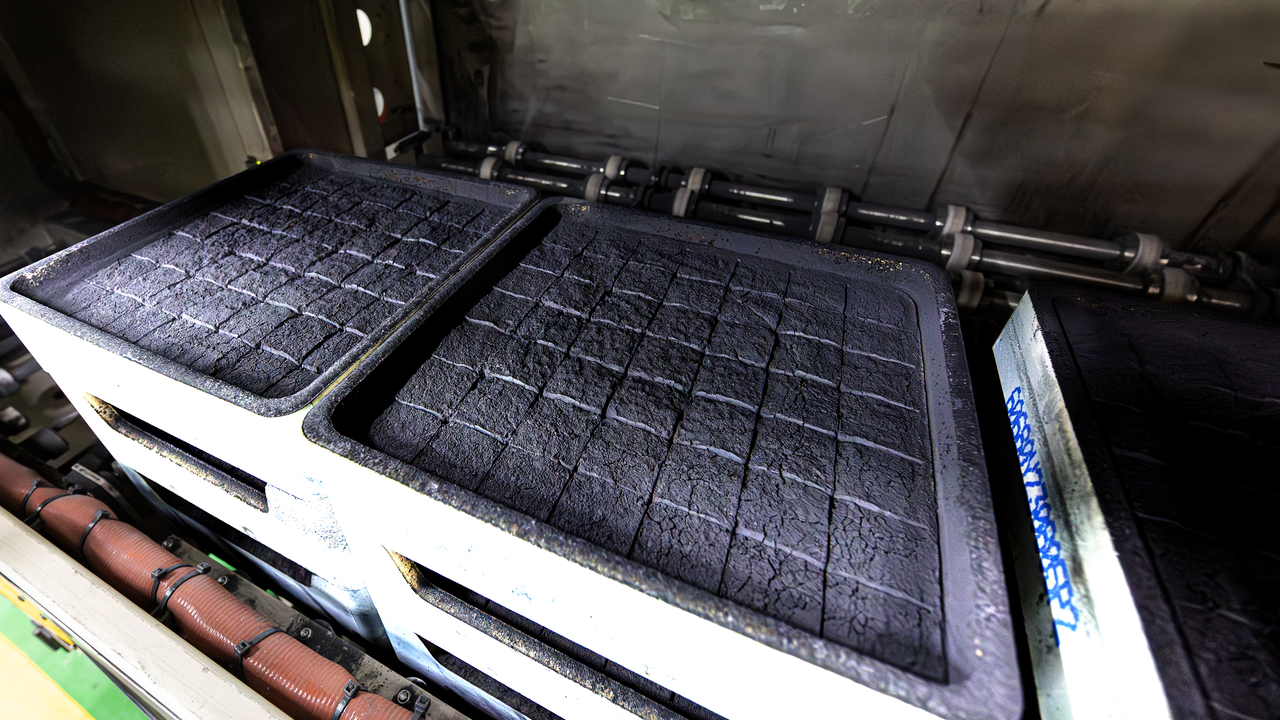
On the same factory site stands a precursor plant with an annual capacity of 45,000 tons, completed in June last year. Precursors are intermediate materials made by combining nickel, cobalt and manganese; when mixed with lithium and fired at high temperatures, they become cathode materials. Jeong said the company used to source precursors from China but has since built its own in-house production capability.
The cathode manufacturing process itself involves multiple steps. Precursors and lithium are mixed, fired at high temperatures and then purified to remove impurities. The material then undergoes washing, drying and additional heat treatment before it meets the performance and quality specifications required by customers.
Posco Future M plans to apply the automation systems and production management technologies developed at the Gwangyang factory to its overseas production sites in the future.
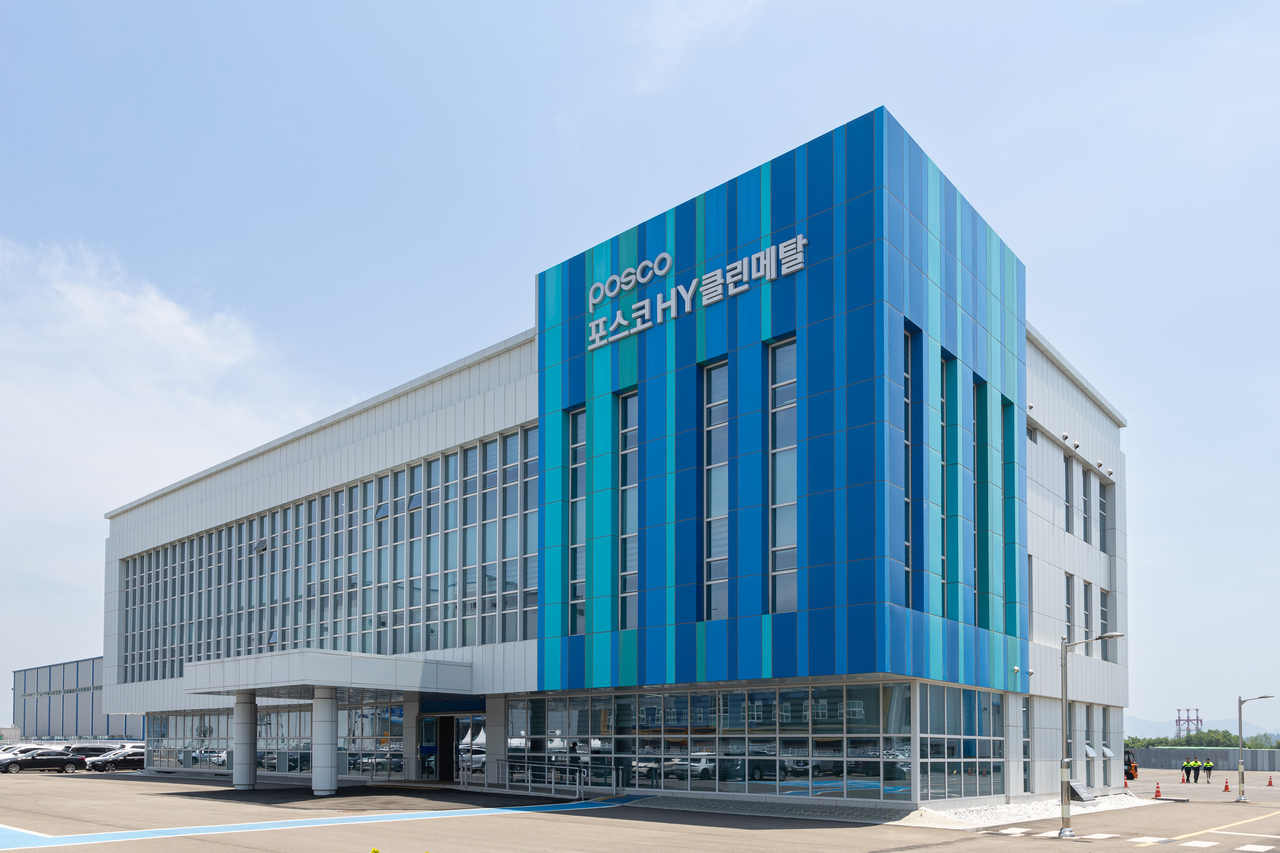
Nickel and lithium recovered from spent batteries; HY Clean Metal completes the supply chain
The Posco Group is also expanding its spent-battery recycling business to secure a stable supply of key raw materials. Posco HY Clean Metal, located near the Gwangyang cathode factory, is at the center of that effort.
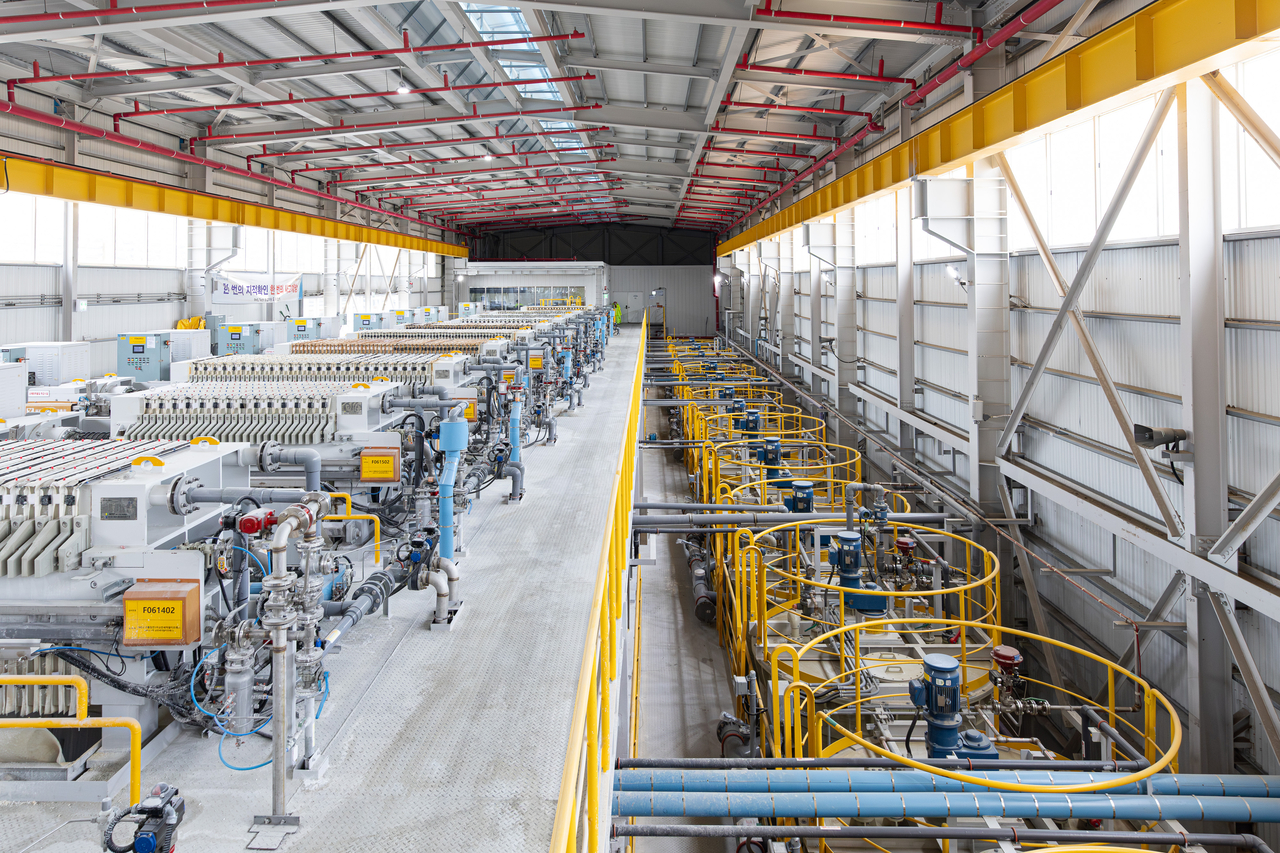
Posco HY Clean Metal, which completed construction in July 2023, recovers nickel, cobalt and lithium from spent batteries and manufacturing scrap and supplies them as cathode raw materials. Lee Hee-jin, head of the planning and finance group at Posco HY Clean Metal, said recycling — which recaptures resources already in circulation — will grow in importance as a source of raw materials going forward.
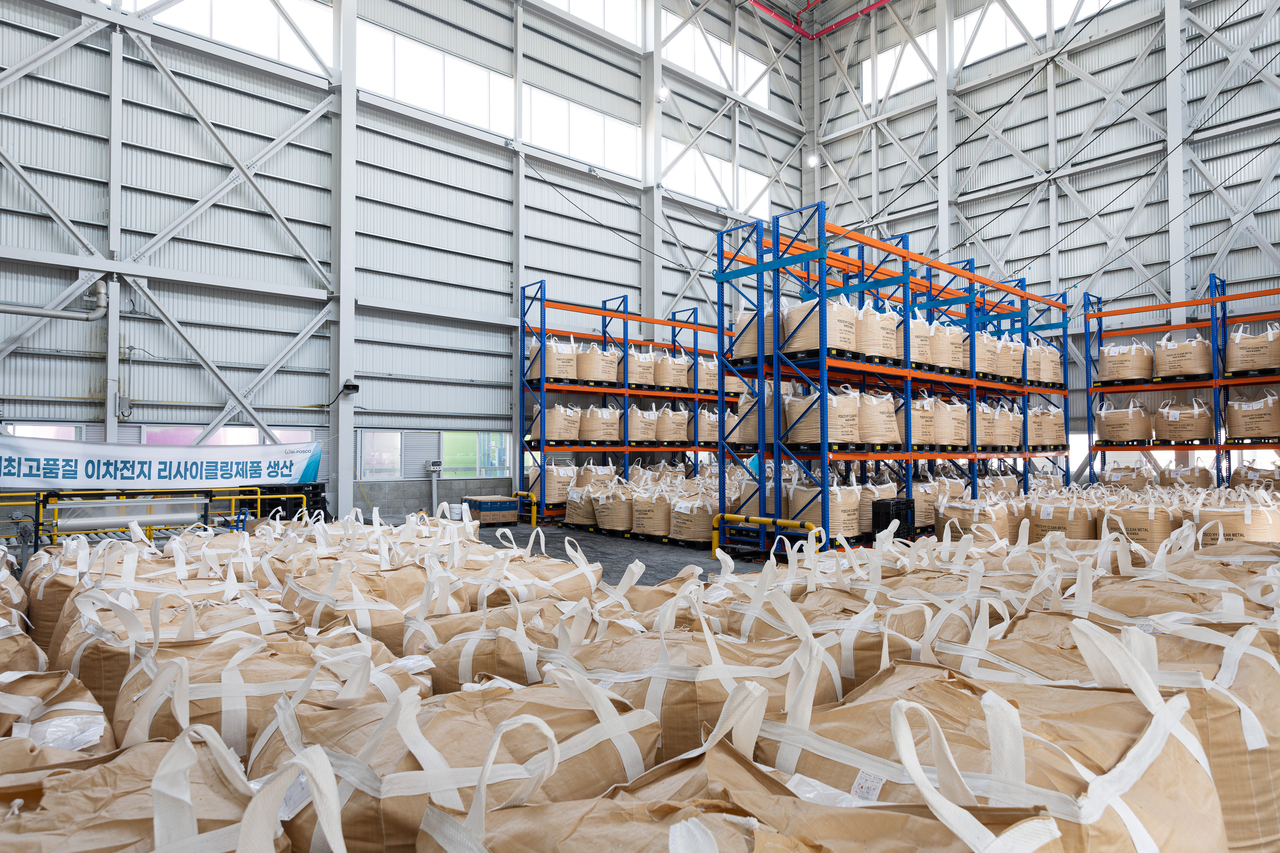
The facility can process 12,000 tons of black mass per year. Black mass is a dark powder obtained by shredding and processing spent batteries; it contains key metals including nickel, cobalt and lithium.
Posco HY Clean Metal refines the black mass to produce lithium carbonate, nickel sulfate and cobalt sulfate, among other materials. The plant has the capacity to produce 2,500 tons of lithium carbonate annually and is currently operating at above 95 percent utilization.
The recycling operation is directly linked to Posco Future M's ternary cathode production. Metals recovered from spent batteries can be fed back into precursor and cathode manufacturing, supplementing raw materials sourced from mines.
Lee said the battery recycling business is sensitive to policy shifts in each country, adding that supply chain management is becoming increasingly important as Europe moves to mandate the use of recycled materials and the United States tightens restrictions on Chinese-origin inputs.
kwater@heraldcorp.com