Factory in Gwangyang capable of producing 130,000 cubic meters of rare gas annually
Targeting chipmakers including Samsung Electronics and SK hynix
Quality certification with customers planned for next year ahead of commercial supply
Steelmaking raw materials repurposed; aerospace sector also in sights
Posco Group has entered the production of rare gases — including neon and xenon, key materials in semiconductor manufacturing — and is moving to secure customers among domestic and overseas chipmakers, with Samsung Electronics and SK hynix among its targets. Having established a domestic production system for rare gases that South Korea has long sourced entirely from abroad, the group is now accelerating preparations to supply the gases directly to semiconductor fabrication processes.
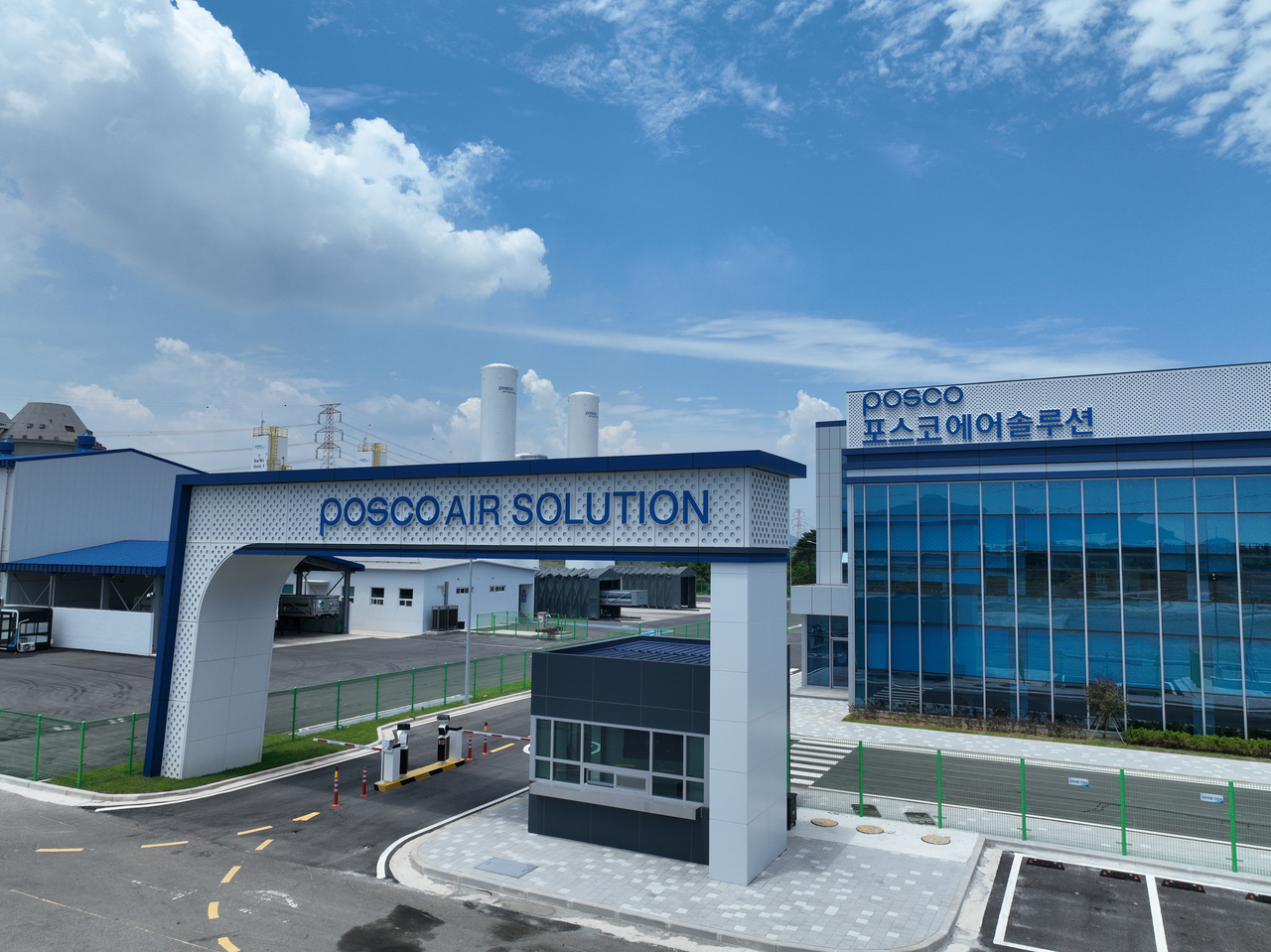
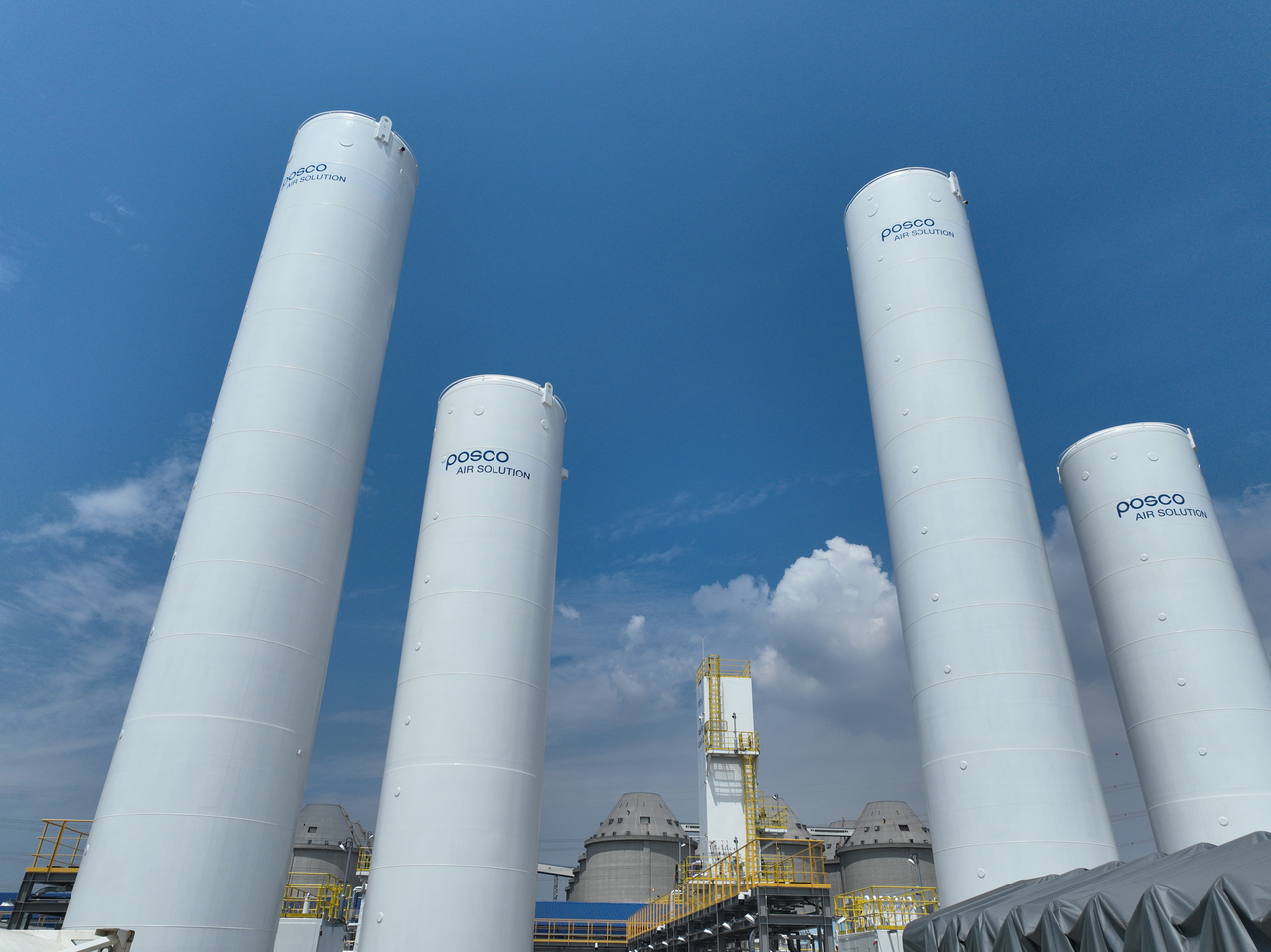
At the Posco Air Solution factory on the Dongho waterfront site of the Gwangyang steelworks in South Jeolla Province, four types of rare gas — neon, xenon, krypton and helium — were in production when a reporter visited Nov. 2. The facility refines raw materials drawn from the steelworks' oxygen plant into high-purity gases for use in the semiconductor and aerospace industries.
Rare gases exist in only trace amounts in the atmosphere, yet they are indispensable to semiconductor production. Neon is used in photolithography, the process that etches circuit patterns onto chips, while xenon and krypton are used in precision processes such as etching. Because any disruption to supply can halt chip production, stable procurement is critical.
Posco pursues Samsung Electronics, SK hynix as customers
"We are currently sending samples to prospective customers and working to open sales channels with major chipmakers," said Bae Sang-bok, a senior manager at Posco Air Solution.
Full-scale sales have not yet begun. "We are not yet at the stage of commercial sales — we are currently supplying samples to customers," Bae said.
Supplying rare gases to chipmakers requires more than achieving high purity. Suppliers must also verify that the gases cause no quality problems when introduced into actual semiconductor fabrication processes, and demonstrate that consistent purity can be maintained over extended periods.
Posco Air Solution plans to begin quality certification procedures with major domestic chipmakers next year. The company intends to expand commercial supply in stages after completing product evaluations and process application tests with each customer.
Posco signed an MOU with Samsung Electronics in 2022 on business cooperation for the domestic production of semiconductor-grade xenon, under which Posco was to handle production technology development and supply while Samsung Electronics would manage quality certification and purchasing.
Annual capacity of 130,000 cubic meters, built on steelmaking raw materials
Posco Air Solution is an industrial gas specialist established in August 2024 as part of Posco Group. It completed a high-purity rare gas production factory on the Dongho waterfront site of the Gwangyang steelworks in June.
The factory has an annual production capacity of 130,000 normal cubic meters, equivalent to roughly 52 percent of South Korea's total rare gas demand from the semiconductor industry as of 2024.
The production process begins at the steelworks' oxygen plant. Posco operates large-scale air separation units to obtain the oxygen and nitrogen needed for steelmaking, and rare gases present in trace amounts in the air can be extracted as a byproduct of that process.
The extracted raw material contains a mixture of gases and impurities. Posco Air Solution purifies it at ultra-low temperatures to separate each rare gas to high purity.
"We use the principle that each gas has a different boiling point," Bae said. "We separate relatively lighter components from heavier ones and remove impurities to produce a product of the desired purity."
Neon and helium in particular must be separated at lower temperatures than xenon and krypton, making process control more demanding. Neon has a boiling point of around minus 246 degrees Celsius, requiring technology capable of maintaining cryogenic conditions with precision.
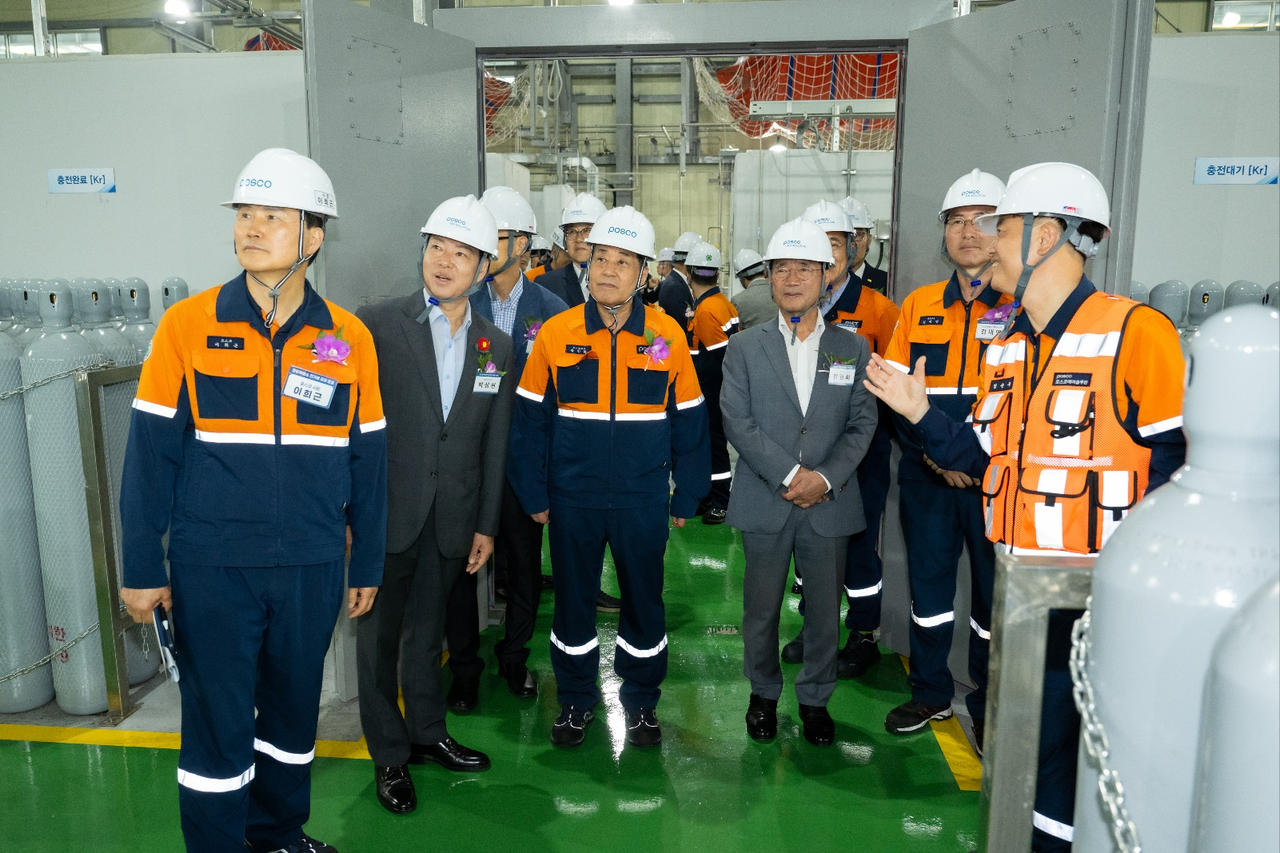
The factory's central control room monitors the temperature and pressure of production equipment in real time. After purification, each gas is tested for purity and impurity content in a quality analysis laboratory before being filled into dedicated containers and shipped.
Full domestic sourcing of raw materials has not yet been achieved, however. A significant portion of the raw materials currently used in production is still imported.
"We currently source about 20 to 30 percent of our raw materials from Posco, with the rest procured from abroad," Bae said. "If sales volumes grow, we plan to consider investment to expand the share of raw materials supplied from the steelworks."
The rare gas market is also subject to sharp price swings driven by geopolitical conditions. Because supply is concentrated in certain countries, any disruption to the supply chain — whether from war or export restrictions — could send prices surging.
Xenon and krypton supplied to Korea Aerospace Research Institute; aerospace market in sights
In the aerospace sector, Posco Air Solution has already secured a track record of product deliveries ahead of its semiconductor push.
The company made its first shipment of high-purity xenon and krypton to the Korea Aerospace Research Institute in May. The institute applied the gases to electric thrusters for satellites and conducted performance tests, issuing a certification of suitability in July.
Electric thrusters control the orbit and attitude of satellites by ionizing gases such as xenon and krypton and expelling them as thrust. Even minute impurities or quality variations in the gas can affect propulsion performance, making strict quality control essential.
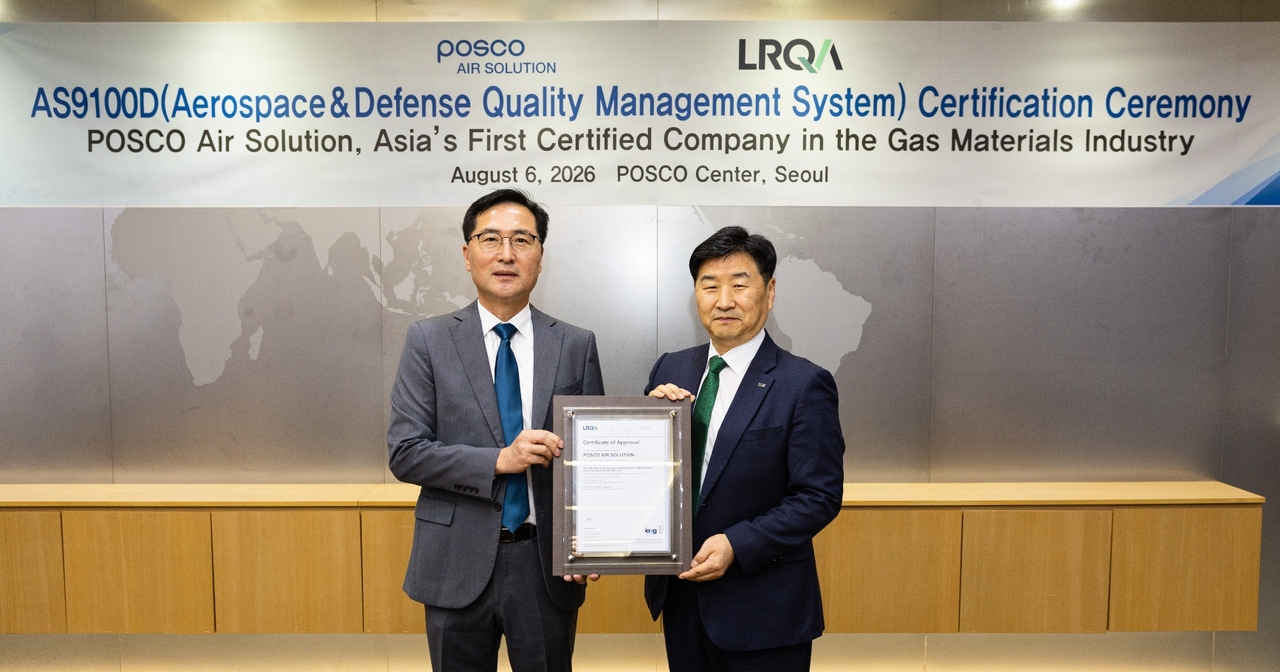
In August, the company also obtained AS9100D certification — the aerospace and defense quality management system standard — from global certification body Lloyd's Register, becoming the first company in Asia to receive the certification in the gas materials manufacturing sector.
Posco Group envisions developing the rare gases recoverable from its steelmaking operations into a new strategic resource. The plan is to leverage the large-scale air separation equipment and purification technology accumulated through its existing steel business to expand into advanced industrial materials for sectors such as semiconductors and aerospace.
At the factory's completion ceremony in June, Posco Group Chairman Jang In-hwa said it was meaningful to be able to produce and stably supply essential materials for advanced industries using the group's own technology, underscoring the importance of supply chain stability.
kwater@heraldcorp.com