Korea Basic Science Institute's independently developed TEM registered as nationally important science and technology material
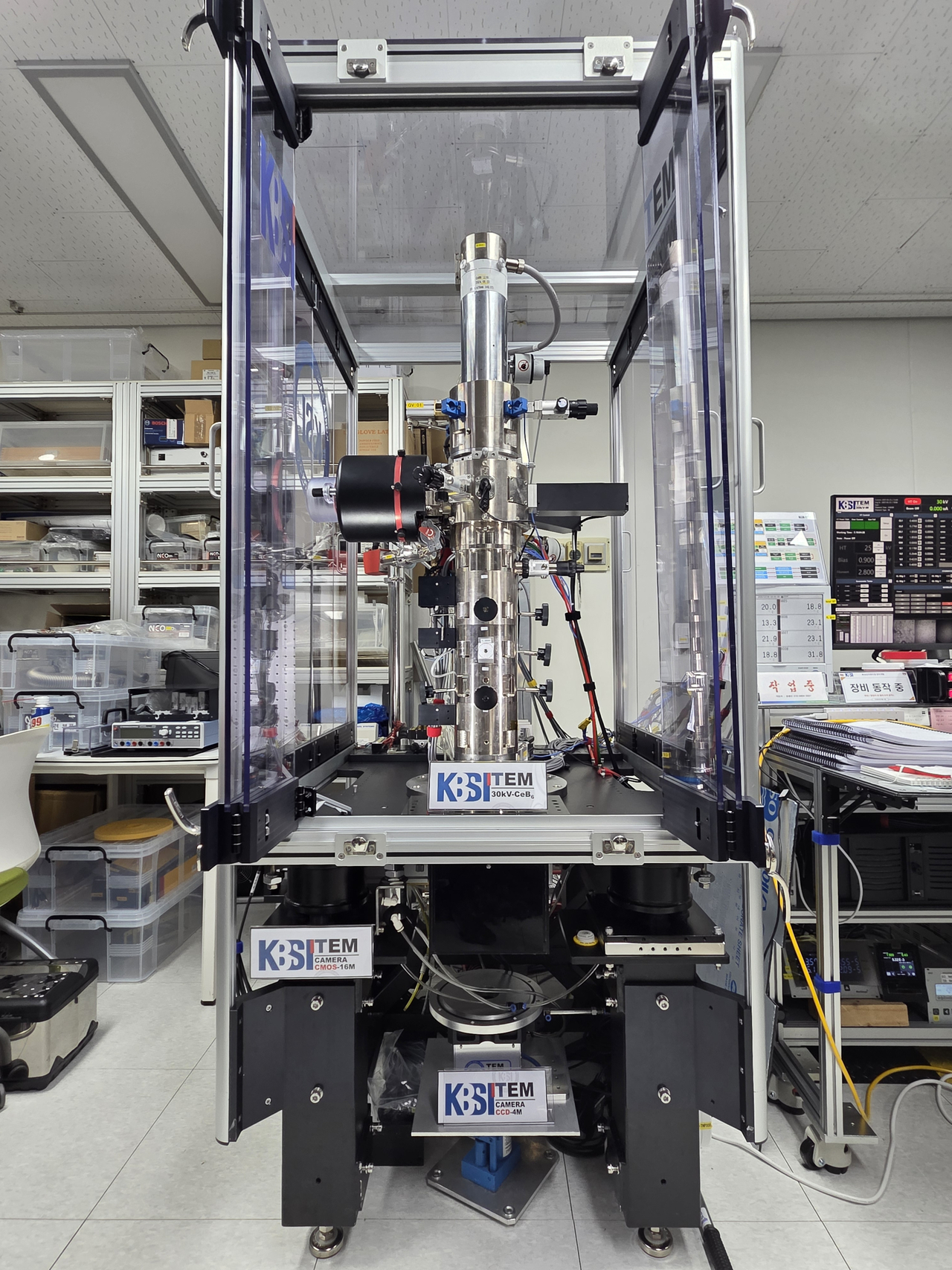
A transmission electron microscope independently developed by South Korean researchers has been recognized as national science and technology heritage, marking a breakthrough in a market long dominated by American and Japanese firms.
The Korea Basic Science Institute announced Tuesday that its homegrown transmission electron microscope, or TEM, has been registered as a nationally important science and technology material — the first time any KBSI research achievement has received such a designation.
A transmission electron microscope is an advanced analytical instrument that passes an electron beam through a sample to observe the fine structure of materials. It is essential to research across a range of cutting-edge industries, including semiconductors, batteries and nanomaterials.
Global specialists from the United States and Japan control roughly 97 percent of the world TEM market, and South Korean research institutions had long relied entirely on imported equipment.
To break free from that technological dependence, a KBSI research team led by Han Cheol-su began developing a domestically produced TEM in 2015.
After four years of research, the team succeeded in 2019 in designing and building key components from scratch — including an electron gun, an electron optical system and an image detector — and used the instrument to capture the first sample images ever produced by an independently developed Korean TEM.
The team also achieved a domestic component ratio of about 70 percent by developing core parts with its own technology, moving well beyond simple assembly of foreign equipment and securing fundamental electron microscope expertise within South Korea.
The results spread to industry as well. KBSI transferred the core technologies it developed during the project to domestic electron microscope companies, including Mcrafts, laying the groundwork for a homegrown research equipment industry and reducing dependence on imported instruments.
The registration as a nationally important science and technology material recognizes both the technical achievement and its historical significance.
The nationally important science and technology materials registration system is a program hosted by the Ministry of Science and ICT and administered by the National Science Museum. Since 2019, it has identified and systematically preserved materials of high historical and educational value to the advancement of science and technology in South Korea.
"This registration is the result of our researchers' efforts and independent technological capabilities being recognized as a nationally important asset to be passed on to future generations," KBSI President Park Seong-gyun said. "We will continue to advance as a leading research institution that develops cutting-edge research equipment with our own hands and achieves technological self-reliance."
nbgkoo@heraldcorp.com