Dismantling of silos at Sampyo Ready-Mix Concrete factory kicks off Wednesday, with full demolition targeted for April 2027
The push to relocate the plant began in earnest in 2003, making this the culmination of a 22-year effort
Songpa-gu to manage noise, dust and vibration while tightening pedestrian safety, laying groundwork for Pungnaptoseong restoration
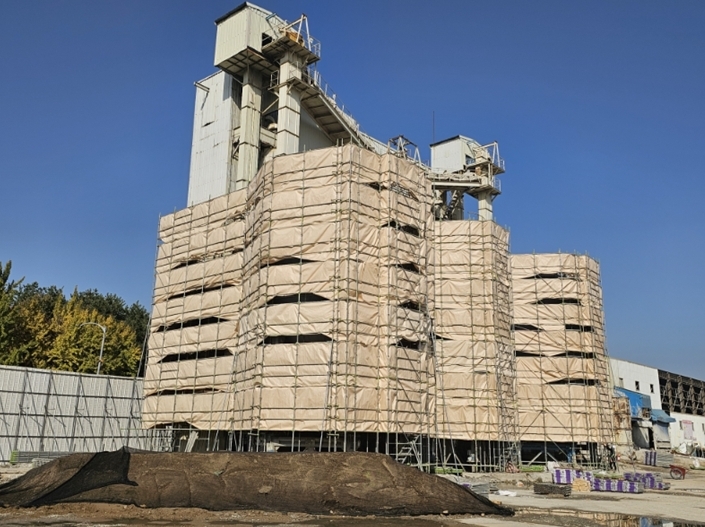
The long-awaited demolition of the Sampyo Ready-Mix Concrete factory in Pungnap-dong, Songpa-gu, Seoul — a project residents have sought for 22 years — is now getting underway.
Songpa-gu announced Wednesday that demolition work has begun at the factory site at 305-14 Pungnap-dong, starting with the dismantling of the silos, the plant's main structures. The entire demolition is targeted for completion by April 2027.
Songpa-gu District Mayor Seo Gang-seok visited the demolition site Wednesday to receive a progress briefing and inspect construction status and safety management measures.
The Pungnap ready-mix concrete plant was operated by Sampyo Industries from 1978 to 2025, a span of 47 years. After Sampyo's Seongsu factory in Seongdong-gu was torn down in 2003, the Pungnap plant remained the only large-scale ready-mix concrete factory within Seoul.
Noise and dust from factory operations, along with traffic disruptions caused by heavy concrete mixer trucks, had long been a source of complaints from local residents. Calls for the factory's relocation intensified after 2003, when efforts to restore the Pungnaptoseong earthen fortress ramped up.
Drawn-out negotiations and legal disputes over the relocation meant it took 22 years before demolition could begin.
The turning point came in November 2023, when a court issued a mediation recommendation. Under the agreement, Sampyo Industries was to cease factory operations by Dec. 31, 2025, and hand over the site and structures to the Seoul Metropolitan Government and Songpa-gu. The factory stopped operating at the end of last year, and the current demolition work marks the start of its physical removal.
Songpa-gu has also been advancing the necessary administrative procedures to expedite the demolition. In April, the district received design approval for the demolition work from the Cultural Heritage Administration. Preliminary work began in October following consultations with relevant agencies.
The district said it plans to focus its administrative resources on minimizing safety incidents and resident inconvenience during the dismantling of the large-scale facility.
Safety installations around the construction site will be expanded and pedestrian protection measures strengthened. The district will also continuously monitor dust suppression measures — including the operation of water-spray systems — as well as noise and vibration levels, and said it will respond promptly to any resident complaints.
The demolition carries significance beyond the removal of an aging industrial facility: it lays the groundwork for a full-scale push to restore the Pungnaptoseong earthen fortress. With the factory that has long degraded the living environment of Pungnap-dong residents now set to disappear, the project is expected to mark a new chapter in improving the area's historical and cultural landscape.
"The demolition of the Pungnap-dong ready-mix concrete factory is an important step in resolving what residents here have sought for 22 years," District Mayor Seo said. "As the project's client, I will personally oversee the progress and ensure the demolition is completed without a hitch, with the safety of our residents as the top priority."
seouldream01@heraldcorp.com