33 years of one-man rule and a 'reality distortion field' leadership style
No succession plan, no No. 2 — and a board stacked with allies
'Too big to sanction' vs. '50-50 odds' of survival
No dual-class shares mean Huang holds just 3.6% — board could act
Even if he stays, some decision-making power may be stripped
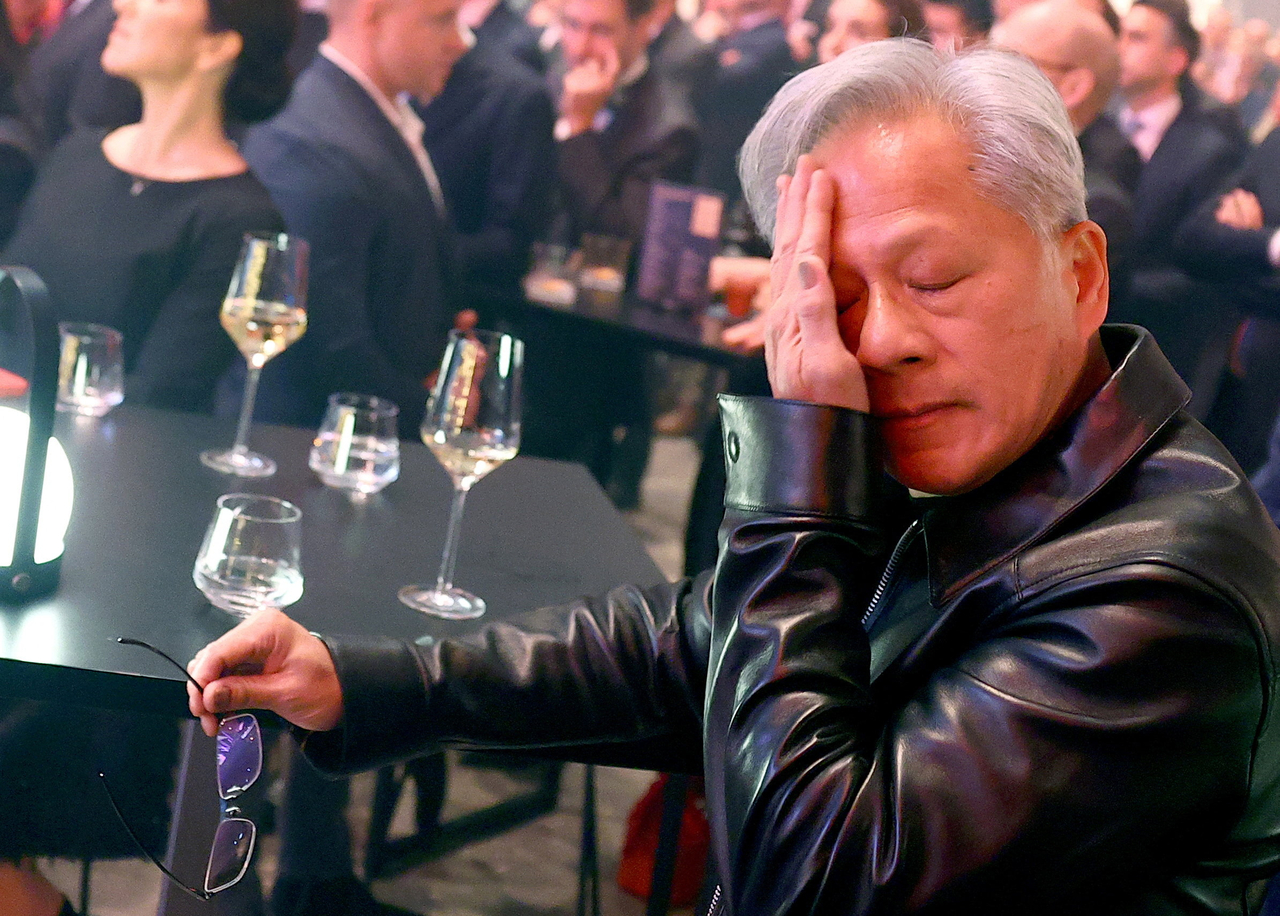
Nvidia CEO Jensen Huang's extramarital affair scandal sent the company's share price down as much as 8 percent during trading Monday (local time) and put him at risk of a congressional investigation, turning the spotlight on whether the board — which has pledged an independent probe — can actually move to sanction him. Nvidia operates under a distinctive internal structure in which, by most accounts, everyone is equal except Huang. As a co-founder who has led the company since its inception, Huang wields influence so sweeping that most analysts expect the board would struggle to check him.
Yet there is a counterargument: unlike many technology companies, Nvidia never granted its founder dual-class shares, meaning the board could, if it chose, dismiss or otherwise discipline Huang. Even short of formal sanction, some analysts predict the scandal will prompt at least a partial redistribution of his authority within the company.
Those who doubt the board can meaningfully act point to Huang's iron grip on internal operations. According to The New York Times and other media, Huang receives direct reports from roughly 60 executives, personally reads thousands of emails each day and drives projects across the entire organization. Every road inside Nvidia leads to Huang — and without him, the company, as currently structured, would struggle to function. The dynamic has drawn comparisons to Apple co-founder Steve Jobs and what observers call a "reality distortion field," the phenomenon in which a leader of exceptional charisma reshapes the perceptions of those around them.
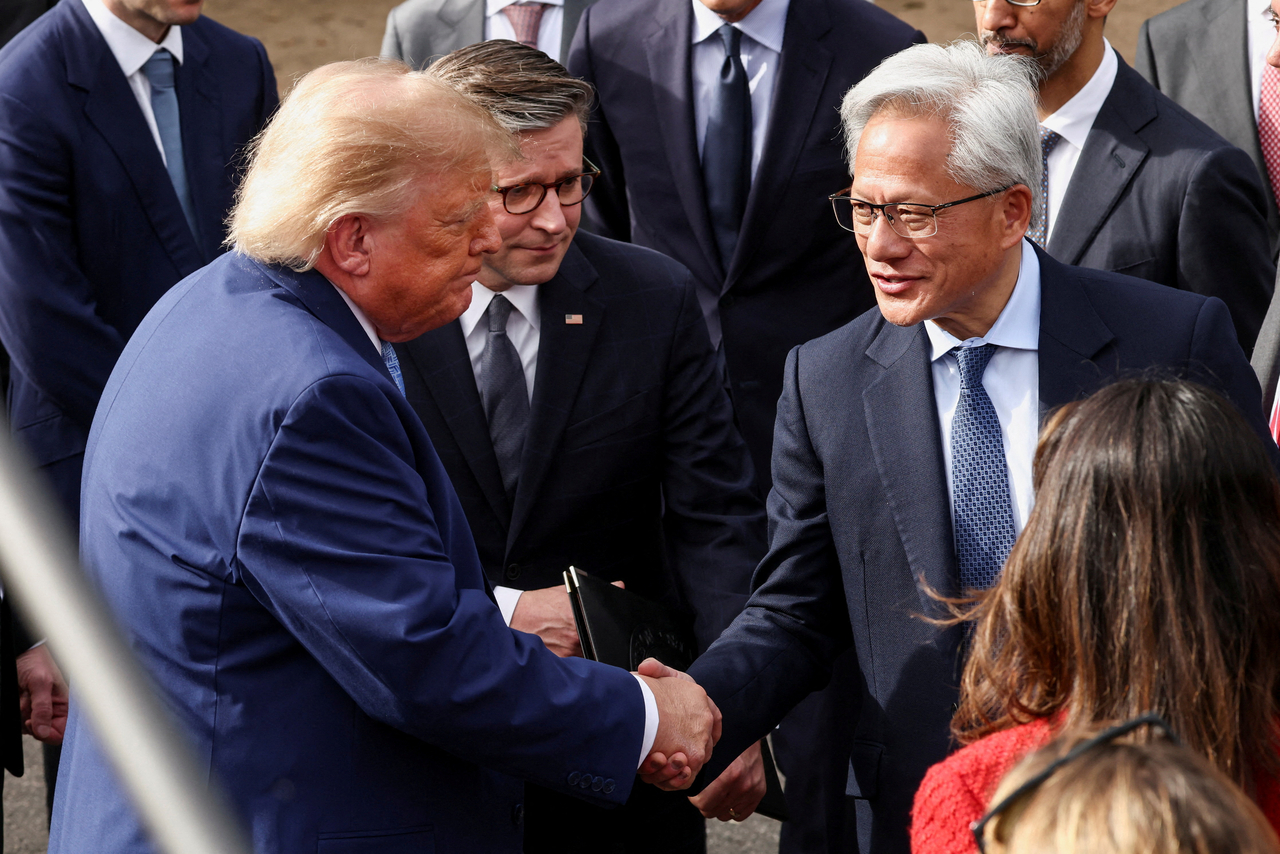
Huang's political and policy influence outside the company is equally formidable. He is one of a handful of people who can reach Donald Trump by phone at will, and he successfully lobbied the president directly to ease export restrictions on AI semiconductors bound for China. Trump publicly defended Huang even after the CEO acknowledged the affair with a woman US intelligence officials have identified as a suspected Chinese asset.
Whether the board that pledged an independent investigation can exercise genuine independence is itself an open question. Four of Nvidia's 10 directors are longtime Huang allies — veterans of the venture capital firms that backed the company at its founding or executives from partner companies dating to the 1990s. Former Nvidia employees have said Huang long treated the board as a formality rather than a meaningful check on strategy or execution.
The absence of any succession plan is another reason analysts doubt the board will act. At a press briefing at CES in January, Huang was asked whether he intended to remain CEO and replied, "As long as I deserve to, I will" — adding that leading Nvidia, as an industry leader, carried enormous responsibility for him. No internal succession program or heir apparent exists. Huang's son, daughter and son-in-law all work at the company, but a family succession is far from settled.

The counterargument is that the fallout is too serious for the board to simply leave Huang in place. Jeffrey Sonnenfeld, a senior associate dean and professor who runs the CEO Leadership Institute at Yale University, put the odds of Huang surviving the scandal and recovering his standing at "about 50-50."
Sonnenfeld said Huang had earned near-absolute respect and trust across the technology industry, but that this episode reflected a particularly serious lapse in judgment. "Even if Jensen was simply naively deceived, any other Nvidia employee would have been fired for this," he said. "This is an irreparable loss of trust."
Critically, unlike peers in the technology sector, Nvidia never issued dual-class shares concentrating voting power in Huang's hands. Dual-class structures typically grant a founder 10 or 20 votes per share, compared with one vote per share for ordinary stock, allowing founders to retain control with a small economic stake. According to an Nvidia disclosure filed in May, Huang held 871 million shares as of March 23 — a stake of just 3.58 percent — with no dual-class voting rights. Should the board decide to remove him, he would have limited means to resist.
Above all, analysts note that the scandal has touched a wide range of constituencies: the board itself, the roughly 42,000 Nvidia employees bound by security regulations, and the US government, which controls exports of Nvidia chips. That breadth of impact, they argue, makes it difficult to keep Huang in the role.
Sonnenfeld suggested the embattled board might therefore look outside the company for a "savior-like solution," citing the example of former Google CEO Eric Schmidt. When co-founders Larry Page and Sergey Brin struggled to manage a rapidly scaling enterprise in 2001, Google brought in Schmidt as a professional manager — and within a decade became one of the world's leading technology companies.
Meanwhile, CNBC reported that the board's investigation into Huang's scandal will be led by Steven Neal, the board's lead independent director and the member responsible for corporate governance.
Neal, an attorney, served as CEO of law firm Cooley before becoming its honorary chairman and senior counsel. Cooley has advised Nvidia on major corporate legal matters and litigation for more than 30 years — handling the company's incorporation in 1993 and its initial public offering in 1999, among other milestones. Neal joined the board in 2019 through his connection to the firm as its CEO.
Regardless of what the board decides about Huang's future, significant changes to corporate governance are widely expected to follow. In a report released Tuesday, Citi analysts identified "potential corporate governance implications" and "increased regulatory scrutiny" as two of the key issues investors will watch as the investigation proceeds.
Even if Huang retains his title, analysts predicted he would likely have to cede some of his day-to-day decision-making authority to others.
Braeden King, a professor of management and organizations at Northwestern University's Kellogg School of Management, said the company would need to put governance safeguards in place "to ensure this cannot happen again." He added that the episode "is likely influencing how other technology companies — particularly those in AI — are thinking about their own governance frameworks and how they respond to calls for greater oversight of their leadership."
kate01@heraldcorp.com