Metaverse sites jump from 71 to 843 in 10 days
Online temple 'Sansa' sparks wave of virtual healing spaces
Metaverse shifts from 'replicating reality' to offering refuge
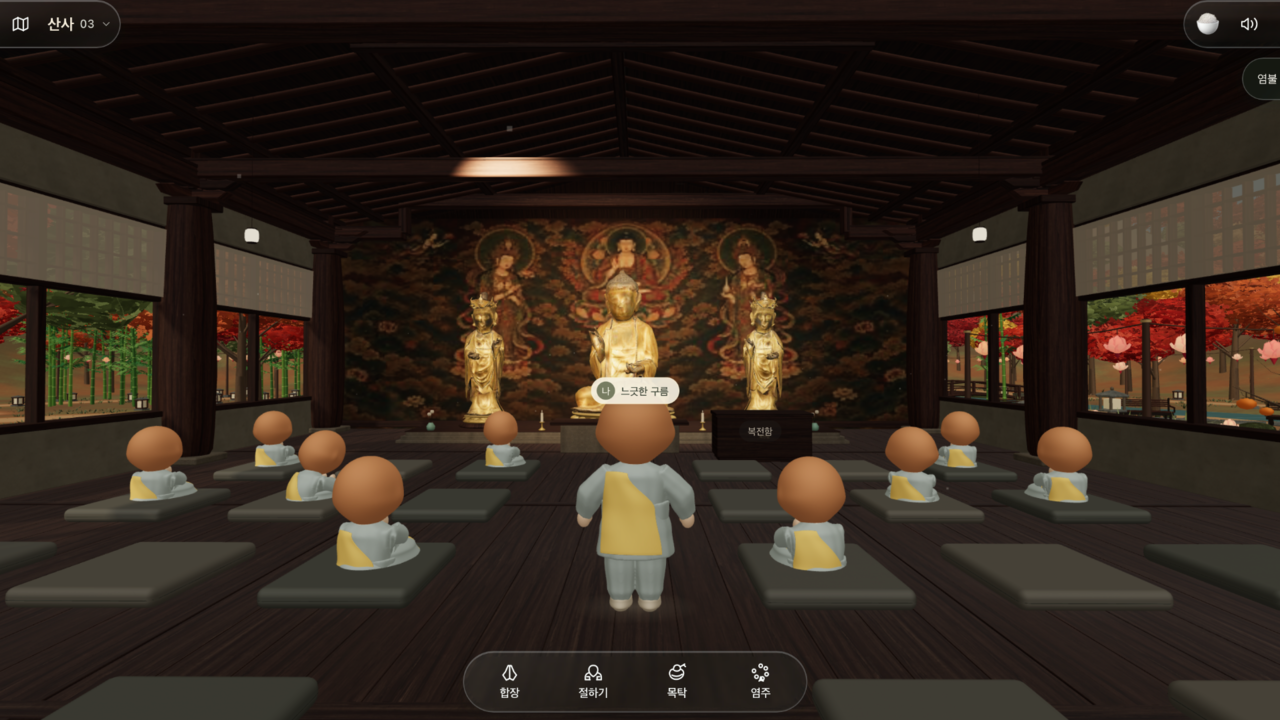
"Samsung Electronics to 1 million won ($738) — let's go!" — a user at a virtual metaverse temple
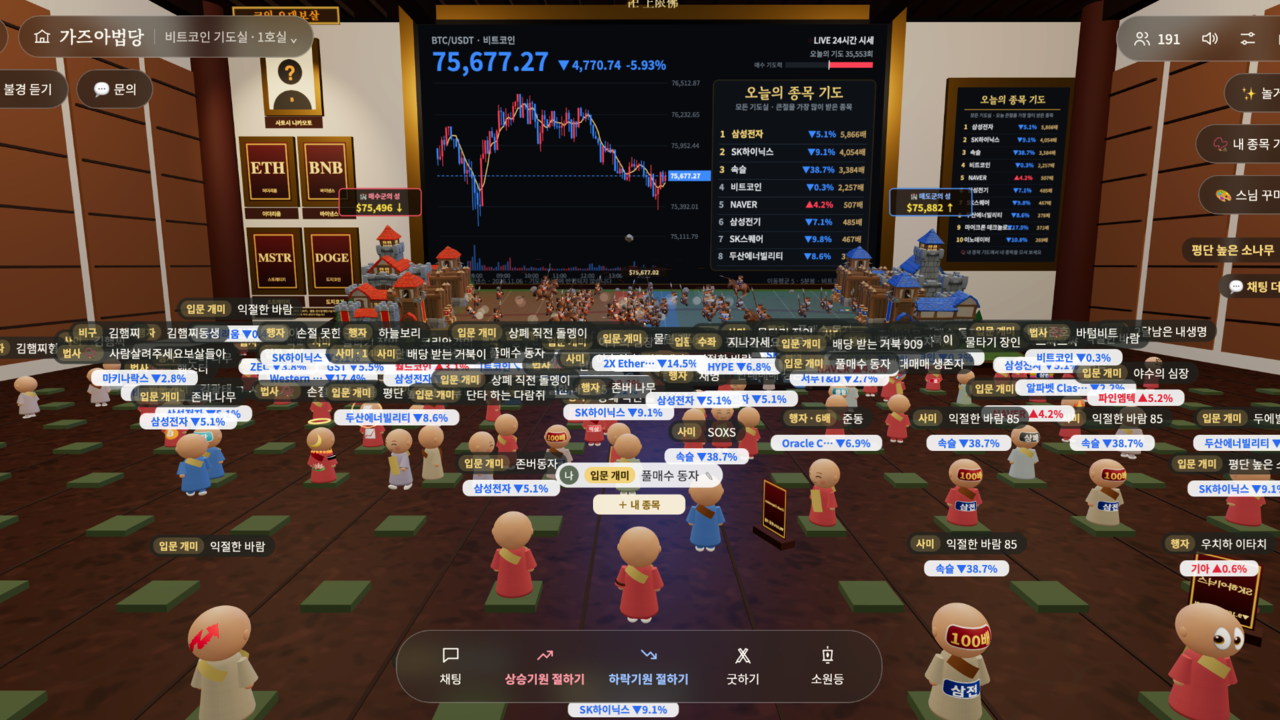
Stepping into a virtual Buddhist hall through a monk avatar, a visitor is greeted by more than 200 child-monk avatars gathered in prayer. Floating above each avatar is the name of a stock — Samsung Electronics among them — along with that day's price movement. Users perform a "rising bow" to wish for higher share prices or leave written prayers. It is a virtual temple service where stock and virtual asset investors gather to pray for gains.
The metaverse, largely forgotten for a time, is drawing attention again. Once hyped as a technology for recreating the real world in virtual space, it is now finding new purpose as a "healing space" — somewhere people go for small pleasures and emotional connection.
Virtual spaces of all kinds are appearing in quick succession: online prayer halls, study rooms and saunas, alongside the virtual temples.
According to Metamoa, a platform that aggregates virtual-space sites, 843 metaverse sites were registered Tuesday — up roughly 1,087 percent from 71 sites on Oct. 30, a jump of 10 days. Concurrent users on Metamoa also surpassed 1,000 that morning.
The standout example is Sansa, an online virtual temple. Developed by Park Jin-won, a university student in their 20s preparing for employment, Sansa is a web-based virtual space where users navigate a temple complex through a child-monk avatar and experience Buddhist temple life indirectly.
Inside the temple, users can sit on a cushion and perform 108 bows, press their palms together in prayer, strike a wooden percussion block or roll prayer beads while listening to the sounds. According to developer Park, about 1.5 million people visited Sansa between Oct. 31 and Friday.
Similar virtual spaces have followed, with derivative offerings including online prayer halls, study rooms and saunas.
Among the most prominent are an online communal prayer space modeled on a famous rock Buddha statue, a stock-prayer hall called Gazua Beopdang, a virtual space called Gaemi World for retail investors, and an online study room where avatars sit in a cafe and study. All operate on the same model: users control an avatar to enjoy services inside a virtual environment.
A defining feature of these spaces is that users feel a sense of togetherness with others even without actively doing anything or exchanging words. Emotional connection through shared presence alone, without active communication, is enough. Sometrend, a big data analytics firm, has described this behavior as "quiet co-presence."
The ease of access is another draw: no app download or account registration is required, letting users drop in briefly to unwind and shake off everyday stress.
Users who have spent time in these virtual spaces have responded warmly. "There's a strange charm to just sitting there," one wrote, while another said, "I like that I can just sit without talking to anyone and leave whenever I want."
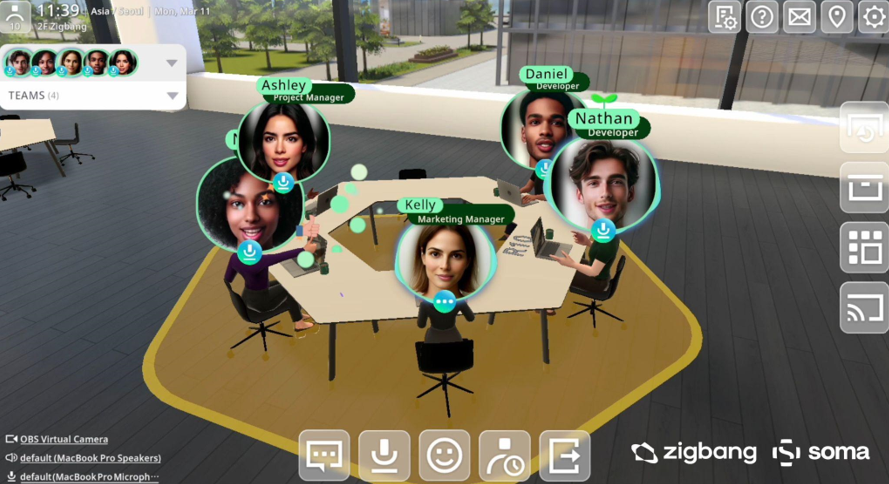
The trend marks a new chapter for the metaverse, which had gone through a prolonged slump.
During the COVID-19 pandemic, the metaverse was celebrated as a next-generation platform that would extend economic and social activity into virtual space. Companies raced to unveil virtual offices, meeting rooms and shopping environments.
But as in-person activity resumed after the pandemic and user interest waned, growth stalled. According to AI marketing firm AIPRM, global monthly searches for "metaverse" fell about 89 percent, from 100,882 in 2022 to 10,668 in 2024.
The virtual-space services now emerging in South Korea are drawing renewed interest as lightweight "healing spaces" that users can drop into casually.
Advances in AI technology have also lowered the barrier to building websites, a development expected to accelerate the virtual-space boom. Through "vibe coding," even individuals with limited programming knowledge can now build their own virtual spaces with relative ease.
Jang Cheol-il, chief executive of Metamoa, said that in the past it was nearly impossible for an individual to build a metaverse or game requiring extensive server infrastructure. "Recently, in line with vibe coding, anyone with just one idea can create content," he said.
young2@heraldcorp.com