Push to build national biotech hub
Industry-academia-research-hospital joint preparatory committee launched
Amended special bill with Greater Seoul regulatory exemptions, state funding provisions delivered to Assembly
Incheon is pushing to transform itself from the world's largest biopharmaceutical production hub into a national biotech research center focused on developing foundational drug technologies and training specialized researchers.
The city officially launched a joint preparatory committee — drawing from industry, academia, research institutions and hospitals — to establish the Incheon Bio Science and Technology Institute (IBIST), and has begun lobbying the National Assembly to pass enabling legislation.
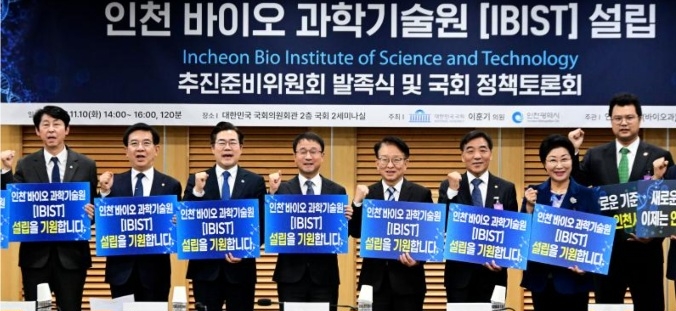
The city co-hosted a launch ceremony and policy forum for the IBIST preparatory committee with Assembly member Lee Hun-gi at the National Assembly Members' Office Building on Tuesday, and delivered an amended special bill to the Assembly that would serve as the legal basis for the institute's establishment.
The event marks the city's first formal step toward expanding Incheon's industrial structure — long centered on biopharmaceutical production facilities — to encompass research and development, foundational technology acquisition and professional workforce training.
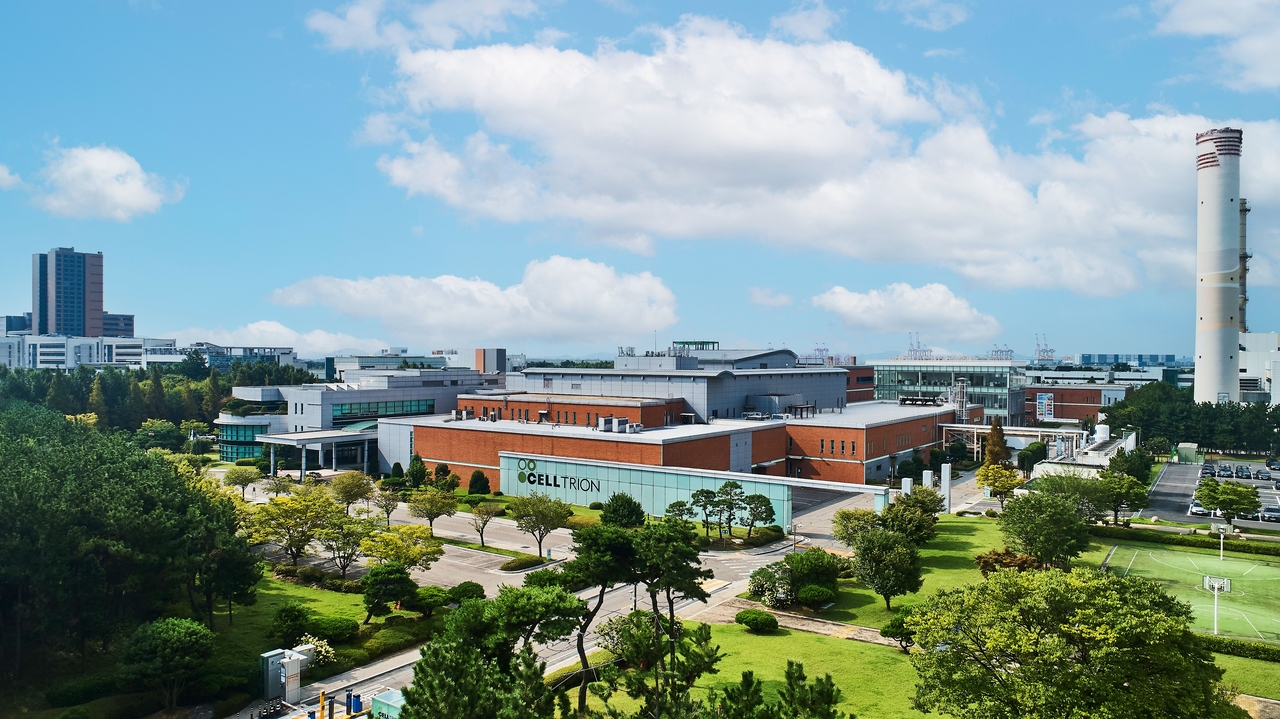
Incheon is home to global biotech firms including Samsung Biologics and Celltrion, and its biopharmaceutical production capacity in Songdo has reached 1.16 million liters.
Last year, Incheon accounted for 61.3 percent of South Korea's total pharmaceutical exports, worth $6.58 billion.
Despite that world-class production capacity, the city believes its foundations for foundational drug research and its systems for training master's- and doctoral-level specialists remain comparatively weak.
Regulations on establishing new universities in the greater Seoul area make it difficult to set up a conventional research-focused university. The city argues that a science and technology institute grounded in separate legislation — similar to KAIST — is therefore necessary.
The preparatory committee launched Tuesday is co-chaired by four figures: Incheon Mayor Park Chan-dae, Inha University President Choi Ki-young, Gachon University President Lee Gil-ya and Celltrion CEO Seo Jin-seok. A total of 24 members participate, drawn from universities, hospitals, biotech companies, research institutions and the local business community.
The city delivered the amended special bill to the leadership of the Democratic Party of Korea on Tuesday and requested the party's legislative support.
The amended bill includes provisions for regulatory exemptions in the greater Seoul area, the granting of designated research institution status, a legal basis for state fiscal support, and measures for cooperative development with non-metropolitan regions.
The intent is to remove anticipated institutional constraints in establishing the institute and to secure a legal foundation for national-level support.
At the policy forum, participants raised the view that IBIST should operate as a biotech-specialized graduate research institution, avoiding overlap with the roles of existing universities.
A cooperative model — leveraging the research capabilities of local universities through joint degrees and collaborative research while training talent to meet industry needs — was cited as a central challenge.
The city plans to intensify consultations with the National Assembly and relevant government ministries to advance the special bill and secure national funding, and to formally launch a citywide civic promotion committee in January next year.
The city also intends to link Songdo's biopharmaceutical production facilities, the materials, parts and equipment industries of the Namdong industrial complex, and Yeongjong's biotech infrastructure to build an industrial ecosystem connecting research and development through to production and commercialization.
"If a research institution to cultivate foundational technologies and talent is added to Incheon's world-class production base, we can lead a new leap forward for South Korea's biotech industry," Mayor Park said, expressing his commitment to developing the city into a national biotech hub.
However, for IBIST's establishment to translate into genuine gains in industrial competitiveness, challenges remain: beyond passing the special bill, the city must first secure stable government fiscal support, attract top-tier researchers, define a clear division of roles with existing universities, and build a research and development framework aligned with industry demand.
gilbert@heraldcorp.com