Panel highlights curriculum reform, integrated leadership; adviser urges scrutiny of merger rationale
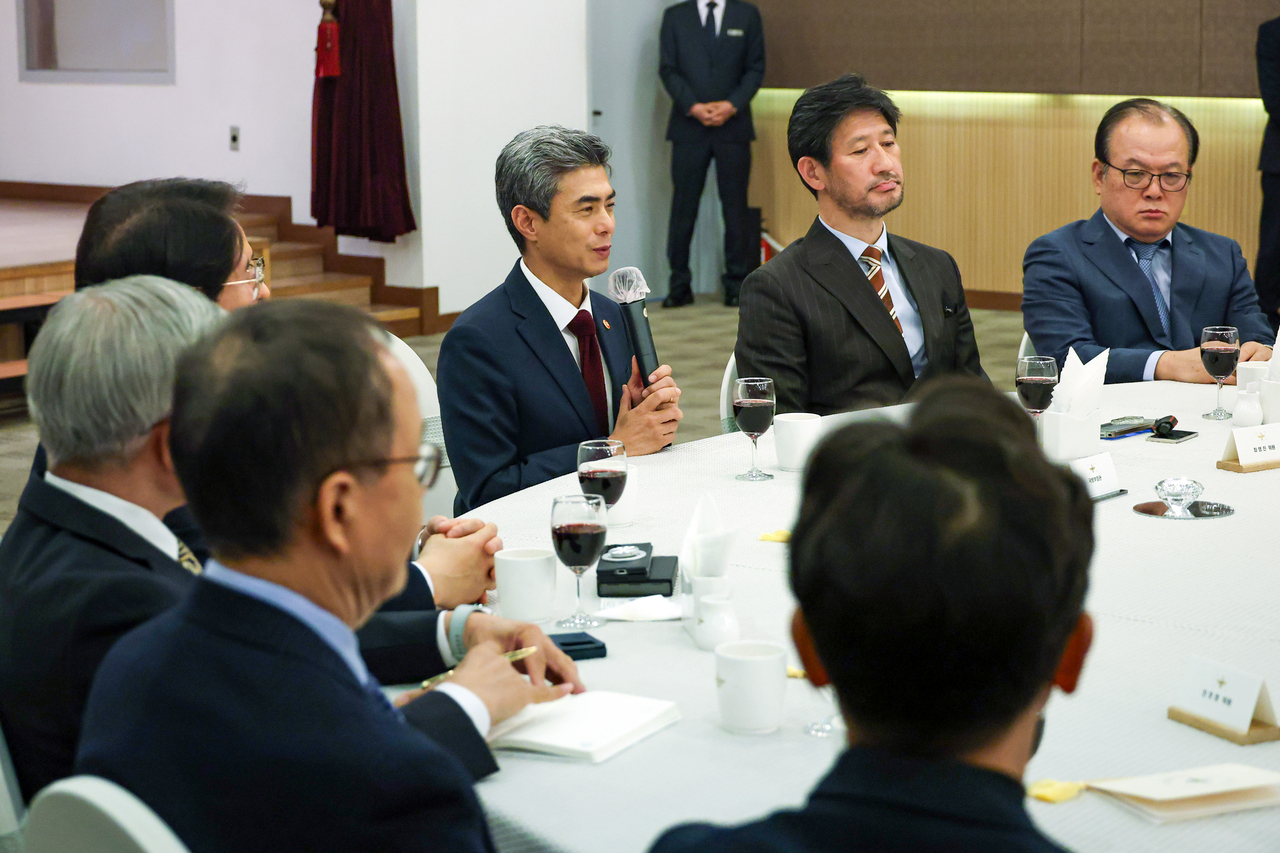
A meeting of the Special Civilian Advisory Committee on the Armed Forces Military Academy, chaired by Defense Minister Kang Shin-chul, on Tuesday emphasized curriculum reform centered on future core competencies, integrated leadership development and the collection of on-the-ground opinions.
The event was held at the Defense Convention center in Yongsan, Seoul, and was attended by Kang and other senior Defense Ministry officials, along with 15 civilian advisory committee members drawn from academia, research institutions and other fields.
The meeting was organized to ensure that the expertise and diverse views of civilian specialists are meaningfully incorporated into policy as the ministry works toward establishing the Armed Forces Military Academy, which is intended to train elite officers to lead future national defense.
The advisory committee brings together experts from five areas relevant to the academy's establishment: organizational operations, curriculum structure, advanced infrastructure, legal review and youth advisory.
At the meeting, Kang stressed the importance of training elite officers capable of leading future warfare, urging committee members to "offer their fullest advice and wisdom so that the Armed Forces Military Academy can take a successful first step."
Lee Chan, a Seoul National University professor serving as an adviser on curriculum, said the essence of establishing the Armed Forces Military Academy "goes beyond simple consolidation — it is about finding a solution for training officers suited to a future battlefield where AI and advanced technology converge." He outlined three directions toward that goal: reforming the curriculum around future core competencies, strengthening integrated leadership and gathering field-level opinions.
Kang Byeong-cheol, director of the Seongmu Security Research Institute and an adviser on organizational operations, said "rigorous verification of the causal relationship is needed to determine whether the goals of strengthening jointness, preparing for future warfare and improving educational competitiveness are directly linked to the consolidation of the military academies."
The Defense Ministry said it plans to operate the special civilian advisory committee and its subcommittees on a standing basis to gather expert opinions broadly from all sectors, and will "faithfully reflect the advisory outcomes in the process of establishing the Armed Forces Military Academy to enhance internal and external credibility and create a more fully realized institution."
youknow@heraldcorp.com