Korea pavilion runs for 9th consecutive year at Shanghai import expo
Participating firms jump from 48 to 88; exhibition space expands 63%
Over 1,200 export consultations held with Chinese buyers
K-beauty, K-food target Chinese consumer market
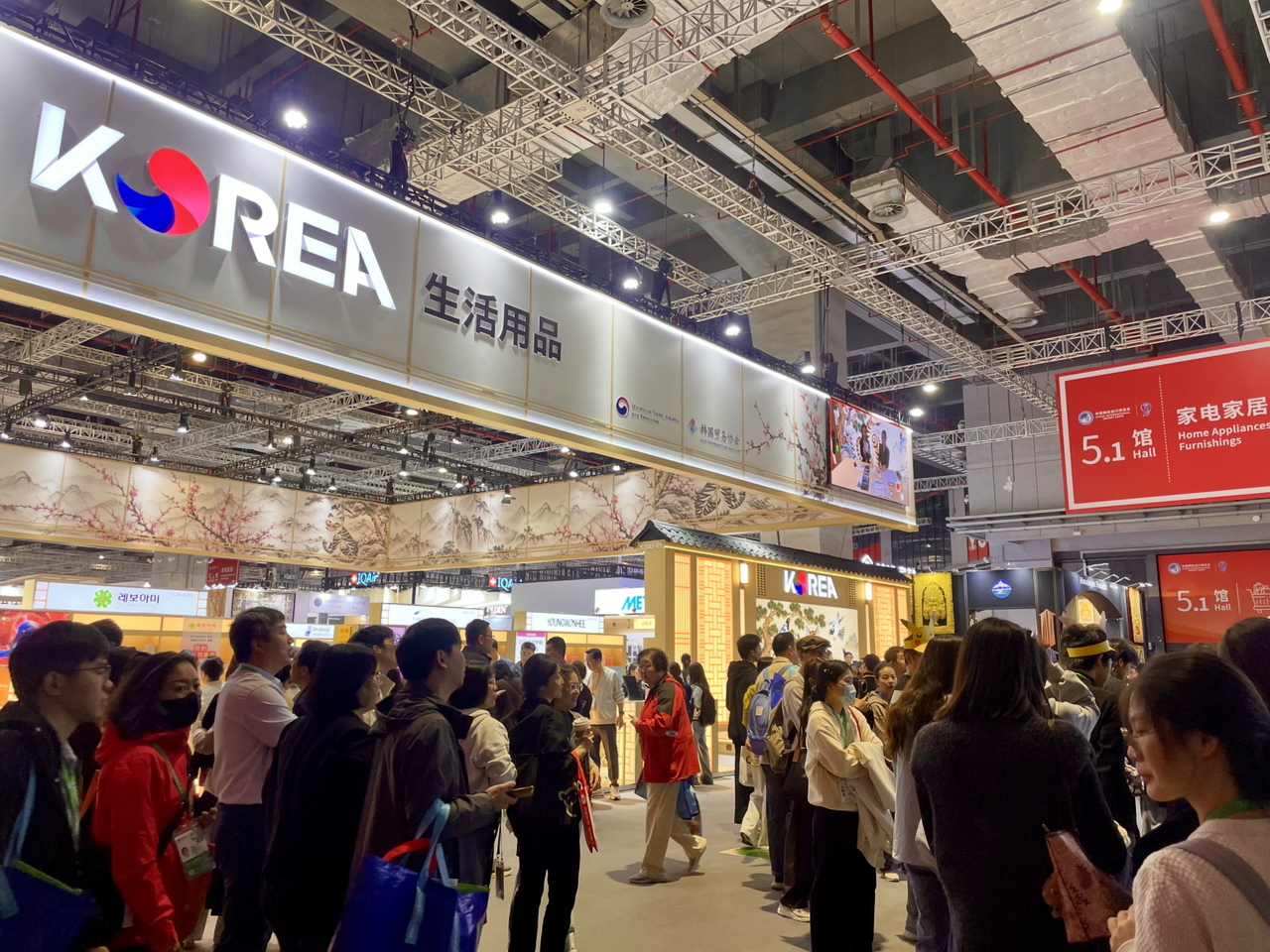
The Korea International Trade Association participated in China's largest import-focused trade fair with 88 domestic companies — up 83 percent from last year — and facilitated $170 million in export consultations, amid intensifying competition in China's consumer goods market. The initiative aims to help Korean companies in sectors such as K-beauty and K-food expand their foothold in the Chinese market.
KITA announced Wednesday that it set up a Korea pavilion at the 9th China International Import Expo, held at the National Exhibition and Convention Center in Shanghai from Thursday through Tuesday, in partnership with the Ministry of Trade, Industry and Resources.
The China International Import Expo is an annual event the Chinese government has organized since 2018 to introduce foreign products and services to its domestic market and promote imports. KITA has operated a Korea pavilion at every edition of the expo since its inaugural year, making this its ninth consecutive year.
This year's expo drew 4,142 companies from 162 countries, making it the largest in the event's history.
KITA significantly expanded the Korea pavilion's scale. The number of participating companies grew 83 percent, from 48 last year to 88 this year, while the exhibition space widened 63 percent, from 608 square meters to 990 square meters.
The Korea pavilion was set up in the consumer goods and agri-food sections of the expo. Four local governments — Busan, North Jeolla Province, North Chungcheong Province and Seoul's Gangnam-gu — along with three partner agencies, including the Public Procurement Service and the Gyeonggi and North Gyeongsang Province Creative Economy Innovation Centers, cooperated in recruiting participating companies and running the exhibition.
Ahead of the expo, KITA identified more than 80 Chinese buyers and arranged meetings between them and Korean exhibitors.
Including those pre-arranged meetings and walk-in buyers at the Korea pavilion, more than 1,200 export consultations were conducted, with the combined value reaching approximately $170 million.
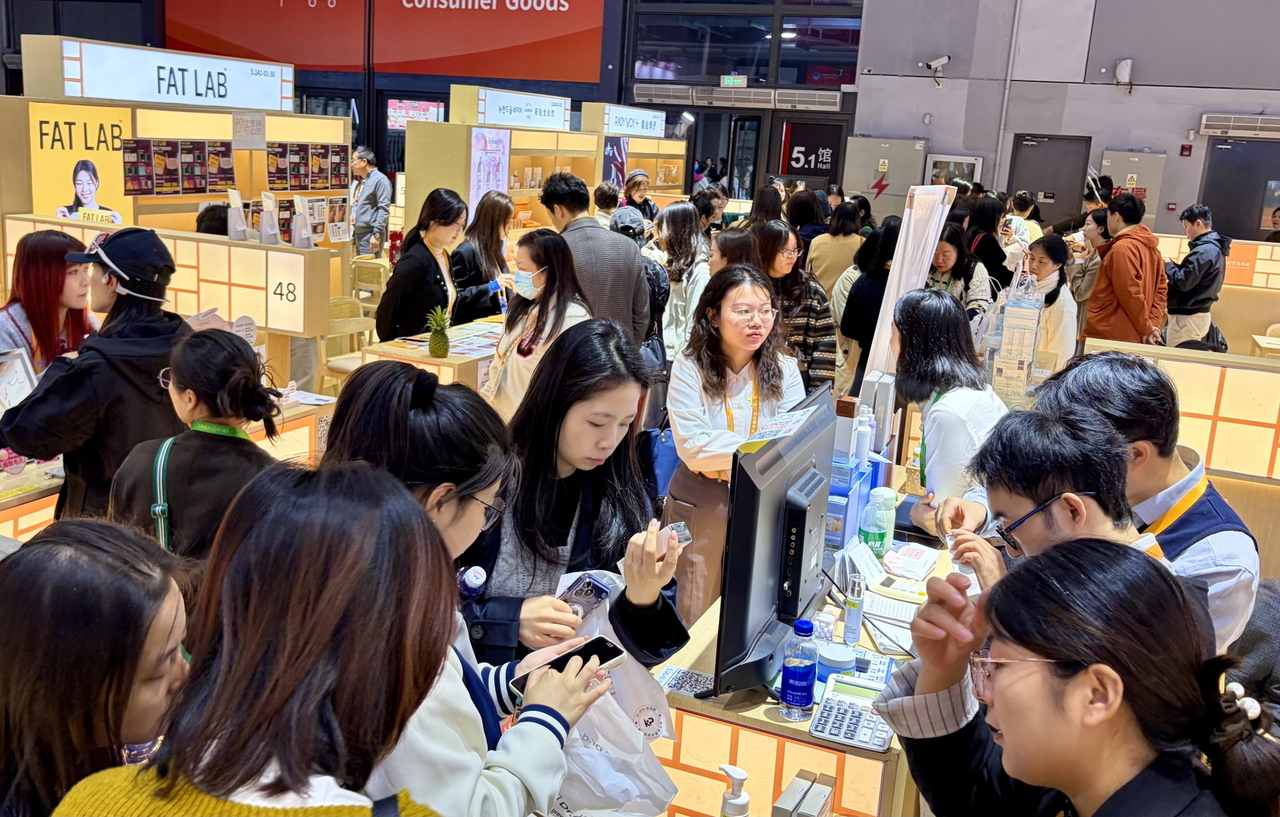
A range of events was also organized to broaden direct engagement with local consumers. The Korea pavilion hosted a K-beauty makeup show, K-food tasting sessions, a live home shopping broadcast, a photo booth and a traditional Korean ddakji ("paper-flipping") game, offering visitors hands-on exposure to Korean culture.
A stamp tour encouraged visitors to explore multiple booths, going beyond simple product displays to let attendees experience Korean consumer goods firsthand.
South Korea's exports to China have been rising recently, buoyed by a semiconductor boom. However, the growth has been concentrated in a handful of product categories such as semiconductors, making diversification into consumer goods and other sectors a pressing challenge.
As Chinese companies continue to raise their technological capabilities and product competitiveness, Korean consumer goods firms increasingly need to compete not just on price but also on quality, design and brand differentiation.
The government is also stepping up support for Korean companies entering China's consumer goods market. Minister of Trade, Industry and Resources Kim Jung-kwan visited Shanghai on Thursday to coincide with the expo's opening, touring the Korea pavilion and encouraging representatives of participating companies.
KITA said it plans to focus on converting the buyer consultations from this expo into actual export contracts.
Lee In-ho, KITA's executive vice chairman, said Chinese consumer goods have grown significantly more competitive, and Korean companies must expand into the Chinese market by leveraging differentiated quality, design, original ideas and a premium image. "KITA will provide comprehensive support for Korean companies entering China's consumer goods market in line with the government's direction, and will take the lead in expanding consumer goods exports to China," Lee said.
kwater@heraldcorp.com